

Back to List
K-Dev Original

Civil Service Training: Nurturing the Driving Force of Economic Development in Korea

Summary

South Korea successfully ensured its civil service training programs supported specific national economic development policies by establishing a centralized and legally mandated system where training content directly reflected major cabinet decisions. This system, viewed as an important tool for both capacity building and bureaucratic control, provided officials with the necessary knowledge, skills, and ethics required for development. The Ministry of General Affairs (MOGA) was required by law to establish an annual training plan that explicitly reflected major government policies, thereby maximizing the effect of training on organizational capacity. Additionally, Public Service Ethics Training acted as a crucial communication channel to justify major policies and mobilize officials by cultivating a loyal, disciplined public servant mindset. Finally, the introduction of commissioned overseas training allowed the government to benchmark advanced scientific and technological knowledge, which was subsequently used for policy development and implementation vital for trade-driven economic growth.

Key Questions

  • What does the principle of "Training First, Assignment Later" signify in the context of the Korean civil service?
  • What was a primary goal of Public Service Ethics Training in South Korea, particularly during its period of economic development?
  • What is a key lesson from South Korea's successful civil service training program?

#civil service #capacity building #policy needs

Overview: South Korea’s Civil Service Training System

For several decades, beginning in the 1960s, South Korea's civil service served as the primary engine of its remarkable economic development. Central to this achievement was a system of comprehensive and systematic training programs designed to equip government officials with the knowledge, skills, and ethics required to fulfill their responsibilities. These programs were instrumental in providing the human capital necessary to execute ambitious national policies.

The foundation of this system is a 9-Grade rank classification structure, resembling that of the Chinese bureaucracy, where Grade 1 is the highest and Grade 9 is the lowest. Entry into the civil service is highly competitive, managed through rigorous examinations administered by the central government for positions at the Grade 9, 7, and 5 levels. Korea employs a "closed career corps system," which prizes the cultivation of generalists. Unlike position classification systems that emphasize specialization, this model recruits officials based on broad, foundational knowledge. As they gain experience, they are rotated through various positions and entrusted with increasingly complex tasks, a practice that builds versatile capabilities and ensures the consistency of public administration regardless of political changes.

The government's approach to civil service training was strategic and centralized from its inception. The Korean government has regarded civil service training as an important tool both for building the capacity of government officials and for controlling government bureaucracy since the 1960s. It established a formal system guided by a master plan and detailed annual plans, which were closely supervised to ensure implementation. These plans were not generic; they were specifically designed to support major government policies and foster the skills necessary to achieve national objectives. A strong emphasis on public service ethics was woven throughout, aiming to enhance competence while simultaneously securing the loyalty of the bureaucracy.

The training framework is organized into three primary categories, as detailed in Table 1. First is public service ethics training, designed to shape the mindset of officials and secure their support for the government. Second is job training, which is subdivided into grade-based basic training (including programs for new employees, refresher training, and training for newly promoted officials) and specialized job training focused on functional skills. The third category is commissioned training, which utilizes external public and private institutions, both domestically and overseas, to provide advanced or specialized education. This structured approach ensured that every aspect of an official's development was deliberately linked to the needs of the state.

Reflection of Government Policy Needs

A foundational principle of Korea's civil service development was the strategic decision to structure the entire government training system to directly reflect and serve national policy needs. This alignment was not an afterthought but a deliberate and centrally managed effort to ensure that the bureaucracy was prepared to execute the nation's ambitious development agenda.

The institutionalization of this system began in earnest in 1961 under the military government. The Supreme Council for National Reconstruction (SCNR), the highest policymaking body of the era, enacted the Government Officials Training Act (GOT Act) and established the Central Officials Training Institute (COTI). To manage this from a central government perspective, an Education and Training Department was created within the Ministry of General Affairs (MOGA).

This created a clear division of labor: MOGA was responsible for central planning and establishing the annual training plan, while COTI was responsible for providing the training programs and supervising other government training centers as they were established. A parallel structure existed for local officials, with the Local Administration Training Institute (LATI) operating under the Ministry of Home Affairs (MOHA).
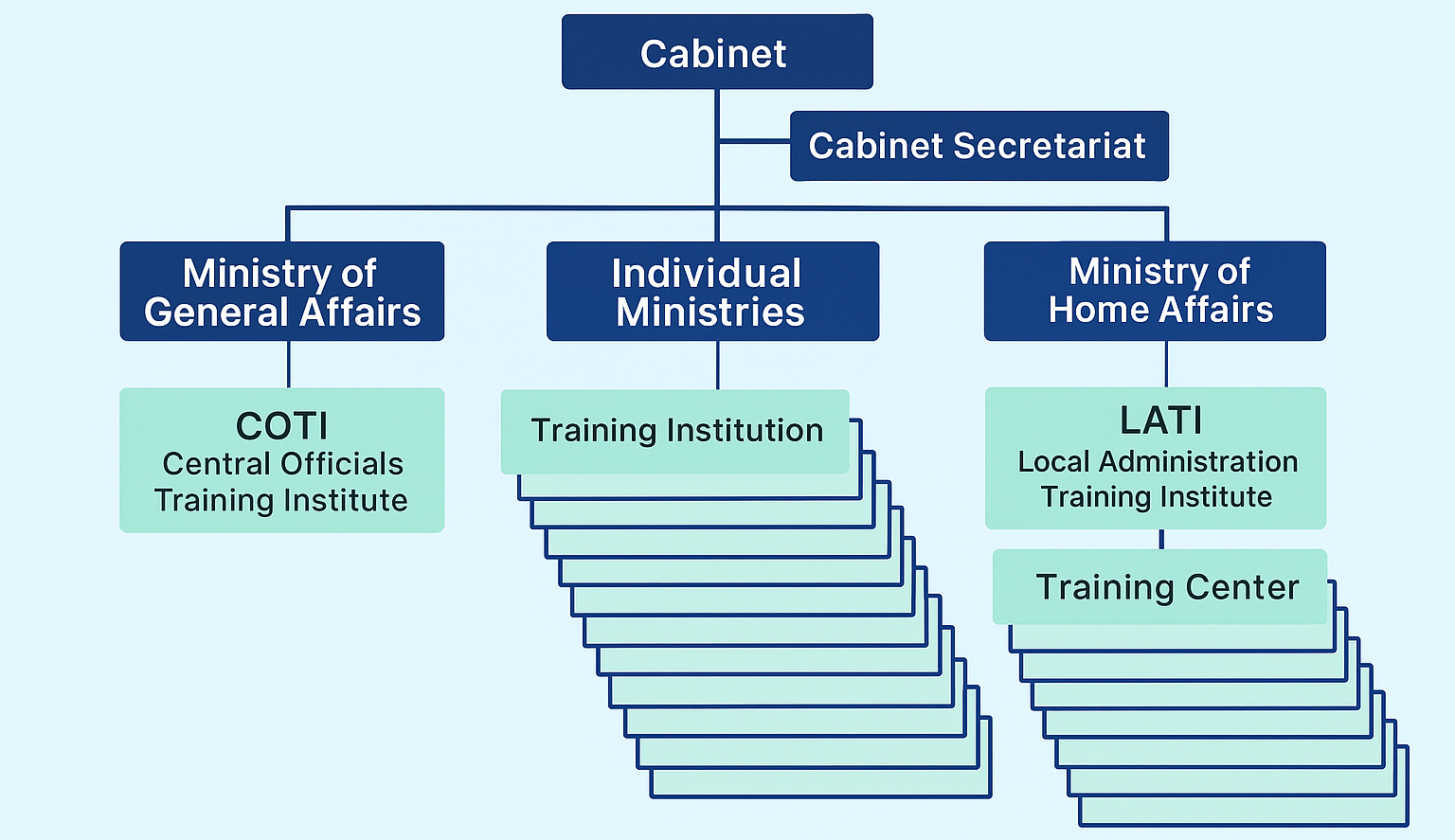
Division of Labor Between the Ministries

The government actively and systematically bridged its economic development policies with specific training programs. By law, MOGA was required to formulate an annual education plan that directly reflected the major policy decisions of the Cabinet. When new national priorities emerged, training programs were developed or reorganized to support them. For instance, the "Planning Program" was created to teach planning skills to officials in support of the First Five-year Economic Development Plan. Similarly, in 1967, as the government prepared for the Second Five-Year Plan, COTI added courses on new managerial techniques—including Program Evaluation and Review Technique (PERT), Critical Path Method (CPM), Operational Research (OR), and the Program Planning and Budgeting System (PPBS)—to equip mid-level officials with the advanced tools needed for complex policy implementation.

The overall training system for government officials was structured to reflect government policy needs. This approach was notably preemptive, providing officials with advanced knowledge and techniques before they were required to design and execute development policies. This forward-looking strategy ensured that the civil service was not just a follower of policy but a capable and prepared instrument for its success, thereby establishing the technical foundation upon which a deep ideological commitment could be built.

Public Service Ethics Training

Perhaps the most distinctive feature of the Korean civil service training system is its profound emphasis on public service ethics. This training was not merely a supplement to technical skills but a core strategic pillar with two primary goals: securing the loyalty and support of government officials to maintain administrative control, and fundamentally reshaping the public servant mindset to one of national service and mission, as illustrated in an excerpt from a training textbook below.

Mission of Government Officials and Discipline

As government officials we are confident in our responsibility as guides of national restoration. If we perceive a government position as a means of living only, we will fail to invest the energy and empathy needed to advance the country. And with that thinking we may indulge in corruption in order to make atonement for needed money because a government position is not a lucrative job. When we as government officials take the lead in national restoration, our futures will be bright.

Needless to say, government administration exists only for the people’s interest and happiness, and the master of government administration is the people. Government officials are qualified delegates—those who are entrusted by the people as public authorities. Government officials are public servants who work for the people.*

Public service ethics training was delivered through three distinct methods. First, it was operated as a separate, independent program under various banners that shifted with the political regime, such as "Anti-communism Training," "Saemaul Training", and "Ideological Training."

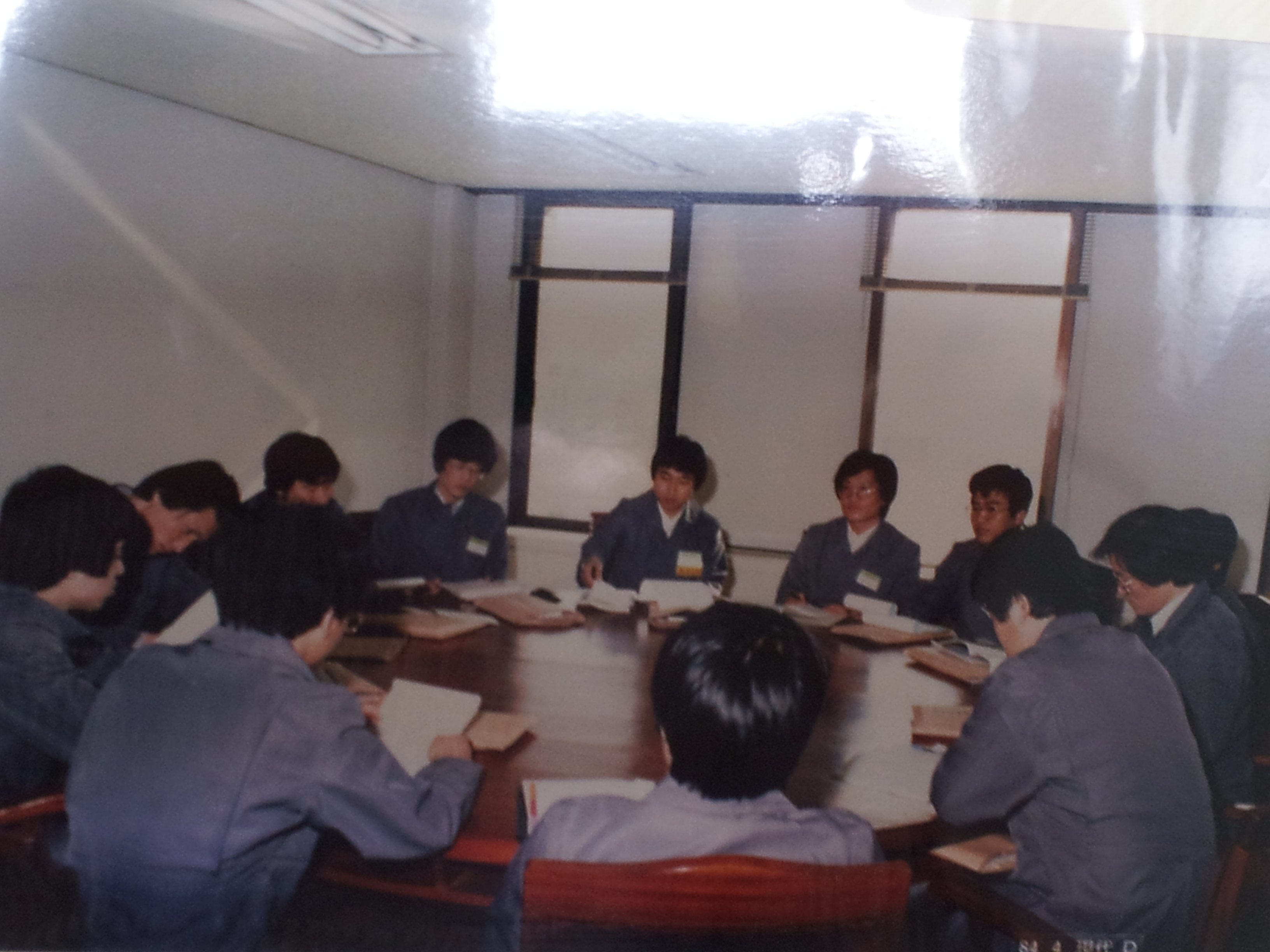
Second, ethics training was integrated as a significant component within standard job training programs. In the 1970s, for example, it accounted for over 20 percent of total class hours and included politically charged courses such as Analysis of Corruption in the Public Administration of the Previous Government during the military government and International Situation and Defeat of Communism during the Fourth Republic. Finally, the training made extensive use of field activities to cultivate a public servant mindset. Trainees participated in team projects, engaged in group ceremonies like the candle ceremony, and undertook field visits to rural areas and industrial complexes to gain a deeper understanding of national development in practice.

Examples of Field Activities (i.e., Group Discussion, Candle Ceremony)

Source: The National Human Resources Development Institute

While it was sometimes used to justify undemocratic political regimes, it was highly effective in building esprit de corps, loyalty to the nation, and a powerful sense of mission among officials. It also enabled the government to tighten organizational discipline and secure the intangible resources—commitment, morale, and unified purpose—necessary for major policy initiatives. For each government, public service ethics training was a useful communication channel to justify the importance of major policies and mobilize government officials to push forward such policies. This internal focus on mindset and loyalty was complemented by commissioned training programs, which offered officials a valuable external perspective.

Commissioned Training

Commissioned training refers to programs conducted by external public or private institutions, distinct from the government's own training centers. This approach was strategically employed to provide officials with specialized knowledge, advanced academic learning, and global perspectives that were not available through standard in-house training. It is divided into two main categories: domestic and overseas training.

Domestic commissioned training consists of several programs tailored to different needs. These include one-year, long-term programs for director-general and manager-level officials conducted at public institutions. The government also provides financial support for selected mid-level officials to attend college and post-graduate programs, often at evening graduate schools to earn master's degrees. Shorter-term programs are also available, including foreign language training and special skills courses at private institutions.

Overseas training was introduced in 1977 to benchmark science and technology from advanced countries and was expanded in 1979 to cover all government ministries. These programs, which saw steady participation, fall into two types: professional job training, where officials work or conduct research in international organizations or foreign governments, and a two-year academic degree program at overseas graduate schools. The selection process is rigorous; each ministry selects candidates based on job performance and language proficiency, after which the Ministry of Personnel Management (MPM) makes the final decision, typically sending one or two applicants from individual ministries for the degree program each year.

The contributions of overseas training to the capacity of government officials were significant and multifaceted. First, it allowed officials to absorb advanced knowledge directly applicable to their policy areas by studying at prestigious universities. Second, immersion in other countries naturally enhanced their language proficiency and understanding of foreign cultures and international norms. Third, it broadened their global perspective and enabled them to build cooperative networks with international scholars and foreign officials.

Given Korea's reliance on international trade for its economic development, such experiences are vital for formulating new policies that correspond to rapid changes in the international arena. These multifaceted benefits, born from a commitment to external learning, highlight just one component of a holistic system whose overall success offers profound lessons for developing nations.

Lessons and Implications

In the 1980s and 1990s, many capacity-building programs in developing countries failed to produce lasting improvements, often due to demotivating organizational cultures, the underutilization of skilled personnel, and a "brain drain" to the private sector. The Korean model, however, stands out as a remarkable success. Its achievements were not accidental but the result of a holistic and strategically aligned system that offers several key lessons for national development.

One of the most critical lessons lies in the system's foundational principles. From the very beginning, the government established a solid legal and institutional framework that provided a durable basis for continuous civil service development. This structure legally mandated a "training first, assignment later" approach, a preemptive strategy ensuring that newly employed or promoted officials were fully equipped with the necessary skills before taking on new responsibilities. This ensured that job responsibilities could be carried out accurately and effectively from day one.

The effectiveness of these programs was then amplified by a deliberate strategy of linking training content directly to national policy objectives. The Korean training system which bridged government policy and training contents maximized the effects of training on the capacity development of government officials. This technical preparation was powerfully complemented by an equal emphasis on public service ethics training, which cultivated a public servant mindset, solidified loyalty, and ensured that advanced skills were paired with a strong sense of national mission. Finally, the entire system remained relevant and practical by being designed from the trainee's perspective; the government conducted regular needs analyses to ensure that programs reflected what officials actually needed to perform their duties, balancing top-down policy directives with bottom-up functional requirements.

In conclusion, South Korea's success in nurturing a world-class civil service was the product of a deliberate, comprehensive, and deeply integrated training system. By systematically aligning legal frameworks, institutional capacity, policy needs, and ethical development, Korea built a bureaucracy that was not merely an administrative body but the decisive driving force behind its national economic transformation.

Author
Yong soo Kwon
Konkuk University
Yang-ho Ahn
Jeju National University
Chang Soo Choe
Cyber Hankuk University of Foreign Studies
cite this work

Civil Service Training: Nurturing the Driving Force of Economic Development in Korea

K-Dev Original
April 13, 2026
This is some text inside of a div block.

Summary

South Korea successfully ensured its civil service training programs supported specific national economic development policies by establishing a centralized and legally mandated system where training content directly reflected major cabinet decisions. This system, viewed as an important tool for both capacity building and bureaucratic control, provided officials with the necessary knowledge, skills, and ethics required for development. The Ministry of General Affairs (MOGA) was required by law to establish an annual training plan that explicitly reflected major government policies, thereby maximizing the effect of training on organizational capacity. Additionally, Public Service Ethics Training acted as a crucial communication channel to justify major policies and mobilize officials by cultivating a loyal, disciplined public servant mindset. Finally, the introduction of commissioned overseas training allowed the government to benchmark advanced scientific and technological knowledge, which was subsequently used for policy development and implementation vital for trade-driven economic growth.

Key Questions

  • What does the principle of "Training First, Assignment Later" signify in the context of the Korean civil service?
  • What was a primary goal of Public Service Ethics Training in South Korea, particularly during its period of economic development?
  • What is a key lesson from South Korea's successful civil service training program?

#civil service #capacity building #policy needs

Overview: South Korea’s Civil Service Training System

For several decades, beginning in the 1960s, South Korea's civil service served as the primary engine of its remarkable economic development. Central to this achievement was a system of comprehensive and systematic training programs designed to equip government officials with the knowledge, skills, and ethics required to fulfill their responsibilities. These programs were instrumental in providing the human capital necessary to execute ambitious national policies.

The foundation of this system is a 9-Grade rank classification structure, resembling that of the Chinese bureaucracy, where Grade 1 is the highest and Grade 9 is the lowest. Entry into the civil service is highly competitive, managed through rigorous examinations administered by the central government for positions at the Grade 9, 7, and 5 levels. Korea employs a "closed career corps system," which prizes the cultivation of generalists. Unlike position classification systems that emphasize specialization, this model recruits officials based on broad, foundational knowledge. As they gain experience, they are rotated through various positions and entrusted with increasingly complex tasks, a practice that builds versatile capabilities and ensures the consistency of public administration regardless of political changes.

The government's approach to civil service training was strategic and centralized from its inception. The Korean government has regarded civil service training as an important tool both for building the capacity of government officials and for controlling government bureaucracy since the 1960s. It established a formal system guided by a master plan and detailed annual plans, which were closely supervised to ensure implementation. These plans were not generic; they were specifically designed to support major government policies and foster the skills necessary to achieve national objectives. A strong emphasis on public service ethics was woven throughout, aiming to enhance competence while simultaneously securing the loyalty of the bureaucracy.

The training framework is organized into three primary categories, as detailed in Table 1. First is public service ethics training, designed to shape the mindset of officials and secure their support for the government. Second is job training, which is subdivided into grade-based basic training (including programs for new employees, refresher training, and training for newly promoted officials) and specialized job training focused on functional skills. The third category is commissioned training, which utilizes external public and private institutions, both domestically and overseas, to provide advanced or specialized education. This structured approach ensured that every aspect of an official's development was deliberately linked to the needs of the state.

Reflection of Government Policy Needs

A foundational principle of Korea's civil service development was the strategic decision to structure the entire government training system to directly reflect and serve national policy needs. This alignment was not an afterthought but a deliberate and centrally managed effort to ensure that the bureaucracy was prepared to execute the nation's ambitious development agenda.

The institutionalization of this system began in earnest in 1961 under the military government. The Supreme Council for National Reconstruction (SCNR), the highest policymaking body of the era, enacted the Government Officials Training Act (GOT Act) and established the Central Officials Training Institute (COTI). To manage this from a central government perspective, an Education and Training Department was created within the Ministry of General Affairs (MOGA).

This created a clear division of labor: MOGA was responsible for central planning and establishing the annual training plan, while COTI was responsible for providing the training programs and supervising other government training centers as they were established. A parallel structure existed for local officials, with the Local Administration Training Institute (LATI) operating under the Ministry of Home Affairs (MOHA).

Division of Labor Between the Ministries

The government actively and systematically bridged its economic development policies with specific training programs. By law, MOGA was required to formulate an annual education plan that directly reflected the major policy decisions of the Cabinet. When new national priorities emerged, training programs were developed or reorganized to support them. For instance, the "Planning Program" was created to teach planning skills to officials in support of the First Five-year Economic Development Plan. Similarly, in 1967, as the government prepared for the Second Five-Year Plan, COTI added courses on new managerial techniques—including Program Evaluation and Review Technique (PERT), Critical Path Method (CPM), Operational Research (OR), and the Program Planning and Budgeting System (PPBS)—to equip mid-level officials with the advanced tools needed for complex policy implementation.

The overall training system for government officials was structured to reflect government policy needs. This approach was notably preemptive, providing officials with advanced knowledge and techniques before they were required to design and execute development policies. This forward-looking strategy ensured that the civil service was not just a follower of policy but a capable and prepared instrument for its success, thereby establishing the technical foundation upon which a deep ideological commitment could be built.

Public Service Ethics Training

Perhaps the most distinctive feature of the Korean civil service training system is its profound emphasis on public service ethics. This training was not merely a supplement to technical skills but a core strategic pillar with two primary goals: securing the loyalty and support of government officials to maintain administrative control, and fundamentally reshaping the public servant mindset to one of national service and mission, as illustrated in an excerpt from a training textbook below.

Mission of Government Officials and Discipline

As government officials we are confident in our responsibility as guides of national restoration. If we perceive a government position as a means of living only, we will fail to invest the energy and empathy needed to advance the country. And with that thinking we may indulge in corruption in order to make atonement for needed money because a government position is not a lucrative job. When we as government officials take the lead in national restoration, our futures will be bright.

Needless to say, government administration exists only for the people’s interest and happiness, and the master of government administration is the people. Government officials are qualified delegates—those who are entrusted by the people as public authorities. Government officials are public servants who work for the people.*

Public service ethics training was delivered through three distinct methods. First, it was operated as a separate, independent program under various banners that shifted with the political regime, such as "Anti-communism Training," "Saemaul Training", and "Ideological Training."

Second, ethics training was integrated as a significant component within standard job training programs. In the 1970s, for example, it accounted for over 20 percent of total class hours and included politically charged courses such as Analysis of Corruption in the Public Administration of the Previous Government during the military government and International Situation and Defeat of Communism during the Fourth Republic. Finally, the training made extensive use of field activities to cultivate a public servant mindset. Trainees participated in team projects, engaged in group ceremonies like the candle ceremony, and undertook field visits to rural areas and industrial complexes to gain a deeper understanding of national development in practice.

Examples of Field Activities (i.e., Group Discussion, Candle Ceremony)

Source: The National Human Resources Development Institute

While it was sometimes used to justify undemocratic political regimes, it was highly effective in building esprit de corps, loyalty to the nation, and a powerful sense of mission among officials. It also enabled the government to tighten organizational discipline and secure the intangible resources—commitment, morale, and unified purpose—necessary for major policy initiatives. For each government, public service ethics training was a useful communication channel to justify the importance of major policies and mobilize government officials to push forward such policies. This internal focus on mindset and loyalty was complemented by commissioned training programs, which offered officials a valuable external perspective.

Commissioned Training

Commissioned training refers to programs conducted by external public or private institutions, distinct from the government's own training centers. This approach was strategically employed to provide officials with specialized knowledge, advanced academic learning, and global perspectives that were not available through standard in-house training. It is divided into two main categories: domestic and overseas training.

Domestic commissioned training consists of several programs tailored to different needs. These include one-year, long-term programs for director-general and manager-level officials conducted at public institutions. The government also provides financial support for selected mid-level officials to attend college and post-graduate programs, often at evening graduate schools to earn master's degrees. Shorter-term programs are also available, including foreign language training and special skills courses at private institutions.

Overseas training was introduced in 1977 to benchmark science and technology from advanced countries and was expanded in 1979 to cover all government ministries. These programs, which saw steady participation, fall into two types: professional job training, where officials work or conduct research in international organizations or foreign governments, and a two-year academic degree program at overseas graduate schools. The selection process is rigorous; each ministry selects candidates based on job performance and language proficiency, after which the Ministry of Personnel Management (MPM) makes the final decision, typically sending one or two applicants from individual ministries for the degree program each year.

The contributions of overseas training to the capacity of government officials were significant and multifaceted. First, it allowed officials to absorb advanced knowledge directly applicable to their policy areas by studying at prestigious universities. Second, immersion in other countries naturally enhanced their language proficiency and understanding of foreign cultures and international norms. Third, it broadened their global perspective and enabled them to build cooperative networks with international scholars and foreign officials.

Given Korea's reliance on international trade for its economic development, such experiences are vital for formulating new policies that correspond to rapid changes in the international arena. These multifaceted benefits, born from a commitment to external learning, highlight just one component of a holistic system whose overall success offers profound lessons for developing nations.

Lessons and Implications

In the 1980s and 1990s, many capacity-building programs in developing countries failed to produce lasting improvements, often due to demotivating organizational cultures, the underutilization of skilled personnel, and a "brain drain" to the private sector. The Korean model, however, stands out as a remarkable success. Its achievements were not accidental but the result of a holistic and strategically aligned system that offers several key lessons for national development.

One of the most critical lessons lies in the system's foundational principles. From the very beginning, the government established a solid legal and institutional framework that provided a durable basis for continuous civil service development. This structure legally mandated a "training first, assignment later" approach, a preemptive strategy ensuring that newly employed or promoted officials were fully equipped with the necessary skills before taking on new responsibilities. This ensured that job responsibilities could be carried out accurately and effectively from day one.

The effectiveness of these programs was then amplified by a deliberate strategy of linking training content directly to national policy objectives. The Korean training system which bridged government policy and training contents maximized the effects of training on the capacity development of government officials. This technical preparation was powerfully complemented by an equal emphasis on public service ethics training, which cultivated a public servant mindset, solidified loyalty, and ensured that advanced skills were paired with a strong sense of national mission. Finally, the entire system remained relevant and practical by being designed from the trainee's perspective; the government conducted regular needs analyses to ensure that programs reflected what officials actually needed to perform their duties, balancing top-down policy directives with bottom-up functional requirements.

In conclusion, South Korea's success in nurturing a world-class civil service was the product of a deliberate, comprehensive, and deeply integrated training system. By systematically aligning legal frameworks, institutional capacity, policy needs, and ethical development, Korea built a bureaucracy that was not merely an administrative body but the decisive driving force behind its national economic transformation.

References
Cite this work
.

More to explore from
In Perspective

No items found.

Civil Service Training: Nurturing the Driving Force of Economic Development in Korea

K-Dev Original
April 13, 2026

I am the text that will be copied.

Overview: South Korea’s Civil Service Training System

For several decades, beginning in the 1960s, South Korea's civil service served as the primary engine of its remarkable economic development. Central to this achievement was a system of comprehensive and systematic training programs designed to equip government officials with the knowledge, skills, and ethics required to fulfill their responsibilities. These programs were instrumental in providing the human capital necessary to execute ambitious national policies.

The foundation of this system is a 9-Grade rank classification structure, resembling that of the Chinese bureaucracy, where Grade 1 is the highest and Grade 9 is the lowest. Entry into the civil service is highly competitive, managed through rigorous examinations administered by the central government for positions at the Grade 9, 7, and 5 levels. Korea employs a "closed career corps system," which prizes the cultivation of generalists. Unlike position classification systems that emphasize specialization, this model recruits officials based on broad, foundational knowledge. As they gain experience, they are rotated through various positions and entrusted with increasingly complex tasks, a practice that builds versatile capabilities and ensures the consistency of public administration regardless of political changes.

The government's approach to civil service training was strategic and centralized from its inception. The Korean government has regarded civil service training as an important tool both for building the capacity of government officials and for controlling government bureaucracy since the 1960s. It established a formal system guided by a master plan and detailed annual plans, which were closely supervised to ensure implementation. These plans were not generic; they were specifically designed to support major government policies and foster the skills necessary to achieve national objectives. A strong emphasis on public service ethics was woven throughout, aiming to enhance competence while simultaneously securing the loyalty of the bureaucracy.

The training framework is organized into three primary categories, as detailed in Table 1. First is public service ethics training, designed to shape the mindset of officials and secure their support for the government. Second is job training, which is subdivided into grade-based basic training (including programs for new employees, refresher training, and training for newly promoted officials) and specialized job training focused on functional skills. The third category is commissioned training, which utilizes external public and private institutions, both domestically and overseas, to provide advanced or specialized education. This structured approach ensured that every aspect of an official's development was deliberately linked to the needs of the state.

Reflection of Government Policy Needs

A foundational principle of Korea's civil service development was the strategic decision to structure the entire government training system to directly reflect and serve national policy needs. This alignment was not an afterthought but a deliberate and centrally managed effort to ensure that the bureaucracy was prepared to execute the nation's ambitious development agenda.

The institutionalization of this system began in earnest in 1961 under the military government. The Supreme Council for National Reconstruction (SCNR), the highest policymaking body of the era, enacted the Government Officials Training Act (GOT Act) and established the Central Officials Training Institute (COTI). To manage this from a central government perspective, an Education and Training Department was created within the Ministry of General Affairs (MOGA).

This created a clear division of labor: MOGA was responsible for central planning and establishing the annual training plan, while COTI was responsible for providing the training programs and supervising other government training centers as they were established. A parallel structure existed for local officials, with the Local Administration Training Institute (LATI) operating under the Ministry of Home Affairs (MOHA).

Division of Labor Between the Ministries

The government actively and systematically bridged its economic development policies with specific training programs. By law, MOGA was required to formulate an annual education plan that directly reflected the major policy decisions of the Cabinet. When new national priorities emerged, training programs were developed or reorganized to support them. For instance, the "Planning Program" was created to teach planning skills to officials in support of the First Five-year Economic Development Plan. Similarly, in 1967, as the government prepared for the Second Five-Year Plan, COTI added courses on new managerial techniques—including Program Evaluation and Review Technique (PERT), Critical Path Method (CPM), Operational Research (OR), and the Program Planning and Budgeting System (PPBS)—to equip mid-level officials with the advanced tools needed for complex policy implementation.

The overall training system for government officials was structured to reflect government policy needs. This approach was notably preemptive, providing officials with advanced knowledge and techniques before they were required to design and execute development policies. This forward-looking strategy ensured that the civil service was not just a follower of policy but a capable and prepared instrument for its success, thereby establishing the technical foundation upon which a deep ideological commitment could be built.

Public Service Ethics Training

Perhaps the most distinctive feature of the Korean civil service training system is its profound emphasis on public service ethics. This training was not merely a supplement to technical skills but a core strategic pillar with two primary goals: securing the loyalty and support of government officials to maintain administrative control, and fundamentally reshaping the public servant mindset to one of national service and mission, as illustrated in an excerpt from a training textbook below.

Mission of Government Officials and Discipline

As government officials we are confident in our responsibility as guides of national restoration. If we perceive a government position as a means of living only, we will fail to invest the energy and empathy needed to advance the country. And with that thinking we may indulge in corruption in order to make atonement for needed money because a government position is not a lucrative job. When we as government officials take the lead in national restoration, our futures will be bright.

Needless to say, government administration exists only for the people’s interest and happiness, and the master of government administration is the people. Government officials are qualified delegates—those who are entrusted by the people as public authorities. Government officials are public servants who work for the people.*

Public service ethics training was delivered through three distinct methods. First, it was operated as a separate, independent program under various banners that shifted with the political regime, such as "Anti-communism Training," "Saemaul Training", and "Ideological Training."

Second, ethics training was integrated as a significant component within standard job training programs. In the 1970s, for example, it accounted for over 20 percent of total class hours and included politically charged courses such as Analysis of Corruption in the Public Administration of the Previous Government during the military government and International Situation and Defeat of Communism during the Fourth Republic. Finally, the training made extensive use of field activities to cultivate a public servant mindset. Trainees participated in team projects, engaged in group ceremonies like the candle ceremony, and undertook field visits to rural areas and industrial complexes to gain a deeper understanding of national development in practice.

Examples of Field Activities (i.e., Group Discussion, Candle Ceremony)

Source: The National Human Resources Development Institute

While it was sometimes used to justify undemocratic political regimes, it was highly effective in building esprit de corps, loyalty to the nation, and a powerful sense of mission among officials. It also enabled the government to tighten organizational discipline and secure the intangible resources—commitment, morale, and unified purpose—necessary for major policy initiatives. For each government, public service ethics training was a useful communication channel to justify the importance of major policies and mobilize government officials to push forward such policies. This internal focus on mindset and loyalty was complemented by commissioned training programs, which offered officials a valuable external perspective.

Commissioned Training

Commissioned training refers to programs conducted by external public or private institutions, distinct from the government's own training centers. This approach was strategically employed to provide officials with specialized knowledge, advanced academic learning, and global perspectives that were not available through standard in-house training. It is divided into two main categories: domestic and overseas training.

Domestic commissioned training consists of several programs tailored to different needs. These include one-year, long-term programs for director-general and manager-level officials conducted at public institutions. The government also provides financial support for selected mid-level officials to attend college and post-graduate programs, often at evening graduate schools to earn master's degrees. Shorter-term programs are also available, including foreign language training and special skills courses at private institutions.

Overseas training was introduced in 1977 to benchmark science and technology from advanced countries and was expanded in 1979 to cover all government ministries. These programs, which saw steady participation, fall into two types: professional job training, where officials work or conduct research in international organizations or foreign governments, and a two-year academic degree program at overseas graduate schools. The selection process is rigorous; each ministry selects candidates based on job performance and language proficiency, after which the Ministry of Personnel Management (MPM) makes the final decision, typically sending one or two applicants from individual ministries for the degree program each year.

The contributions of overseas training to the capacity of government officials were significant and multifaceted. First, it allowed officials to absorb advanced knowledge directly applicable to their policy areas by studying at prestigious universities. Second, immersion in other countries naturally enhanced their language proficiency and understanding of foreign cultures and international norms. Third, it broadened their global perspective and enabled them to build cooperative networks with international scholars and foreign officials.

Given Korea's reliance on international trade for its economic development, such experiences are vital for formulating new policies that correspond to rapid changes in the international arena. These multifaceted benefits, born from a commitment to external learning, highlight just one component of a holistic system whose overall success offers profound lessons for developing nations.

Lessons and Implications

In the 1980s and 1990s, many capacity-building programs in developing countries failed to produce lasting improvements, often due to demotivating organizational cultures, the underutilization of skilled personnel, and a "brain drain" to the private sector. The Korean model, however, stands out as a remarkable success. Its achievements were not accidental but the result of a holistic and strategically aligned system that offers several key lessons for national development.

One of the most critical lessons lies in the system's foundational principles. From the very beginning, the government established a solid legal and institutional framework that provided a durable basis for continuous civil service development. This structure legally mandated a "training first, assignment later" approach, a preemptive strategy ensuring that newly employed or promoted officials were fully equipped with the necessary skills before taking on new responsibilities. This ensured that job responsibilities could be carried out accurately and effectively from day one.

The effectiveness of these programs was then amplified by a deliberate strategy of linking training content directly to national policy objectives. The Korean training system which bridged government policy and training contents maximized the effects of training on the capacity development of government officials. This technical preparation was powerfully complemented by an equal emphasis on public service ethics training, which cultivated a public servant mindset, solidified loyalty, and ensured that advanced skills were paired with a strong sense of national mission. Finally, the entire system remained relevant and practical by being designed from the trainee's perspective; the government conducted regular needs analyses to ensure that programs reflected what officials actually needed to perform their duties, balancing top-down policy directives with bottom-up functional requirements.

In conclusion, South Korea's success in nurturing a world-class civil service was the product of a deliberate, comprehensive, and deeply integrated training system. By systematically aligning legal frameworks, institutional capacity, policy needs, and ethical development, Korea built a bureaucracy that was not merely an administrative body but the decisive driving force behind its national economic transformation.

References
Cite this work
.

More to explore from
In Perspective

No items found.