Topics
K-Dev Originals
perspectives
Timeline
research guide
(in preparation)
Archive
Browse
the full list of
topics
Agriculture
Culture and Tourism
Economy
Education
Energy & Environment
Foreign Aid
Government & Law
Health & Welfare
ICT
Industry & Trade
Labor & Employment
Land, Housing & Transportation
Others
Population & Demography
Science & Technology
Social Development
Search
Topics
Agriculture
Culture and Tourism
Economy
Education
Energy & Environment
Government & Law
Health & Welfare
ICT
Industry & Trade
Labor & Employment
Land, Housing & Transportation
Population & Demography
Science & Technology
Social Development
All Topics
K-Dev Originals
Perspectives
Timeline
Research Guide
Archive
About
Health & Welfare
Featured
Featured
Health & Welfare
Building Human Resource Capacity for Health through Educational Innovation
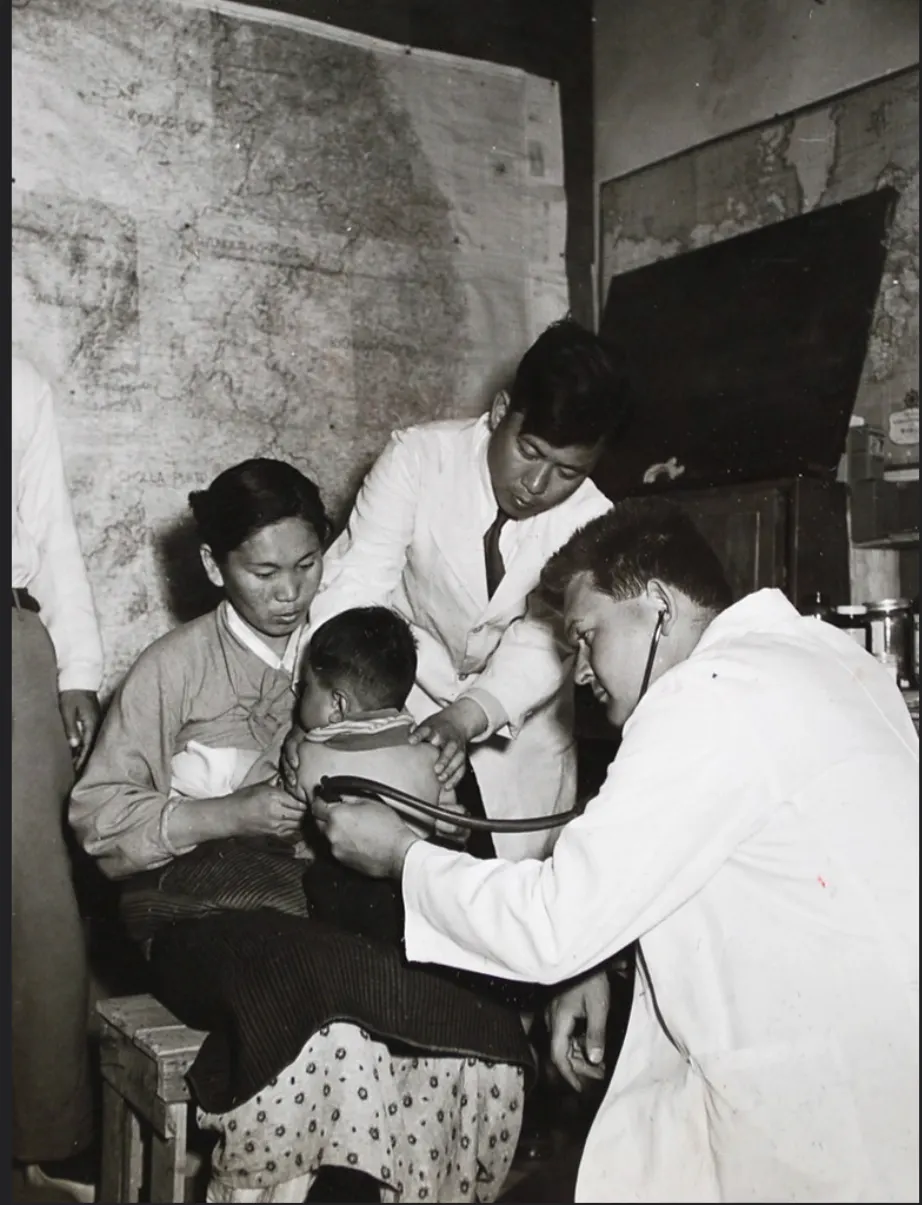
After liberation from Japan, Korea faced a severe shortage of modern medical professionals and a devastated health infrastructure, worsened by the Korean War. Korea’s rapid medical advancement in later decades was achieved largely through a human resource–centered approach rather than reliance on material aid. The Minnesota Project (1954–1961), led by the United States, rebuilt Seoul National University’s College of Medicine and trained faculty in advanced clinical and educational methods, laying the foundation for institutional reform. The China Medical Board Project (1963–1986) continued this momentum, promoting self-development and research capacity through matching funds and broader academic exchange. These initiatives fit within an innovation diffusion framework, as knowledge and practices spread nationwide. Korea’s experience highlights how investing in human capital and institutional learning can drive sustainable health system transformation.
K-Dev Original
August 26, 2026
Filtering by:
Tag
Operator
Value
Filter
Year
Clear
After 2008
1998-2008
1988-1997
1980-1987
1962-1979
1950-1961
1945-1950
Before 1945
Clear All
Thank you! Your submission has been received!
Oops! Something went wrong while submitting the form.
Filtering by:
Tag
Operator
Value
Health & Welfare
Building Human Resource Capacity for Health through Educational Innovation
K-Dev Original
August 26, 2026
1945-1950
1950-1961
1962-1979
Before 1945
Foreign Aid
Health & Welfare
Establishment of the Korea Medical Center
K-Dev Original
August 26, 2026
1950-1961
1962-1979
Health & Welfare
Korea's Development toward a Robust National Immunization System
K-Dev Original
August 26, 2026
1950-1961
1962-1979
1980-1987
1998-2008
Foreign Aid
Health & Welfare
International Medical and Social Assistance to Post-War Korea
K-Dev Original
August 26, 2026
1945-1950
1950-1961
There are no available cars matching the current filters.
Reset All


%20(1)%20(1).webp)

.png)
.png)