

Back to List
K-Dev Original

Korean Fiscal Policy and Stabilization Efforts

Author

Summary

At the turn of the 1980s, South Korea embarked on a fundamental reorientation of its economic policy, marking a decisive break from the past. The relentless "growth-first" strategy that had defined its rapid industrialization gave way to a new paradigm focused on consolidating growth on the basis of stability.

This shift also championed ‘private sector-led’ development over direct government intervention. We are going to analyze this critical transition, exploring the economic crisis that precipitated the change, the bold stabilization policies that were implemented, and how the success of these measures laid the fiscal foundation for a dramatic expansion of public services in the decades that followed.

Key Questions

  • What prompted the drastic economic policy shift at the turn of the 1980s, and how was price stability successfully achieved through fiscal means?
  • Despite successful fiscal consolidation, what fundamental difficulties hampered the effectiveness of monetary policy during the stabilization effort?
  • Following the restoration of fiscal balance, what were the primary drivers and consequences of the subsequent rapid expansion in government spending?

#stabilization #inflation #zero-based bugeting #government spending #monetary policy #ZBB

The Looming Crisis: Unraveling the Economic Imbalances of the 1970s

To fully grasp the magnitude of the policy shift in the 1980s, it is essential to first understand the severe economic pressures that had accumulated by the end of the 1970s. The blistering 9 percent average output growth during that decade, while impressive, had created a series of profound macroeconomic imbalances that threatened to derail the nation's progress. These challenges were not merely cyclical downturns but structural problems that served as the primary catalyst for sweeping reform.

The imbalances stemmed from several powerful forces acting in concert. The government's ambitious drive to develop Heavy and Chemical Industries (HCI), coupled with a construction boom in the Middle East, generated enormous excess demand. This was compounded by persistent fiscal deficits. The economy was then hit by the first and second global oil shocks, which further strained its resources and fueled inflationary pressures.

The consequences were severe and multifaceted. Inflation escalated rapidly, eroding purchasing power and creating economic uncertainty. Amid this high inflation, the government's delay in devaluing the Korean won led to its significant overvaluation. This, in turn, crippled the price competitiveness of the nation's exports, a critical engine of its growth.

The fallout was stark: in 1979, exports shrank for the first time since the early 1960s, and by 1980, the combination of a poor harvest and profound political instability following the assassination of President Park plunged the economy into negative growth. The crisis was undeniable, forcing the government to confront the unsustainability of its existing model and seek a new path forward.

A New Blueprint for Stability: The 1979 Comprehensive Economic Program

In response to the mounting crisis, the government formulated the Comprehensive Economic Stabilization Program, a landmark initiative that represented a pivotal moment in South Korean economic history. Announced in April 1979, the program was a formal acknowledgment of the deep-seated structural problems plaguing the economy and marked the first major attempt to fundamentally alter its course.

Developed through a collaboration between officials at the Economic Planning Board (EPB) and economists at the Korea Development Institute (KDI), the program was radical for its time. It directly challenged the core tenets of the prevailing development strategy by proposing to reduce export subsidies, moderate investments in the HCI sector, and scale back a popular rural housing improvement program. Even more revolutionary were its proposals to liberalize prices and interest rates, measures that were previously considered unthinkable.

The program's bold agenda met with fierce political resistance. Other government ministries staunchly opposed the reforms, and the president himself ordered the continuation of export subsidies. Despite this initial pushback, the underlying principles of the program took hold. The successor administration of Chun Doo-hwan formally adopted its core philosophy, introducing the new guiding slogans of "stability" and "private sector-led growth". These principles were not merely rhetorical; they were enshrined as the central pillars of the fifth Five-Year Plan (1982-1986), setting a new direction for the national economy. This new blueprint for stability would be implemented primarily through a disciplined and determined application of fiscal policy.

The Power of the Purse: How Fiscal Consolidation Tamed Inflation

The government's new economic strategy was anchored by a strategic decision to prioritize fiscal policy as the primary tool for stabilization. Rather than relying on monetary levers, which faced significant structural constraints, policymakers wielded the national budget with remarkable discipline to rein in inflation and restore macroeconomic balance. This focus on fiscal consolidation became the central pillar of the entire stabilization effort.

The government implemented a series of stringent and politically difficult measures. In 1981, it demonstrated its commitment by setting the government-paid price for rice at a modest 14 percent increase, rejecting calls from the opposition party for a 45.6 percent hike. In 1982, it introduced zero-based budgeting (ZBB), a rigorous process requiring every spending item to be justified from scratch, and even made cuts to the budget already in progress. This restraint culminated in the 1983 budget, where the central government's consolidated spending decreased by 2.7 percent in real terms.

The results of this fiscal austerity were both swift and dramatic. The economic transformation is evident in the government's balance sheet, which moved from a fiscal deficit of -4.3 percent of GDP in 1981 to a surplus of 0.2 percent by 1987. This consolidation, combined with stabilizing oil prices, broke the back of inflation; consumer prices, which had been rising at over 20 percent in 1981, fell to under 5 percent by 1983 and have remained in single digits since. Furthermore, this fiscal discipline caused central government debt to fall to a very low 8 percent of GDP by 1996, providing a critical buffer that enabled an aggressive response to the 1997 financial crisis.

However, this success was not achieved without cost. The consolidation policies contributed to a prolonged recession that began in 1980. The unemployment rate jumped from 3.8 percent in 1979 to 5.2 percent in 1980 and remained elevated for several years. While fiscal policy proved to be a powerful and effective tool for stabilization, the government's efforts on the monetary front encountered significant obstacles.

Navigating Monetary Headwinds: The Limits of Monetary Policy

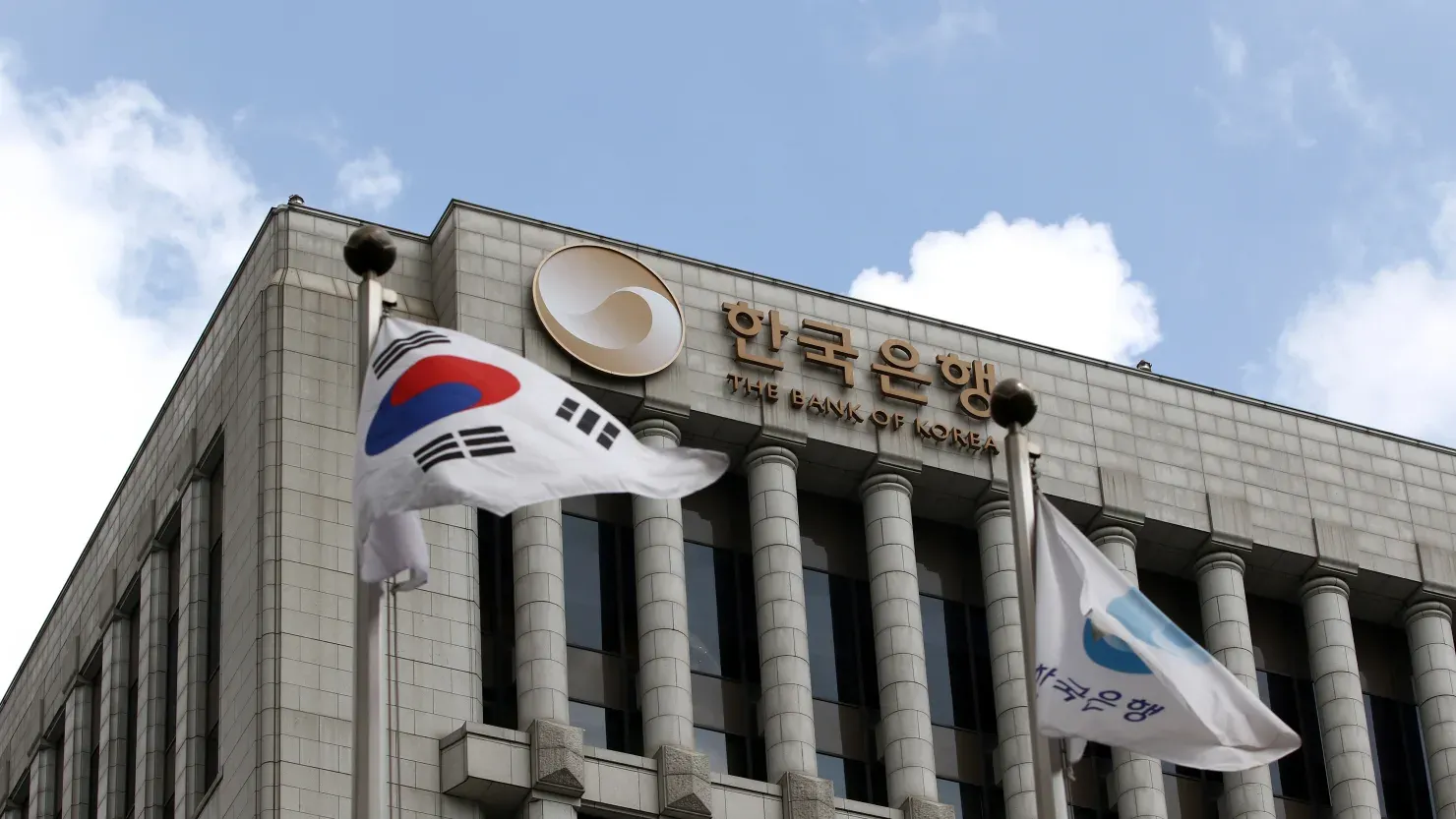
Despite the overarching goal of stabilization, monetary policy was unable to make a meaningful contribution to the effort. The Bank of Korea (BOK) was constrained by deep-seated structural issues that limited its ability to effectively control the money supply. These challenges reveal the complexities of a transitioning economy where legacy policy tools conflicted with new economic objectives.

The primary challenge was the continued existence of "directed credits," a system where the government channeled loans to specific industries. This practice forced the BOK to extend large volumes of credit to commercial banks, which in turn increased bank reserves. To counteract this inflationary pressure, the BOK had to sell massive quantities of Monetary Stabilization Bonds (MSBs) to "sterilize," or absorb, the excess liquidity.

A second major difficulty arose during the "three-low period" of 1986-1988, when low oil prices, low interest rates, and a low U.S. dollar value fueled a large current account surplus. To sustain exports and encourage business investment, the government delayed the revaluation of the won, which led to a surge in the BOK's net foreign assets (NFAs). This policy choice stood in contrast to competitors like Japan and Taiwan, which began revaluing their currencies in late 1985. The delay in Korea not only forced the central bank to issue even more MSBs to sterilize the influx of foreign currency, but it also carried significant long-term costs. Critically, it hampered efforts by businesses to enhance their competitiveness, retarded the restructuring of domestic industries, and encouraged destabilizing real estate speculation.

The consequences of these structural constraints were significant. The BOK consistently struggled to meet its goals, exceeding its annual money supply growth targets in 12 of the 18 years between 1979 and 1996. Furthermore, the massive stock of outstanding MSBs created a vicious cycle: the interest payments on these bonds added to the money supply and generated large financial losses for the central bank. These limitations on monetary policy underscore the critical role that fiscal consolidation played, and it was the stability achieved through fiscal discipline that ultimately cleared the way for a new phase of government activity.

A New Era of Public Spending: Expanding Services on a Stable Foundation

Once fiscal balance was restored in 1987, the South Korean government entered a new phase of development, shifting its priorities to meet growing public demand for social and economic services. Built upon the hard-won foundation of macroeconomic stability, this era was characterized by a rapid and sustained expansion of the state's role in improving the quality of life for its citizens. The growth in government expenditure was remarkable, with general government spending rising from 18 percent of GDP in 1987 to 30 percent by 2009.

This expansion was driven by targeted investments in key public functions, particularly social welfare. A major catalyst for this growth was the expansion of the National Health Insurance program, which, after a phased introduction, was extended to cover the entire population in 1989. This landmark achievement marked a significant step toward building a comprehensive social safety net and demonstrated a profound change in the social contract.

Simultaneously, the government leveraged its fiscal health to undertake a dual strategy of building national infrastructure and investing in human capital. Spending on economic affairs surged in the early 1990s, financing a wave of transformative projects like the West Coast Expressway, the Seoul-Busan High-speed Railroad, and the Incheon International Airport. These investments dramatically expanded the country's transport capacity and laid the groundwork for future economic dynamism. In parallel, the government addressed the national housing shortage, causing the housing supply ratio to jump from 72.4 percent to 96.2 percent between 1990 and 2000. Sustained investment in education supported a rise in school enrollment to near-100 percent for primary and secondary education, fostering one of the world's most educated workforces. In this new era, the government successfully leveraged its stable fiscal position to significantly expand its role as a provider of public goods and builder of essential economic infrastructure.

Conclusion

The trajectory of the South Korean economy from the late 1970s through the 1990s offers a powerful lesson in economic management. The nation navigated a severe macroeconomic crisis born from the excesses of its high-growth era by implementing a painful but ultimately successful program of fiscal consolidation. The discipline of the early 1980s tamed runaway inflation and placed public finances on a sustainable path.

This achievement was not an end in itself but a means to a greater one. The analysis reinforces a key insight: achieving fiscal stability was the necessary precondition for the subsequent expansion of South Korea's public welfare, housing, and infrastructure, transforming the nation and the lives of its citizens.

Author
Il SaKong
Korea Development Institute
cite this work

Korean Fiscal Policy and Stabilization Efforts

K-Dev Original
February 3, 2026
This is some text inside of a div block.

Summary

At the turn of the 1980s, South Korea embarked on a fundamental reorientation of its economic policy, marking a decisive break from the past. The relentless "growth-first" strategy that had defined its rapid industrialization gave way to a new paradigm focused on consolidating growth on the basis of stability.

This shift also championed ‘private sector-led’ development over direct government intervention. We are going to analyze this critical transition, exploring the economic crisis that precipitated the change, the bold stabilization policies that were implemented, and how the success of these measures laid the fiscal foundation for a dramatic expansion of public services in the decades that followed.

Key Questions

  • What prompted the drastic economic policy shift at the turn of the 1980s, and how was price stability successfully achieved through fiscal means?
  • Despite successful fiscal consolidation, what fundamental difficulties hampered the effectiveness of monetary policy during the stabilization effort?
  • Following the restoration of fiscal balance, what were the primary drivers and consequences of the subsequent rapid expansion in government spending?

#stabilization #inflation #zero-based bugeting #government spending #monetary policy #ZBB

The Looming Crisis: Unraveling the Economic Imbalances of the 1970s

To fully grasp the magnitude of the policy shift in the 1980s, it is essential to first understand the severe economic pressures that had accumulated by the end of the 1970s. The blistering 9 percent average output growth during that decade, while impressive, had created a series of profound macroeconomic imbalances that threatened to derail the nation's progress. These challenges were not merely cyclical downturns but structural problems that served as the primary catalyst for sweeping reform.

The imbalances stemmed from several powerful forces acting in concert. The government's ambitious drive to develop Heavy and Chemical Industries (HCI), coupled with a construction boom in the Middle East, generated enormous excess demand. This was compounded by persistent fiscal deficits. The economy was then hit by the first and second global oil shocks, which further strained its resources and fueled inflationary pressures.

The consequences were severe and multifaceted. Inflation escalated rapidly, eroding purchasing power and creating economic uncertainty. Amid this high inflation, the government's delay in devaluing the Korean won led to its significant overvaluation. This, in turn, crippled the price competitiveness of the nation's exports, a critical engine of its growth.

The fallout was stark: in 1979, exports shrank for the first time since the early 1960s, and by 1980, the combination of a poor harvest and profound political instability following the assassination of President Park plunged the economy into negative growth. The crisis was undeniable, forcing the government to confront the unsustainability of its existing model and seek a new path forward.

A New Blueprint for Stability: The 1979 Comprehensive Economic Program

In response to the mounting crisis, the government formulated the Comprehensive Economic Stabilization Program, a landmark initiative that represented a pivotal moment in South Korean economic history. Announced in April 1979, the program was a formal acknowledgment of the deep-seated structural problems plaguing the economy and marked the first major attempt to fundamentally alter its course.

Developed through a collaboration between officials at the Economic Planning Board (EPB) and economists at the Korea Development Institute (KDI), the program was radical for its time. It directly challenged the core tenets of the prevailing development strategy by proposing to reduce export subsidies, moderate investments in the HCI sector, and scale back a popular rural housing improvement program. Even more revolutionary were its proposals to liberalize prices and interest rates, measures that were previously considered unthinkable.

The program's bold agenda met with fierce political resistance. Other government ministries staunchly opposed the reforms, and the president himself ordered the continuation of export subsidies. Despite this initial pushback, the underlying principles of the program took hold. The successor administration of Chun Doo-hwan formally adopted its core philosophy, introducing the new guiding slogans of "stability" and "private sector-led growth". These principles were not merely rhetorical; they were enshrined as the central pillars of the fifth Five-Year Plan (1982-1986), setting a new direction for the national economy. This new blueprint for stability would be implemented primarily through a disciplined and determined application of fiscal policy.

The Power of the Purse: How Fiscal Consolidation Tamed Inflation

The government's new economic strategy was anchored by a strategic decision to prioritize fiscal policy as the primary tool for stabilization. Rather than relying on monetary levers, which faced significant structural constraints, policymakers wielded the national budget with remarkable discipline to rein in inflation and restore macroeconomic balance. This focus on fiscal consolidation became the central pillar of the entire stabilization effort.

The government implemented a series of stringent and politically difficult measures. In 1981, it demonstrated its commitment by setting the government-paid price for rice at a modest 14 percent increase, rejecting calls from the opposition party for a 45.6 percent hike. In 1982, it introduced zero-based budgeting (ZBB), a rigorous process requiring every spending item to be justified from scratch, and even made cuts to the budget already in progress. This restraint culminated in the 1983 budget, where the central government's consolidated spending decreased by 2.7 percent in real terms.

The results of this fiscal austerity were both swift and dramatic. The economic transformation is evident in the government's balance sheet, which moved from a fiscal deficit of -4.3 percent of GDP in 1981 to a surplus of 0.2 percent by 1987. This consolidation, combined with stabilizing oil prices, broke the back of inflation; consumer prices, which had been rising at over 20 percent in 1981, fell to under 5 percent by 1983 and have remained in single digits since. Furthermore, this fiscal discipline caused central government debt to fall to a very low 8 percent of GDP by 1996, providing a critical buffer that enabled an aggressive response to the 1997 financial crisis.

However, this success was not achieved without cost. The consolidation policies contributed to a prolonged recession that began in 1980. The unemployment rate jumped from 3.8 percent in 1979 to 5.2 percent in 1980 and remained elevated for several years. While fiscal policy proved to be a powerful and effective tool for stabilization, the government's efforts on the monetary front encountered significant obstacles.

Navigating Monetary Headwinds: The Limits of Monetary Policy

Despite the overarching goal of stabilization, monetary policy was unable to make a meaningful contribution to the effort. The Bank of Korea (BOK) was constrained by deep-seated structural issues that limited its ability to effectively control the money supply. These challenges reveal the complexities of a transitioning economy where legacy policy tools conflicted with new economic objectives.

The primary challenge was the continued existence of "directed credits," a system where the government channeled loans to specific industries. This practice forced the BOK to extend large volumes of credit to commercial banks, which in turn increased bank reserves. To counteract this inflationary pressure, the BOK had to sell massive quantities of Monetary Stabilization Bonds (MSBs) to "sterilize," or absorb, the excess liquidity.

A second major difficulty arose during the "three-low period" of 1986-1988, when low oil prices, low interest rates, and a low U.S. dollar value fueled a large current account surplus. To sustain exports and encourage business investment, the government delayed the revaluation of the won, which led to a surge in the BOK's net foreign assets (NFAs). This policy choice stood in contrast to competitors like Japan and Taiwan, which began revaluing their currencies in late 1985. The delay in Korea not only forced the central bank to issue even more MSBs to sterilize the influx of foreign currency, but it also carried significant long-term costs. Critically, it hampered efforts by businesses to enhance their competitiveness, retarded the restructuring of domestic industries, and encouraged destabilizing real estate speculation.

The consequences of these structural constraints were significant. The BOK consistently struggled to meet its goals, exceeding its annual money supply growth targets in 12 of the 18 years between 1979 and 1996. Furthermore, the massive stock of outstanding MSBs created a vicious cycle: the interest payments on these bonds added to the money supply and generated large financial losses for the central bank. These limitations on monetary policy underscore the critical role that fiscal consolidation played, and it was the stability achieved through fiscal discipline that ultimately cleared the way for a new phase of government activity.

A New Era of Public Spending: Expanding Services on a Stable Foundation

Once fiscal balance was restored in 1987, the South Korean government entered a new phase of development, shifting its priorities to meet growing public demand for social and economic services. Built upon the hard-won foundation of macroeconomic stability, this era was characterized by a rapid and sustained expansion of the state's role in improving the quality of life for its citizens. The growth in government expenditure was remarkable, with general government spending rising from 18 percent of GDP in 1987 to 30 percent by 2009.

This expansion was driven by targeted investments in key public functions, particularly social welfare. A major catalyst for this growth was the expansion of the National Health Insurance program, which, after a phased introduction, was extended to cover the entire population in 1989. This landmark achievement marked a significant step toward building a comprehensive social safety net and demonstrated a profound change in the social contract.

Simultaneously, the government leveraged its fiscal health to undertake a dual strategy of building national infrastructure and investing in human capital. Spending on economic affairs surged in the early 1990s, financing a wave of transformative projects like the West Coast Expressway, the Seoul-Busan High-speed Railroad, and the Incheon International Airport. These investments dramatically expanded the country's transport capacity and laid the groundwork for future economic dynamism. In parallel, the government addressed the national housing shortage, causing the housing supply ratio to jump from 72.4 percent to 96.2 percent between 1990 and 2000. Sustained investment in education supported a rise in school enrollment to near-100 percent for primary and secondary education, fostering one of the world's most educated workforces. In this new era, the government successfully leveraged its stable fiscal position to significantly expand its role as a provider of public goods and builder of essential economic infrastructure.

Conclusion

The trajectory of the South Korean economy from the late 1970s through the 1990s offers a powerful lesson in economic management. The nation navigated a severe macroeconomic crisis born from the excesses of its high-growth era by implementing a painful but ultimately successful program of fiscal consolidation. The discipline of the early 1980s tamed runaway inflation and placed public finances on a sustainable path.

This achievement was not an end in itself but a means to a greater one. The analysis reinforces a key insight: achieving fiscal stability was the necessary precondition for the subsequent expansion of South Korea's public welfare, housing, and infrastructure, transforming the nation and the lives of its citizens.

References
Cite this work
.

More to explore from
In Perspective

No items found.

Korean Fiscal Policy and Stabilization Efforts

K-Dev Original
February 3, 2026

I am the text that will be copied.

The Looming Crisis: Unraveling the Economic Imbalances of the 1970s

To fully grasp the magnitude of the policy shift in the 1980s, it is essential to first understand the severe economic pressures that had accumulated by the end of the 1970s. The blistering 9 percent average output growth during that decade, while impressive, had created a series of profound macroeconomic imbalances that threatened to derail the nation's progress. These challenges were not merely cyclical downturns but structural problems that served as the primary catalyst for sweeping reform.

The imbalances stemmed from several powerful forces acting in concert. The government's ambitious drive to develop Heavy and Chemical Industries (HCI), coupled with a construction boom in the Middle East, generated enormous excess demand. This was compounded by persistent fiscal deficits. The economy was then hit by the first and second global oil shocks, which further strained its resources and fueled inflationary pressures.

The consequences were severe and multifaceted. Inflation escalated rapidly, eroding purchasing power and creating economic uncertainty. Amid this high inflation, the government's delay in devaluing the Korean won led to its significant overvaluation. This, in turn, crippled the price competitiveness of the nation's exports, a critical engine of its growth.

The fallout was stark: in 1979, exports shrank for the first time since the early 1960s, and by 1980, the combination of a poor harvest and profound political instability following the assassination of President Park plunged the economy into negative growth. The crisis was undeniable, forcing the government to confront the unsustainability of its existing model and seek a new path forward.

A New Blueprint for Stability: The 1979 Comprehensive Economic Program

In response to the mounting crisis, the government formulated the Comprehensive Economic Stabilization Program, a landmark initiative that represented a pivotal moment in South Korean economic history. Announced in April 1979, the program was a formal acknowledgment of the deep-seated structural problems plaguing the economy and marked the first major attempt to fundamentally alter its course.

Developed through a collaboration between officials at the Economic Planning Board (EPB) and economists at the Korea Development Institute (KDI), the program was radical for its time. It directly challenged the core tenets of the prevailing development strategy by proposing to reduce export subsidies, moderate investments in the HCI sector, and scale back a popular rural housing improvement program. Even more revolutionary were its proposals to liberalize prices and interest rates, measures that were previously considered unthinkable.

The program's bold agenda met with fierce political resistance. Other government ministries staunchly opposed the reforms, and the president himself ordered the continuation of export subsidies. Despite this initial pushback, the underlying principles of the program took hold. The successor administration of Chun Doo-hwan formally adopted its core philosophy, introducing the new guiding slogans of "stability" and "private sector-led growth". These principles were not merely rhetorical; they were enshrined as the central pillars of the fifth Five-Year Plan (1982-1986), setting a new direction for the national economy. This new blueprint for stability would be implemented primarily through a disciplined and determined application of fiscal policy.

The Power of the Purse: How Fiscal Consolidation Tamed Inflation

The government's new economic strategy was anchored by a strategic decision to prioritize fiscal policy as the primary tool for stabilization. Rather than relying on monetary levers, which faced significant structural constraints, policymakers wielded the national budget with remarkable discipline to rein in inflation and restore macroeconomic balance. This focus on fiscal consolidation became the central pillar of the entire stabilization effort.

The government implemented a series of stringent and politically difficult measures. In 1981, it demonstrated its commitment by setting the government-paid price for rice at a modest 14 percent increase, rejecting calls from the opposition party for a 45.6 percent hike. In 1982, it introduced zero-based budgeting (ZBB), a rigorous process requiring every spending item to be justified from scratch, and even made cuts to the budget already in progress. This restraint culminated in the 1983 budget, where the central government's consolidated spending decreased by 2.7 percent in real terms.

The results of this fiscal austerity were both swift and dramatic. The economic transformation is evident in the government's balance sheet, which moved from a fiscal deficit of -4.3 percent of GDP in 1981 to a surplus of 0.2 percent by 1987. This consolidation, combined with stabilizing oil prices, broke the back of inflation; consumer prices, which had been rising at over 20 percent in 1981, fell to under 5 percent by 1983 and have remained in single digits since. Furthermore, this fiscal discipline caused central government debt to fall to a very low 8 percent of GDP by 1996, providing a critical buffer that enabled an aggressive response to the 1997 financial crisis.

However, this success was not achieved without cost. The consolidation policies contributed to a prolonged recession that began in 1980. The unemployment rate jumped from 3.8 percent in 1979 to 5.2 percent in 1980 and remained elevated for several years. While fiscal policy proved to be a powerful and effective tool for stabilization, the government's efforts on the monetary front encountered significant obstacles.

Navigating Monetary Headwinds: The Limits of Monetary Policy

Despite the overarching goal of stabilization, monetary policy was unable to make a meaningful contribution to the effort. The Bank of Korea (BOK) was constrained by deep-seated structural issues that limited its ability to effectively control the money supply. These challenges reveal the complexities of a transitioning economy where legacy policy tools conflicted with new economic objectives.

The primary challenge was the continued existence of "directed credits," a system where the government channeled loans to specific industries. This practice forced the BOK to extend large volumes of credit to commercial banks, which in turn increased bank reserves. To counteract this inflationary pressure, the BOK had to sell massive quantities of Monetary Stabilization Bonds (MSBs) to "sterilize," or absorb, the excess liquidity.

A second major difficulty arose during the "three-low period" of 1986-1988, when low oil prices, low interest rates, and a low U.S. dollar value fueled a large current account surplus. To sustain exports and encourage business investment, the government delayed the revaluation of the won, which led to a surge in the BOK's net foreign assets (NFAs). This policy choice stood in contrast to competitors like Japan and Taiwan, which began revaluing their currencies in late 1985. The delay in Korea not only forced the central bank to issue even more MSBs to sterilize the influx of foreign currency, but it also carried significant long-term costs. Critically, it hampered efforts by businesses to enhance their competitiveness, retarded the restructuring of domestic industries, and encouraged destabilizing real estate speculation.

The consequences of these structural constraints were significant. The BOK consistently struggled to meet its goals, exceeding its annual money supply growth targets in 12 of the 18 years between 1979 and 1996. Furthermore, the massive stock of outstanding MSBs created a vicious cycle: the interest payments on these bonds added to the money supply and generated large financial losses for the central bank. These limitations on monetary policy underscore the critical role that fiscal consolidation played, and it was the stability achieved through fiscal discipline that ultimately cleared the way for a new phase of government activity.

A New Era of Public Spending: Expanding Services on a Stable Foundation

Once fiscal balance was restored in 1987, the South Korean government entered a new phase of development, shifting its priorities to meet growing public demand for social and economic services. Built upon the hard-won foundation of macroeconomic stability, this era was characterized by a rapid and sustained expansion of the state's role in improving the quality of life for its citizens. The growth in government expenditure was remarkable, with general government spending rising from 18 percent of GDP in 1987 to 30 percent by 2009.

This expansion was driven by targeted investments in key public functions, particularly social welfare. A major catalyst for this growth was the expansion of the National Health Insurance program, which, after a phased introduction, was extended to cover the entire population in 1989. This landmark achievement marked a significant step toward building a comprehensive social safety net and demonstrated a profound change in the social contract.

Simultaneously, the government leveraged its fiscal health to undertake a dual strategy of building national infrastructure and investing in human capital. Spending on economic affairs surged in the early 1990s, financing a wave of transformative projects like the West Coast Expressway, the Seoul-Busan High-speed Railroad, and the Incheon International Airport. These investments dramatically expanded the country's transport capacity and laid the groundwork for future economic dynamism. In parallel, the government addressed the national housing shortage, causing the housing supply ratio to jump from 72.4 percent to 96.2 percent between 1990 and 2000. Sustained investment in education supported a rise in school enrollment to near-100 percent for primary and secondary education, fostering one of the world's most educated workforces. In this new era, the government successfully leveraged its stable fiscal position to significantly expand its role as a provider of public goods and builder of essential economic infrastructure.

Conclusion

The trajectory of the South Korean economy from the late 1970s through the 1990s offers a powerful lesson in economic management. The nation navigated a severe macroeconomic crisis born from the excesses of its high-growth era by implementing a painful but ultimately successful program of fiscal consolidation. The discipline of the early 1980s tamed runaway inflation and placed public finances on a sustainable path.

This achievement was not an end in itself but a means to a greater one. The analysis reinforces a key insight: achieving fiscal stability was the necessary precondition for the subsequent expansion of South Korea's public welfare, housing, and infrastructure, transforming the nation and the lives of its citizens.

References
Cite this work
.

More to explore from
In Perspective

No items found.