

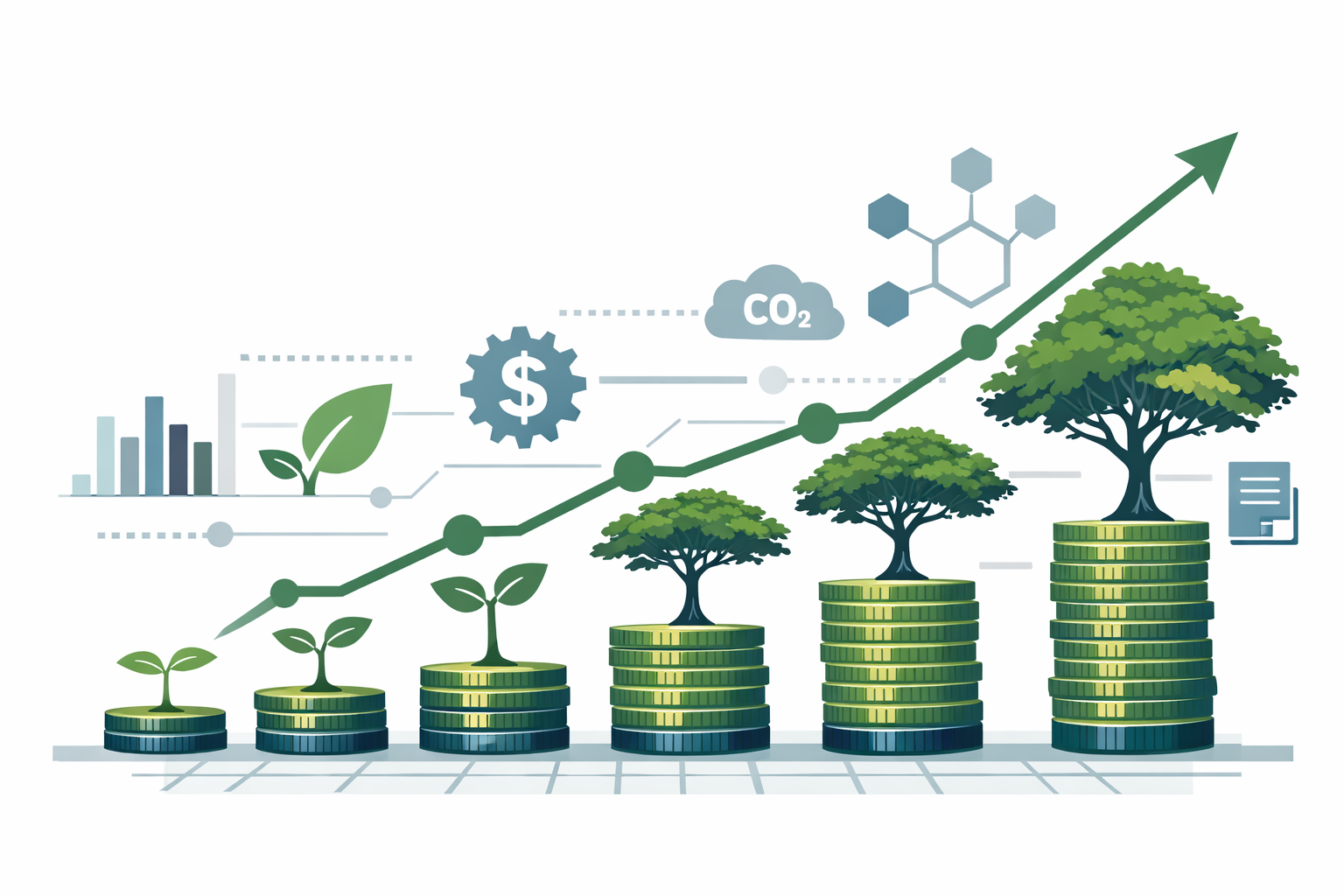
Korea’s green growth experience illustrates how economic growth and environmental protection can coexist through a balanced approach to sustainable development. The nation’s Five-Year Plan emphasized greenhouse gas reduction, fossil fuel independence, industrial greening, and lifestyle transformation, while lessons from its implementation highlight the need for early environmental integration, government–market role alignment, and international cooperation. Programs such as the Knowledge Sharing Program (KSP) demonstrate Korea’s commitment to helping developing nations adopt similar models, positioning the country as a global leader in pursuing inclusive and sustainable green growth.
#green growth #low carbon economy #environmental policy
South Korea's pivot to a green growth model represents a fundamental re-evaluation of its national development paradigm. For decades, the nation pursued rapid economic expansion, a strategy that yielded remarkable progress but came at a significant environmental cost. Recognizing that this trajectory was unsustainable, Korea embarked on a strategic shift to forge a virtuous cycle between its economy and the environment. Crucially, this was not an abrupt revolution but an evolution; the advancement of past policy efforts, combined with the new green growth paradigm, led to a more comprehensive national growth policy that sought not to halt growth, but to redefine it.
The adoption of the "Low Carbon, Green Growth" vision was driven by a convergence of internal reflection and external pressures. The rapid industrialization that began in the 1960s had led to severe environmental deterioration, a domestic reality that could no longer be ignored. Simultaneously, the global crises of climate change, global warming, and finite natural resources made it clear that the traditional fossil fuel-based growth model was obsolete. In a landmark 2008 address, this new national direction was solidified when President Lee Myung-bak proclaimed "Low Carbon, Green Growth" as the axis of a new vision designed to achieve sustainable growth while actively reducing greenhouse gas emissions and pollution.
To translate this vision into a coherent national policy, Korea swiftly established robust institutional and legal frameworks. In February 2009, the Presidential Committee on Green Growth (PCGG) was launched as the central deliberative body. This was given a permanent legal foundation with the enactment of the 'Framework Act on Low Carbon, Green Growth' in 2010, which gave the PCGG sweeping oversight of everything from national strategy and climate change response to basic energy plans and international cooperation. Complementing this structure were two key strategic documents: the ‘National Strategy for Green Growth’, a detailed mid-term action plan. This combination of a high-level vision, a strong legal basis, and concrete strategic plans created a powerful engine for national transformation. These foundational policies set the stage for a series of ambitious projects aimed at tangible environmental restoration and protection.
The tangible outcomes of Korea's green growth commitment are best illustrated through its successful environmental restoration projects. These case studies serve as powerful evidence that ecological renewal and industrial development are not mutually exclusive goals. They demonstrate a practical approach to reversing past environmental damage and embedding sustainability into the national landscape, providing valuable, real-world examples of policy in action.
Five major cases stand out as representative successes of this national effort:
These successful projects did not occur in isolation; rather, they were expressions of a comprehensive and systematic policy framework designed to guide Korea’s transition to a green economy.
The Five-Year Plan for Green Growth (2009-2013) served as the detailed, actionable roadmap that translated Korea’s high-level vision into specific policy directions. This mid-term plan was strategically crucial, establishing ten core policy pillars organized under three broad strategies: responding to climate change, fostering new growth engines, and improving quality of life. By setting clear tasks and performance indicators, the plan systematically integrated green principles across the entire Korean economy and society.
1. Greenhouse Gas Reduction
To effectively mitigate greenhouse gas emissions, the plan outlined four practical tasks.
2. Reduction of Fossil Fuel Use and Enhancement of Energy Independence
A central policy direction was the reduction of fossil fuel dependency and the enhancement of energy independence. The plan promoted the development of a high-efficiency, low-consumption community through flagship projects such as a national LED diffusion policy, support for energy service companies (ESCO), compulsory energy grade 1 certification for public organizations, and tax credits for investments in energy-saving facilities. These initiatives were designed to accelerate the transition toward clean energy sources and reduce the nation's overall energy footprint.
3. Greening of Manufacturing
The plan also addressed the greening of manufacturing through a dual approach. It aimed not only to foster entirely new green industries but also to pursue the greening of existing ones. This strategy recognized the importance of transforming Korea's industrial backbone into a low-carbon, high-value-added engine of growth. Representative success cases emerged from close cooperation between the government and the private sector to develop low-carbon technologies in key areas like secondary batteries, steel, and power generation.
4. Green Land and Transportation
Initiatives for green land and transportation focused on creating sustainable living environments through:
These efforts were complemented by national-scale projects such as the Four Major Rivers Restoration Project, linking environmental renewal with regional development.
5. Green Lifestyle
Finally, the plan emphasized the importance of embedding sustainability into daily life. This policy direction, termed the 'green revolution of life,' focused on the 'practice of the green movement in life.' It outlined practical challenges to be met through expanding green growth education, diffusing green lifestyle practices, activating green consumption, and developing eco-tourism, ensuring that the national vision was supported by widespread public participation. The implementation of these detailed policies has yielded a wealth of experience, offering critical lessons for the future.
South Korea's green growth journey, marked by both significant achievements and valuable learning opportunities, offers critical lessons for its own future policy development and for other nations embarking on a similar path. For developing countries, in particular, Korea's experience provides a practical framework for navigating the complex challenge of balancing economic progress with environmental stewardship. These insights serve as guiding principles for shaping a truly sustainable global future.
The foremost lesson is that green growth is a core strategy for achieving sustainable development, a framework where the three pillars of economy, environment, and social development must be held in careful balance. Policies must be designed to create synergies between these elements, ensuring that economic advancement does not come at the expense of environmental health or social equity.
Korea's experience shows the importance of integrating environmental considerations into development projects from their earliest planning stages. The initial degradation of sites like Lake Shihwa serves as a powerful reminder that indiscriminate development leads to costly environmental and social consequences. Future projects must prioritize environmental impact assessments and establish inclusive governance structures to ensure that development goals are achieved without causing environmental harm.
From an economic perspective, Korea's experience demonstrates that investing in green industries is a strategic imperative for growth, particularly for export-oriented developing nations. As developed nations have implemented various environmentally friendly policies and increased their imports of environmentally friendly products, the global market is shifting. For developing nations, investment in the green industry can therefore increase exports more than investment in traditional sectors, making a substantial contribution to economic growth.
The roles of the government and the private sector must also evolve. In the initial phases, strong government leadership is often necessary to establish legal foundations, direct investment, and build institutional capacity. However, as the economy matures, the government’s role should transition to supporting a dynamic, market-led economy driven by private sector innovation. For developing nations where investment resources are not sufficient, this transition requires external support. Developed nations need to actively support developing nations with foreign aid based on international cooperation or policies such as the support from the International Climate Fund.
Finally, the importance of international cooperation and knowledge sharing cannot be overstated. As a leader in this field, Korea has a unique opportunity to assist developing nations by sharing its experiences and lessons. Through platforms like the Knowledge Sharing Program (KSP), which from 2004 to 2012 implemented projects on 441 topics for 39 partner countries, Korea can provide invaluable guidance. By openly discussing both its successes and shortcomings, Korea can help partner countries plan and implement their own green growth policies more effectively, fostering a global community committed to a shared, sustainable prosperity.

Korea’s green growth experience illustrates how economic growth and environmental protection can coexist through a balanced approach to sustainable development. The nation’s Five-Year Plan emphasized greenhouse gas reduction, fossil fuel independence, industrial greening, and lifestyle transformation, while lessons from its implementation highlight the need for early environmental integration, government–market role alignment, and international cooperation. Programs such as the Knowledge Sharing Program (KSP) demonstrate Korea’s commitment to helping developing nations adopt similar models, positioning the country as a global leader in pursuing inclusive and sustainable green growth.
#green growth #low carbon economy #environmental policy
South Korea's pivot to a green growth model represents a fundamental re-evaluation of its national development paradigm. For decades, the nation pursued rapid economic expansion, a strategy that yielded remarkable progress but came at a significant environmental cost. Recognizing that this trajectory was unsustainable, Korea embarked on a strategic shift to forge a virtuous cycle between its economy and the environment. Crucially, this was not an abrupt revolution but an evolution; the advancement of past policy efforts, combined with the new green growth paradigm, led to a more comprehensive national growth policy that sought not to halt growth, but to redefine it.
The adoption of the "Low Carbon, Green Growth" vision was driven by a convergence of internal reflection and external pressures. The rapid industrialization that began in the 1960s had led to severe environmental deterioration, a domestic reality that could no longer be ignored. Simultaneously, the global crises of climate change, global warming, and finite natural resources made it clear that the traditional fossil fuel-based growth model was obsolete. In a landmark 2008 address, this new national direction was solidified when President Lee Myung-bak proclaimed "Low Carbon, Green Growth" as the axis of a new vision designed to achieve sustainable growth while actively reducing greenhouse gas emissions and pollution.
To translate this vision into a coherent national policy, Korea swiftly established robust institutional and legal frameworks. In February 2009, the Presidential Committee on Green Growth (PCGG) was launched as the central deliberative body. This was given a permanent legal foundation with the enactment of the 'Framework Act on Low Carbon, Green Growth' in 2010, which gave the PCGG sweeping oversight of everything from national strategy and climate change response to basic energy plans and international cooperation. Complementing this structure were two key strategic documents: the ‘National Strategy for Green Growth’, a detailed mid-term action plan. This combination of a high-level vision, a strong legal basis, and concrete strategic plans created a powerful engine for national transformation. These foundational policies set the stage for a series of ambitious projects aimed at tangible environmental restoration and protection.
The tangible outcomes of Korea's green growth commitment are best illustrated through its successful environmental restoration projects. These case studies serve as powerful evidence that ecological renewal and industrial development are not mutually exclusive goals. They demonstrate a practical approach to reversing past environmental damage and embedding sustainability into the national landscape, providing valuable, real-world examples of policy in action.
Five major cases stand out as representative successes of this national effort:
These successful projects did not occur in isolation; rather, they were expressions of a comprehensive and systematic policy framework designed to guide Korea’s transition to a green economy.
The Five-Year Plan for Green Growth (2009-2013) served as the detailed, actionable roadmap that translated Korea’s high-level vision into specific policy directions. This mid-term plan was strategically crucial, establishing ten core policy pillars organized under three broad strategies: responding to climate change, fostering new growth engines, and improving quality of life. By setting clear tasks and performance indicators, the plan systematically integrated green principles across the entire Korean economy and society.
1. Greenhouse Gas Reduction
To effectively mitigate greenhouse gas emissions, the plan outlined four practical tasks.
2. Reduction of Fossil Fuel Use and Enhancement of Energy Independence
A central policy direction was the reduction of fossil fuel dependency and the enhancement of energy independence. The plan promoted the development of a high-efficiency, low-consumption community through flagship projects such as a national LED diffusion policy, support for energy service companies (ESCO), compulsory energy grade 1 certification for public organizations, and tax credits for investments in energy-saving facilities. These initiatives were designed to accelerate the transition toward clean energy sources and reduce the nation's overall energy footprint.
3. Greening of Manufacturing
The plan also addressed the greening of manufacturing through a dual approach. It aimed not only to foster entirely new green industries but also to pursue the greening of existing ones. This strategy recognized the importance of transforming Korea's industrial backbone into a low-carbon, high-value-added engine of growth. Representative success cases emerged from close cooperation between the government and the private sector to develop low-carbon technologies in key areas like secondary batteries, steel, and power generation.
4. Green Land and Transportation
Initiatives for green land and transportation focused on creating sustainable living environments through:
These efforts were complemented by national-scale projects such as the Four Major Rivers Restoration Project, linking environmental renewal with regional development.
5. Green Lifestyle
Finally, the plan emphasized the importance of embedding sustainability into daily life. This policy direction, termed the 'green revolution of life,' focused on the 'practice of the green movement in life.' It outlined practical challenges to be met through expanding green growth education, diffusing green lifestyle practices, activating green consumption, and developing eco-tourism, ensuring that the national vision was supported by widespread public participation. The implementation of these detailed policies has yielded a wealth of experience, offering critical lessons for the future.
South Korea's green growth journey, marked by both significant achievements and valuable learning opportunities, offers critical lessons for its own future policy development and for other nations embarking on a similar path. For developing countries, in particular, Korea's experience provides a practical framework for navigating the complex challenge of balancing economic progress with environmental stewardship. These insights serve as guiding principles for shaping a truly sustainable global future.
The foremost lesson is that green growth is a core strategy for achieving sustainable development, a framework where the three pillars of economy, environment, and social development must be held in careful balance. Policies must be designed to create synergies between these elements, ensuring that economic advancement does not come at the expense of environmental health or social equity.
Korea's experience shows the importance of integrating environmental considerations into development projects from their earliest planning stages. The initial degradation of sites like Lake Shihwa serves as a powerful reminder that indiscriminate development leads to costly environmental and social consequences. Future projects must prioritize environmental impact assessments and establish inclusive governance structures to ensure that development goals are achieved without causing environmental harm.
From an economic perspective, Korea's experience demonstrates that investing in green industries is a strategic imperative for growth, particularly for export-oriented developing nations. As developed nations have implemented various environmentally friendly policies and increased their imports of environmentally friendly products, the global market is shifting. For developing nations, investment in the green industry can therefore increase exports more than investment in traditional sectors, making a substantial contribution to economic growth.
The roles of the government and the private sector must also evolve. In the initial phases, strong government leadership is often necessary to establish legal foundations, direct investment, and build institutional capacity. However, as the economy matures, the government’s role should transition to supporting a dynamic, market-led economy driven by private sector innovation. For developing nations where investment resources are not sufficient, this transition requires external support. Developed nations need to actively support developing nations with foreign aid based on international cooperation or policies such as the support from the International Climate Fund.
Finally, the importance of international cooperation and knowledge sharing cannot be overstated. As a leader in this field, Korea has a unique opportunity to assist developing nations by sharing its experiences and lessons. Through platforms like the Knowledge Sharing Program (KSP), which from 2004 to 2012 implemented projects on 441 topics for 39 partner countries, Korea can provide invaluable guidance. By openly discussing both its successes and shortcomings, Korea can help partner countries plan and implement their own green growth policies more effectively, fostering a global community committed to a shared, sustainable prosperity.

South Korea's pivot to a green growth model represents a fundamental re-evaluation of its national development paradigm. For decades, the nation pursued rapid economic expansion, a strategy that yielded remarkable progress but came at a significant environmental cost. Recognizing that this trajectory was unsustainable, Korea embarked on a strategic shift to forge a virtuous cycle between its economy and the environment. Crucially, this was not an abrupt revolution but an evolution; the advancement of past policy efforts, combined with the new green growth paradigm, led to a more comprehensive national growth policy that sought not to halt growth, but to redefine it.
The adoption of the "Low Carbon, Green Growth" vision was driven by a convergence of internal reflection and external pressures. The rapid industrialization that began in the 1960s had led to severe environmental deterioration, a domestic reality that could no longer be ignored. Simultaneously, the global crises of climate change, global warming, and finite natural resources made it clear that the traditional fossil fuel-based growth model was obsolete. In a landmark 2008 address, this new national direction was solidified when President Lee Myung-bak proclaimed "Low Carbon, Green Growth" as the axis of a new vision designed to achieve sustainable growth while actively reducing greenhouse gas emissions and pollution.
To translate this vision into a coherent national policy, Korea swiftly established robust institutional and legal frameworks. In February 2009, the Presidential Committee on Green Growth (PCGG) was launched as the central deliberative body. This was given a permanent legal foundation with the enactment of the 'Framework Act on Low Carbon, Green Growth' in 2010, which gave the PCGG sweeping oversight of everything from national strategy and climate change response to basic energy plans and international cooperation. Complementing this structure were two key strategic documents: the ‘National Strategy for Green Growth’, a detailed mid-term action plan. This combination of a high-level vision, a strong legal basis, and concrete strategic plans created a powerful engine for national transformation. These foundational policies set the stage for a series of ambitious projects aimed at tangible environmental restoration and protection.
The tangible outcomes of Korea's green growth commitment are best illustrated through its successful environmental restoration projects. These case studies serve as powerful evidence that ecological renewal and industrial development are not mutually exclusive goals. They demonstrate a practical approach to reversing past environmental damage and embedding sustainability into the national landscape, providing valuable, real-world examples of policy in action.
Five major cases stand out as representative successes of this national effort:
These successful projects did not occur in isolation; rather, they were expressions of a comprehensive and systematic policy framework designed to guide Korea’s transition to a green economy.
The Five-Year Plan for Green Growth (2009-2013) served as the detailed, actionable roadmap that translated Korea’s high-level vision into specific policy directions. This mid-term plan was strategically crucial, establishing ten core policy pillars organized under three broad strategies: responding to climate change, fostering new growth engines, and improving quality of life. By setting clear tasks and performance indicators, the plan systematically integrated green principles across the entire Korean economy and society.
1. Greenhouse Gas Reduction
To effectively mitigate greenhouse gas emissions, the plan outlined four practical tasks.
2. Reduction of Fossil Fuel Use and Enhancement of Energy Independence
A central policy direction was the reduction of fossil fuel dependency and the enhancement of energy independence. The plan promoted the development of a high-efficiency, low-consumption community through flagship projects such as a national LED diffusion policy, support for energy service companies (ESCO), compulsory energy grade 1 certification for public organizations, and tax credits for investments in energy-saving facilities. These initiatives were designed to accelerate the transition toward clean energy sources and reduce the nation's overall energy footprint.
3. Greening of Manufacturing
The plan also addressed the greening of manufacturing through a dual approach. It aimed not only to foster entirely new green industries but also to pursue the greening of existing ones. This strategy recognized the importance of transforming Korea's industrial backbone into a low-carbon, high-value-added engine of growth. Representative success cases emerged from close cooperation between the government and the private sector to develop low-carbon technologies in key areas like secondary batteries, steel, and power generation.
4. Green Land and Transportation
Initiatives for green land and transportation focused on creating sustainable living environments through:
These efforts were complemented by national-scale projects such as the Four Major Rivers Restoration Project, linking environmental renewal with regional development.
5. Green Lifestyle
Finally, the plan emphasized the importance of embedding sustainability into daily life. This policy direction, termed the 'green revolution of life,' focused on the 'practice of the green movement in life.' It outlined practical challenges to be met through expanding green growth education, diffusing green lifestyle practices, activating green consumption, and developing eco-tourism, ensuring that the national vision was supported by widespread public participation. The implementation of these detailed policies has yielded a wealth of experience, offering critical lessons for the future.
South Korea's green growth journey, marked by both significant achievements and valuable learning opportunities, offers critical lessons for its own future policy development and for other nations embarking on a similar path. For developing countries, in particular, Korea's experience provides a practical framework for navigating the complex challenge of balancing economic progress with environmental stewardship. These insights serve as guiding principles for shaping a truly sustainable global future.
The foremost lesson is that green growth is a core strategy for achieving sustainable development, a framework where the three pillars of economy, environment, and social development must be held in careful balance. Policies must be designed to create synergies between these elements, ensuring that economic advancement does not come at the expense of environmental health or social equity.
Korea's experience shows the importance of integrating environmental considerations into development projects from their earliest planning stages. The initial degradation of sites like Lake Shihwa serves as a powerful reminder that indiscriminate development leads to costly environmental and social consequences. Future projects must prioritize environmental impact assessments and establish inclusive governance structures to ensure that development goals are achieved without causing environmental harm.
From an economic perspective, Korea's experience demonstrates that investing in green industries is a strategic imperative for growth, particularly for export-oriented developing nations. As developed nations have implemented various environmentally friendly policies and increased their imports of environmentally friendly products, the global market is shifting. For developing nations, investment in the green industry can therefore increase exports more than investment in traditional sectors, making a substantial contribution to economic growth.
The roles of the government and the private sector must also evolve. In the initial phases, strong government leadership is often necessary to establish legal foundations, direct investment, and build institutional capacity. However, as the economy matures, the government’s role should transition to supporting a dynamic, market-led economy driven by private sector innovation. For developing nations where investment resources are not sufficient, this transition requires external support. Developed nations need to actively support developing nations with foreign aid based on international cooperation or policies such as the support from the International Climate Fund.
Finally, the importance of international cooperation and knowledge sharing cannot be overstated. As a leader in this field, Korea has a unique opportunity to assist developing nations by sharing its experiences and lessons. Through platforms like the Knowledge Sharing Program (KSP), which from 2004 to 2012 implemented projects on 441 topics for 39 partner countries, Korea can provide invaluable guidance. By openly discussing both its successes and shortcomings, Korea can help partner countries plan and implement their own green growth policies more effectively, fostering a global community committed to a shared, sustainable prosperity.