

Back to List
K-Dev Original

Korea’s Reforestation Story: From Bare Mountains to a Greener Korea

Summary

Korea’s Forest Reclamation was a joint achievement of strategic government policy and active public participation. Systematic planning and strong leadership were matched by the people’s cooperative spirit and voluntary efforts, enabling large-scale tree planting despite harsh terrain. This collaborative model is now shared with developing countries through Korea’s Forest ODA.

Key Questions

  • What made Korea’s reforestation policy work?
  • How did public contribute to successful forest reclamation?
  • What lessons can Korea’s reforestation offer to the world?

#development #environment restoration #reforestation

While global deforestation continues to claim millions of hectares annually, South Korea offers a powerful counter-narrative. According to a UN FAO report (2015), Korea was one of the poorest countries in the world in the 1950s, with chronic forest devastation. However, the country achieved something remarkable: simultaneous economic development and forest restoration, a unique case worldwide that provides crucial lessons for developing countries pursuing green growth today. Before exploring Korea’s successful reforestation story, it is essential to trace how deforestation accumulated over time.

How Korea’s forests became bare mountains

During the Chosun Dynasty (1392-1910), forests belonged to the government but were open to the public for fuelwood and timber. Without systematic protection and facing population growth, degradation accelerated. The Japanese colonial era (1910-1945) made things worse through resource exploitation, with more frequent droughts and floods.

After liberation (1945–1950), many Koreans returned from abroad, driving a rapid population surge. Although forests still covered 6.81 million hectares (68% of the land area), illegal logging practices spread widely. This pressure intensified after the Korean War, as social disorder and post-war reconstruction increased demand for timber. By the late 1950s, 58% of Korea’s forests had become bare mountains, and areas requiring urgent erosion control reached 0.68 million hectares. This environmental crisis severely affected agriculture, which accounted for over 45% of total GDP.

From the 1960s onward, the government launched a nationwide forest reclamation policy. Through systematic planning and active public participation, Korea restored its bare mountains over roughly half a century. This experience later supported the expansion of Korea’s reforestation model beyond its borders.

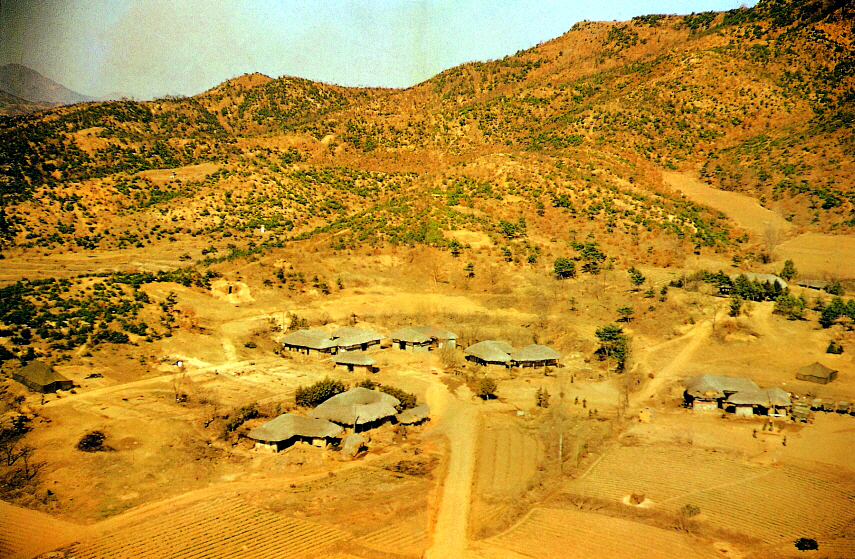
Bare Mountains at Northern Area of Seoul in Early 1960s.

In early 1960 of Seoul, mountains with only clumsy young pine trees sparsely scattered and a few sleepy thatched houses at the foot of the mountain. It’s a picture of north Gyeonggi Province at the beginning of the 1960s
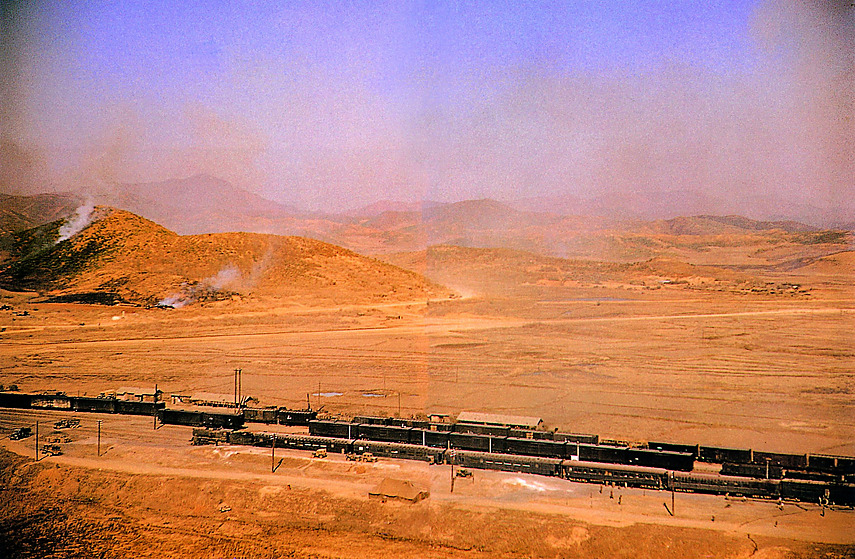
Bare Hills at Munsan Station in 1960

A sight in the vicinity of Munsan Station, Gyeonggi Province at the beginning of the 1960s. At that time, this kind of bare landscape was seen anywhere in Korea.

The Blueprint for Greening: Government Leadership and Policy

Korea's transformation began with decisive government action. The Park Chung Hee regime (1961-1979) established various laws related to the forest reclamation which had not been enacted by the previous regime. The government built its reforestation strategy on three foundations: strong laws, expanded administrative capacity, and long-term comprehensive planning.

First came the legal framework. The Forest Law (1961) institutionalized village-level participation through Village Forestry Cooperatives (산림계), while the Erosion Control Act (1962) empowered government intervention in land management. These laws created the institutional backbone for nationwide mobilization. Second, the government expanded administrative capacity. The Forest Bureau was reorganized as the Korea Forest Service (KFS) in 1967, and in 1973, it was transferred to the Ministry of Home Affairs to strengthen coordination with local governments and integrate with the Saemaul Movement. Third and most critically, the KFS developed comprehensive long-term plans that treated reforestation not as isolated tree-planting but as integrated national development.

In 1973, the KFS introduced a comprehensive long-term nationwide forest rehabilitation plan. It combined reforestation with erosion control, forest protection, and practical resource needs such as fuel and timber supply.

1) The First Ten-Year Forest Rehabilitation Plan (1973-1982)

The project included reforestation of 1 million ha using 2.1 billion trees in 10 years,  tending care of 3.8 million hectare (ha) and erosion control work on 84,000 ha. The three basic directions of the plan were as follows:

  • National Tree Planting:  Every citizen plants trees year-round with the spirit of the Saemaul Movement through villages, working places, homes, organizations, institutions and schools.
  • Economic Planting:  The tree planting and preservation of the forest are to be directly linked to the increase in nation’s income, while a new economic zone is to be established in the mountain area.
  • Fast Tree Planting: The 6.67 million ha of mountains are to be completely covered with trees resulting in green revolution. In order to complete the forest reclamation early, many fast-growing trees are to be planted.

Mobilizing Public Spirit: Visual campaigns for national tree planting

Government promotional materials encouraged citizens to plant trees as part of their civic participation in the Saemaul Movement. Source: Forest magazines (n.d.)

Tree species selection evolved strategically over time. In the early phase of reforestation, fast-growing trees dominated planting efforts to quickly achieve green coverage on bare mountains. However, as the initial greening goals were met, the focus shifted toward timber trees for long-term economic value.

The plan also required loggers and timber-consuming companies to plant trees, while each village was to establish fuelwood forests for local fuel supply. Additionally, erosion control projects prioritized the recovery of severely degraded areas, and a planted-tree inspection system was introduced to assess survival rates in autumn for trees planted in spring. The village fuelwood forest strategy proved highly effective. As the chart below shows, fuelwood plantation area expanded rapidly from around 10,000 hectares in early 1973 to over 75,000 hectares by 1977, helping reduce pressure on natural forests while meeting rural fuel needs.

These coordinated strategies produced remarkable results. The results of the First Ten-Year Forest Rehabilitation Plan exceeded expectations dramatically. Originally designed for completion in 1982, the plan's goals were achieved by 1978, just six years into the ten-year timeline. As shown in the table below, total reforestation reached 108% of the target, with 1.08 million hectares planted using 2.96 billion trees against the planned 1 million hectares and 2.13 billion trees. Stock raising achieved 143% of target, and tending care reached 110%.

Breaking down reforestation by tree type reveals the strategic priorities. Timber trees vastly exceeded their target ****(183%), reflecting the government's emphasis on building long-term economic forests. Fast-growing trees also surpassed goals (120%), ensuring rapid coverage of bare mountains. Fuelwood forests met their target (101%), securing local fuel supply for rural villages.

2) The Second Ten-Year Forest Rehabilitation Plan (1979-1988)

The KFS established the second ten-year plan in 1979, and adjusted it twice. The revised plan aimed to plant 2 billion trees across 1 million ha and to conduct tending care for 150,000 ha of natural forests. Beyond planting, it focused on completing greening of un-stocked areas and urgent erosion-control sites, building large-scale commercial forest complexes, and developing and planting native woody species. The plan also addressed longer-term management priorities such as land-use planning, development of forestry technology, timely supply and export of forest products, and the promotion of forests’ public benefits.

3) The Third, Fourth and Fifth Forest Basic Planning (1988-2017)

Because the goals of the second plan were achieved within nine years, the KFS shifted its framework to Forest Basic Planning in 1988. The Third Plan (1988–1997) set a planting target of 320,000 ha in 10 years and emphasized large-scale commercial forests, while also promoting income sources for mountain villages, public health, environmental functions of forests, and biodiversity conservation.

The Fourth Forest Basic Planning (1998–2007) highlighted job creation through forest tending care, and expanded large-scale public labor projects during the IMF financial crisis starting in 1998, including planting 200,000 ha, thinning 730,000 ha, and tending care of 930,000 ha over ten years.

The Fifth Forest Basic Planning (2008–2017) set a planting target of 240,000 ha in 10 years and continued efforts to establish commercial forest complexes, aiming to increase domestic wood supply and improve forest ecosystem health and amenity green spaces.

How did Public Participation Contribute to Korea’s Reforestation Success?

The success of Korea’s reforestation cannot be understood without recognizing the pivotal role of its citizens. The core lesson from this national effort is that in the forest reclamation process, people’s cooperative spirit and voluntary participation were as important as the role played by the government. Transforming steep, inaccessible mountainsides required a level of mobilization that top-down directives alone could never achieve. The government’s policies succeeded because they effectively tapped into and organized this collective public will.A cornerstone of this public-private partnership was the nation-wide Forestry Cooperative. Rooted in traditional Korean cooperative spirits like "Durae" (collective labor), this organization was formalized under the Forest Law. Its structure was hierarchical, with the Village Forestry Cooperative serving as the end-point organization responsible for implementation. These village-level bodies were given direct responsibility for protecting local forests, preventing illegal logging, fighting fires, and undertaking reforestation projects, most notably the establishment of local fuelwood forests to meet community energy needs.This cooperative structure was powerfully amplified by the Saemaul Movement, a nationwide initiative to modernize rural Korea based on the principles of diligence, self-reliance, and cooperation**.** The movement directly supported reforestation through village improvement projects like Saemaul afforestation and erosion control. Its impact was immense; between 1973 and 1978, Saemaul afforestation projects accounted for a remarkable 43% of all national afforestation, and between 1973 and 1975, Saemaul projects constituted 70.7% of all national erosion control work. Critically, the movement also drove income-boosting projects that gave farmers a direct financial stake in the greening of their nation. As one analysis notes, “Saemaul Movement improved village income, reduced fuel wood dependence, and significantly contributed to reforestation.”The Saemaul Nursery Project was a particularly effective model for incentivizing public participation. The government provided initial funds for villages to establish tree nurseries and guaranteed the purchase of all seedlings produced. Profits were split, with half paid as wages to cooperative members and half contributed to a village fund, which in turn led to the creation of the Community Credit Cooperative (CCC). This program was a resounding success, accounting for 34.8% of the 2.7 billion seedlings produced nationally during the first Ten-Year Plan.As Korea's economy grew and educational levels rose, the private sector and non-governmental organizations like the Forest for Life National Movement began to play an increasingly important role, promoting forest conservation, public education, and a broader culture of environmental stewardship. This powerful combination of government strategy and mobilized public spirit translated directly into the tangible, on-the-ground projects that transformed the Korean landscape.
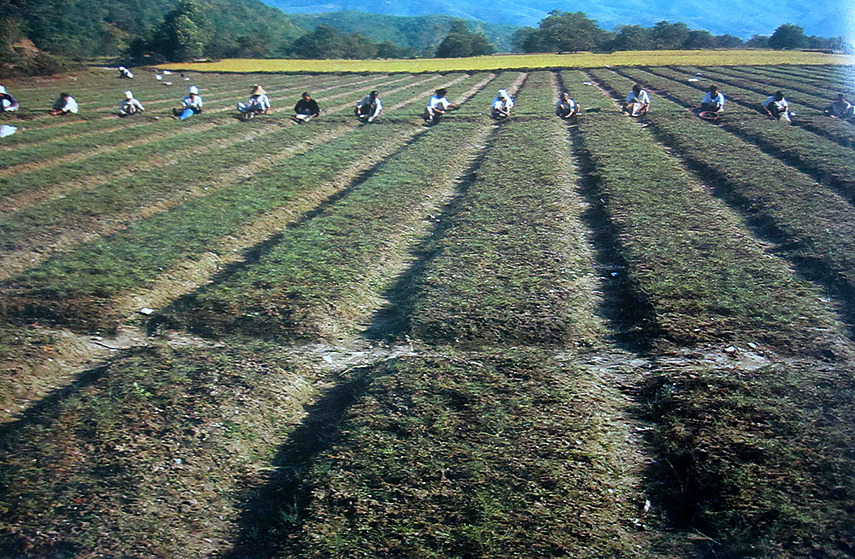
Saemaul Tree Nurseries at Buyeo-Gun

New Village Movement nurseries generated income to the participating farmers and the part of the income was donated to the village to start a village microcredit. Source: Korea Forest Service (1974)

What did Korea’s Forest Reforestation Accomplish?

The synergy between government governance and public participation translated into a series of highly successful, large-scale projects that methodically rebuilt the nation's ecological foundation. These initiatives directly tackled the core challenges of barren land, soil erosion, chronic fuel shortages, and destructive farming practices, achieving tangible results that laid the groundwork for a green future.The Reforestation Project (1961~1987) was the centerpiece of the national effort. During the first two Ten-Year Plans (1973-1988), an intensive planting campaign saw a total of 4.8 billion trees planted across 2.04 million hectares. The effort was particularly intense during the First Plan, which saw 2.9 billion trees planted on 1.08 million hectares, followed by another 1.9 billion trees on 960,000 hectares during the Second Plan. This massive undertaking covered 31% of the country's total forest area and, by its conclusion, had successfully greened every bare mountain in the nation.Running in parallel was the critical Erosion Control Project (1961~1987), a model of long-term policy and public-private partnership, and support from international cooperation. The Park Chung Hee administration enacted the Erosion Control Act (1962), which enabled the government to designate erosion-control lands and clarify rules on costs, penalties, facility management, and profit handling. Building on research, Korea also developed mid-slope erosion-control techniques suited to its terrain. The government advanced recovery through the Seven-Year Forest Conservation Plan (1965–1971) and watershed-based planning, including the General Forest Recovery Plan for Each Watershed (six major watersheds, 1967). By 1972, about 83% of barren land had been recovered. During the first and second Ten-Year Plans, the focus shifted from quantity to quality and annual region-by-region completion, and by 1988, Korea succeeded in greening the remaining barren areas. Village Forestry Cooperatives provided daily labor based on traditional cooperative practices, while international institutions contributed cooperation and support.
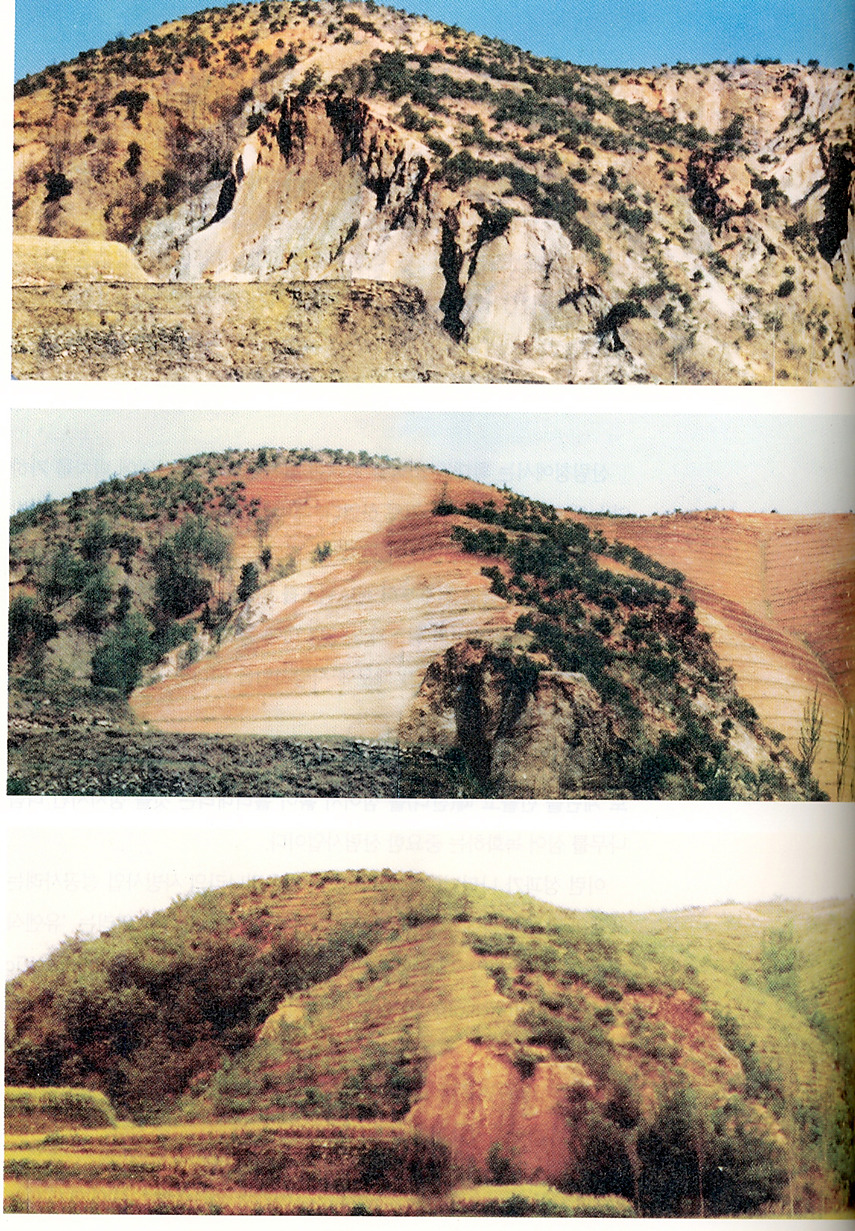
Annual Effects of Erosion Control Works at Ulju-Gun

Above pictures shows gradual restoration after special erosion control at Uljugun in 1972 to protect the Ulsan industrial complex. Source: Korea Forest Service (n.d.)

The government recognized that reforestation could not succeed until the rural fuel crisis was solved. The Fuelwood Forest Establishment Project (1951–1977) mobilized Village Forestry Cooperatives to establish local fuelwood forests under the Forest Law, a practical strategy in a country where over 70% of forests were privately owned. Participation was secured through seedling support and incentives such as PL480 aid grain, and later reinforced by Saemaul-era furnace improvements that reportedly cut fuelwood use by about 30%. As coal replaced fuelwood in the late 1970s, forest management could pivot toward broader rehabilitation goals.

To address another historical source of deforestation, the government implemented the Slash-and-Burn Farming Regulation Project (1966-1978). This five-year plan successfully resettled the 300,000 households engaged in the practice, a figure representing 6% of the national population and 12% of all farmers at the time, by providing fair resettlement support and resolving a 700-year-old problem.
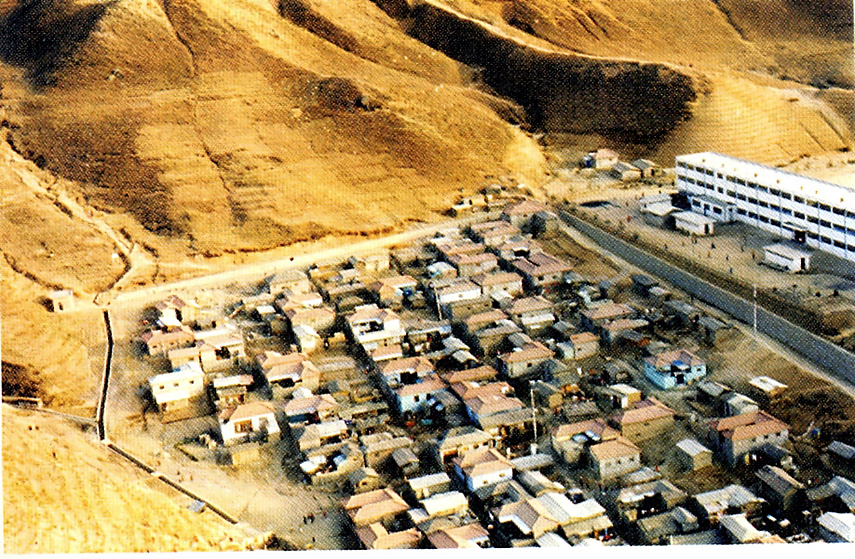
Settlements of Slash-And-Burn Farmers And Miners

Scene of a settlement for slash-and-burn farmers. Though it was a desolate place without a tree in a nearby mountain, a school was first built to give education to their children. Source: Korea Forest Service (1974)

To ensure the quality of these massive undertakings, the government instituted a rigorous, three-tiered Planted-Tree Inspection System (1973~1987). This governance tool enforced accountability through self-examinations, cross-inspections by officials from other regions to ensure fairness, and a final national-level inspection. The system was highly effective, dramatically increasing the survival rate of planted trees from less than 70% in earlier years to an impressive 93.3% by 1986.

A Global Model: Lessons from the Korean Experience

Korea's journey from a barren, war-torn nation to a green country is more than a national triumph; it is a globally relevant case study in development policy. It offers universal lessons on the power of determined governance, deep community engagement, and the strategic pursuit of sustainable growth. The success was the result of a harmonious alignment of political leadership, effective administration, citizen mobilization through the Saemaul Movement, powerful economic incentives, technological development, and the provision of alternative fuel sources.

From this experience, several core lessons emerge for other developing countries. The Korean model demonstrates the profound importance of public-private partnerships, confirms the strong correlation between rising national income and successful forest reclamation, and highlights the critical role of changing the mental attitude of the people. This process was aided in its early stages by crucial support from international organizations like the United Nations Korean Reconstruction Agency (UNKRA), AID, International Cooperation Agency (ICA), United Nations Special Fund (UNSF), USOM, and UNDP, which helped build a foundation for recovery. These lessons can be framed as actionable recommendations, such as establishing locally-customized forest policies, reinforcing the roles of research and training centers, and directly linking reforestation projects with income generation to secure community buy-in.

South Korea has now come full circle, evolving from an aid recipient to a donor through organizations like the Korea International Cooperation Agency (KOICA). Its story proves that environmental restoration is not a peripheral concern but can be a central pillar of economic development, social cohesion, and national identity. Ultimately, the Korean miracle serves as a living blueprint for the 21st century, demonstrating that with strategic vision and collective will, a nation can regrow not only its forests but its future.

Further Readings

Author
Kyung Joon Lee
seoul national university
Yeo-Chang Yoon
seoul national university
cite this work

Korea’s Reforestation Story: From Bare Mountains to a Greener Korea

K-Dev Original
February 1, 2026
This is some text inside of a div block.

Summary

Korea’s Forest Reclamation was a joint achievement of strategic government policy and active public participation. Systematic planning and strong leadership were matched by the people’s cooperative spirit and voluntary efforts, enabling large-scale tree planting despite harsh terrain. This collaborative model is now shared with developing countries through Korea’s Forest ODA.

Key Questions

  • What made Korea’s reforestation policy work?
  • How did public contribute to successful forest reclamation?
  • What lessons can Korea’s reforestation offer to the world?

#development #environment restoration #reforestation

While global deforestation continues to claim millions of hectares annually, South Korea offers a powerful counter-narrative. According to a UN FAO report (2015), Korea was one of the poorest countries in the world in the 1950s, with chronic forest devastation. However, the country achieved something remarkable: simultaneous economic development and forest restoration, a unique case worldwide that provides crucial lessons for developing countries pursuing green growth today. Before exploring Korea’s successful reforestation story, it is essential to trace how deforestation accumulated over time.

How Korea’s forests became bare mountains

During the Chosun Dynasty (1392-1910), forests belonged to the government but were open to the public for fuelwood and timber. Without systematic protection and facing population growth, degradation accelerated. The Japanese colonial era (1910-1945) made things worse through resource exploitation, with more frequent droughts and floods.

After liberation (1945–1950), many Koreans returned from abroad, driving a rapid population surge. Although forests still covered 6.81 million hectares (68% of the land area), illegal logging practices spread widely. This pressure intensified after the Korean War, as social disorder and post-war reconstruction increased demand for timber. By the late 1950s, 58% of Korea’s forests had become bare mountains, and areas requiring urgent erosion control reached 0.68 million hectares. This environmental crisis severely affected agriculture, which accounted for over 45% of total GDP.

From the 1960s onward, the government launched a nationwide forest reclamation policy. Through systematic planning and active public participation, Korea restored its bare mountains over roughly half a century. This experience later supported the expansion of Korea’s reforestation model beyond its borders.

Bare Mountains at Northern Area of Seoul in Early 1960s.

In early 1960 of Seoul, mountains with only clumsy young pine trees sparsely scattered and a few sleepy thatched houses at the foot of the mountain. It’s a picture of north Gyeonggi Province at the beginning of the 1960s

Bare Hills at Munsan Station in 1960

A sight in the vicinity of Munsan Station, Gyeonggi Province at the beginning of the 1960s. At that time, this kind of bare landscape was seen anywhere in Korea.

The Blueprint for Greening: Government Leadership and Policy

Korea's transformation began with decisive government action. The Park Chung Hee regime (1961-1979) established various laws related to the forest reclamation which had not been enacted by the previous regime. The government built its reforestation strategy on three foundations: strong laws, expanded administrative capacity, and long-term comprehensive planning.

First came the legal framework. The Forest Law (1961) institutionalized village-level participation through Village Forestry Cooperatives (산림계), while the Erosion Control Act (1962) empowered government intervention in land management. These laws created the institutional backbone for nationwide mobilization. Second, the government expanded administrative capacity. The Forest Bureau was reorganized as the Korea Forest Service (KFS) in 1967, and in 1973, it was transferred to the Ministry of Home Affairs to strengthen coordination with local governments and integrate with the Saemaul Movement. Third and most critically, the KFS developed comprehensive long-term plans that treated reforestation not as isolated tree-planting but as integrated national development.

In 1973, the KFS introduced a comprehensive long-term nationwide forest rehabilitation plan. It combined reforestation with erosion control, forest protection, and practical resource needs such as fuel and timber supply.

1) The First Ten-Year Forest Rehabilitation Plan (1973-1982)

The project included reforestation of 1 million ha using 2.1 billion trees in 10 years,  tending care of 3.8 million hectare (ha) and erosion control work on 84,000 ha. The three basic directions of the plan were as follows:

  • National Tree Planting:  Every citizen plants trees year-round with the spirit of the Saemaul Movement through villages, working places, homes, organizations, institutions and schools.
  • Economic Planting:  The tree planting and preservation of the forest are to be directly linked to the increase in nation’s income, while a new economic zone is to be established in the mountain area.
  • Fast Tree Planting: The 6.67 million ha of mountains are to be completely covered with trees resulting in green revolution. In order to complete the forest reclamation early, many fast-growing trees are to be planted.

Mobilizing Public Spirit: Visual campaigns for national tree planting

Government promotional materials encouraged citizens to plant trees as part of their civic participation in the Saemaul Movement. Source: Forest magazines (n.d.)

Tree species selection evolved strategically over time. In the early phase of reforestation, fast-growing trees dominated planting efforts to quickly achieve green coverage on bare mountains. However, as the initial greening goals were met, the focus shifted toward timber trees for long-term economic value.

The plan also required loggers and timber-consuming companies to plant trees, while each village was to establish fuelwood forests for local fuel supply. Additionally, erosion control projects prioritized the recovery of severely degraded areas, and a planted-tree inspection system was introduced to assess survival rates in autumn for trees planted in spring. The village fuelwood forest strategy proved highly effective. As the chart below shows, fuelwood plantation area expanded rapidly from around 10,000 hectares in early 1973 to over 75,000 hectares by 1977, helping reduce pressure on natural forests while meeting rural fuel needs.

These coordinated strategies produced remarkable results. The results of the First Ten-Year Forest Rehabilitation Plan exceeded expectations dramatically. Originally designed for completion in 1982, the plan's goals were achieved by 1978, just six years into the ten-year timeline. As shown in the table below, total reforestation reached 108% of the target, with 1.08 million hectares planted using 2.96 billion trees against the planned 1 million hectares and 2.13 billion trees. Stock raising achieved 143% of target, and tending care reached 110%.

Breaking down reforestation by tree type reveals the strategic priorities. Timber trees vastly exceeded their target ****(183%), reflecting the government's emphasis on building long-term economic forests. Fast-growing trees also surpassed goals (120%), ensuring rapid coverage of bare mountains. Fuelwood forests met their target (101%), securing local fuel supply for rural villages.

2) The Second Ten-Year Forest Rehabilitation Plan (1979-1988)

The KFS established the second ten-year plan in 1979, and adjusted it twice. The revised plan aimed to plant 2 billion trees across 1 million ha and to conduct tending care for 150,000 ha of natural forests. Beyond planting, it focused on completing greening of un-stocked areas and urgent erosion-control sites, building large-scale commercial forest complexes, and developing and planting native woody species. The plan also addressed longer-term management priorities such as land-use planning, development of forestry technology, timely supply and export of forest products, and the promotion of forests’ public benefits.

3) The Third, Fourth and Fifth Forest Basic Planning (1988-2017)

Because the goals of the second plan were achieved within nine years, the KFS shifted its framework to Forest Basic Planning in 1988. The Third Plan (1988–1997) set a planting target of 320,000 ha in 10 years and emphasized large-scale commercial forests, while also promoting income sources for mountain villages, public health, environmental functions of forests, and biodiversity conservation.

The Fourth Forest Basic Planning (1998–2007) highlighted job creation through forest tending care, and expanded large-scale public labor projects during the IMF financial crisis starting in 1998, including planting 200,000 ha, thinning 730,000 ha, and tending care of 930,000 ha over ten years.

The Fifth Forest Basic Planning (2008–2017) set a planting target of 240,000 ha in 10 years and continued efforts to establish commercial forest complexes, aiming to increase domestic wood supply and improve forest ecosystem health and amenity green spaces.

How did Public Participation Contribute to Korea’s Reforestation Success?

The success of Korea’s reforestation cannot be understood without recognizing the pivotal role of its citizens. The core lesson from this national effort is that in the forest reclamation process, people’s cooperative spirit and voluntary participation were as important as the role played by the government. Transforming steep, inaccessible mountainsides required a level of mobilization that top-down directives alone could never achieve. The government’s policies succeeded because they effectively tapped into and organized this collective public will.A cornerstone of this public-private partnership was the nation-wide Forestry Cooperative. Rooted in traditional Korean cooperative spirits like "Durae" (collective labor), this organization was formalized under the Forest Law. Its structure was hierarchical, with the Village Forestry Cooperative serving as the end-point organization responsible for implementation. These village-level bodies were given direct responsibility for protecting local forests, preventing illegal logging, fighting fires, and undertaking reforestation projects, most notably the establishment of local fuelwood forests to meet community energy needs.This cooperative structure was powerfully amplified by the Saemaul Movement, a nationwide initiative to modernize rural Korea based on the principles of diligence, self-reliance, and cooperation**.** The movement directly supported reforestation through village improvement projects like Saemaul afforestation and erosion control. Its impact was immense; between 1973 and 1978, Saemaul afforestation projects accounted for a remarkable 43% of all national afforestation, and between 1973 and 1975, Saemaul projects constituted 70.7% of all national erosion control work. Critically, the movement also drove income-boosting projects that gave farmers a direct financial stake in the greening of their nation. As one analysis notes, “Saemaul Movement improved village income, reduced fuel wood dependence, and significantly contributed to reforestation.”The Saemaul Nursery Project was a particularly effective model for incentivizing public participation. The government provided initial funds for villages to establish tree nurseries and guaranteed the purchase of all seedlings produced. Profits were split, with half paid as wages to cooperative members and half contributed to a village fund, which in turn led to the creation of the Community Credit Cooperative (CCC). This program was a resounding success, accounting for 34.8% of the 2.7 billion seedlings produced nationally during the first Ten-Year Plan.As Korea's economy grew and educational levels rose, the private sector and non-governmental organizations like the Forest for Life National Movement began to play an increasingly important role, promoting forest conservation, public education, and a broader culture of environmental stewardship. This powerful combination of government strategy and mobilized public spirit translated directly into the tangible, on-the-ground projects that transformed the Korean landscape.

Saemaul Tree Nurseries at Buyeo-Gun

New Village Movement nurseries generated income to the participating farmers and the part of the income was donated to the village to start a village microcredit. Source: Korea Forest Service (1974)

What did Korea’s Forest Reforestation Accomplish?

The synergy between government governance and public participation translated into a series of highly successful, large-scale projects that methodically rebuilt the nation's ecological foundation. These initiatives directly tackled the core challenges of barren land, soil erosion, chronic fuel shortages, and destructive farming practices, achieving tangible results that laid the groundwork for a green future.The Reforestation Project (1961~1987) was the centerpiece of the national effort. During the first two Ten-Year Plans (1973-1988), an intensive planting campaign saw a total of 4.8 billion trees planted across 2.04 million hectares. The effort was particularly intense during the First Plan, which saw 2.9 billion trees planted on 1.08 million hectares, followed by another 1.9 billion trees on 960,000 hectares during the Second Plan. This massive undertaking covered 31% of the country's total forest area and, by its conclusion, had successfully greened every bare mountain in the nation.Running in parallel was the critical Erosion Control Project (1961~1987), a model of long-term policy and public-private partnership, and support from international cooperation. The Park Chung Hee administration enacted the Erosion Control Act (1962), which enabled the government to designate erosion-control lands and clarify rules on costs, penalties, facility management, and profit handling. Building on research, Korea also developed mid-slope erosion-control techniques suited to its terrain. The government advanced recovery through the Seven-Year Forest Conservation Plan (1965–1971) and watershed-based planning, including the General Forest Recovery Plan for Each Watershed (six major watersheds, 1967). By 1972, about 83% of barren land had been recovered. During the first and second Ten-Year Plans, the focus shifted from quantity to quality and annual region-by-region completion, and by 1988, Korea succeeded in greening the remaining barren areas. Village Forestry Cooperatives provided daily labor based on traditional cooperative practices, while international institutions contributed cooperation and support.

Annual Effects of Erosion Control Works at Ulju-Gun

Above pictures shows gradual restoration after special erosion control at Uljugun in 1972 to protect the Ulsan industrial complex. Source: Korea Forest Service (n.d.)

The government recognized that reforestation could not succeed until the rural fuel crisis was solved. The Fuelwood Forest Establishment Project (1951–1977) mobilized Village Forestry Cooperatives to establish local fuelwood forests under the Forest Law, a practical strategy in a country where over 70% of forests were privately owned. Participation was secured through seedling support and incentives such as PL480 aid grain, and later reinforced by Saemaul-era furnace improvements that reportedly cut fuelwood use by about 30%. As coal replaced fuelwood in the late 1970s, forest management could pivot toward broader rehabilitation goals.

To address another historical source of deforestation, the government implemented the Slash-and-Burn Farming Regulation Project (1966-1978). This five-year plan successfully resettled the 300,000 households engaged in the practice, a figure representing 6% of the national population and 12% of all farmers at the time, by providing fair resettlement support and resolving a 700-year-old problem.

Settlements of Slash-And-Burn Farmers And Miners

Scene of a settlement for slash-and-burn farmers. Though it was a desolate place without a tree in a nearby mountain, a school was first built to give education to their children. Source: Korea Forest Service (1974)

To ensure the quality of these massive undertakings, the government instituted a rigorous, three-tiered Planted-Tree Inspection System (1973~1987). This governance tool enforced accountability through self-examinations, cross-inspections by officials from other regions to ensure fairness, and a final national-level inspection. The system was highly effective, dramatically increasing the survival rate of planted trees from less than 70% in earlier years to an impressive 93.3% by 1986.

A Global Model: Lessons from the Korean Experience

Korea's journey from a barren, war-torn nation to a green country is more than a national triumph; it is a globally relevant case study in development policy. It offers universal lessons on the power of determined governance, deep community engagement, and the strategic pursuit of sustainable growth. The success was the result of a harmonious alignment of political leadership, effective administration, citizen mobilization through the Saemaul Movement, powerful economic incentives, technological development, and the provision of alternative fuel sources.

From this experience, several core lessons emerge for other developing countries. The Korean model demonstrates the profound importance of public-private partnerships, confirms the strong correlation between rising national income and successful forest reclamation, and highlights the critical role of changing the mental attitude of the people. This process was aided in its early stages by crucial support from international organizations like the United Nations Korean Reconstruction Agency (UNKRA), AID, International Cooperation Agency (ICA), United Nations Special Fund (UNSF), USOM, and UNDP, which helped build a foundation for recovery. These lessons can be framed as actionable recommendations, such as establishing locally-customized forest policies, reinforcing the roles of research and training centers, and directly linking reforestation projects with income generation to secure community buy-in.

South Korea has now come full circle, evolving from an aid recipient to a donor through organizations like the Korea International Cooperation Agency (KOICA). Its story proves that environmental restoration is not a peripheral concern but can be a central pillar of economic development, social cohesion, and national identity. Ultimately, the Korean miracle serves as a living blueprint for the 21st century, demonstrating that with strategic vision and collective will, a nation can regrow not only its forests but its future.

Further Readings

References
Cite this work
.

More to explore from
In Perspective

No items found.

Korea’s Reforestation Story: From Bare Mountains to a Greener Korea

K-Dev Original
February 1, 2026

I am the text that will be copied.

While global deforestation continues to claim millions of hectares annually, South Korea offers a powerful counter-narrative. According to a UN FAO report (2015), Korea was one of the poorest countries in the world in the 1950s, with chronic forest devastation. However, the country achieved something remarkable: simultaneous economic development and forest restoration, a unique case worldwide that provides crucial lessons for developing countries pursuing green growth today. Before exploring Korea’s successful reforestation story, it is essential to trace how deforestation accumulated over time.

How Korea’s forests became bare mountains

During the Chosun Dynasty (1392-1910), forests belonged to the government but were open to the public for fuelwood and timber. Without systematic protection and facing population growth, degradation accelerated. The Japanese colonial era (1910-1945) made things worse through resource exploitation, with more frequent droughts and floods.

After liberation (1945–1950), many Koreans returned from abroad, driving a rapid population surge. Although forests still covered 6.81 million hectares (68% of the land area), illegal logging practices spread widely. This pressure intensified after the Korean War, as social disorder and post-war reconstruction increased demand for timber. By the late 1950s, 58% of Korea’s forests had become bare mountains, and areas requiring urgent erosion control reached 0.68 million hectares. This environmental crisis severely affected agriculture, which accounted for over 45% of total GDP.

From the 1960s onward, the government launched a nationwide forest reclamation policy. Through systematic planning and active public participation, Korea restored its bare mountains over roughly half a century. This experience later supported the expansion of Korea’s reforestation model beyond its borders.

Bare Mountains at Northern Area of Seoul in Early 1960s.

In early 1960 of Seoul, mountains with only clumsy young pine trees sparsely scattered and a few sleepy thatched houses at the foot of the mountain. It’s a picture of north Gyeonggi Province at the beginning of the 1960s

Bare Hills at Munsan Station in 1960

A sight in the vicinity of Munsan Station, Gyeonggi Province at the beginning of the 1960s. At that time, this kind of bare landscape was seen anywhere in Korea.

The Blueprint for Greening: Government Leadership and Policy

Korea's transformation began with decisive government action. The Park Chung Hee regime (1961-1979) established various laws related to the forest reclamation which had not been enacted by the previous regime. The government built its reforestation strategy on three foundations: strong laws, expanded administrative capacity, and long-term comprehensive planning.

First came the legal framework. The Forest Law (1961) institutionalized village-level participation through Village Forestry Cooperatives (산림계), while the Erosion Control Act (1962) empowered government intervention in land management. These laws created the institutional backbone for nationwide mobilization. Second, the government expanded administrative capacity. The Forest Bureau was reorganized as the Korea Forest Service (KFS) in 1967, and in 1973, it was transferred to the Ministry of Home Affairs to strengthen coordination with local governments and integrate with the Saemaul Movement. Third and most critically, the KFS developed comprehensive long-term plans that treated reforestation not as isolated tree-planting but as integrated national development.

In 1973, the KFS introduced a comprehensive long-term nationwide forest rehabilitation plan. It combined reforestation with erosion control, forest protection, and practical resource needs such as fuel and timber supply.

1) The First Ten-Year Forest Rehabilitation Plan (1973-1982)

The project included reforestation of 1 million ha using 2.1 billion trees in 10 years,  tending care of 3.8 million hectare (ha) and erosion control work on 84,000 ha. The three basic directions of the plan were as follows:

  • National Tree Planting:  Every citizen plants trees year-round with the spirit of the Saemaul Movement through villages, working places, homes, organizations, institutions and schools.
  • Economic Planting:  The tree planting and preservation of the forest are to be directly linked to the increase in nation’s income, while a new economic zone is to be established in the mountain area.
  • Fast Tree Planting: The 6.67 million ha of mountains are to be completely covered with trees resulting in green revolution. In order to complete the forest reclamation early, many fast-growing trees are to be planted.

Mobilizing Public Spirit: Visual campaigns for national tree planting

Government promotional materials encouraged citizens to plant trees as part of their civic participation in the Saemaul Movement. Source: Forest magazines (n.d.)

Tree species selection evolved strategically over time. In the early phase of reforestation, fast-growing trees dominated planting efforts to quickly achieve green coverage on bare mountains. However, as the initial greening goals were met, the focus shifted toward timber trees for long-term economic value.

The plan also required loggers and timber-consuming companies to plant trees, while each village was to establish fuelwood forests for local fuel supply. Additionally, erosion control projects prioritized the recovery of severely degraded areas, and a planted-tree inspection system was introduced to assess survival rates in autumn for trees planted in spring. The village fuelwood forest strategy proved highly effective. As the chart below shows, fuelwood plantation area expanded rapidly from around 10,000 hectares in early 1973 to over 75,000 hectares by 1977, helping reduce pressure on natural forests while meeting rural fuel needs.

These coordinated strategies produced remarkable results. The results of the First Ten-Year Forest Rehabilitation Plan exceeded expectations dramatically. Originally designed for completion in 1982, the plan's goals were achieved by 1978, just six years into the ten-year timeline. As shown in the table below, total reforestation reached 108% of the target, with 1.08 million hectares planted using 2.96 billion trees against the planned 1 million hectares and 2.13 billion trees. Stock raising achieved 143% of target, and tending care reached 110%.

Breaking down reforestation by tree type reveals the strategic priorities. Timber trees vastly exceeded their target ****(183%), reflecting the government's emphasis on building long-term economic forests. Fast-growing trees also surpassed goals (120%), ensuring rapid coverage of bare mountains. Fuelwood forests met their target (101%), securing local fuel supply for rural villages.

2) The Second Ten-Year Forest Rehabilitation Plan (1979-1988)

The KFS established the second ten-year plan in 1979, and adjusted it twice. The revised plan aimed to plant 2 billion trees across 1 million ha and to conduct tending care for 150,000 ha of natural forests. Beyond planting, it focused on completing greening of un-stocked areas and urgent erosion-control sites, building large-scale commercial forest complexes, and developing and planting native woody species. The plan also addressed longer-term management priorities such as land-use planning, development of forestry technology, timely supply and export of forest products, and the promotion of forests’ public benefits.

3) The Third, Fourth and Fifth Forest Basic Planning (1988-2017)

Because the goals of the second plan were achieved within nine years, the KFS shifted its framework to Forest Basic Planning in 1988. The Third Plan (1988–1997) set a planting target of 320,000 ha in 10 years and emphasized large-scale commercial forests, while also promoting income sources for mountain villages, public health, environmental functions of forests, and biodiversity conservation.

The Fourth Forest Basic Planning (1998–2007) highlighted job creation through forest tending care, and expanded large-scale public labor projects during the IMF financial crisis starting in 1998, including planting 200,000 ha, thinning 730,000 ha, and tending care of 930,000 ha over ten years.

The Fifth Forest Basic Planning (2008–2017) set a planting target of 240,000 ha in 10 years and continued efforts to establish commercial forest complexes, aiming to increase domestic wood supply and improve forest ecosystem health and amenity green spaces.

How did Public Participation Contribute to Korea’s Reforestation Success?

The success of Korea’s reforestation cannot be understood without recognizing the pivotal role of its citizens. The core lesson from this national effort is that in the forest reclamation process, people’s cooperative spirit and voluntary participation were as important as the role played by the government. Transforming steep, inaccessible mountainsides required a level of mobilization that top-down directives alone could never achieve. The government’s policies succeeded because they effectively tapped into and organized this collective public will.A cornerstone of this public-private partnership was the nation-wide Forestry Cooperative. Rooted in traditional Korean cooperative spirits like "Durae" (collective labor), this organization was formalized under the Forest Law. Its structure was hierarchical, with the Village Forestry Cooperative serving as the end-point organization responsible for implementation. These village-level bodies were given direct responsibility for protecting local forests, preventing illegal logging, fighting fires, and undertaking reforestation projects, most notably the establishment of local fuelwood forests to meet community energy needs.This cooperative structure was powerfully amplified by the Saemaul Movement, a nationwide initiative to modernize rural Korea based on the principles of diligence, self-reliance, and cooperation**.** The movement directly supported reforestation through village improvement projects like Saemaul afforestation and erosion control. Its impact was immense; between 1973 and 1978, Saemaul afforestation projects accounted for a remarkable 43% of all national afforestation, and between 1973 and 1975, Saemaul projects constituted 70.7% of all national erosion control work. Critically, the movement also drove income-boosting projects that gave farmers a direct financial stake in the greening of their nation. As one analysis notes, “Saemaul Movement improved village income, reduced fuel wood dependence, and significantly contributed to reforestation.”The Saemaul Nursery Project was a particularly effective model for incentivizing public participation. The government provided initial funds for villages to establish tree nurseries and guaranteed the purchase of all seedlings produced. Profits were split, with half paid as wages to cooperative members and half contributed to a village fund, which in turn led to the creation of the Community Credit Cooperative (CCC). This program was a resounding success, accounting for 34.8% of the 2.7 billion seedlings produced nationally during the first Ten-Year Plan.As Korea's economy grew and educational levels rose, the private sector and non-governmental organizations like the Forest for Life National Movement began to play an increasingly important role, promoting forest conservation, public education, and a broader culture of environmental stewardship. This powerful combination of government strategy and mobilized public spirit translated directly into the tangible, on-the-ground projects that transformed the Korean landscape.

Saemaul Tree Nurseries at Buyeo-Gun

New Village Movement nurseries generated income to the participating farmers and the part of the income was donated to the village to start a village microcredit. Source: Korea Forest Service (1974)

What did Korea’s Forest Reforestation Accomplish?

The synergy between government governance and public participation translated into a series of highly successful, large-scale projects that methodically rebuilt the nation's ecological foundation. These initiatives directly tackled the core challenges of barren land, soil erosion, chronic fuel shortages, and destructive farming practices, achieving tangible results that laid the groundwork for a green future.The Reforestation Project (1961~1987) was the centerpiece of the national effort. During the first two Ten-Year Plans (1973-1988), an intensive planting campaign saw a total of 4.8 billion trees planted across 2.04 million hectares. The effort was particularly intense during the First Plan, which saw 2.9 billion trees planted on 1.08 million hectares, followed by another 1.9 billion trees on 960,000 hectares during the Second Plan. This massive undertaking covered 31% of the country's total forest area and, by its conclusion, had successfully greened every bare mountain in the nation.Running in parallel was the critical Erosion Control Project (1961~1987), a model of long-term policy and public-private partnership, and support from international cooperation. The Park Chung Hee administration enacted the Erosion Control Act (1962), which enabled the government to designate erosion-control lands and clarify rules on costs, penalties, facility management, and profit handling. Building on research, Korea also developed mid-slope erosion-control techniques suited to its terrain. The government advanced recovery through the Seven-Year Forest Conservation Plan (1965–1971) and watershed-based planning, including the General Forest Recovery Plan for Each Watershed (six major watersheds, 1967). By 1972, about 83% of barren land had been recovered. During the first and second Ten-Year Plans, the focus shifted from quantity to quality and annual region-by-region completion, and by 1988, Korea succeeded in greening the remaining barren areas. Village Forestry Cooperatives provided daily labor based on traditional cooperative practices, while international institutions contributed cooperation and support.

Annual Effects of Erosion Control Works at Ulju-Gun

Above pictures shows gradual restoration after special erosion control at Uljugun in 1972 to protect the Ulsan industrial complex. Source: Korea Forest Service (n.d.)

The government recognized that reforestation could not succeed until the rural fuel crisis was solved. The Fuelwood Forest Establishment Project (1951–1977) mobilized Village Forestry Cooperatives to establish local fuelwood forests under the Forest Law, a practical strategy in a country where over 70% of forests were privately owned. Participation was secured through seedling support and incentives such as PL480 aid grain, and later reinforced by Saemaul-era furnace improvements that reportedly cut fuelwood use by about 30%. As coal replaced fuelwood in the late 1970s, forest management could pivot toward broader rehabilitation goals.

To address another historical source of deforestation, the government implemented the Slash-and-Burn Farming Regulation Project (1966-1978). This five-year plan successfully resettled the 300,000 households engaged in the practice, a figure representing 6% of the national population and 12% of all farmers at the time, by providing fair resettlement support and resolving a 700-year-old problem.

Settlements of Slash-And-Burn Farmers And Miners

Scene of a settlement for slash-and-burn farmers. Though it was a desolate place without a tree in a nearby mountain, a school was first built to give education to their children. Source: Korea Forest Service (1974)

To ensure the quality of these massive undertakings, the government instituted a rigorous, three-tiered Planted-Tree Inspection System (1973~1987). This governance tool enforced accountability through self-examinations, cross-inspections by officials from other regions to ensure fairness, and a final national-level inspection. The system was highly effective, dramatically increasing the survival rate of planted trees from less than 70% in earlier years to an impressive 93.3% by 1986.

A Global Model: Lessons from the Korean Experience

Korea's journey from a barren, war-torn nation to a green country is more than a national triumph; it is a globally relevant case study in development policy. It offers universal lessons on the power of determined governance, deep community engagement, and the strategic pursuit of sustainable growth. The success was the result of a harmonious alignment of political leadership, effective administration, citizen mobilization through the Saemaul Movement, powerful economic incentives, technological development, and the provision of alternative fuel sources.

From this experience, several core lessons emerge for other developing countries. The Korean model demonstrates the profound importance of public-private partnerships, confirms the strong correlation between rising national income and successful forest reclamation, and highlights the critical role of changing the mental attitude of the people. This process was aided in its early stages by crucial support from international organizations like the United Nations Korean Reconstruction Agency (UNKRA), AID, International Cooperation Agency (ICA), United Nations Special Fund (UNSF), USOM, and UNDP, which helped build a foundation for recovery. These lessons can be framed as actionable recommendations, such as establishing locally-customized forest policies, reinforcing the roles of research and training centers, and directly linking reforestation projects with income generation to secure community buy-in.

South Korea has now come full circle, evolving from an aid recipient to a donor through organizations like the Korea International Cooperation Agency (KOICA). Its story proves that environmental restoration is not a peripheral concern but can be a central pillar of economic development, social cohesion, and national identity. Ultimately, the Korean miracle serves as a living blueprint for the 21st century, demonstrating that with strategic vision and collective will, a nation can regrow not only its forests but its future.

Further Readings

References
Cite this work
.

More to explore from
In Perspective

No items found.