

Back to List
K-Dev Original

Korea's Transformation of its Coastline: A History of National Expansion and Ecological Reckoning

Summary

For South Korea, the sea has never been a static boundary but a dynamic frontier—a source of economic survival and, ultimately, environmental reckoning. In the decades following the Korean War, the nation embarked on a major campaign to create new land from its coastlines and extend its economic reach across the globe's oceans. This report analyzes how Korea systematically transformed its tidal flats into territory through large-scale reclamation projects while simultaneously expanding its maritime activities from deep-sea fishing to Antarctic exploration. It shows how this development-first approach reached a critical turning point in the 1990s, forcing a national conversation about economic priorities, environmental sustainability, and the future of its newly forged land.

Key Questions

  • How has Korea turned the sea into national territory?
  • How have the goals of large-scale reclamation projects changed over time?
  • How has rising environmental awareness reshaped Korea’s coastal and reclamation policies?

#environment #coastal development #land reclamation

The Great Expansion: Turning Coastlines into National Territory

For a post-war South Korea facing rapid urbanization and industrialization, the sea was not a boundary but a strategic resource. The national imperative to secure land for food production, industrial growth, and expanding cities set the stage for one of the most ambitious land reclamation campaigns in modern history. The country's heavily indented and shallow west and south coasts were a key geographic advantage; these features made large-scale reclamation technologically and economically viable, thus shaping national development policy from the outset.

The Drive for New Land

The primary motivations behind Korea's large-scale reclamation projects were multifaceted and urgent. With urban and industrial growth consuming existing farmland, creating new agricultural land was essential to the national goal of achieving food self-sufficiency. Simultaneously, these projects were designed to meet the growing demand for industrial sites, coastal industrial parks, and modern port facilities. They also served to secure critical water resources for agricultural, industrial, and household use by creating massive freshwater reservoirs.

This national effort was enabled by the Public Waters Reclamation Act of 1962, the key legislation that provided the legal framework for this transformation. A comprehensive survey conducted that same year identified 71 potential reclamation areas, estimating a total reclaimable area of 2,250 km², of which 1,650 km² was deemed suitable for farmland. This survey established a clear blueprint for the decades of development that would follow.

A Nation on the Water

Parallel to the physical expansion of its coastline, Korea was also extending its presence across the world's oceans. This new mastery over its immediate coastline fostered a national confidence that soon projected outward, transforming Korea from a coastal nation into a global maritime player. After 1945, the nation began to develop a deep-sea fishing industry, which evolved from small-scale operations to a fleet of ocean-going vessels. This growing maritime experience culminated in the nation extending its reach to the farthest corners of the globe, dispatching an exploration team to the Antarctic in 1985 and establishing the Sejong Science Base in 1988.

Legally, the nation’s maritime territory extends 12 nautical miles from its shoreline. The establishment of the Antarctic base represents a significant extension of Korea’s scientific and maritime activities on the global stage, solidifying its presence in Antarctica rather than a claim of sovereign territory.

Quantifying the Transformation

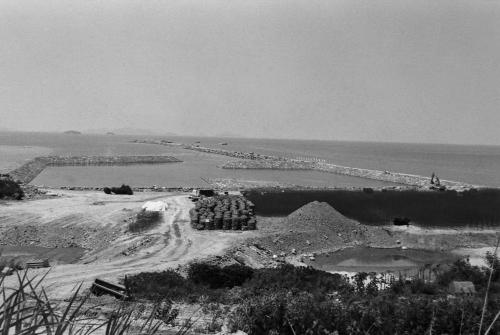
The sheer scale of the reclamation effort was staggering. From the 1960s through the 1980s, hundreds of projects led by both the government and the private sector reshaped the coastline. The pace was particularly intense in the 1960s, which saw the creation of over a thousand new districts. Since 1945, a total of 82,250 hectares of land have been reclaimed, with another 52,528 hectares currently in the process of being formed.

Yet this period of relentless territorial creation came at a cost, sowing the seeds of economic and ecological conflicts that would define the next chapter of Korea's relationship with the sea.

The Turning Tide: The Rise of Environmental and Economic Debates

The 1990s marked a pivotal period in Korea's relationship with its coastlines. As the nation's per capita GNI surpassed the $10,000 threshold, a new national consciousness began to emerge. The development-first model that had fueled decades of growth was increasingly scrutinized, prompting critical questions about the long-term economic viability and environmental costs of transforming the sea into land.

Questioning the Development-First Model

Several factors drove this shift toward a more cautious approach. Economically, the country began experiencing a surplus in its rice supply, which fundamentally undermined the decades-old economic rationale for reclamation, shifting the national cost-benefit analysis against purely agricultural projects. Concurrently, there was a growing public and governmental awareness of the importance of tidal flats and coastal ecological systems, which were previously viewed as unproductive areas to be developed.

An Environmental Wake-Up Call

The nation's policy landscape began to reflect these growing environmental concerns. An early and foundational step was the enactment of the Maritime Pollution Prevention Act in 1977, established after Korea participated in an international convention on the issue. The challenge was significant; the chemical oxygen demand (COD) index, a key indicator of coastal water pollution, had risen steadily with economic growth. This trend peaked at an index of 1.89 in 1994 before concerted efforts to manage pollution brought it down to 1.40 by 2006.

These growing debates and early policy responses set the stage for major conflicts and revisions surrounding some of the nation's largest and most symbolic development projects.

Case Studies in Transformation: Reimagining Reclaimed Land

The abstract national debates over development versus conservation forced concrete and often difficult changes in some of Korea's most ambitious reclamation projects. The stories of the Sihwa, Saemangeum, and Donga districts serve as powerful microcosms of a nationwide paradigm shift, illustrating the painful but necessary process of learning from past mistakes and reimagining the future of reclaimed land.

The Sihwa District: A Lesson in Environmental Costs

The Sihwa project stands as a key cautionary tale in Korea's development history. After the tide embankment was completed in 1994, the original plan to create valuable farmland and a vast freshwater lake was abruptly abandoned due to a severe and rapid deterioration in water quality, which turned the lake into a symbol of environmental failure.

In response, the project was radically transformed. Instead of farmland, the area is being redeveloped into the Sihwa Multi-Techno Valley, with the goal of creating a "Green City." This pivot from an agricultural and environmental disaster to an innovative, technology-focused hub includes the construction of a tidal power plant, a facility said to be the world’s largest of its kind. The transformation of Sihwa represents a reactive, yet ultimately forward-thinking, response to an environmental crisis.

The Saemangeum Project: A Battle Over a New Vision

No project better symbolizes the deep conflict between development and conservation than Saemangeum. Launched in 1991 with the construction of a monumental 33.4 km-long tidal embankment, its original goal was to create 40,000 hectares of new farmland. However, the project was engulfed in controversy for years, with critics pointing to the irreversible destruction of vital wetland ecosystems and questioning its economic feasibility in an era of food surpluses.

This sustained pressure led to a major revision of the plan in 2009. The new vision dramatically reduced the proportion of land designated for agriculture from 70% to just 30%. The reclaimed area is now slated for industrial and tourism use, with the ambitious goal of creating a global technology and entertainment hub called the “City of Neo Civitas.” This focus on water quality is a direct and critical policy response to the hard-learned lessons from the Sihwa environmental disaster, making Saemangeum's success as a world-class “luxury brand composite city” contingent on avoiding the mistakes of the past.

The Donga District: A Decade of Deliberation

The Donga Reclamation Site in Gimpo provides another example of this transitional period. After the project was completed in 1991, the reclaimed land sat in limbo for a full decade as authorities deliberated on its purpose. The original agricultural objective was scrapped, and the site was ultimately designated for a thermal power plant and as part of the Incheon Free Economic Zone, reflecting the nation’s shifting economic priorities away from farming and toward industry and global commerce.

These case studies reveal a complex and ongoing process of national adaptation, where the intended purposes of massive infrastructure projects were re-evaluated and transformed in the face of new economic realities and environmental imperatives.

Conclusion: Charting a New Maritime Future

South Korea's journey with the sea is a powerful narrative of transformation—first of the coastline, and then of the national consciousness itself. The nation moved from a single-minded focus on creating new territory from its tidal flats to fuel industrialization and food security, to a far more complex and challenging position. Today, it grapples with balancing economic ambition with environmental stewardship, seeking to repurpose the vast landscapes it created. The ongoing stories of Sihwa, Saemangeum, and other reclamation projects demonstrate that this is not a closed chapter of history. They are living laboratories where the nation's future relationship with the ocean—one that seeks to reconcile the legacies of development with the demands of sustainability—is still being written.

Author
Il SaKong
Korea Development Institute
Youngsun Koh
Korea Development Institute
cite this work

Korea's Transformation of its Coastline: A History of National Expansion and Ecological Reckoning

K-Dev Original
February 28, 2026
This is some text inside of a div block.

Summary

For South Korea, the sea has never been a static boundary but a dynamic frontier—a source of economic survival and, ultimately, environmental reckoning. In the decades following the Korean War, the nation embarked on a major campaign to create new land from its coastlines and extend its economic reach across the globe's oceans. This report analyzes how Korea systematically transformed its tidal flats into territory through large-scale reclamation projects while simultaneously expanding its maritime activities from deep-sea fishing to Antarctic exploration. It shows how this development-first approach reached a critical turning point in the 1990s, forcing a national conversation about economic priorities, environmental sustainability, and the future of its newly forged land.

Key Questions

  • How has Korea turned the sea into national territory?
  • How have the goals of large-scale reclamation projects changed over time?
  • How has rising environmental awareness reshaped Korea’s coastal and reclamation policies?

#environment #coastal development #land reclamation

The Great Expansion: Turning Coastlines into National Territory

For a post-war South Korea facing rapid urbanization and industrialization, the sea was not a boundary but a strategic resource. The national imperative to secure land for food production, industrial growth, and expanding cities set the stage for one of the most ambitious land reclamation campaigns in modern history. The country's heavily indented and shallow west and south coasts were a key geographic advantage; these features made large-scale reclamation technologically and economically viable, thus shaping national development policy from the outset.

The Drive for New Land

The primary motivations behind Korea's large-scale reclamation projects were multifaceted and urgent. With urban and industrial growth consuming existing farmland, creating new agricultural land was essential to the national goal of achieving food self-sufficiency. Simultaneously, these projects were designed to meet the growing demand for industrial sites, coastal industrial parks, and modern port facilities. They also served to secure critical water resources for agricultural, industrial, and household use by creating massive freshwater reservoirs.

This national effort was enabled by the Public Waters Reclamation Act of 1962, the key legislation that provided the legal framework for this transformation. A comprehensive survey conducted that same year identified 71 potential reclamation areas, estimating a total reclaimable area of 2,250 km², of which 1,650 km² was deemed suitable for farmland. This survey established a clear blueprint for the decades of development that would follow.

A Nation on the Water

Parallel to the physical expansion of its coastline, Korea was also extending its presence across the world's oceans. This new mastery over its immediate coastline fostered a national confidence that soon projected outward, transforming Korea from a coastal nation into a global maritime player. After 1945, the nation began to develop a deep-sea fishing industry, which evolved from small-scale operations to a fleet of ocean-going vessels. This growing maritime experience culminated in the nation extending its reach to the farthest corners of the globe, dispatching an exploration team to the Antarctic in 1985 and establishing the Sejong Science Base in 1988.

Legally, the nation’s maritime territory extends 12 nautical miles from its shoreline. The establishment of the Antarctic base represents a significant extension of Korea’s scientific and maritime activities on the global stage, solidifying its presence in Antarctica rather than a claim of sovereign territory.

Quantifying the Transformation

The sheer scale of the reclamation effort was staggering. From the 1960s through the 1980s, hundreds of projects led by both the government and the private sector reshaped the coastline. The pace was particularly intense in the 1960s, which saw the creation of over a thousand new districts. Since 1945, a total of 82,250 hectares of land have been reclaimed, with another 52,528 hectares currently in the process of being formed.

Yet this period of relentless territorial creation came at a cost, sowing the seeds of economic and ecological conflicts that would define the next chapter of Korea's relationship with the sea.

The Turning Tide: The Rise of Environmental and Economic Debates

The 1990s marked a pivotal period in Korea's relationship with its coastlines. As the nation's per capita GNI surpassed the $10,000 threshold, a new national consciousness began to emerge. The development-first model that had fueled decades of growth was increasingly scrutinized, prompting critical questions about the long-term economic viability and environmental costs of transforming the sea into land.

Questioning the Development-First Model

Several factors drove this shift toward a more cautious approach. Economically, the country began experiencing a surplus in its rice supply, which fundamentally undermined the decades-old economic rationale for reclamation, shifting the national cost-benefit analysis against purely agricultural projects. Concurrently, there was a growing public and governmental awareness of the importance of tidal flats and coastal ecological systems, which were previously viewed as unproductive areas to be developed.

An Environmental Wake-Up Call

The nation's policy landscape began to reflect these growing environmental concerns. An early and foundational step was the enactment of the Maritime Pollution Prevention Act in 1977, established after Korea participated in an international convention on the issue. The challenge was significant; the chemical oxygen demand (COD) index, a key indicator of coastal water pollution, had risen steadily with economic growth. This trend peaked at an index of 1.89 in 1994 before concerted efforts to manage pollution brought it down to 1.40 by 2006.

These growing debates and early policy responses set the stage for major conflicts and revisions surrounding some of the nation's largest and most symbolic development projects.

Case Studies in Transformation: Reimagining Reclaimed Land

The abstract national debates over development versus conservation forced concrete and often difficult changes in some of Korea's most ambitious reclamation projects. The stories of the Sihwa, Saemangeum, and Donga districts serve as powerful microcosms of a nationwide paradigm shift, illustrating the painful but necessary process of learning from past mistakes and reimagining the future of reclaimed land.

The Sihwa District: A Lesson in Environmental Costs

The Sihwa project stands as a key cautionary tale in Korea's development history. After the tide embankment was completed in 1994, the original plan to create valuable farmland and a vast freshwater lake was abruptly abandoned due to a severe and rapid deterioration in water quality, which turned the lake into a symbol of environmental failure.

In response, the project was radically transformed. Instead of farmland, the area is being redeveloped into the Sihwa Multi-Techno Valley, with the goal of creating a "Green City." This pivot from an agricultural and environmental disaster to an innovative, technology-focused hub includes the construction of a tidal power plant, a facility said to be the world’s largest of its kind. The transformation of Sihwa represents a reactive, yet ultimately forward-thinking, response to an environmental crisis.

The Saemangeum Project: A Battle Over a New Vision

No project better symbolizes the deep conflict between development and conservation than Saemangeum. Launched in 1991 with the construction of a monumental 33.4 km-long tidal embankment, its original goal was to create 40,000 hectares of new farmland. However, the project was engulfed in controversy for years, with critics pointing to the irreversible destruction of vital wetland ecosystems and questioning its economic feasibility in an era of food surpluses.

This sustained pressure led to a major revision of the plan in 2009. The new vision dramatically reduced the proportion of land designated for agriculture from 70% to just 30%. The reclaimed area is now slated for industrial and tourism use, with the ambitious goal of creating a global technology and entertainment hub called the “City of Neo Civitas.” This focus on water quality is a direct and critical policy response to the hard-learned lessons from the Sihwa environmental disaster, making Saemangeum's success as a world-class “luxury brand composite city” contingent on avoiding the mistakes of the past.

The Donga District: A Decade of Deliberation

The Donga Reclamation Site in Gimpo provides another example of this transitional period. After the project was completed in 1991, the reclaimed land sat in limbo for a full decade as authorities deliberated on its purpose. The original agricultural objective was scrapped, and the site was ultimately designated for a thermal power plant and as part of the Incheon Free Economic Zone, reflecting the nation’s shifting economic priorities away from farming and toward industry and global commerce.

These case studies reveal a complex and ongoing process of national adaptation, where the intended purposes of massive infrastructure projects were re-evaluated and transformed in the face of new economic realities and environmental imperatives.

Conclusion: Charting a New Maritime Future

South Korea's journey with the sea is a powerful narrative of transformation—first of the coastline, and then of the national consciousness itself. The nation moved from a single-minded focus on creating new territory from its tidal flats to fuel industrialization and food security, to a far more complex and challenging position. Today, it grapples with balancing economic ambition with environmental stewardship, seeking to repurpose the vast landscapes it created. The ongoing stories of Sihwa, Saemangeum, and other reclamation projects demonstrate that this is not a closed chapter of history. They are living laboratories where the nation's future relationship with the ocean—one that seeks to reconcile the legacies of development with the demands of sustainability—is still being written.

References
Cite this work
.

More to explore from
In Perspective

No items found.

Korea's Transformation of its Coastline: A History of National Expansion and Ecological Reckoning

K-Dev Original
February 28, 2026

I am the text that will be copied.

The Great Expansion: Turning Coastlines into National Territory

For a post-war South Korea facing rapid urbanization and industrialization, the sea was not a boundary but a strategic resource. The national imperative to secure land for food production, industrial growth, and expanding cities set the stage for one of the most ambitious land reclamation campaigns in modern history. The country's heavily indented and shallow west and south coasts were a key geographic advantage; these features made large-scale reclamation technologically and economically viable, thus shaping national development policy from the outset.

The Drive for New Land

The primary motivations behind Korea's large-scale reclamation projects were multifaceted and urgent. With urban and industrial growth consuming existing farmland, creating new agricultural land was essential to the national goal of achieving food self-sufficiency. Simultaneously, these projects were designed to meet the growing demand for industrial sites, coastal industrial parks, and modern port facilities. They also served to secure critical water resources for agricultural, industrial, and household use by creating massive freshwater reservoirs.

This national effort was enabled by the Public Waters Reclamation Act of 1962, the key legislation that provided the legal framework for this transformation. A comprehensive survey conducted that same year identified 71 potential reclamation areas, estimating a total reclaimable area of 2,250 km², of which 1,650 km² was deemed suitable for farmland. This survey established a clear blueprint for the decades of development that would follow.

A Nation on the Water

Parallel to the physical expansion of its coastline, Korea was also extending its presence across the world's oceans. This new mastery over its immediate coastline fostered a national confidence that soon projected outward, transforming Korea from a coastal nation into a global maritime player. After 1945, the nation began to develop a deep-sea fishing industry, which evolved from small-scale operations to a fleet of ocean-going vessels. This growing maritime experience culminated in the nation extending its reach to the farthest corners of the globe, dispatching an exploration team to the Antarctic in 1985 and establishing the Sejong Science Base in 1988.

Legally, the nation’s maritime territory extends 12 nautical miles from its shoreline. The establishment of the Antarctic base represents a significant extension of Korea’s scientific and maritime activities on the global stage, solidifying its presence in Antarctica rather than a claim of sovereign territory.

Quantifying the Transformation

The sheer scale of the reclamation effort was staggering. From the 1960s through the 1980s, hundreds of projects led by both the government and the private sector reshaped the coastline. The pace was particularly intense in the 1960s, which saw the creation of over a thousand new districts. Since 1945, a total of 82,250 hectares of land have been reclaimed, with another 52,528 hectares currently in the process of being formed.

Yet this period of relentless territorial creation came at a cost, sowing the seeds of economic and ecological conflicts that would define the next chapter of Korea's relationship with the sea.

The Turning Tide: The Rise of Environmental and Economic Debates

The 1990s marked a pivotal period in Korea's relationship with its coastlines. As the nation's per capita GNI surpassed the $10,000 threshold, a new national consciousness began to emerge. The development-first model that had fueled decades of growth was increasingly scrutinized, prompting critical questions about the long-term economic viability and environmental costs of transforming the sea into land.

Questioning the Development-First Model

Several factors drove this shift toward a more cautious approach. Economically, the country began experiencing a surplus in its rice supply, which fundamentally undermined the decades-old economic rationale for reclamation, shifting the national cost-benefit analysis against purely agricultural projects. Concurrently, there was a growing public and governmental awareness of the importance of tidal flats and coastal ecological systems, which were previously viewed as unproductive areas to be developed.

An Environmental Wake-Up Call

The nation's policy landscape began to reflect these growing environmental concerns. An early and foundational step was the enactment of the Maritime Pollution Prevention Act in 1977, established after Korea participated in an international convention on the issue. The challenge was significant; the chemical oxygen demand (COD) index, a key indicator of coastal water pollution, had risen steadily with economic growth. This trend peaked at an index of 1.89 in 1994 before concerted efforts to manage pollution brought it down to 1.40 by 2006.

These growing debates and early policy responses set the stage for major conflicts and revisions surrounding some of the nation's largest and most symbolic development projects.

Case Studies in Transformation: Reimagining Reclaimed Land

The abstract national debates over development versus conservation forced concrete and often difficult changes in some of Korea's most ambitious reclamation projects. The stories of the Sihwa, Saemangeum, and Donga districts serve as powerful microcosms of a nationwide paradigm shift, illustrating the painful but necessary process of learning from past mistakes and reimagining the future of reclaimed land.

The Sihwa District: A Lesson in Environmental Costs

The Sihwa project stands as a key cautionary tale in Korea's development history. After the tide embankment was completed in 1994, the original plan to create valuable farmland and a vast freshwater lake was abruptly abandoned due to a severe and rapid deterioration in water quality, which turned the lake into a symbol of environmental failure.

In response, the project was radically transformed. Instead of farmland, the area is being redeveloped into the Sihwa Multi-Techno Valley, with the goal of creating a "Green City." This pivot from an agricultural and environmental disaster to an innovative, technology-focused hub includes the construction of a tidal power plant, a facility said to be the world’s largest of its kind. The transformation of Sihwa represents a reactive, yet ultimately forward-thinking, response to an environmental crisis.

The Saemangeum Project: A Battle Over a New Vision

No project better symbolizes the deep conflict between development and conservation than Saemangeum. Launched in 1991 with the construction of a monumental 33.4 km-long tidal embankment, its original goal was to create 40,000 hectares of new farmland. However, the project was engulfed in controversy for years, with critics pointing to the irreversible destruction of vital wetland ecosystems and questioning its economic feasibility in an era of food surpluses.

This sustained pressure led to a major revision of the plan in 2009. The new vision dramatically reduced the proportion of land designated for agriculture from 70% to just 30%. The reclaimed area is now slated for industrial and tourism use, with the ambitious goal of creating a global technology and entertainment hub called the “City of Neo Civitas.” This focus on water quality is a direct and critical policy response to the hard-learned lessons from the Sihwa environmental disaster, making Saemangeum's success as a world-class “luxury brand composite city” contingent on avoiding the mistakes of the past.

The Donga District: A Decade of Deliberation

The Donga Reclamation Site in Gimpo provides another example of this transitional period. After the project was completed in 1991, the reclaimed land sat in limbo for a full decade as authorities deliberated on its purpose. The original agricultural objective was scrapped, and the site was ultimately designated for a thermal power plant and as part of the Incheon Free Economic Zone, reflecting the nation’s shifting economic priorities away from farming and toward industry and global commerce.

These case studies reveal a complex and ongoing process of national adaptation, where the intended purposes of massive infrastructure projects were re-evaluated and transformed in the face of new economic realities and environmental imperatives.

Conclusion: Charting a New Maritime Future

South Korea's journey with the sea is a powerful narrative of transformation—first of the coastline, and then of the national consciousness itself. The nation moved from a single-minded focus on creating new territory from its tidal flats to fuel industrialization and food security, to a far more complex and challenging position. Today, it grapples with balancing economic ambition with environmental stewardship, seeking to repurpose the vast landscapes it created. The ongoing stories of Sihwa, Saemangeum, and other reclamation projects demonstrate that this is not a closed chapter of history. They are living laboratories where the nation's future relationship with the ocean—one that seeks to reconcile the legacies of development with the demands of sustainability—is still being written.

References
Cite this work
.

More to explore from
In Perspective

No items found.