

.png)
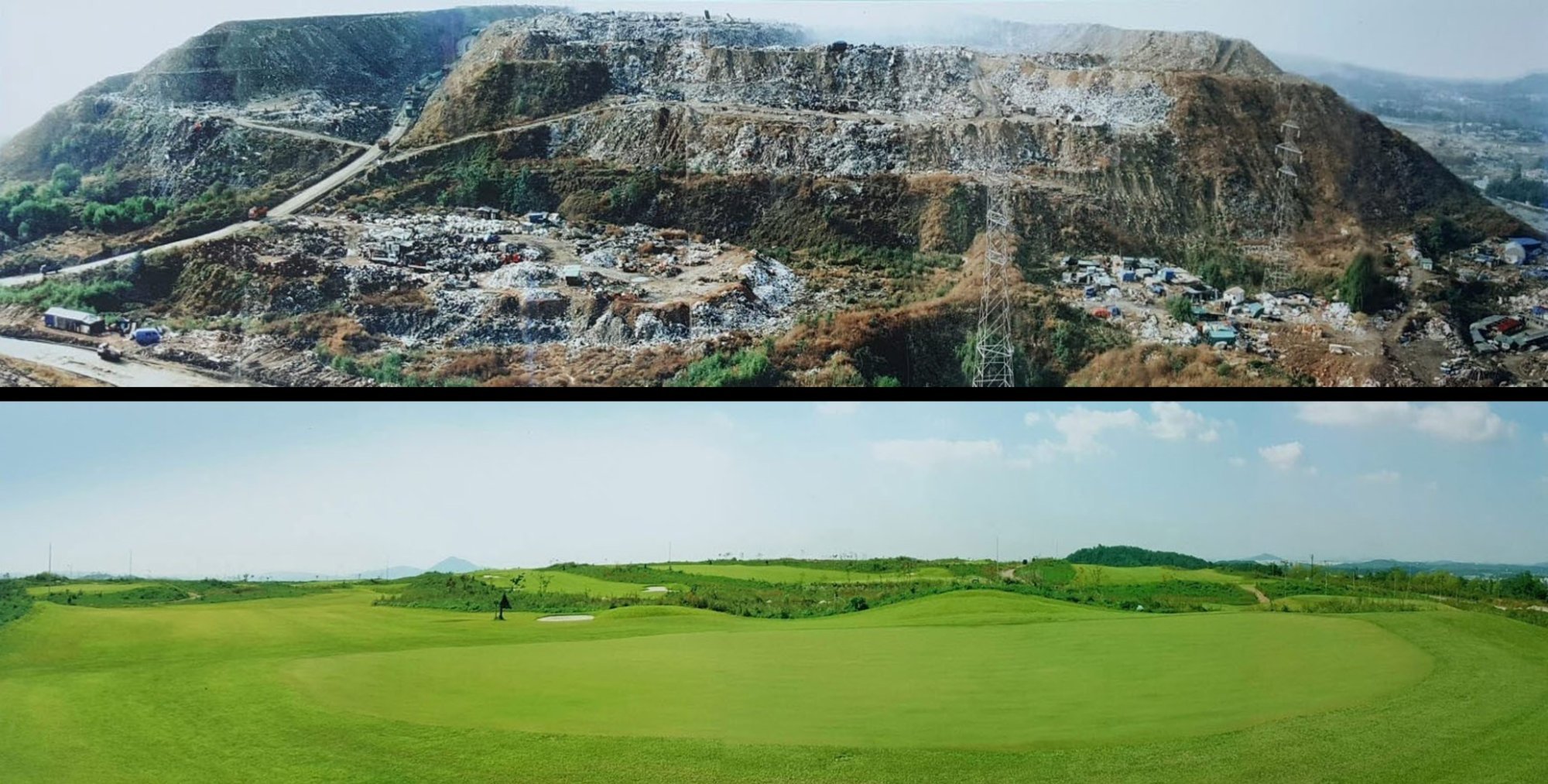
The story of Nanjido is one of Seoul's most remarkable environmental triumphs. For 15 years, it was the city's primary dumping site, accumulating 92 million cubic meters of waste in two 100-meter-high heaps. After its closure in 1993, the Seoul City Government (SCG) chose environmental restoration and stabilization over commercial development, installing impermeable walls, leachate treatment systems, and 106 landfill-gas collection wells that now supply fuel for regional heating. The site’s transformation was closely linked to the 2002 FIFA World Cup and the Sangam New Millennium Town project. The resulting World Cup Park consists of five sub-parks-Haneul, Noeul, Pyeonghwa, Nanjicheon, and Nanji Hangang-built across the former landfill and its riverside. Since then, biodiversity has grown from 167 to more than 730 species, and over 12 million people visit annually, turning this former waste site into a common asset for future generations. Beyond its physical restoration, Nanjido illustrates how effective governance, civic participation, and appropriate technology can turn an environmental liability into a sustainable urban landscape, where urban development and ecological renewal reinforce rather than oppose each other.
#urban development #urban transform
1. Restoration to Eco Park from Waste Dumping Site
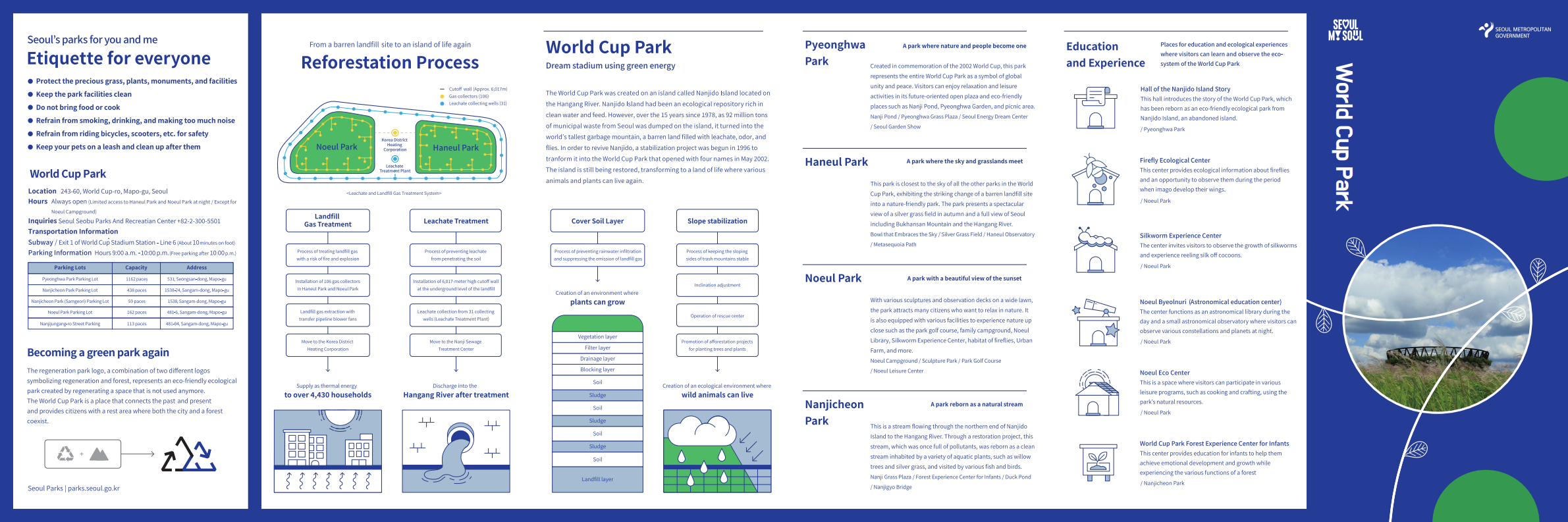
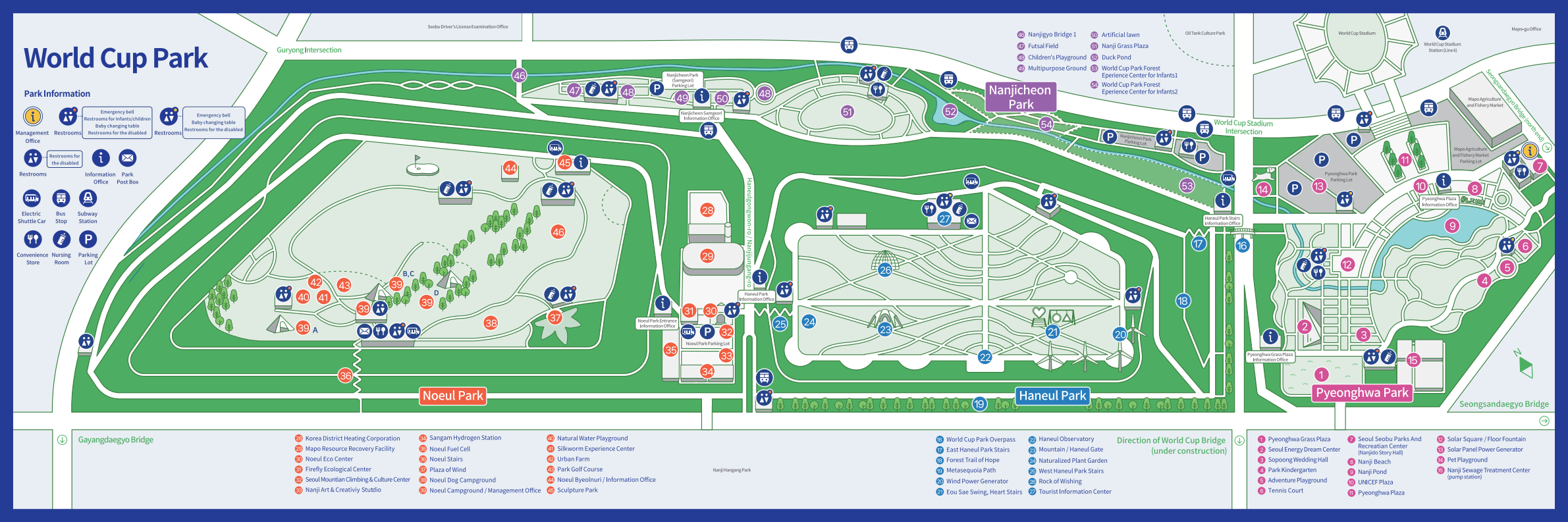
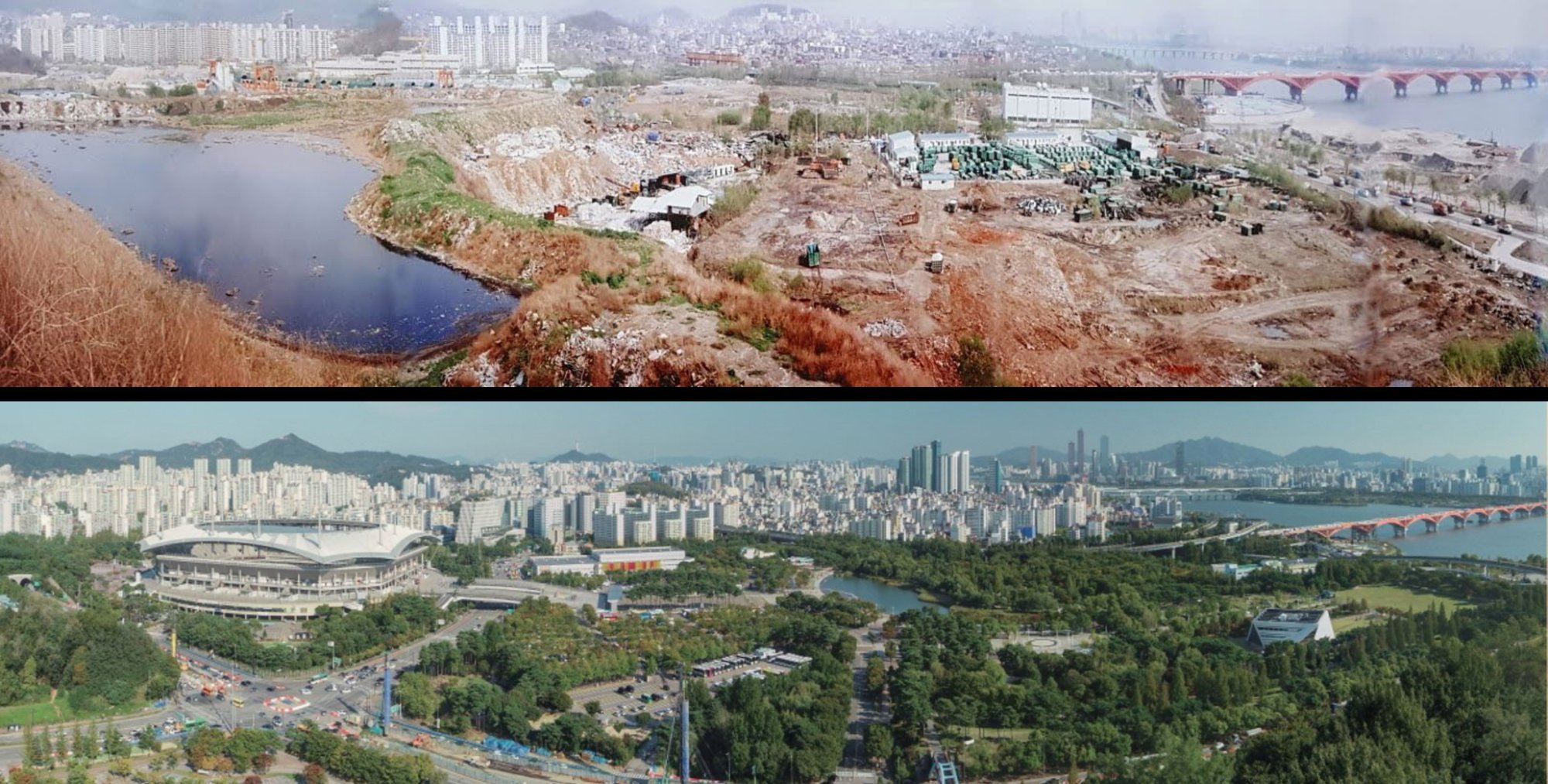
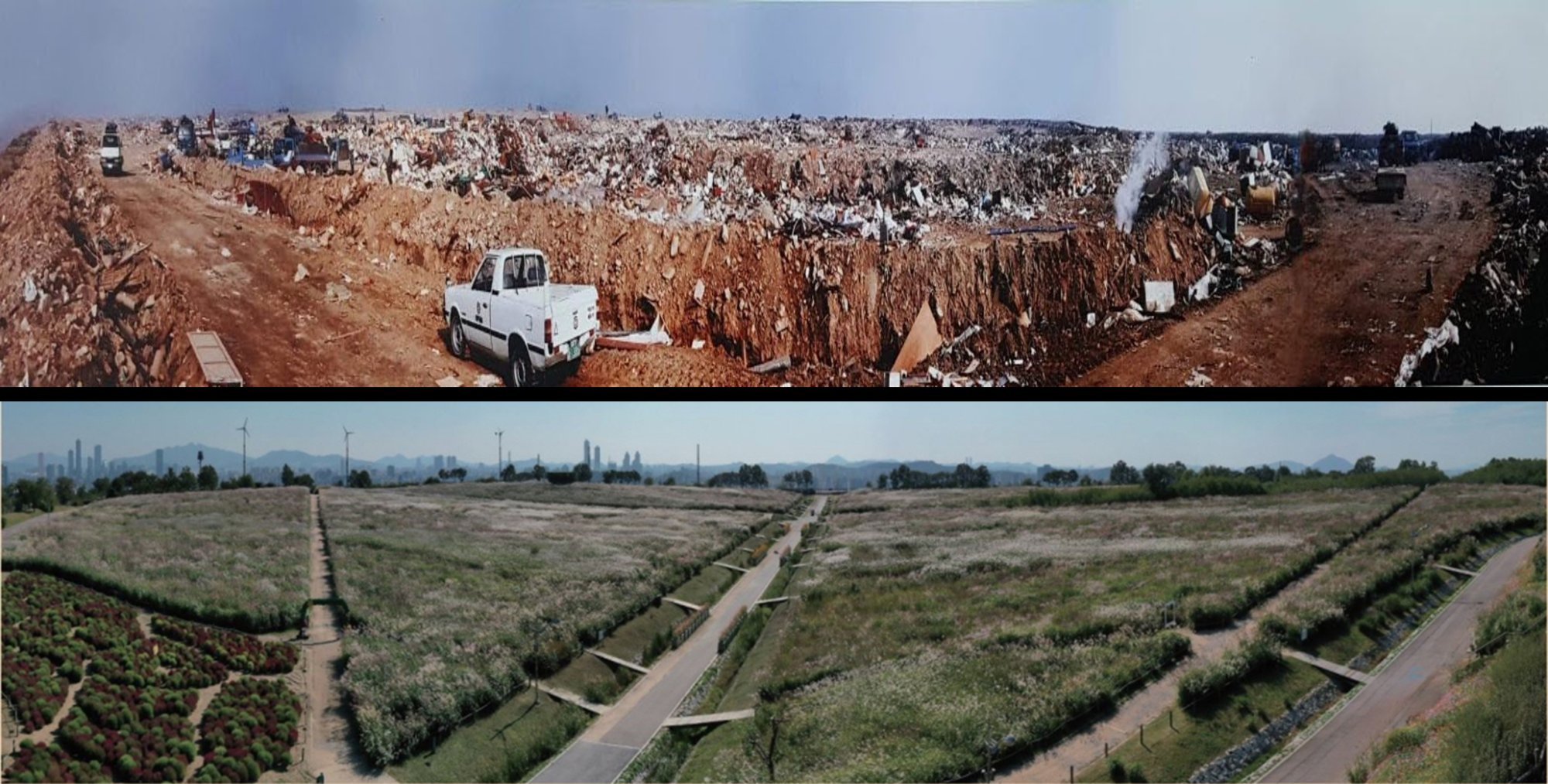
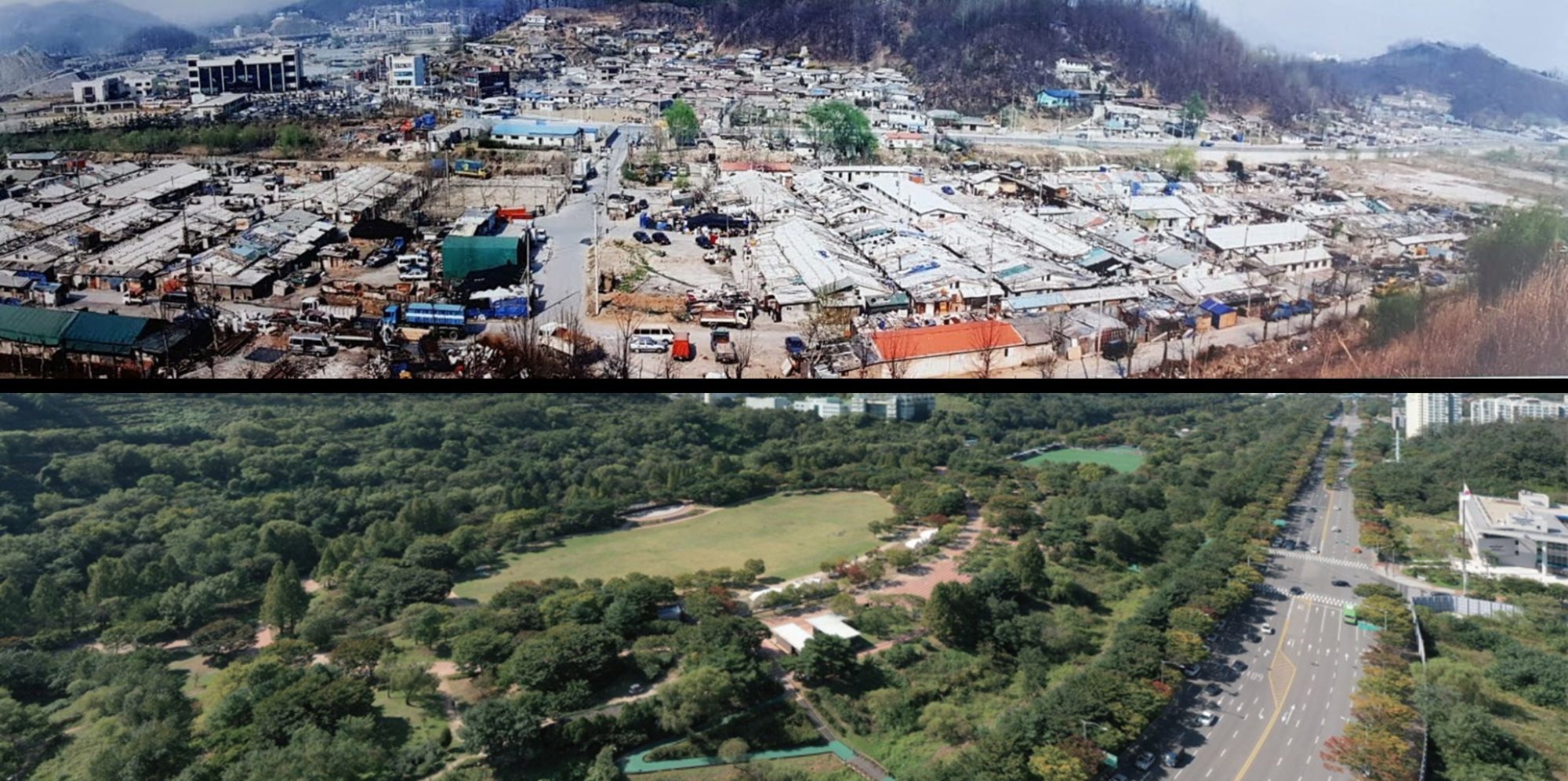
The Nanjido was a small island where orchids and gromwell grew with various seasonal flowers. However, the Nanjido had been changed into a garbage dumping site for the city of Seoul, the capital of Korea, from 1978. Korea did not have any modern landfill techniques to treat the landfill gas and leachate during 1970s. The dumping site was used for 15 years without even covering the garbage with soil. Finally, after two 100m high garbage heaps, a total 92,000,000㎥ of garbage, were made, its use as a waste dumping site was finished in 1993. The Seoul City government (SCG) carried out landfill stabilization work and park establishment construction in consecutive order. Through the stabilization stage, the waste layer was blocked off from outside and facilities were installed in order to treat landfill gas and leachate generated from waste degradation. During the park construction stage, the Haneul Park and the Noeul Park were built on top of garbage mountain, while the Pyeonghwa Park and Nanjicheon Park was built on flatland and the Nanji Han River Park was built on riverside of the Han River. One year after closure of the dumping site in 1994, 89 species from 24 families of plants were discovered, but the numbers were rapidly increased as much as 502 species of 95 families of vegetation by 2010 since establishment of the World Cup Park. After the Nanjido was transformed into the World Cup Park there was also an increase of animal life including birds, insects, amphibians, fish and mammals. There were 167 species of animals discovered prior to construction of the World Cup Park and they included fish, amphibians, insects and mammals. However, eight years after the World Cup Park was completed, it grew to 731 species in 2010.
2. Eco Park Construction linked with the 2002 World Cup
It was June 1996 when Korea and Japan were confirmed to co-host the 2002 FIFA World Cup and thus, the decision to build the Seoul World Cup Stadium near the Nanjido was made in October 1997 with just four years and eight months left to the start of the 2002 World Cup. From the aspect of 2002 World Cup clock, construction of the stadium was the most urgent and improvement of environmental factors near the stadium was also an important matter. One unchanging condition was that the Nanjido dumping site must be renovated before start of the World Cup game no matter what happens. The SCG mobilized all administrative powers and resources, maintained a simple decision-making structure, and finally completed designs and construction for landfill stabilization and ecological park on schedule before the start of the World Cup games.
.png)
The SCG planned to create a new sub-center of Seoul metropolis at SangAm area in which residence, traffic system, hi-tech industries and ecology could harmonize in the future, calling it the New Millennium Town. With opening of the World Cup Park in 2002 and the reopening of the Noeul Park in 2008, plan to construct Seoul's SangAm New Millennium Town Park was completed for the most part. In particular, it was possible to secure 43% of total area of the SangAm New Millennium Town as open spaces and parks. Twelve years after completion of the World Cup Park, residential areas as well as IT companies and high-tech industry have continuously moved into the town and it has now appearance of the SangAm New Town as planned originally. The establishment of the World Cup Park led to the creation of a new rest area and green space loved by residents of Seoul city. There are 12 million people who visit World Cup Park every year, thus out-numbering total number of people living in Seoul, which are 10.39 million people. It also has effect of expanding the rest area of the Seoul city by 5.3%.
1. The Waste Dumping Site Stabilization Work
As various wastes were piled up in this site unsanitarily for 15 years, the rotted wastes generated leachate, odor and harmful gas, and thus contaminating the Han river and atmosphere, while deteriorating the surrounding ecology. The goal of the stabilization work was to restore the environment, while keeping the huge garbage heaps as it is. In other words, the goal was to identify source of environmental pollution in the dumping site as it is and to restore the abandoned land of the Nanjido into an environment-friendly park. The stabilization work included installation of the impermeable wall in order to prevent leakage of leachate from dumping site, the treatment of leachate, the collection and treatment of landfill gas, slope stabilization to manage side of waste heaps, and the construction of grassland after covering the top of landfill with soil. A shielding wall was installed to prevent leakage of leachate from sides and bottom part of the dumping site. The leachate were collected and sent to the leachate treatment facility for purification. Sheet pile and slurry walls were installed as measures to prevent leakage of leachate and pollution.
Also, 31 leachate collection wells were installed on the inside of shielding wall to collect the planned amount of leachate (1,860 tons/day). Collected leachate was transported to the leachate treatment facility. In order to remove the foul odors and dangers of explosion due to landfill gas, the upper part of the dumping site was covered with a blocking layer consisting of soil and shielding sheet. The 106 landfill gas collection wells were installed on the upper part and sides of the landfill to extract landfill gas from waste heaps, and collected landfill gas was transferred to the treatment facility through a 14,050m long gas pipe. Landfill gas was used as fuel of regional heating system and remaining gas was incinerated in the gas stack. The upper part of the landfill had a 4% or higher degree slope to ensure rainwater runoff. The upper lot of Landfill 1 and landfill 2 were divided into 10 blocks to help rainwater runoff and site rearrangement was planed accordingly. The upper parts of the landfills were covered with soil to restrict emission of landfill gas and also with a blocking layer (HDPE) to prevent rainwater penetration and underground water pollution by leachate later. On the uppermost part, a vegetation layer (30cm) and surface layer (30cm) was constructed to help vegetation restoration without rainwater permeation. Side-gutter was installed at the slope of landfill to collect and drain of surface water ran off from the upper part. Rainwater pipes (plume pipes, PE pipes, slope waterway, hume pipes, etc) were installed to drain rainwater from the landfill slopes and maintenance roads.
Slope collapse and scour protection were prevented by installing slope safety devices, such as GEO CELL, slope collection and drainage pipes, reinforced retaining walls, etc. It was necessary to monitor leachate leaks, landfill gas emissions, contamination level, stability of landfill slope, subsidence behavior analysis in final cover layer of upper part, and activity destruction. In order to achieve this purpose, the 66 surface settlement plates were installed on the upper part of the landfill. And other monitoring equipments were installed as follows; 21 inclinometers on upper parts and sides of the landfill, 17 pore water-pressure gauge, 62 underground water level gauges inside and outside of leachate impermeable wal, 6 underground water contamination monitoring wells outside of the landfill, and 6 landfill gas monitoring wells inside and outside of the leachate impermeable wall. Furthermore, installation of landfill gas collection wells and landfill gas discharge wells was carried out after diagnosis on environmental status of ground level beside two waste heaps. In particular, collected landfill gas has been burned in a gas stack to remove foul odors and harmful substances.
.png)
.png)
2. The World Cup Park Construction
The World Cup Park was designed pursuing 'mutual coexistence and symbiosis', coexistence of 'nature and human culture', construction of a symbiotic relationship of 'environmental conservation and human use', and harmony of 'artificial structures and natural scenery'. The land usage was divided into four districts as the activity district, environmental restoration district, natural ecology district and regional facility district according to the site characteristics. The Pyeonghwa Park was designed to express the symbolism of the 2002 World Cup commemorative park and to play a key role in connecting all World Cup Parks organically. The Nanji Pond was built in the center of the park and connected to Nanjicheon Park as the source of the Nanjicheon Stream. The Haneul Park was established as a place for education that expresses the rebirth of abandoned land, which in this case is a waste dumping site, back to nature. In order to express the theme of 'restoration of nature', the entire park was made to be covered with grass since grass is the vegetation that appears first in dry and rough land. The Noeul Park adopted the establishment of an open-spaced environment-friendly golf course that minimizes damages to the natural environment, while being convenient to be used by people. The area of the golf course was limited to 57% of the area of the upper part of Landfill 1, while the remaining 43% was used for natural vegetation area and for exercise and walkway for people. The Nanjicheon Park is a park that restored the natural ecosystem damaged due to Nanjicheon Stream containing leachate from wastes, and thus it was established to show the natural river ecology. The land usage plan and spatial structural plan were established with the goal of creating a space for residents, and especially the disabled, senior citizens and youths, of SangAm New Millennium Town. The Nanji Han River Park is a neighborhood park to be used by residents for recreation and provides exercise, play, picnic and walking trail. Simultaneously, it was planned out as an environment/ecology, World Cup events, and urban park/neighborhood park to accommodate the functions needed for the World Cup games.
1. SCG’s Choice : Reservation of Dumping Site for the Future
After the end of burying wastes in the Nanjido dumping site in 1993, it became a huge social issue how to use the vast land area of over 2㎢. That issue was not only for the SCG but for the entire country's housing construction industry. At first the SCG reviewed various ways to remove waste layers and use Nanjido for something highly profitable. Five construction companies also formed one task force, so called the Green 21 Forum, and reviewed technologies for the early development of Nanjido. However, their plan was not adopted due to lack of profitability and secondary contamination and concern regarding secondary pollution. Despite a number of other opinions, the final choice of the SCG for the use of the Nanjido Waste Landfill was “to maintain the current status, while conducting environmental pollution prevention and stabilization work, and deferring usage for the future." The World Cup Park was thus established here.
2. Linking Eco Park Restoration with Urban Development
The World Cup Park was able to be established so quickly despite heavy investments because it was pursued in connection with regional development and the 2002 World Cup games. The establishment of the SangAm New Town was a core project of the 31st mayor of Seoul, the World Cup Park was a sales point that would provide success of the SangAm New Town. The 31st mayor urgently needed a project to overturn the gloomy social atmosphere resulting from the 1997 economic crisis. In July 1998 before being inaugurated as the mayor declared the 'establishment of the New Seoul Town'. The New Seoul Town represented SangAm New Town and the World Cup Park would be a park and an open space on the backdrop of the SangAm New Town. The ecological restoration of the Nanjido waste dumping site pursued by the SCG was a perfect subject to make the 2002 FIFA World Cup an environmental World Cup.
3. Refraining from Human Interference
Aside from planting some host plants and improving habitats, the SCG is refraining from all human interference. The reason why so many plants and animals live here in just eight years since construction of the park in 2002 is because the World Cup Park is not ecologically broken off with the surrounding area and the Han River, Bulgwancheon Stream, Hongjecheon Stream, and Hyangdongcheon Stream act as an eco-corridors for the park. After the park construction, the SCG planted oak trees, wild pear trees and other plants that could be used as food by animals and built an artificial wetland to promote bio-diversity in the World Cup Park. Corridors for wild animals such as the narrow-mouth frog, which is one flagship species of the World Cup Park, were also installed. For example, a log ramp was built on the retaining wall and an escape route was also made for animals that fell down in drainage and collecting wells. The drains installed nets to prevent falling.
.png)
4. Management of the Park with Volunteers
World Cup Park was not developed just as a neighborhood park for local residents, but as a park for the citizens of Seoul. Jayuro that connects Seoul north and east, the Naebu Expressway that connects east and west, Gayang Bridge and Seongsan Bridge that connects the northern and southern part of the Han River, subway line 6 World Cup Stadium Station, and the Hangang walking trail and Bulgwangcheon walking trail all help promote access of people. World Cup Park is managed by 65 public officials of the City of Seoul. However, due to its huge area that spans more than 2㎢ and diverse facilities, it is difficult to manage it properly with this manpower, and thus, volunteers also contribute. Volunteers with expertise are in charge of Nanjido storytelling, carrying out programs, operating the park information center, and providing guidance for the firefly eco center. In particular, there are 15 people who speak English, Japanese and Chinese tell the story of Nanjido to foreigners who visit World Cup Park. Daily volunteers help with picking up garbage, cleaning facilities, administrative support, and other simple tasks. Noeul Park is managed jointly with a civic organization called the 'Noeul Park People's Organization'. The World Cup Park monitors changes in animals and plants every year. The monitoring covers seven field of plant ecology (flora, mushrooms), animal ecology (wild birds, land insects, aquatic invertebrates, fish), and mineral environment (soil).
5. Conflict Resolution
There were also difficulties in the establishment and management of the World Cup Park. There were conflicts between the civil social organizations and the SCG Green People's Committee over the construction of a public nine-hole golf course in Noeul Park. There was also a legal battle with the Korea Sports Promotion Foundation over the public golf course fee. In result, the nine-hole public golf course is being used as a public park and is being managed jointly with the civil social organization that had argued against it. This was the result of lacking communication with the people and an uncomfortable facade of building a park in such a short period of time.
.png)
1. Closed Waste Landfill as common assets of the future
Idle public land such as waste landfills must be utilized as common assets of the future, rather than for commercial purposes. The fact that upper part of the dumping site now be used as a park that the citizen of Seoul are proud of are also very outstanding. Through this, there was sufficient justification to block off environmental damages resulting from the landfill as well as satisfying the legal conditions of 20-30 year after-closure management. It acts as a backdrop park for the region and also helps development of the worn and torn area giving the opportunity for people to experience an eco-park where they can enjoy nature. If the Nanjido dumping site was used for commercial purposes, this place would have been filled with a bunch of gray concrete skyscrapers.
2. Use of Appropriate Technology for Unsanitary Landfills
Appropriate environmental management is possible for unsanitary landfills as well. The Nanjido dumping site at the time when garbage was buried, it was the epitome of a unsanitary landfill without any countermeasures for landfill gas, leachate, waste scattering, and pests. Even after the closure of wastes dumping site, massive heaps of garbage that stood 100m high made it difficult to establish an engineering plan for environmental management. The facts that a park would be established in this area, the 2002 FIFA World Cup main stadium would be built here, and the fact that this area would be the home to the New Millennium Town required strict environmental management of the Nanjido dumping site. However, the SCG achieved stabilization of the waste layer by maximizing the use of nature's healing abilities and blocked pollutants from being exposed to the environment by appropriate engineering measures. The results were highly satisfactory. Many visitors never notice the environmental problems in this site since landfill gas and leachate are being properly collected and treated.
3. An opportunity for the socially vulnerable people
The establishment of a park acted as an opportunity to provide a dwelling place for the socially vulnerable people who lived next to the dumping site. To the people of Nanjido who made a living on picking recyclables from the waste of the site, Nanjido Dumping site was an important site for survival (824 households, 3,103 people). The Nanjido dumping site was closed in March 1993 but many of the residents did not have resources to leave their place of residence, which were shabby and in danger of collapse. Thus, the SCG brokered jobs to over 400 households and created jobs, while helping them to move such as giving them rights to move into leased apartments, etc.
4. Landfill Gas Use
Collected landfill gas was used as regional heating fuel. At the World Cup Park, a total of 106 landfill gas collection wells - 58 wells in Noeul Park and 48 wells in Haneul Park - were installed to collect the landfill gas generated from the waste layer. From the landfill gas, valuable substance as fuel was methane gas (CH4). The total amount of landfill gas used as fuel from 2002 to 2013 was 232,572,000㎥, which can be monetarily converted to approximately 8.2 billion won. Landfill gas is used as part of the fuel of the Korea District Heating Corporation that supplies heating to three public buildings, 16,335 apartment households and 36 office buildings. Landfill gas occurs naturally and unless used as such, it leads to exhaust of methane or carbon dioxide, which is known to cause global warming.
5. Environmental Education Venue
The World Cup Park is recognized as a place for international environmental education. Approximately 3,000 domestic and foreign public officials and concerned persons visit the World Cup Park every year. They come to benchmark the landfill that was transformed into a park and to visit the Mapo Resource Recovery Facility (incinerator) and Korea District Heating Corporation (that uses landfill gas and incinerator heat as heat sources for regional heating) located at the World Cup Park. Meanwhile, World Cup Park received the UN Habitats Special Award in 2010. This award is given to individuals, institutes and businesses recognized for making remarkable contributions for providing housing for humanity and in relation to sustainable urban development.
6. A Guide for Post-care of Unsanitary Landfills
The restoration of the Nanjido as World Cup Park was a turning point for landfill management. During the period of 1978 to 1993 when the Nanjido dumping site was operated, the only regulation on waste landfill in Korea was on how to cover up the landfill. More detailed landfill regulations appeared after enactment of the 1991 waste management act, and this was when the Nanjido dumping site was preparing to finish burial of wastes. Management methods after closing landfill were established in 1998 and this was when the Nanjido was already beginning its stabilization work. After the Nanjido dumping site was closed, the government made huge revisions to relevant regulations. Landfills now have to be built in a appropriate area and should have a basis to minimize environmental damages in the establishment phase. The government prescribed methods to prevent environmental damages by the facility during burial of wastes. It also specified to treat and monitor pollutants for a certain period of time after the landfill was closed.
Pyeonghwa Park
Haneul Park
Noeul Park
Nanjicheon Park
.png)
The story of Nanjido is one of Seoul's most remarkable environmental triumphs. For 15 years, it was the city's primary dumping site, accumulating 92 million cubic meters of waste in two 100-meter-high heaps. After its closure in 1993, the Seoul City Government (SCG) chose environmental restoration and stabilization over commercial development, installing impermeable walls, leachate treatment systems, and 106 landfill-gas collection wells that now supply fuel for regional heating. The site’s transformation was closely linked to the 2002 FIFA World Cup and the Sangam New Millennium Town project. The resulting World Cup Park consists of five sub-parks-Haneul, Noeul, Pyeonghwa, Nanjicheon, and Nanji Hangang-built across the former landfill and its riverside. Since then, biodiversity has grown from 167 to more than 730 species, and over 12 million people visit annually, turning this former waste site into a common asset for future generations. Beyond its physical restoration, Nanjido illustrates how effective governance, civic participation, and appropriate technology can turn an environmental liability into a sustainable urban landscape, where urban development and ecological renewal reinforce rather than oppose each other.
#urban development #urban transform
1. Restoration to Eco Park from Waste Dumping Site
The Nanjido was a small island where orchids and gromwell grew with various seasonal flowers. However, the Nanjido had been changed into a garbage dumping site for the city of Seoul, the capital of Korea, from 1978. Korea did not have any modern landfill techniques to treat the landfill gas and leachate during 1970s. The dumping site was used for 15 years without even covering the garbage with soil. Finally, after two 100m high garbage heaps, a total 92,000,000㎥ of garbage, were made, its use as a waste dumping site was finished in 1993. The Seoul City government (SCG) carried out landfill stabilization work and park establishment construction in consecutive order. Through the stabilization stage, the waste layer was blocked off from outside and facilities were installed in order to treat landfill gas and leachate generated from waste degradation. During the park construction stage, the Haneul Park and the Noeul Park were built on top of garbage mountain, while the Pyeonghwa Park and Nanjicheon Park was built on flatland and the Nanji Han River Park was built on riverside of the Han River. One year after closure of the dumping site in 1994, 89 species from 24 families of plants were discovered, but the numbers were rapidly increased as much as 502 species of 95 families of vegetation by 2010 since establishment of the World Cup Park. After the Nanjido was transformed into the World Cup Park there was also an increase of animal life including birds, insects, amphibians, fish and mammals. There were 167 species of animals discovered prior to construction of the World Cup Park and they included fish, amphibians, insects and mammals. However, eight years after the World Cup Park was completed, it grew to 731 species in 2010.
2. Eco Park Construction linked with the 2002 World Cup
It was June 1996 when Korea and Japan were confirmed to co-host the 2002 FIFA World Cup and thus, the decision to build the Seoul World Cup Stadium near the Nanjido was made in October 1997 with just four years and eight months left to the start of the 2002 World Cup. From the aspect of 2002 World Cup clock, construction of the stadium was the most urgent and improvement of environmental factors near the stadium was also an important matter. One unchanging condition was that the Nanjido dumping site must be renovated before start of the World Cup game no matter what happens. The SCG mobilized all administrative powers and resources, maintained a simple decision-making structure, and finally completed designs and construction for landfill stabilization and ecological park on schedule before the start of the World Cup games.
.png)
The SCG planned to create a new sub-center of Seoul metropolis at SangAm area in which residence, traffic system, hi-tech industries and ecology could harmonize in the future, calling it the New Millennium Town. With opening of the World Cup Park in 2002 and the reopening of the Noeul Park in 2008, plan to construct Seoul's SangAm New Millennium Town Park was completed for the most part. In particular, it was possible to secure 43% of total area of the SangAm New Millennium Town as open spaces and parks. Twelve years after completion of the World Cup Park, residential areas as well as IT companies and high-tech industry have continuously moved into the town and it has now appearance of the SangAm New Town as planned originally. The establishment of the World Cup Park led to the creation of a new rest area and green space loved by residents of Seoul city. There are 12 million people who visit World Cup Park every year, thus out-numbering total number of people living in Seoul, which are 10.39 million people. It also has effect of expanding the rest area of the Seoul city by 5.3%.
1. The Waste Dumping Site Stabilization Work
As various wastes were piled up in this site unsanitarily for 15 years, the rotted wastes generated leachate, odor and harmful gas, and thus contaminating the Han river and atmosphere, while deteriorating the surrounding ecology. The goal of the stabilization work was to restore the environment, while keeping the huge garbage heaps as it is. In other words, the goal was to identify source of environmental pollution in the dumping site as it is and to restore the abandoned land of the Nanjido into an environment-friendly park. The stabilization work included installation of the impermeable wall in order to prevent leakage of leachate from dumping site, the treatment of leachate, the collection and treatment of landfill gas, slope stabilization to manage side of waste heaps, and the construction of grassland after covering the top of landfill with soil. A shielding wall was installed to prevent leakage of leachate from sides and bottom part of the dumping site. The leachate were collected and sent to the leachate treatment facility for purification. Sheet pile and slurry walls were installed as measures to prevent leakage of leachate and pollution.
Also, 31 leachate collection wells were installed on the inside of shielding wall to collect the planned amount of leachate (1,860 tons/day). Collected leachate was transported to the leachate treatment facility. In order to remove the foul odors and dangers of explosion due to landfill gas, the upper part of the dumping site was covered with a blocking layer consisting of soil and shielding sheet. The 106 landfill gas collection wells were installed on the upper part and sides of the landfill to extract landfill gas from waste heaps, and collected landfill gas was transferred to the treatment facility through a 14,050m long gas pipe. Landfill gas was used as fuel of regional heating system and remaining gas was incinerated in the gas stack. The upper part of the landfill had a 4% or higher degree slope to ensure rainwater runoff. The upper lot of Landfill 1 and landfill 2 were divided into 10 blocks to help rainwater runoff and site rearrangement was planed accordingly. The upper parts of the landfills were covered with soil to restrict emission of landfill gas and also with a blocking layer (HDPE) to prevent rainwater penetration and underground water pollution by leachate later. On the uppermost part, a vegetation layer (30cm) and surface layer (30cm) was constructed to help vegetation restoration without rainwater permeation. Side-gutter was installed at the slope of landfill to collect and drain of surface water ran off from the upper part. Rainwater pipes (plume pipes, PE pipes, slope waterway, hume pipes, etc) were installed to drain rainwater from the landfill slopes and maintenance roads.
Slope collapse and scour protection were prevented by installing slope safety devices, such as GEO CELL, slope collection and drainage pipes, reinforced retaining walls, etc. It was necessary to monitor leachate leaks, landfill gas emissions, contamination level, stability of landfill slope, subsidence behavior analysis in final cover layer of upper part, and activity destruction. In order to achieve this purpose, the 66 surface settlement plates were installed on the upper part of the landfill. And other monitoring equipments were installed as follows; 21 inclinometers on upper parts and sides of the landfill, 17 pore water-pressure gauge, 62 underground water level gauges inside and outside of leachate impermeable wal, 6 underground water contamination monitoring wells outside of the landfill, and 6 landfill gas monitoring wells inside and outside of the leachate impermeable wall. Furthermore, installation of landfill gas collection wells and landfill gas discharge wells was carried out after diagnosis on environmental status of ground level beside two waste heaps. In particular, collected landfill gas has been burned in a gas stack to remove foul odors and harmful substances.
.png)
.png)
2. The World Cup Park Construction
The World Cup Park was designed pursuing 'mutual coexistence and symbiosis', coexistence of 'nature and human culture', construction of a symbiotic relationship of 'environmental conservation and human use', and harmony of 'artificial structures and natural scenery'. The land usage was divided into four districts as the activity district, environmental restoration district, natural ecology district and regional facility district according to the site characteristics. The Pyeonghwa Park was designed to express the symbolism of the 2002 World Cup commemorative park and to play a key role in connecting all World Cup Parks organically. The Nanji Pond was built in the center of the park and connected to Nanjicheon Park as the source of the Nanjicheon Stream. The Haneul Park was established as a place for education that expresses the rebirth of abandoned land, which in this case is a waste dumping site, back to nature. In order to express the theme of 'restoration of nature', the entire park was made to be covered with grass since grass is the vegetation that appears first in dry and rough land. The Noeul Park adopted the establishment of an open-spaced environment-friendly golf course that minimizes damages to the natural environment, while being convenient to be used by people. The area of the golf course was limited to 57% of the area of the upper part of Landfill 1, while the remaining 43% was used for natural vegetation area and for exercise and walkway for people. The Nanjicheon Park is a park that restored the natural ecosystem damaged due to Nanjicheon Stream containing leachate from wastes, and thus it was established to show the natural river ecology. The land usage plan and spatial structural plan were established with the goal of creating a space for residents, and especially the disabled, senior citizens and youths, of SangAm New Millennium Town. The Nanji Han River Park is a neighborhood park to be used by residents for recreation and provides exercise, play, picnic and walking trail. Simultaneously, it was planned out as an environment/ecology, World Cup events, and urban park/neighborhood park to accommodate the functions needed for the World Cup games.


1. SCG’s Choice : Reservation of Dumping Site for the Future
After the end of burying wastes in the Nanjido dumping site in 1993, it became a huge social issue how to use the vast land area of over 2㎢. That issue was not only for the SCG but for the entire country's housing construction industry. At first the SCG reviewed various ways to remove waste layers and use Nanjido for something highly profitable. Five construction companies also formed one task force, so called the Green 21 Forum, and reviewed technologies for the early development of Nanjido. However, their plan was not adopted due to lack of profitability and secondary contamination and concern regarding secondary pollution. Despite a number of other opinions, the final choice of the SCG for the use of the Nanjido Waste Landfill was “to maintain the current status, while conducting environmental pollution prevention and stabilization work, and deferring usage for the future." The World Cup Park was thus established here.
2. Linking Eco Park Restoration with Urban Development
The World Cup Park was able to be established so quickly despite heavy investments because it was pursued in connection with regional development and the 2002 World Cup games. The establishment of the SangAm New Town was a core project of the 31st mayor of Seoul, the World Cup Park was a sales point that would provide success of the SangAm New Town. The 31st mayor urgently needed a project to overturn the gloomy social atmosphere resulting from the 1997 economic crisis. In July 1998 before being inaugurated as the mayor declared the 'establishment of the New Seoul Town'. The New Seoul Town represented SangAm New Town and the World Cup Park would be a park and an open space on the backdrop of the SangAm New Town. The ecological restoration of the Nanjido waste dumping site pursued by the SCG was a perfect subject to make the 2002 FIFA World Cup an environmental World Cup.
3. Refraining from Human Interference
Aside from planting some host plants and improving habitats, the SCG is refraining from all human interference. The reason why so many plants and animals live here in just eight years since construction of the park in 2002 is because the World Cup Park is not ecologically broken off with the surrounding area and the Han River, Bulgwancheon Stream, Hongjecheon Stream, and Hyangdongcheon Stream act as an eco-corridors for the park. After the park construction, the SCG planted oak trees, wild pear trees and other plants that could be used as food by animals and built an artificial wetland to promote bio-diversity in the World Cup Park. Corridors for wild animals such as the narrow-mouth frog, which is one flagship species of the World Cup Park, were also installed. For example, a log ramp was built on the retaining wall and an escape route was also made for animals that fell down in drainage and collecting wells. The drains installed nets to prevent falling.
.png)
4. Management of the Park with Volunteers
World Cup Park was not developed just as a neighborhood park for local residents, but as a park for the citizens of Seoul. Jayuro that connects Seoul north and east, the Naebu Expressway that connects east and west, Gayang Bridge and Seongsan Bridge that connects the northern and southern part of the Han River, subway line 6 World Cup Stadium Station, and the Hangang walking trail and Bulgwangcheon walking trail all help promote access of people. World Cup Park is managed by 65 public officials of the City of Seoul. However, due to its huge area that spans more than 2㎢ and diverse facilities, it is difficult to manage it properly with this manpower, and thus, volunteers also contribute. Volunteers with expertise are in charge of Nanjido storytelling, carrying out programs, operating the park information center, and providing guidance for the firefly eco center. In particular, there are 15 people who speak English, Japanese and Chinese tell the story of Nanjido to foreigners who visit World Cup Park. Daily volunteers help with picking up garbage, cleaning facilities, administrative support, and other simple tasks. Noeul Park is managed jointly with a civic organization called the 'Noeul Park People's Organization'. The World Cup Park monitors changes in animals and plants every year. The monitoring covers seven field of plant ecology (flora, mushrooms), animal ecology (wild birds, land insects, aquatic invertebrates, fish), and mineral environment (soil).
5. Conflict Resolution
There were also difficulties in the establishment and management of the World Cup Park. There were conflicts between the civil social organizations and the SCG Green People's Committee over the construction of a public nine-hole golf course in Noeul Park. There was also a legal battle with the Korea Sports Promotion Foundation over the public golf course fee. In result, the nine-hole public golf course is being used as a public park and is being managed jointly with the civil social organization that had argued against it. This was the result of lacking communication with the people and an uncomfortable facade of building a park in such a short period of time.
.png)
1. Closed Waste Landfill as common assets of the future
Idle public land such as waste landfills must be utilized as common assets of the future, rather than for commercial purposes. The fact that upper part of the dumping site now be used as a park that the citizen of Seoul are proud of are also very outstanding. Through this, there was sufficient justification to block off environmental damages resulting from the landfill as well as satisfying the legal conditions of 20-30 year after-closure management. It acts as a backdrop park for the region and also helps development of the worn and torn area giving the opportunity for people to experience an eco-park where they can enjoy nature. If the Nanjido dumping site was used for commercial purposes, this place would have been filled with a bunch of gray concrete skyscrapers.
2. Use of Appropriate Technology for Unsanitary Landfills
Appropriate environmental management is possible for unsanitary landfills as well. The Nanjido dumping site at the time when garbage was buried, it was the epitome of a unsanitary landfill without any countermeasures for landfill gas, leachate, waste scattering, and pests. Even after the closure of wastes dumping site, massive heaps of garbage that stood 100m high made it difficult to establish an engineering plan for environmental management. The facts that a park would be established in this area, the 2002 FIFA World Cup main stadium would be built here, and the fact that this area would be the home to the New Millennium Town required strict environmental management of the Nanjido dumping site. However, the SCG achieved stabilization of the waste layer by maximizing the use of nature's healing abilities and blocked pollutants from being exposed to the environment by appropriate engineering measures. The results were highly satisfactory. Many visitors never notice the environmental problems in this site since landfill gas and leachate are being properly collected and treated.
3. An opportunity for the socially vulnerable people
The establishment of a park acted as an opportunity to provide a dwelling place for the socially vulnerable people who lived next to the dumping site. To the people of Nanjido who made a living on picking recyclables from the waste of the site, Nanjido Dumping site was an important site for survival (824 households, 3,103 people). The Nanjido dumping site was closed in March 1993 but many of the residents did not have resources to leave their place of residence, which were shabby and in danger of collapse. Thus, the SCG brokered jobs to over 400 households and created jobs, while helping them to move such as giving them rights to move into leased apartments, etc.
4. Landfill Gas Use
Collected landfill gas was used as regional heating fuel. At the World Cup Park, a total of 106 landfill gas collection wells - 58 wells in Noeul Park and 48 wells in Haneul Park - were installed to collect the landfill gas generated from the waste layer. From the landfill gas, valuable substance as fuel was methane gas (CH4). The total amount of landfill gas used as fuel from 2002 to 2013 was 232,572,000㎥, which can be monetarily converted to approximately 8.2 billion won. Landfill gas is used as part of the fuel of the Korea District Heating Corporation that supplies heating to three public buildings, 16,335 apartment households and 36 office buildings. Landfill gas occurs naturally and unless used as such, it leads to exhaust of methane or carbon dioxide, which is known to cause global warming.
5. Environmental Education Venue
The World Cup Park is recognized as a place for international environmental education. Approximately 3,000 domestic and foreign public officials and concerned persons visit the World Cup Park every year. They come to benchmark the landfill that was transformed into a park and to visit the Mapo Resource Recovery Facility (incinerator) and Korea District Heating Corporation (that uses landfill gas and incinerator heat as heat sources for regional heating) located at the World Cup Park. Meanwhile, World Cup Park received the UN Habitats Special Award in 2010. This award is given to individuals, institutes and businesses recognized for making remarkable contributions for providing housing for humanity and in relation to sustainable urban development.
6. A Guide for Post-care of Unsanitary Landfills
The restoration of the Nanjido as World Cup Park was a turning point for landfill management. During the period of 1978 to 1993 when the Nanjido dumping site was operated, the only regulation on waste landfill in Korea was on how to cover up the landfill. More detailed landfill regulations appeared after enactment of the 1991 waste management act, and this was when the Nanjido dumping site was preparing to finish burial of wastes. Management methods after closing landfill were established in 1998 and this was when the Nanjido was already beginning its stabilization work. After the Nanjido dumping site was closed, the government made huge revisions to relevant regulations. Landfills now have to be built in a appropriate area and should have a basis to minimize environmental damages in the establishment phase. The government prescribed methods to prevent environmental damages by the facility during burial of wastes. It also specified to treat and monitor pollutants for a certain period of time after the landfill was closed.
Pyeonghwa Park

Haneul Park

Noeul Park

Nanjicheon Park

.png)
1. Restoration to Eco Park from Waste Dumping Site
The Nanjido was a small island where orchids and gromwell grew with various seasonal flowers. However, the Nanjido had been changed into a garbage dumping site for the city of Seoul, the capital of Korea, from 1978. Korea did not have any modern landfill techniques to treat the landfill gas and leachate during 1970s. The dumping site was used for 15 years without even covering the garbage with soil. Finally, after two 100m high garbage heaps, a total 92,000,000㎥ of garbage, were made, its use as a waste dumping site was finished in 1993. The Seoul City government (SCG) carried out landfill stabilization work and park establishment construction in consecutive order. Through the stabilization stage, the waste layer was blocked off from outside and facilities were installed in order to treat landfill gas and leachate generated from waste degradation. During the park construction stage, the Haneul Park and the Noeul Park were built on top of garbage mountain, while the Pyeonghwa Park and Nanjicheon Park was built on flatland and the Nanji Han River Park was built on riverside of the Han River. One year after closure of the dumping site in 1994, 89 species from 24 families of plants were discovered, but the numbers were rapidly increased as much as 502 species of 95 families of vegetation by 2010 since establishment of the World Cup Park. After the Nanjido was transformed into the World Cup Park there was also an increase of animal life including birds, insects, amphibians, fish and mammals. There were 167 species of animals discovered prior to construction of the World Cup Park and they included fish, amphibians, insects and mammals. However, eight years after the World Cup Park was completed, it grew to 731 species in 2010.
2. Eco Park Construction linked with the 2002 World Cup
It was June 1996 when Korea and Japan were confirmed to co-host the 2002 FIFA World Cup and thus, the decision to build the Seoul World Cup Stadium near the Nanjido was made in October 1997 with just four years and eight months left to the start of the 2002 World Cup. From the aspect of 2002 World Cup clock, construction of the stadium was the most urgent and improvement of environmental factors near the stadium was also an important matter. One unchanging condition was that the Nanjido dumping site must be renovated before start of the World Cup game no matter what happens. The SCG mobilized all administrative powers and resources, maintained a simple decision-making structure, and finally completed designs and construction for landfill stabilization and ecological park on schedule before the start of the World Cup games.
.png)
The SCG planned to create a new sub-center of Seoul metropolis at SangAm area in which residence, traffic system, hi-tech industries and ecology could harmonize in the future, calling it the New Millennium Town. With opening of the World Cup Park in 2002 and the reopening of the Noeul Park in 2008, plan to construct Seoul's SangAm New Millennium Town Park was completed for the most part. In particular, it was possible to secure 43% of total area of the SangAm New Millennium Town as open spaces and parks. Twelve years after completion of the World Cup Park, residential areas as well as IT companies and high-tech industry have continuously moved into the town and it has now appearance of the SangAm New Town as planned originally. The establishment of the World Cup Park led to the creation of a new rest area and green space loved by residents of Seoul city. There are 12 million people who visit World Cup Park every year, thus out-numbering total number of people living in Seoul, which are 10.39 million people. It also has effect of expanding the rest area of the Seoul city by 5.3%.
1. The Waste Dumping Site Stabilization Work
As various wastes were piled up in this site unsanitarily for 15 years, the rotted wastes generated leachate, odor and harmful gas, and thus contaminating the Han river and atmosphere, while deteriorating the surrounding ecology. The goal of the stabilization work was to restore the environment, while keeping the huge garbage heaps as it is. In other words, the goal was to identify source of environmental pollution in the dumping site as it is and to restore the abandoned land of the Nanjido into an environment-friendly park. The stabilization work included installation of the impermeable wall in order to prevent leakage of leachate from dumping site, the treatment of leachate, the collection and treatment of landfill gas, slope stabilization to manage side of waste heaps, and the construction of grassland after covering the top of landfill with soil. A shielding wall was installed to prevent leakage of leachate from sides and bottom part of the dumping site. The leachate were collected and sent to the leachate treatment facility for purification. Sheet pile and slurry walls were installed as measures to prevent leakage of leachate and pollution.
Also, 31 leachate collection wells were installed on the inside of shielding wall to collect the planned amount of leachate (1,860 tons/day). Collected leachate was transported to the leachate treatment facility. In order to remove the foul odors and dangers of explosion due to landfill gas, the upper part of the dumping site was covered with a blocking layer consisting of soil and shielding sheet. The 106 landfill gas collection wells were installed on the upper part and sides of the landfill to extract landfill gas from waste heaps, and collected landfill gas was transferred to the treatment facility through a 14,050m long gas pipe. Landfill gas was used as fuel of regional heating system and remaining gas was incinerated in the gas stack. The upper part of the landfill had a 4% or higher degree slope to ensure rainwater runoff. The upper lot of Landfill 1 and landfill 2 were divided into 10 blocks to help rainwater runoff and site rearrangement was planed accordingly. The upper parts of the landfills were covered with soil to restrict emission of landfill gas and also with a blocking layer (HDPE) to prevent rainwater penetration and underground water pollution by leachate later. On the uppermost part, a vegetation layer (30cm) and surface layer (30cm) was constructed to help vegetation restoration without rainwater permeation. Side-gutter was installed at the slope of landfill to collect and drain of surface water ran off from the upper part. Rainwater pipes (plume pipes, PE pipes, slope waterway, hume pipes, etc) were installed to drain rainwater from the landfill slopes and maintenance roads.
Slope collapse and scour protection were prevented by installing slope safety devices, such as GEO CELL, slope collection and drainage pipes, reinforced retaining walls, etc. It was necessary to monitor leachate leaks, landfill gas emissions, contamination level, stability of landfill slope, subsidence behavior analysis in final cover layer of upper part, and activity destruction. In order to achieve this purpose, the 66 surface settlement plates were installed on the upper part of the landfill. And other monitoring equipments were installed as follows; 21 inclinometers on upper parts and sides of the landfill, 17 pore water-pressure gauge, 62 underground water level gauges inside and outside of leachate impermeable wal, 6 underground water contamination monitoring wells outside of the landfill, and 6 landfill gas monitoring wells inside and outside of the leachate impermeable wall. Furthermore, installation of landfill gas collection wells and landfill gas discharge wells was carried out after diagnosis on environmental status of ground level beside two waste heaps. In particular, collected landfill gas has been burned in a gas stack to remove foul odors and harmful substances.
.png)
.png)
2. The World Cup Park Construction
The World Cup Park was designed pursuing 'mutual coexistence and symbiosis', coexistence of 'nature and human culture', construction of a symbiotic relationship of 'environmental conservation and human use', and harmony of 'artificial structures and natural scenery'. The land usage was divided into four districts as the activity district, environmental restoration district, natural ecology district and regional facility district according to the site characteristics. The Pyeonghwa Park was designed to express the symbolism of the 2002 World Cup commemorative park and to play a key role in connecting all World Cup Parks organically. The Nanji Pond was built in the center of the park and connected to Nanjicheon Park as the source of the Nanjicheon Stream. The Haneul Park was established as a place for education that expresses the rebirth of abandoned land, which in this case is a waste dumping site, back to nature. In order to express the theme of 'restoration of nature', the entire park was made to be covered with grass since grass is the vegetation that appears first in dry and rough land. The Noeul Park adopted the establishment of an open-spaced environment-friendly golf course that minimizes damages to the natural environment, while being convenient to be used by people. The area of the golf course was limited to 57% of the area of the upper part of Landfill 1, while the remaining 43% was used for natural vegetation area and for exercise and walkway for people. The Nanjicheon Park is a park that restored the natural ecosystem damaged due to Nanjicheon Stream containing leachate from wastes, and thus it was established to show the natural river ecology. The land usage plan and spatial structural plan were established with the goal of creating a space for residents, and especially the disabled, senior citizens and youths, of SangAm New Millennium Town. The Nanji Han River Park is a neighborhood park to be used by residents for recreation and provides exercise, play, picnic and walking trail. Simultaneously, it was planned out as an environment/ecology, World Cup events, and urban park/neighborhood park to accommodate the functions needed for the World Cup games.


1. SCG’s Choice : Reservation of Dumping Site for the Future
After the end of burying wastes in the Nanjido dumping site in 1993, it became a huge social issue how to use the vast land area of over 2㎢. That issue was not only for the SCG but for the entire country's housing construction industry. At first the SCG reviewed various ways to remove waste layers and use Nanjido for something highly profitable. Five construction companies also formed one task force, so called the Green 21 Forum, and reviewed technologies for the early development of Nanjido. However, their plan was not adopted due to lack of profitability and secondary contamination and concern regarding secondary pollution. Despite a number of other opinions, the final choice of the SCG for the use of the Nanjido Waste Landfill was “to maintain the current status, while conducting environmental pollution prevention and stabilization work, and deferring usage for the future." The World Cup Park was thus established here.
2. Linking Eco Park Restoration with Urban Development
The World Cup Park was able to be established so quickly despite heavy investments because it was pursued in connection with regional development and the 2002 World Cup games. The establishment of the SangAm New Town was a core project of the 31st mayor of Seoul, the World Cup Park was a sales point that would provide success of the SangAm New Town. The 31st mayor urgently needed a project to overturn the gloomy social atmosphere resulting from the 1997 economic crisis. In July 1998 before being inaugurated as the mayor declared the 'establishment of the New Seoul Town'. The New Seoul Town represented SangAm New Town and the World Cup Park would be a park and an open space on the backdrop of the SangAm New Town. The ecological restoration of the Nanjido waste dumping site pursued by the SCG was a perfect subject to make the 2002 FIFA World Cup an environmental World Cup.
3. Refraining from Human Interference
Aside from planting some host plants and improving habitats, the SCG is refraining from all human interference. The reason why so many plants and animals live here in just eight years since construction of the park in 2002 is because the World Cup Park is not ecologically broken off with the surrounding area and the Han River, Bulgwancheon Stream, Hongjecheon Stream, and Hyangdongcheon Stream act as an eco-corridors for the park. After the park construction, the SCG planted oak trees, wild pear trees and other plants that could be used as food by animals and built an artificial wetland to promote bio-diversity in the World Cup Park. Corridors for wild animals such as the narrow-mouth frog, which is one flagship species of the World Cup Park, were also installed. For example, a log ramp was built on the retaining wall and an escape route was also made for animals that fell down in drainage and collecting wells. The drains installed nets to prevent falling.
.png)
4. Management of the Park with Volunteers
World Cup Park was not developed just as a neighborhood park for local residents, but as a park for the citizens of Seoul. Jayuro that connects Seoul north and east, the Naebu Expressway that connects east and west, Gayang Bridge and Seongsan Bridge that connects the northern and southern part of the Han River, subway line 6 World Cup Stadium Station, and the Hangang walking trail and Bulgwangcheon walking trail all help promote access of people. World Cup Park is managed by 65 public officials of the City of Seoul. However, due to its huge area that spans more than 2㎢ and diverse facilities, it is difficult to manage it properly with this manpower, and thus, volunteers also contribute. Volunteers with expertise are in charge of Nanjido storytelling, carrying out programs, operating the park information center, and providing guidance for the firefly eco center. In particular, there are 15 people who speak English, Japanese and Chinese tell the story of Nanjido to foreigners who visit World Cup Park. Daily volunteers help with picking up garbage, cleaning facilities, administrative support, and other simple tasks. Noeul Park is managed jointly with a civic organization called the 'Noeul Park People's Organization'. The World Cup Park monitors changes in animals and plants every year. The monitoring covers seven field of plant ecology (flora, mushrooms), animal ecology (wild birds, land insects, aquatic invertebrates, fish), and mineral environment (soil).
5. Conflict Resolution
There were also difficulties in the establishment and management of the World Cup Park. There were conflicts between the civil social organizations and the SCG Green People's Committee over the construction of a public nine-hole golf course in Noeul Park. There was also a legal battle with the Korea Sports Promotion Foundation over the public golf course fee. In result, the nine-hole public golf course is being used as a public park and is being managed jointly with the civil social organization that had argued against it. This was the result of lacking communication with the people and an uncomfortable facade of building a park in such a short period of time.
.png)
1. Closed Waste Landfill as common assets of the future
Idle public land such as waste landfills must be utilized as common assets of the future, rather than for commercial purposes. The fact that upper part of the dumping site now be used as a park that the citizen of Seoul are proud of are also very outstanding. Through this, there was sufficient justification to block off environmental damages resulting from the landfill as well as satisfying the legal conditions of 20-30 year after-closure management. It acts as a backdrop park for the region and also helps development of the worn and torn area giving the opportunity for people to experience an eco-park where they can enjoy nature. If the Nanjido dumping site was used for commercial purposes, this place would have been filled with a bunch of gray concrete skyscrapers.
2. Use of Appropriate Technology for Unsanitary Landfills
Appropriate environmental management is possible for unsanitary landfills as well. The Nanjido dumping site at the time when garbage was buried, it was the epitome of a unsanitary landfill without any countermeasures for landfill gas, leachate, waste scattering, and pests. Even after the closure of wastes dumping site, massive heaps of garbage that stood 100m high made it difficult to establish an engineering plan for environmental management. The facts that a park would be established in this area, the 2002 FIFA World Cup main stadium would be built here, and the fact that this area would be the home to the New Millennium Town required strict environmental management of the Nanjido dumping site. However, the SCG achieved stabilization of the waste layer by maximizing the use of nature's healing abilities and blocked pollutants from being exposed to the environment by appropriate engineering measures. The results were highly satisfactory. Many visitors never notice the environmental problems in this site since landfill gas and leachate are being properly collected and treated.
3. An opportunity for the socially vulnerable people
The establishment of a park acted as an opportunity to provide a dwelling place for the socially vulnerable people who lived next to the dumping site. To the people of Nanjido who made a living on picking recyclables from the waste of the site, Nanjido Dumping site was an important site for survival (824 households, 3,103 people). The Nanjido dumping site was closed in March 1993 but many of the residents did not have resources to leave their place of residence, which were shabby and in danger of collapse. Thus, the SCG brokered jobs to over 400 households and created jobs, while helping them to move such as giving them rights to move into leased apartments, etc.
4. Landfill Gas Use
Collected landfill gas was used as regional heating fuel. At the World Cup Park, a total of 106 landfill gas collection wells - 58 wells in Noeul Park and 48 wells in Haneul Park - were installed to collect the landfill gas generated from the waste layer. From the landfill gas, valuable substance as fuel was methane gas (CH4). The total amount of landfill gas used as fuel from 2002 to 2013 was 232,572,000㎥, which can be monetarily converted to approximately 8.2 billion won. Landfill gas is used as part of the fuel of the Korea District Heating Corporation that supplies heating to three public buildings, 16,335 apartment households and 36 office buildings. Landfill gas occurs naturally and unless used as such, it leads to exhaust of methane or carbon dioxide, which is known to cause global warming.
5. Environmental Education Venue
The World Cup Park is recognized as a place for international environmental education. Approximately 3,000 domestic and foreign public officials and concerned persons visit the World Cup Park every year. They come to benchmark the landfill that was transformed into a park and to visit the Mapo Resource Recovery Facility (incinerator) and Korea District Heating Corporation (that uses landfill gas and incinerator heat as heat sources for regional heating) located at the World Cup Park. Meanwhile, World Cup Park received the UN Habitats Special Award in 2010. This award is given to individuals, institutes and businesses recognized for making remarkable contributions for providing housing for humanity and in relation to sustainable urban development.
6. A Guide for Post-care of Unsanitary Landfills
The restoration of the Nanjido as World Cup Park was a turning point for landfill management. During the period of 1978 to 1993 when the Nanjido dumping site was operated, the only regulation on waste landfill in Korea was on how to cover up the landfill. More detailed landfill regulations appeared after enactment of the 1991 waste management act, and this was when the Nanjido dumping site was preparing to finish burial of wastes. Management methods after closing landfill were established in 1998 and this was when the Nanjido was already beginning its stabilization work. After the Nanjido dumping site was closed, the government made huge revisions to relevant regulations. Landfills now have to be built in a appropriate area and should have a basis to minimize environmental damages in the establishment phase. The government prescribed methods to prevent environmental damages by the facility during burial of wastes. It also specified to treat and monitor pollutants for a certain period of time after the landfill was closed.
Pyeonghwa Park

Haneul Park

Noeul Park

Nanjicheon Park
