

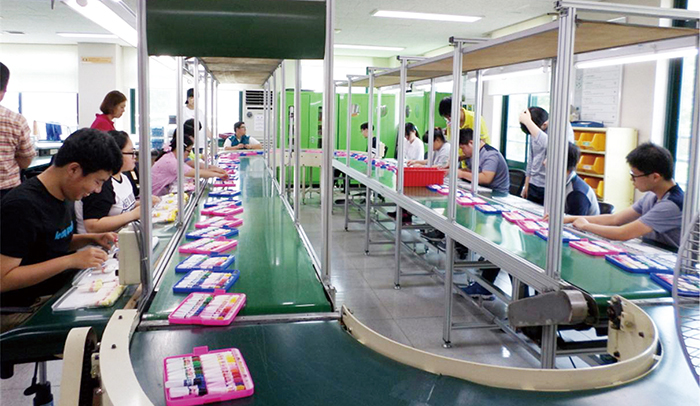
South Korea’s vocational training system for persons with disabilities has developed in response to demographic change, labor market gaps, and employer demand for job-ready skills. While persons with disabilities account for a stable share of the population, labor force participation and employment rates remain significantly lower than those of the general population, alongside a rising share of older persons with disabilities. Employer surveys indicate that skills mismatch and a lack of suitable positions are key barriers to hiring. To address these gaps, Korea expanded vocational competency development as a core employment policy, supported by an employment quota system and contributory charges. Over time, fragmented training provision was consolidated into a more systematic, demand-oriented model, with diversified training modalities including specialized, integrated, and firm-linked customized programs. Empirical evidence shows that vocational training substantially improves employment probability, wages, and job satisfaction, including for persons with severe disabilities. These experiences offer policy-relevant lessons for building inclusive, demand-responsive training systems.
#disability #labor #TVET
The disabled population of South Korea consists of 2.63 million who are registered as of 2024, which is 5.1% of the total population. Due to population decline and population ageing, the total number of registered persons with disabilities has been decreasing for the past few years, while the share of persons with disabilities aged 65 and over continues to rise.
Korea Employment Agency for Persons with Disabilities (KEAD)’s survey on the economic activity of the disabled (2025) indicates that 35.6% of registered disabled persons over 15 years old are engaged in economic activity either by employment or unemployment.
The labor force participation rate and the employment rate of the disabled are remarkably lower than total population, while the unemployment rate is higher than those of the total population. Meanwhile, according to KEAD’s survey on Work & Life of Persons with Developmental Disabilities (2024), 50.7% of the unemployed hope to have paid jobs.
According to the survey on the employment conditions of persons with disabilities in the business sector (2024), companies reported barriers to hiring people with disabilities are “lack of qualified workers (17.9%)” and “lack of suitable positions (13.5%).”
These results indicate that an employment policy that enables the supply of disabled workers to meet the demand of companies is urgently required. About the demand and supply within the labor market for the disabled, it is true that there are many job seekers but not enough appropriately trained people who can perform the jobs that companies demand. In this circumstance, raising and providing a skilled labor force among the disabled that meets the companies’ demand is in line with government-level human resources development.
A vocational competency development program for the disabled had been implemented in a variety of forms before the advent of the Quota System for the Employment of the Disabled such as welfare centers for the disabled run by the Ministry of Health and Wealth, “vocational rehabilitation training” operated by vocational rehabilitation institutes, “vocational education” conducted by special schools of the Ministry of Education and “vocational training” by public or authorized vocational training institutes of the Ministry of Employment and Labor. Although there is a rehabilitation training system for those disabled by industrial disasters and disabled veterans, the program can be categorized by the three types mentioned above. However, as these training programs had limited resources and limited eligible trainees, they could not meet the training demand of the disabled.
The “principle of compulsory employment of the disabled legislation” of ILO 1923, enforces the government’s social responsibility and obligation for people with disabilities and insists that the government should acknowledge the economic value of those people. According to the recommendation of ILO, the Korean government has implemented a compulsory employment system for the disabled. Vocational training of persons with disabilities keeps developing with many changes through the present as a core part of the employment policy for the disabled.
Vocational skill development training has the following purposes that accord with the philosophy of the Act: Vocational skill development training programs for the disabled should increase employment and promote job security of the disabled by fostering skilled manpower that corresponds with the demand of companies and the disabled citizens themselves.
The employment rate of the trainees who took training in one of KEAD’s Vocational Competency Development Centers presented below. The employment rate has risen from 78.8% in 2005 to 90.2% in 2012, and to 91.3% in 2013.
Among the trainees who have completed training, the severely disabled were 72.7% in 2005, 66.5% in 2006, 61.5% in 2007, 66.7% in 2008, 66.0% in 2009, 66.8% in 2010, 57.4% in 2011, 64.5% in 2012 and 68.9% in 2013. Considering that the ratio of the severely disabled in the overall disabled population is 32.6% (as of 2013) the average 65.7% participation rate is notably high.
To assess whether the disabled are provided with various opportunities for vocational training, we looked in to the getting-a-job rate of trainees of other training institutes that receive financial support. As of 2013, in the case of individual training expense support, the getting-a-job rate is 38.8%, the rate of private training institutes is 59.0% and the public training institutes (Korea Polytechnics) rate is 76.4% showing that the public institutes do best of all. Private organizations come next and individual training is the last. The annual getting-a-job rate shows continuous increase from all three types of training. Based on these figures, we estimate that the result of the policy to expand the opportunities for vocational training for the disabled is positive.
The result of an assessment on effectiveness of vocational competency development of the disabled is as follows: The disabled who received vocational training are 2.6 times more likely to get a job than those who are not trained (Jun et al., 2011). The Logit method which controls for the variable of time was used for this analysis. The employment effectiveness by training type shows that the disabled who received customized training are 5.1% more likely to be employed than those who received general training (Nam & Lee, 2013).
About the wage-income effect, average wages of the disabled who received vocational training are 13.2% higher than those who have not received vocational training. Also, job satisfaction—a marker of successful employment—of those who received vocational training is 13.2% higher than those who are not trained (Lee, 2008).
Considering those research results, the vocational competency development program for the disabled is estimated to have contributed successfully to the employment of disabled people.
After the “Employment Promotion of Disabled Persons Act” started to be enforced on January 1, 1991, it was revised for introduction of a new system and improvement of the existing system.
In the revised Act, it is emphasized that workplace skill development training should be carried out to provide a professional life suited to the disabled person’s expectations, aptitude and abilities. Also, for improved workplace skill development, not only payment of training allowance but also granting a loan or subsidy for the expenses incurred to any person who establishes and operates a facility or training program for vocational adjustment is allowed.
Vocational competency development programs before the establishment of KEAD were “vocational rehabilitation training” by welfare centers or vocational rehabilitation facilities for the disabled under the Ministry of Health and Wealth. “Vocational education” was conducted by special schools under the Ministry of Education and “vocational training” by public or authorized vocational training institutes under the Ministry of Employment and Labor and served as a rehabilitation training system for those disabled by industrial disaster and disabled veterans. Later in 1992 with the opening of Ilsan Specialized Vocational School, which is designed for vocational training for the disabled, vocational training by expert faculty using a systematic training curriculum began.
To meet the increasing demand and desire for vocational rehabilitation of the disabled, vocational training facilities by each type of disability in each area were expanded as a part of a five-year plan for the promotion of employment of the disabled. In January 2000 with the opening of the Employment Development Institute, specialized vocational schools opened in Daejeon and Busan and in Daegu and Jeonnam in 2002. In 2003 a network building program between areas became regularized, including establishment of specialized vocational schools for the visually and mentally disabled.

KEAD’s vocational training systems for the disabled adopted big changes around 2005. In November 2004, skill training-oriented specialized vocational schools were reformed to comprehensive vocational competency development centers and the role and function of training systems were re-established to foster customized human resources for the disabled. Therefore, the system was expanded to include rehabilitation services and supported training systems, specialization training by type of disabilities, job training for the intellectual disabled and customized training.
Targeting expansion of training opportunities to the students and rehabilitation service that fits the characteristics of each person and each type of disability, KEAD created and implemented a three-year plan in 2008. As the training for the severely disabled initiated by the policy order of the government changed from obligational to optional, the training for the severely disabled was weakened and therefore KEAD implemented the plan mainly for the severely disabled who have difficulties in getting vocational training. Also, through in-advance contracts with companies, KEAD expanded customized training for immediate application of competency in various industrial fields. In addition, the agency conducted specialized training by type of disabilities to provide optimized competency development service depending on the type of disability.
KEAD seeks to strengthen demand-based vocational training to foster skilled human resources via vocational competency development and to expand competency development opportunities for the disabled.

KEAD’s vocational training system is structured to accommodate diverse needs and pathways of persons with disabilities, ranging from basic skill development to advanced, employment-linked training. Core programs include integrated (convergence) training, which offers level-based professional training from foundational skills to multi-skilled technician competencies; specialized training, tailored to specific disability types such as visual, hearing, intellectual, and developmental disabilities; and general training, which follows National Competency Standards (NCS)–based curricula in single occupational fields. In addition, customized training is designed in partnership with firms, covering job-specific training, recruitment, and post-employment support, while upskilling programs for employed workers focus on enhancing job performance of workers already in employment. Training durations vary by occupation, generally ranging from one month to up to two years, and are delivered through vocational competency development centers, digital training centers, customized training centers, and centers for persons with developmental disabilities.
Specialized training by type of disability, (“specialized training” hereafter), which began in 2005, means professional vocational competency development training that considers features of disability for those who experience difficulties entering the job market. Currently each of the five Vocational Competency Development Centers focuses on a particular type of disability: Daegu specializes in visual disability, Ilsan in hearing disability, Busan in mental disabilities, Jeonnam in brain disabilities, and Daejeon in intellectual (autism) disability.
“Customized training” was introduced in 2002 and was fully implemented in 2005. It was introduced because there was a limit in then-existing vocational training to satisfy various vocational desires of the disabled. “Customized training” is similar to order-based training. The whole process from its curriculum design, to trainee selection, training and employment, is connected with companies and as it is closely related to actual performance of duties, trainees adjust to the workplace smoothly, leading to higher satisfaction of companies and the disabled.
To meet various demands of the disabled and increase locational access, KEAD supports other training organizations. The organizations that provide vocational training for the disabled other than vocational training institutes run by KEAD include public and private training organizations.
1. Vocational Training Systems for the Disabled through an Employment Quota System
Korea introduced its Quota System for the Employment of the Disabled with the enactment of the “Employment Promotion and Vocational Rehabilitation of Disabled Persons Act” in 1990. Before the introduction, the issue of employment of the disabled had been partly handled in the law related to the disabled but the system could not be established properly. The rate of employment by companies with the obligation of employment increased by six times from 0.42% in 1991 to 2.48 in 2013. This strong increase was due to the continuous change in quota system, which include increase in obligatory employment rates, adjustment of contributory charge, strengthened implementation of employment obligation, stronger incentives for business owners and improved perception of the disabled. The changes in the vocational training system are expanded infrastructure in vocational training, reformed training system, strengthened customized training, specialized training by type of disabilities and increased accessibility to training.
In the beginning stage, it can be said that general training-centered program operation is more stable. For customized training, checking the possibility through pilot programs is the first step and if the effectiveness is good enough, it is better to expand the customized training reflecting the demand of companies. There is a limit to satisfy the training demand only through exclusive training institutes for the disabled. In order to address the problem, Korea responds to various training demands of the disabled by financially supporting the private and public training institutes. Therefore, in developing countries, it is necessary to find methods to utilize various training resources in connection other than exclusive training institutes. In developing countries, the state tends to focus all its capacity on economic development. In this situation, the employment of the disabled can be pushed back in policy priority, as was the case in Korea. Therefore, if a country chooses to establish vocational training systems among its employment policies, implementation of an obligatory employment system can be considered. As such a system determines the obligatory employment rate considering the disabled population, various policies should be made and implemented to meet the employment goal. Vocational training must be the most representative employment policy area for the disabled. Korea could devise vocational training systems in a short period of 20 years, because it implemented employment policy for the disabled based on the quota system.
2. Government-led mid-to Long-term Plans should be Made
Korea constructed infrastructure to implement programs by introducing the obligatory employment system for the disabled in 1990 and establishment of the Korea Employment Agency for the Disabled. Later, to implement programs systematically, the government created mid-to long-term program plans. The employment promotion program plan for the disabled (1994~1997) contains support for welfare centers for the disabled and support for facility funds for business owners. In the announcement of employment measures for the disabled in 1995, strengthening connections between special education and vocational training was stated. Amending detailed program plans for the above-mentioned measure, the “five-year plan for the development of welfare of the disabled” (1998~2002) was created.
From the second five-year plan, provision for promotion of employment of the disabled was separately created and currently the 3rd plan 2008~2012 and the 4th (2013~2017) plans are being implemented. Through the plans, Korea is expanding infrastructure of vocational training for the disabled and strengthening the program at the same time. The Ministry of Employment and Labor is in charge of the plan, but as it is created jointly with other ministries, cooperation between ministries is required. Government-led mid-to long-term planning is required for the development of policy for the disabled. The government in developing countries needs to create mid-to long-term development plans in joint efforts with ministries to achieve the goal of the relevant tasks. As Korea experienced, evaluation of implementation processes of the mid-to long-term plan is weak; therefore, it is necessary to consider the function of checking and evaluating in the planning stage.
3. Securing Budget through Contributory Charges
Most of the countries which implement an obligatory employment system set an obligatory employment rate, which if not reached, they collect contributory charges. The purpose of the contributory charge system is to equalize the economic burden of the companies that employ or do not employ the disabled and to encourage business owners to employ the disabled. Contributory charge systems vary depending on countries. For example, Germany sets the price of its contributory charge depending on the employment rate and France applies different standards depending on the size of companies. Korea imposes and collects additional charges on companies with low employment rate like Germany.
Korea implements employment policies based on the contributory charges and the dependency on the charge is very high. Weak general accounting support and low employment rate and social insurance rate can be seen as weak points in operating the employment program for the disabled in a stable manner. However, as Korea has constantly changed the contributory system and the fund for employment promotion for the disabled is well stabilized, it is forecast that there will be no big problem in implementing the program. Taking the case of Korea, developing countries need to consider employment promotion programs for the disabled with the financial source of the contributory charge.
4. Building a Training System that Meets the Demand of Companies and the Disabled

Implementing employment policy for the last 20 years, Korea has achieved a major increase in employment. However, there has been no big improvement in employment of the severely disabled. Therefore, Korea revised the “Employment Promotion of Disabled Persons Act” to the “Employment Promotion and Vocational Rehabilitation of Disabled Persons Act” in 2000, laying the legal ground for strengthening employment promotion of the severely disabled. In vocational training, expanding training participation of the severely disabled and specialized training for those with visual, hearing, mental, intelligence and brain disability who face difficulties in getting a job has been strengthened. There are demands from companies for manpower, and to meet the demand, the agency reduced the portion of general training and raised the portion of customized training from 2005. Through a national scale survey on the demand of companies and the disabled, Korea improves merits and demerits of training. Also reflecting the training demand, direction of program is determined to expand training facilities. Considering both companies and the disabled is very important in employment policy for the disabled. Therefore, in developing countries, it is necessary to understand that the consumer survey provides basic data for policy making.
In the beginning stage, it can be said that general training-centered program operation is more stable. For customized training, checking the possibility through pilot programs is the first step and if the effectiveness is good enough, it is better to expand the customized training reflecting the demand of companies. There is a limit to satisfy the training demand only through exclusive training institutes for the disabled. In order to address the problem, Korea responds to various training demands of the disabled by financially supporting the private and public training institutes. Therefore, in developing countries, it is necessary to find methods to utilize various training resources in connection with the disabled other than exclusive training institutes.
5. Efforts to Improve Recognition of the Human Resources of the Disabled

Korea hosts a Vocational Skill Contest for the Disabled every year for the purpose of encouraging development of skills of the disabled and contributing to development of employment of the disabled through improvement of social perceptions on disabilities. The Vocational Skill Contest for the Disabled is divided into a contest for the intellectually disabled, local contests, national contests and the International Abilympics.
The annual performance of the National Vocational Skill Contest shows gradual improvement of the perception on skilled people with disabilities. The job- maintaining rate of awardees of the vocational skill contest has exceeded its target. It has been revealed in many reports that negative perception of the disabled is a disincentive for their employment. Korea requires education on improving perception of the disabled in the workplace through its 2007 revision of related laws and develops various programs to improve the perception of the disabled such as the EDI behavior program and distributes them. The Vocational Skill Contest is in line with the activities to improve recognition of business owners and is also a nationwide PR activity. Developing countries need to consider hosting such vocational skills contests regularly. Further, when development of education programs for improvement of recognition on the disabled is required, benchmarking the EDI behavior program of Korea is recommended.

South Korea’s vocational training system for persons with disabilities has developed in response to demographic change, labor market gaps, and employer demand for job-ready skills. While persons with disabilities account for a stable share of the population, labor force participation and employment rates remain significantly lower than those of the general population, alongside a rising share of older persons with disabilities. Employer surveys indicate that skills mismatch and a lack of suitable positions are key barriers to hiring. To address these gaps, Korea expanded vocational competency development as a core employment policy, supported by an employment quota system and contributory charges. Over time, fragmented training provision was consolidated into a more systematic, demand-oriented model, with diversified training modalities including specialized, integrated, and firm-linked customized programs. Empirical evidence shows that vocational training substantially improves employment probability, wages, and job satisfaction, including for persons with severe disabilities. These experiences offer policy-relevant lessons for building inclusive, demand-responsive training systems.
#disability #labor #TVET
The disabled population of South Korea consists of 2.63 million who are registered as of 2024, which is 5.1% of the total population. Due to population decline and population ageing, the total number of registered persons with disabilities has been decreasing for the past few years, while the share of persons with disabilities aged 65 and over continues to rise.
Korea Employment Agency for Persons with Disabilities (KEAD)’s survey on the economic activity of the disabled (2025) indicates that 35.6% of registered disabled persons over 15 years old are engaged in economic activity either by employment or unemployment.
The labor force participation rate and the employment rate of the disabled are remarkably lower than total population, while the unemployment rate is higher than those of the total population. Meanwhile, according to KEAD’s survey on Work & Life of Persons with Developmental Disabilities (2024), 50.7% of the unemployed hope to have paid jobs.
According to the survey on the employment conditions of persons with disabilities in the business sector (2024), companies reported barriers to hiring people with disabilities are “lack of qualified workers (17.9%)” and “lack of suitable positions (13.5%).”
These results indicate that an employment policy that enables the supply of disabled workers to meet the demand of companies is urgently required. About the demand and supply within the labor market for the disabled, it is true that there are many job seekers but not enough appropriately trained people who can perform the jobs that companies demand. In this circumstance, raising and providing a skilled labor force among the disabled that meets the companies’ demand is in line with government-level human resources development.
A vocational competency development program for the disabled had been implemented in a variety of forms before the advent of the Quota System for the Employment of the Disabled such as welfare centers for the disabled run by the Ministry of Health and Wealth, “vocational rehabilitation training” operated by vocational rehabilitation institutes, “vocational education” conducted by special schools of the Ministry of Education and “vocational training” by public or authorized vocational training institutes of the Ministry of Employment and Labor. Although there is a rehabilitation training system for those disabled by industrial disasters and disabled veterans, the program can be categorized by the three types mentioned above. However, as these training programs had limited resources and limited eligible trainees, they could not meet the training demand of the disabled.
The “principle of compulsory employment of the disabled legislation” of ILO 1923, enforces the government’s social responsibility and obligation for people with disabilities and insists that the government should acknowledge the economic value of those people. According to the recommendation of ILO, the Korean government has implemented a compulsory employment system for the disabled. Vocational training of persons with disabilities keeps developing with many changes through the present as a core part of the employment policy for the disabled.
Vocational skill development training has the following purposes that accord with the philosophy of the Act: Vocational skill development training programs for the disabled should increase employment and promote job security of the disabled by fostering skilled manpower that corresponds with the demand of companies and the disabled citizens themselves.
The employment rate of the trainees who took training in one of KEAD’s Vocational Competency Development Centers presented below. The employment rate has risen from 78.8% in 2005 to 90.2% in 2012, and to 91.3% in 2013.
Among the trainees who have completed training, the severely disabled were 72.7% in 2005, 66.5% in 2006, 61.5% in 2007, 66.7% in 2008, 66.0% in 2009, 66.8% in 2010, 57.4% in 2011, 64.5% in 2012 and 68.9% in 2013. Considering that the ratio of the severely disabled in the overall disabled population is 32.6% (as of 2013) the average 65.7% participation rate is notably high.
To assess whether the disabled are provided with various opportunities for vocational training, we looked in to the getting-a-job rate of trainees of other training institutes that receive financial support. As of 2013, in the case of individual training expense support, the getting-a-job rate is 38.8%, the rate of private training institutes is 59.0% and the public training institutes (Korea Polytechnics) rate is 76.4% showing that the public institutes do best of all. Private organizations come next and individual training is the last. The annual getting-a-job rate shows continuous increase from all three types of training. Based on these figures, we estimate that the result of the policy to expand the opportunities for vocational training for the disabled is positive.
The result of an assessment on effectiveness of vocational competency development of the disabled is as follows: The disabled who received vocational training are 2.6 times more likely to get a job than those who are not trained (Jun et al., 2011). The Logit method which controls for the variable of time was used for this analysis. The employment effectiveness by training type shows that the disabled who received customized training are 5.1% more likely to be employed than those who received general training (Nam & Lee, 2013).
About the wage-income effect, average wages of the disabled who received vocational training are 13.2% higher than those who have not received vocational training. Also, job satisfaction—a marker of successful employment—of those who received vocational training is 13.2% higher than those who are not trained (Lee, 2008).
Considering those research results, the vocational competency development program for the disabled is estimated to have contributed successfully to the employment of disabled people.
After the “Employment Promotion of Disabled Persons Act” started to be enforced on January 1, 1991, it was revised for introduction of a new system and improvement of the existing system.
In the revised Act, it is emphasized that workplace skill development training should be carried out to provide a professional life suited to the disabled person’s expectations, aptitude and abilities. Also, for improved workplace skill development, not only payment of training allowance but also granting a loan or subsidy for the expenses incurred to any person who establishes and operates a facility or training program for vocational adjustment is allowed.
Vocational competency development programs before the establishment of KEAD were “vocational rehabilitation training” by welfare centers or vocational rehabilitation facilities for the disabled under the Ministry of Health and Wealth. “Vocational education” was conducted by special schools under the Ministry of Education and “vocational training” by public or authorized vocational training institutes under the Ministry of Employment and Labor and served as a rehabilitation training system for those disabled by industrial disaster and disabled veterans. Later in 1992 with the opening of Ilsan Specialized Vocational School, which is designed for vocational training for the disabled, vocational training by expert faculty using a systematic training curriculum began.
To meet the increasing demand and desire for vocational rehabilitation of the disabled, vocational training facilities by each type of disability in each area were expanded as a part of a five-year plan for the promotion of employment of the disabled. In January 2000 with the opening of the Employment Development Institute, specialized vocational schools opened in Daejeon and Busan and in Daegu and Jeonnam in 2002. In 2003 a network building program between areas became regularized, including establishment of specialized vocational schools for the visually and mentally disabled.

KEAD’s vocational training systems for the disabled adopted big changes around 2005. In November 2004, skill training-oriented specialized vocational schools were reformed to comprehensive vocational competency development centers and the role and function of training systems were re-established to foster customized human resources for the disabled. Therefore, the system was expanded to include rehabilitation services and supported training systems, specialization training by type of disabilities, job training for the intellectual disabled and customized training.
Targeting expansion of training opportunities to the students and rehabilitation service that fits the characteristics of each person and each type of disability, KEAD created and implemented a three-year plan in 2008. As the training for the severely disabled initiated by the policy order of the government changed from obligational to optional, the training for the severely disabled was weakened and therefore KEAD implemented the plan mainly for the severely disabled who have difficulties in getting vocational training. Also, through in-advance contracts with companies, KEAD expanded customized training for immediate application of competency in various industrial fields. In addition, the agency conducted specialized training by type of disabilities to provide optimized competency development service depending on the type of disability.
KEAD seeks to strengthen demand-based vocational training to foster skilled human resources via vocational competency development and to expand competency development opportunities for the disabled.
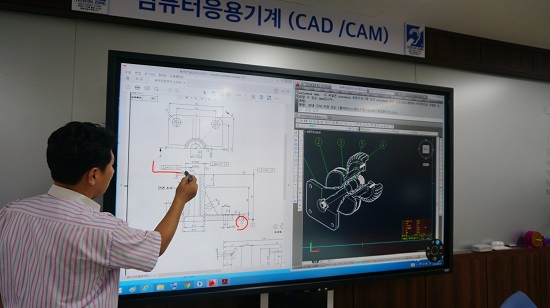
KEAD’s vocational training system is structured to accommodate diverse needs and pathways of persons with disabilities, ranging from basic skill development to advanced, employment-linked training. Core programs include integrated (convergence) training, which offers level-based professional training from foundational skills to multi-skilled technician competencies; specialized training, tailored to specific disability types such as visual, hearing, intellectual, and developmental disabilities; and general training, which follows National Competency Standards (NCS)–based curricula in single occupational fields. In addition, customized training is designed in partnership with firms, covering job-specific training, recruitment, and post-employment support, while upskilling programs for employed workers focus on enhancing job performance of workers already in employment. Training durations vary by occupation, generally ranging from one month to up to two years, and are delivered through vocational competency development centers, digital training centers, customized training centers, and centers for persons with developmental disabilities.
Specialized training by type of disability, (“specialized training” hereafter), which began in 2005, means professional vocational competency development training that considers features of disability for those who experience difficulties entering the job market. Currently each of the five Vocational Competency Development Centers focuses on a particular type of disability: Daegu specializes in visual disability, Ilsan in hearing disability, Busan in mental disabilities, Jeonnam in brain disabilities, and Daejeon in intellectual (autism) disability.
“Customized training” was introduced in 2002 and was fully implemented in 2005. It was introduced because there was a limit in then-existing vocational training to satisfy various vocational desires of the disabled. “Customized training” is similar to order-based training. The whole process from its curriculum design, to trainee selection, training and employment, is connected with companies and as it is closely related to actual performance of duties, trainees adjust to the workplace smoothly, leading to higher satisfaction of companies and the disabled.
To meet various demands of the disabled and increase locational access, KEAD supports other training organizations. The organizations that provide vocational training for the disabled other than vocational training institutes run by KEAD include public and private training organizations.
1. Vocational Training Systems for the Disabled through an Employment Quota System
Korea introduced its Quota System for the Employment of the Disabled with the enactment of the “Employment Promotion and Vocational Rehabilitation of Disabled Persons Act” in 1990. Before the introduction, the issue of employment of the disabled had been partly handled in the law related to the disabled but the system could not be established properly. The rate of employment by companies with the obligation of employment increased by six times from 0.42% in 1991 to 2.48 in 2013. This strong increase was due to the continuous change in quota system, which include increase in obligatory employment rates, adjustment of contributory charge, strengthened implementation of employment obligation, stronger incentives for business owners and improved perception of the disabled. The changes in the vocational training system are expanded infrastructure in vocational training, reformed training system, strengthened customized training, specialized training by type of disabilities and increased accessibility to training.
In the beginning stage, it can be said that general training-centered program operation is more stable. For customized training, checking the possibility through pilot programs is the first step and if the effectiveness is good enough, it is better to expand the customized training reflecting the demand of companies. There is a limit to satisfy the training demand only through exclusive training institutes for the disabled. In order to address the problem, Korea responds to various training demands of the disabled by financially supporting the private and public training institutes. Therefore, in developing countries, it is necessary to find methods to utilize various training resources in connection other than exclusive training institutes. In developing countries, the state tends to focus all its capacity on economic development. In this situation, the employment of the disabled can be pushed back in policy priority, as was the case in Korea. Therefore, if a country chooses to establish vocational training systems among its employment policies, implementation of an obligatory employment system can be considered. As such a system determines the obligatory employment rate considering the disabled population, various policies should be made and implemented to meet the employment goal. Vocational training must be the most representative employment policy area for the disabled. Korea could devise vocational training systems in a short period of 20 years, because it implemented employment policy for the disabled based on the quota system.
2. Government-led mid-to Long-term Plans should be Made
Korea constructed infrastructure to implement programs by introducing the obligatory employment system for the disabled in 1990 and establishment of the Korea Employment Agency for the Disabled. Later, to implement programs systematically, the government created mid-to long-term program plans. The employment promotion program plan for the disabled (1994~1997) contains support for welfare centers for the disabled and support for facility funds for business owners. In the announcement of employment measures for the disabled in 1995, strengthening connections between special education and vocational training was stated. Amending detailed program plans for the above-mentioned measure, the “five-year plan for the development of welfare of the disabled” (1998~2002) was created.
From the second five-year plan, provision for promotion of employment of the disabled was separately created and currently the 3rd plan 2008~2012 and the 4th (2013~2017) plans are being implemented. Through the plans, Korea is expanding infrastructure of vocational training for the disabled and strengthening the program at the same time. The Ministry of Employment and Labor is in charge of the plan, but as it is created jointly with other ministries, cooperation between ministries is required. Government-led mid-to long-term planning is required for the development of policy for the disabled. The government in developing countries needs to create mid-to long-term development plans in joint efforts with ministries to achieve the goal of the relevant tasks. As Korea experienced, evaluation of implementation processes of the mid-to long-term plan is weak; therefore, it is necessary to consider the function of checking and evaluating in the planning stage.
3. Securing Budget through Contributory Charges
Most of the countries which implement an obligatory employment system set an obligatory employment rate, which if not reached, they collect contributory charges. The purpose of the contributory charge system is to equalize the economic burden of the companies that employ or do not employ the disabled and to encourage business owners to employ the disabled. Contributory charge systems vary depending on countries. For example, Germany sets the price of its contributory charge depending on the employment rate and France applies different standards depending on the size of companies. Korea imposes and collects additional charges on companies with low employment rate like Germany.
Korea implements employment policies based on the contributory charges and the dependency on the charge is very high. Weak general accounting support and low employment rate and social insurance rate can be seen as weak points in operating the employment program for the disabled in a stable manner. However, as Korea has constantly changed the contributory system and the fund for employment promotion for the disabled is well stabilized, it is forecast that there will be no big problem in implementing the program. Taking the case of Korea, developing countries need to consider employment promotion programs for the disabled with the financial source of the contributory charge.
4. Building a Training System that Meets the Demand of Companies and the Disabled

Implementing employment policy for the last 20 years, Korea has achieved a major increase in employment. However, there has been no big improvement in employment of the severely disabled. Therefore, Korea revised the “Employment Promotion of Disabled Persons Act” to the “Employment Promotion and Vocational Rehabilitation of Disabled Persons Act” in 2000, laying the legal ground for strengthening employment promotion of the severely disabled. In vocational training, expanding training participation of the severely disabled and specialized training for those with visual, hearing, mental, intelligence and brain disability who face difficulties in getting a job has been strengthened. There are demands from companies for manpower, and to meet the demand, the agency reduced the portion of general training and raised the portion of customized training from 2005. Through a national scale survey on the demand of companies and the disabled, Korea improves merits and demerits of training. Also reflecting the training demand, direction of program is determined to expand training facilities. Considering both companies and the disabled is very important in employment policy for the disabled. Therefore, in developing countries, it is necessary to understand that the consumer survey provides basic data for policy making.
In the beginning stage, it can be said that general training-centered program operation is more stable. For customized training, checking the possibility through pilot programs is the first step and if the effectiveness is good enough, it is better to expand the customized training reflecting the demand of companies. There is a limit to satisfy the training demand only through exclusive training institutes for the disabled. In order to address the problem, Korea responds to various training demands of the disabled by financially supporting the private and public training institutes. Therefore, in developing countries, it is necessary to find methods to utilize various training resources in connection with the disabled other than exclusive training institutes.
5. Efforts to Improve Recognition of the Human Resources of the Disabled
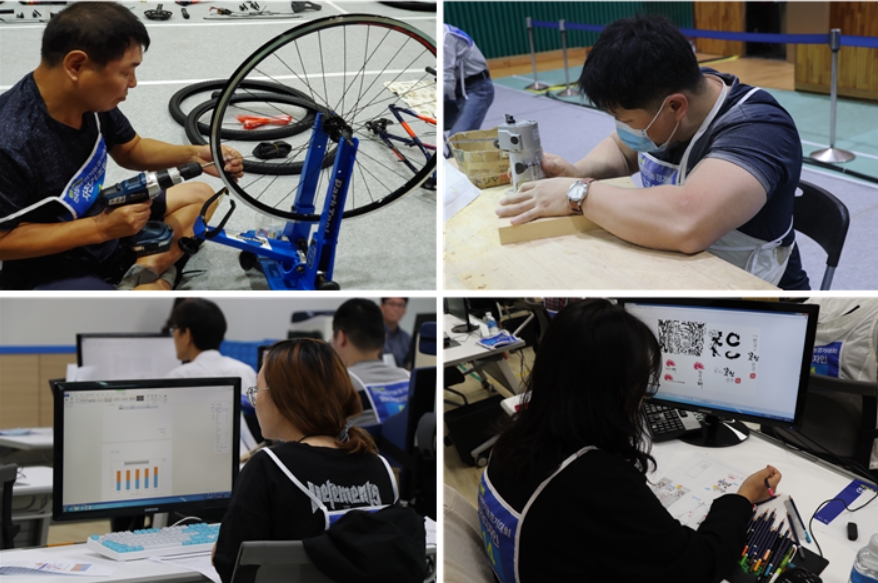
Korea hosts a Vocational Skill Contest for the Disabled every year for the purpose of encouraging development of skills of the disabled and contributing to development of employment of the disabled through improvement of social perceptions on disabilities. The Vocational Skill Contest for the Disabled is divided into a contest for the intellectually disabled, local contests, national contests and the International Abilympics.
The annual performance of the National Vocational Skill Contest shows gradual improvement of the perception on skilled people with disabilities. The job- maintaining rate of awardees of the vocational skill contest has exceeded its target. It has been revealed in many reports that negative perception of the disabled is a disincentive for their employment. Korea requires education on improving perception of the disabled in the workplace through its 2007 revision of related laws and develops various programs to improve the perception of the disabled such as the EDI behavior program and distributes them. The Vocational Skill Contest is in line with the activities to improve recognition of business owners and is also a nationwide PR activity. Developing countries need to consider hosting such vocational skills contests regularly. Further, when development of education programs for improvement of recognition on the disabled is required, benchmarking the EDI behavior program of Korea is recommended.

The disabled population of South Korea consists of 2.63 million who are registered as of 2024, which is 5.1% of the total population. Due to population decline and population ageing, the total number of registered persons with disabilities has been decreasing for the past few years, while the share of persons with disabilities aged 65 and over continues to rise.
Korea Employment Agency for Persons with Disabilities (KEAD)’s survey on the economic activity of the disabled (2025) indicates that 35.6% of registered disabled persons over 15 years old are engaged in economic activity either by employment or unemployment.
The labor force participation rate and the employment rate of the disabled are remarkably lower than total population, while the unemployment rate is higher than those of the total population. Meanwhile, according to KEAD’s survey on Work & Life of Persons with Developmental Disabilities (2024), 50.7% of the unemployed hope to have paid jobs.
According to the survey on the employment conditions of persons with disabilities in the business sector (2024), companies reported barriers to hiring people with disabilities are “lack of qualified workers (17.9%)” and “lack of suitable positions (13.5%).”
These results indicate that an employment policy that enables the supply of disabled workers to meet the demand of companies is urgently required. About the demand and supply within the labor market for the disabled, it is true that there are many job seekers but not enough appropriately trained people who can perform the jobs that companies demand. In this circumstance, raising and providing a skilled labor force among the disabled that meets the companies’ demand is in line with government-level human resources development.
A vocational competency development program for the disabled had been implemented in a variety of forms before the advent of the Quota System for the Employment of the Disabled such as welfare centers for the disabled run by the Ministry of Health and Wealth, “vocational rehabilitation training” operated by vocational rehabilitation institutes, “vocational education” conducted by special schools of the Ministry of Education and “vocational training” by public or authorized vocational training institutes of the Ministry of Employment and Labor. Although there is a rehabilitation training system for those disabled by industrial disasters and disabled veterans, the program can be categorized by the three types mentioned above. However, as these training programs had limited resources and limited eligible trainees, they could not meet the training demand of the disabled.
The “principle of compulsory employment of the disabled legislation” of ILO 1923, enforces the government’s social responsibility and obligation for people with disabilities and insists that the government should acknowledge the economic value of those people. According to the recommendation of ILO, the Korean government has implemented a compulsory employment system for the disabled. Vocational training of persons with disabilities keeps developing with many changes through the present as a core part of the employment policy for the disabled.
Vocational skill development training has the following purposes that accord with the philosophy of the Act: Vocational skill development training programs for the disabled should increase employment and promote job security of the disabled by fostering skilled manpower that corresponds with the demand of companies and the disabled citizens themselves.
The employment rate of the trainees who took training in one of KEAD’s Vocational Competency Development Centers presented below. The employment rate has risen from 78.8% in 2005 to 90.2% in 2012, and to 91.3% in 2013.
Among the trainees who have completed training, the severely disabled were 72.7% in 2005, 66.5% in 2006, 61.5% in 2007, 66.7% in 2008, 66.0% in 2009, 66.8% in 2010, 57.4% in 2011, 64.5% in 2012 and 68.9% in 2013. Considering that the ratio of the severely disabled in the overall disabled population is 32.6% (as of 2013) the average 65.7% participation rate is notably high.
To assess whether the disabled are provided with various opportunities for vocational training, we looked in to the getting-a-job rate of trainees of other training institutes that receive financial support. As of 2013, in the case of individual training expense support, the getting-a-job rate is 38.8%, the rate of private training institutes is 59.0% and the public training institutes (Korea Polytechnics) rate is 76.4% showing that the public institutes do best of all. Private organizations come next and individual training is the last. The annual getting-a-job rate shows continuous increase from all three types of training. Based on these figures, we estimate that the result of the policy to expand the opportunities for vocational training for the disabled is positive.
The result of an assessment on effectiveness of vocational competency development of the disabled is as follows: The disabled who received vocational training are 2.6 times more likely to get a job than those who are not trained (Jun et al., 2011). The Logit method which controls for the variable of time was used for this analysis. The employment effectiveness by training type shows that the disabled who received customized training are 5.1% more likely to be employed than those who received general training (Nam & Lee, 2013).
About the wage-income effect, average wages of the disabled who received vocational training are 13.2% higher than those who have not received vocational training. Also, job satisfaction—a marker of successful employment—of those who received vocational training is 13.2% higher than those who are not trained (Lee, 2008).
Considering those research results, the vocational competency development program for the disabled is estimated to have contributed successfully to the employment of disabled people.
After the “Employment Promotion of Disabled Persons Act” started to be enforced on January 1, 1991, it was revised for introduction of a new system and improvement of the existing system.
In the revised Act, it is emphasized that workplace skill development training should be carried out to provide a professional life suited to the disabled person’s expectations, aptitude and abilities. Also, for improved workplace skill development, not only payment of training allowance but also granting a loan or subsidy for the expenses incurred to any person who establishes and operates a facility or training program for vocational adjustment is allowed.
Vocational competency development programs before the establishment of KEAD were “vocational rehabilitation training” by welfare centers or vocational rehabilitation facilities for the disabled under the Ministry of Health and Wealth. “Vocational education” was conducted by special schools under the Ministry of Education and “vocational training” by public or authorized vocational training institutes under the Ministry of Employment and Labor and served as a rehabilitation training system for those disabled by industrial disaster and disabled veterans. Later in 1992 with the opening of Ilsan Specialized Vocational School, which is designed for vocational training for the disabled, vocational training by expert faculty using a systematic training curriculum began.
To meet the increasing demand and desire for vocational rehabilitation of the disabled, vocational training facilities by each type of disability in each area were expanded as a part of a five-year plan for the promotion of employment of the disabled. In January 2000 with the opening of the Employment Development Institute, specialized vocational schools opened in Daejeon and Busan and in Daegu and Jeonnam in 2002. In 2003 a network building program between areas became regularized, including establishment of specialized vocational schools for the visually and mentally disabled.

KEAD’s vocational training systems for the disabled adopted big changes around 2005. In November 2004, skill training-oriented specialized vocational schools were reformed to comprehensive vocational competency development centers and the role and function of training systems were re-established to foster customized human resources for the disabled. Therefore, the system was expanded to include rehabilitation services and supported training systems, specialization training by type of disabilities, job training for the intellectual disabled and customized training.
Targeting expansion of training opportunities to the students and rehabilitation service that fits the characteristics of each person and each type of disability, KEAD created and implemented a three-year plan in 2008. As the training for the severely disabled initiated by the policy order of the government changed from obligational to optional, the training for the severely disabled was weakened and therefore KEAD implemented the plan mainly for the severely disabled who have difficulties in getting vocational training. Also, through in-advance contracts with companies, KEAD expanded customized training for immediate application of competency in various industrial fields. In addition, the agency conducted specialized training by type of disabilities to provide optimized competency development service depending on the type of disability.
KEAD seeks to strengthen demand-based vocational training to foster skilled human resources via vocational competency development and to expand competency development opportunities for the disabled.

KEAD’s vocational training system is structured to accommodate diverse needs and pathways of persons with disabilities, ranging from basic skill development to advanced, employment-linked training. Core programs include integrated (convergence) training, which offers level-based professional training from foundational skills to multi-skilled technician competencies; specialized training, tailored to specific disability types such as visual, hearing, intellectual, and developmental disabilities; and general training, which follows National Competency Standards (NCS)–based curricula in single occupational fields. In addition, customized training is designed in partnership with firms, covering job-specific training, recruitment, and post-employment support, while upskilling programs for employed workers focus on enhancing job performance of workers already in employment. Training durations vary by occupation, generally ranging from one month to up to two years, and are delivered through vocational competency development centers, digital training centers, customized training centers, and centers for persons with developmental disabilities.
Specialized training by type of disability, (“specialized training” hereafter), which began in 2005, means professional vocational competency development training that considers features of disability for those who experience difficulties entering the job market. Currently each of the five Vocational Competency Development Centers focuses on a particular type of disability: Daegu specializes in visual disability, Ilsan in hearing disability, Busan in mental disabilities, Jeonnam in brain disabilities, and Daejeon in intellectual (autism) disability.
“Customized training” was introduced in 2002 and was fully implemented in 2005. It was introduced because there was a limit in then-existing vocational training to satisfy various vocational desires of the disabled. “Customized training” is similar to order-based training. The whole process from its curriculum design, to trainee selection, training and employment, is connected with companies and as it is closely related to actual performance of duties, trainees adjust to the workplace smoothly, leading to higher satisfaction of companies and the disabled.
To meet various demands of the disabled and increase locational access, KEAD supports other training organizations. The organizations that provide vocational training for the disabled other than vocational training institutes run by KEAD include public and private training organizations.
1. Vocational Training Systems for the Disabled through an Employment Quota System
Korea introduced its Quota System for the Employment of the Disabled with the enactment of the “Employment Promotion and Vocational Rehabilitation of Disabled Persons Act” in 1990. Before the introduction, the issue of employment of the disabled had been partly handled in the law related to the disabled but the system could not be established properly. The rate of employment by companies with the obligation of employment increased by six times from 0.42% in 1991 to 2.48 in 2013. This strong increase was due to the continuous change in quota system, which include increase in obligatory employment rates, adjustment of contributory charge, strengthened implementation of employment obligation, stronger incentives for business owners and improved perception of the disabled. The changes in the vocational training system are expanded infrastructure in vocational training, reformed training system, strengthened customized training, specialized training by type of disabilities and increased accessibility to training.
In the beginning stage, it can be said that general training-centered program operation is more stable. For customized training, checking the possibility through pilot programs is the first step and if the effectiveness is good enough, it is better to expand the customized training reflecting the demand of companies. There is a limit to satisfy the training demand only through exclusive training institutes for the disabled. In order to address the problem, Korea responds to various training demands of the disabled by financially supporting the private and public training institutes. Therefore, in developing countries, it is necessary to find methods to utilize various training resources in connection other than exclusive training institutes. In developing countries, the state tends to focus all its capacity on economic development. In this situation, the employment of the disabled can be pushed back in policy priority, as was the case in Korea. Therefore, if a country chooses to establish vocational training systems among its employment policies, implementation of an obligatory employment system can be considered. As such a system determines the obligatory employment rate considering the disabled population, various policies should be made and implemented to meet the employment goal. Vocational training must be the most representative employment policy area for the disabled. Korea could devise vocational training systems in a short period of 20 years, because it implemented employment policy for the disabled based on the quota system.
2. Government-led mid-to Long-term Plans should be Made
Korea constructed infrastructure to implement programs by introducing the obligatory employment system for the disabled in 1990 and establishment of the Korea Employment Agency for the Disabled. Later, to implement programs systematically, the government created mid-to long-term program plans. The employment promotion program plan for the disabled (1994~1997) contains support for welfare centers for the disabled and support for facility funds for business owners. In the announcement of employment measures for the disabled in 1995, strengthening connections between special education and vocational training was stated. Amending detailed program plans for the above-mentioned measure, the “five-year plan for the development of welfare of the disabled” (1998~2002) was created.
From the second five-year plan, provision for promotion of employment of the disabled was separately created and currently the 3rd plan 2008~2012 and the 4th (2013~2017) plans are being implemented. Through the plans, Korea is expanding infrastructure of vocational training for the disabled and strengthening the program at the same time. The Ministry of Employment and Labor is in charge of the plan, but as it is created jointly with other ministries, cooperation between ministries is required. Government-led mid-to long-term planning is required for the development of policy for the disabled. The government in developing countries needs to create mid-to long-term development plans in joint efforts with ministries to achieve the goal of the relevant tasks. As Korea experienced, evaluation of implementation processes of the mid-to long-term plan is weak; therefore, it is necessary to consider the function of checking and evaluating in the planning stage.
3. Securing Budget through Contributory Charges
Most of the countries which implement an obligatory employment system set an obligatory employment rate, which if not reached, they collect contributory charges. The purpose of the contributory charge system is to equalize the economic burden of the companies that employ or do not employ the disabled and to encourage business owners to employ the disabled. Contributory charge systems vary depending on countries. For example, Germany sets the price of its contributory charge depending on the employment rate and France applies different standards depending on the size of companies. Korea imposes and collects additional charges on companies with low employment rate like Germany.
Korea implements employment policies based on the contributory charges and the dependency on the charge is very high. Weak general accounting support and low employment rate and social insurance rate can be seen as weak points in operating the employment program for the disabled in a stable manner. However, as Korea has constantly changed the contributory system and the fund for employment promotion for the disabled is well stabilized, it is forecast that there will be no big problem in implementing the program. Taking the case of Korea, developing countries need to consider employment promotion programs for the disabled with the financial source of the contributory charge.
4. Building a Training System that Meets the Demand of Companies and the Disabled

Implementing employment policy for the last 20 years, Korea has achieved a major increase in employment. However, there has been no big improvement in employment of the severely disabled. Therefore, Korea revised the “Employment Promotion of Disabled Persons Act” to the “Employment Promotion and Vocational Rehabilitation of Disabled Persons Act” in 2000, laying the legal ground for strengthening employment promotion of the severely disabled. In vocational training, expanding training participation of the severely disabled and specialized training for those with visual, hearing, mental, intelligence and brain disability who face difficulties in getting a job has been strengthened. There are demands from companies for manpower, and to meet the demand, the agency reduced the portion of general training and raised the portion of customized training from 2005. Through a national scale survey on the demand of companies and the disabled, Korea improves merits and demerits of training. Also reflecting the training demand, direction of program is determined to expand training facilities. Considering both companies and the disabled is very important in employment policy for the disabled. Therefore, in developing countries, it is necessary to understand that the consumer survey provides basic data for policy making.
In the beginning stage, it can be said that general training-centered program operation is more stable. For customized training, checking the possibility through pilot programs is the first step and if the effectiveness is good enough, it is better to expand the customized training reflecting the demand of companies. There is a limit to satisfy the training demand only through exclusive training institutes for the disabled. In order to address the problem, Korea responds to various training demands of the disabled by financially supporting the private and public training institutes. Therefore, in developing countries, it is necessary to find methods to utilize various training resources in connection with the disabled other than exclusive training institutes.
5. Efforts to Improve Recognition of the Human Resources of the Disabled

Korea hosts a Vocational Skill Contest for the Disabled every year for the purpose of encouraging development of skills of the disabled and contributing to development of employment of the disabled through improvement of social perceptions on disabilities. The Vocational Skill Contest for the Disabled is divided into a contest for the intellectually disabled, local contests, national contests and the International Abilympics.
The annual performance of the National Vocational Skill Contest shows gradual improvement of the perception on skilled people with disabilities. The job- maintaining rate of awardees of the vocational skill contest has exceeded its target. It has been revealed in many reports that negative perception of the disabled is a disincentive for their employment. Korea requires education on improving perception of the disabled in the workplace through its 2007 revision of related laws and develops various programs to improve the perception of the disabled such as the EDI behavior program and distributes them. The Vocational Skill Contest is in line with the activities to improve recognition of business owners and is also a nationwide PR activity. Developing countries need to consider hosting such vocational skills contests regularly. Further, when development of education programs for improvement of recognition on the disabled is required, benchmarking the EDI behavior program of Korea is recommended.