

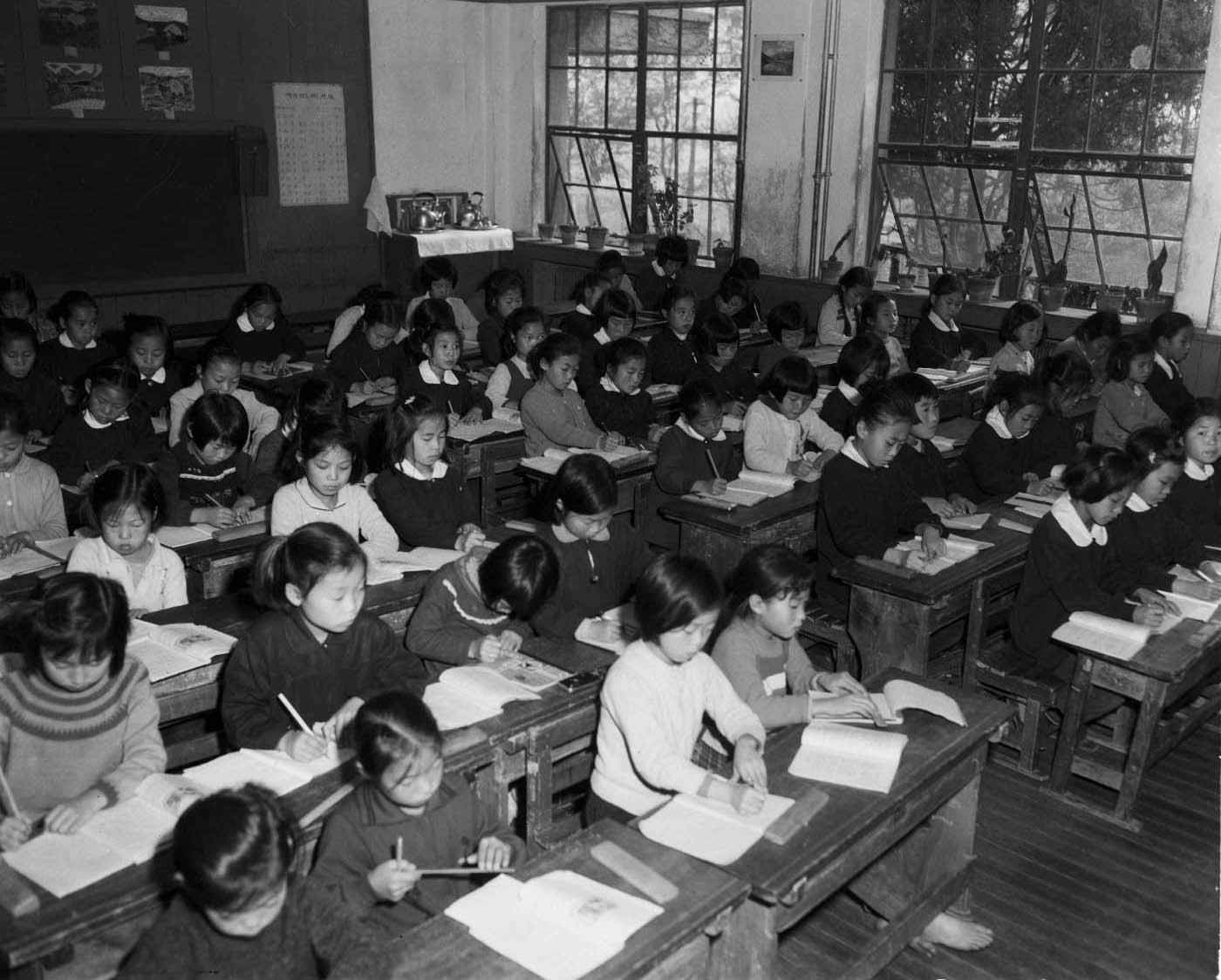
This article examines how South Korea rebuilt its compulsory elementary education system after the Korean War, achieving near-universal enrollment despite severe resource constraints. The government’s 6-year plan (1954–1959) successfully raised the enrollment rate to 96.4%, supported by democratic ideals, strong public belief in education, and farsighted leadership. A pragmatic “low-cost approach” enabled rapid expansion through large classes, multi-shift systems, and community-based funding. While this model ensured broad access, it also created long-term challenges such as overcrowding and uneven educational quality.
#compulsory elementary education #enrollment expansion #educational policy
Over the past seventy years, South Korea has achieved a truly remarkable development in education, transforming its system from the ruins of war into a globally recognized model of success. This achievement is all the more noteworthy because it was accomplished despite the widespread devastation of the Korean War and severe economic hardship. The nation’s journey was driven by a dual commitment to massive quantitative growth in school enrollment and a consistent push for qualitative improvement. However, this unprecedented expansion also prompted enduring challenges, such as excessive expenditures in private education, unlimited competition, and inequalities of opportunity. The story of South Korea's educational reconstruction is therefore a complex testament to a shared vision, built upon a societal potential that was preserved even under 35 years of Japanese colonial rule.
This rapid development was not a historical accident but the result of a deliberate and unified national will. The reason that Korean education could develop in its both quantitative and qualitative aspects despite such limits in its education system can be found in the fact that the nation and the people made a concerted effort to establish a quality education system. This experience of rebuilding a nation through the classroom holds invaluable lessons for developing countries today, particularly those facing post-conflict reconstruction. Understanding the initial challenges South Korea faced and the foundational legal framework it established is the first step in appreciating this extraordinary accomplishment.
Immediately following the establishment of the Republic of Korea in 1948, one of the most urgent national policies was the implementation of compulsory elementary education, a goal enshrined in the country's new Constitution and Education Act. The government laid out an ambitious plan to launch this 6-year system on June 1, 1950. However, this foundational effort was almost immediately derailed when, just 24 days later, the Korean War erupted, forcing the suspension of the nationwide plan.
The conflict had a devastating impact on the nascent education system. The progress made in school enrollment was reversed, as the elementary school enrollment rate declined from 74.8% in 1948 to 69.8% in 1951.
Although the armistice was signed in 1953, it was during the subsequent post-war restructuring period that the government could truly resume its plan in earnest. In this respect, it can be said that compulsory education in Korea was finally back on track in the post-Korean War restructuring period after the war ended in 1954. To turn this renewed commitment into a tangible reality, the government formulated a large-scale, multi-year plan to achieve universal education.
The core policy instrument for achieving universal elementary education was the "6-year Compulsory Education Improvement Plan," which ran from 1954 to 1959. This strategic plan was designed with three clear and ambitious objectives: increasing the enrollment rate of school-age children to 96%, building a sufficient number of new classrooms, and securing the necessary educational finance to support this massive expansion.
An evaluation of the plan reveals a story of remarkable success mixed with significant shortfalls. On the primary goal of enrollment, the plan was an overwhelming success. By 1959, the number of enrolled students had surged from 2,678,978 to 3,558,142, reaching an enrollment ratio of 96.4% and exceeding the original target.
However, the government failed to meet its infrastructure goals. It had planned to increase the number of elementary schools to 4,614 but only managed to build 4,574. The policy mechanism for the consequences of this shortfall was clear: the government had to defer the implementation of the Enforcement Decree of the Education Act of 1952, which stipulated that the average number of students per classroom should not exceed 60. This decision led directly to the chronic problems of overcrowded classes and overly-large schools that would challenge the Korean education system for years to come.
Despite these deficiencies, The 6-year Compulsory Education Improvement Plan can be evaluated as one of the most successful achievement in the education reform in the modern Korean history when viewed from the perspective of achieving the enrollment rate goal. This success was powered by a unique combination of societal values and political will.
The astonishing quantitative expansion of Korean education was not accidental. It was propelled by a powerful convergence of a newly adopted political system, deeply held societal beliefs about the power of learning, and the presence of strong, experienced leadership. Three primary drivers can be identified as the engine of this growth.
This combination of factors created immense demand for education, but fulfilling that demand in one of the world's poorest countries required unconventional and pragmatic financial strategies.
To achieve the rapid expansion of educational opportunities with severely limited resources, South Korea adopted what has been termed a "low-cost approach." This was an inevitable and pragmatic strategy born of necessity, prioritizing access to elementary education even at the expense of the educational environment. A key indicator of this strategy's effectiveness was that Korea's unit cost of education was far below that of other countries with similar income levels.
The government employed several specific cost-saving tactics to make this expansion possible:
Crucially, the government did not bear the financial burden alone. This support was institutionalized after the Korean War through the "Teacher-Parent Association," which became a major source of funding for school operations. At its peak in 1958, contributions from these associations accounted for as much as 75% of a school's estimated income. This model is best described as a "semi-government compulsory education," where a significant portion of the cost was transferred to parents and local communities. This low-cost approach demonstrates that Korea's education policy prioritized the expansion of educational opportunities for elementary education over concerns about the degradation of quality due to the multi-shift system, overcrowded classes and overly-large schools. This unique experience offers powerful implications for other nations facing similar challenges.
South Korea's post-war experience serves as a powerful and relevant case study for developing countries today, especially those working to establish basic educational infrastructure in the aftermath of conflict or natural disasters. The Korean model demonstrates that it is possible to achieve ambitious educational goals even under the most severe constraints and offers meaningful implications for contemporary development efforts. Three key lessons stand out.

This article examines how South Korea rebuilt its compulsory elementary education system after the Korean War, achieving near-universal enrollment despite severe resource constraints. The government’s 6-year plan (1954–1959) successfully raised the enrollment rate to 96.4%, supported by democratic ideals, strong public belief in education, and farsighted leadership. A pragmatic “low-cost approach” enabled rapid expansion through large classes, multi-shift systems, and community-based funding. While this model ensured broad access, it also created long-term challenges such as overcrowding and uneven educational quality.
#compulsory elementary education #enrollment expansion #educational policy
Over the past seventy years, South Korea has achieved a truly remarkable development in education, transforming its system from the ruins of war into a globally recognized model of success. This achievement is all the more noteworthy because it was accomplished despite the widespread devastation of the Korean War and severe economic hardship. The nation’s journey was driven by a dual commitment to massive quantitative growth in school enrollment and a consistent push for qualitative improvement. However, this unprecedented expansion also prompted enduring challenges, such as excessive expenditures in private education, unlimited competition, and inequalities of opportunity. The story of South Korea's educational reconstruction is therefore a complex testament to a shared vision, built upon a societal potential that was preserved even under 35 years of Japanese colonial rule.
This rapid development was not a historical accident but the result of a deliberate and unified national will. The reason that Korean education could develop in its both quantitative and qualitative aspects despite such limits in its education system can be found in the fact that the nation and the people made a concerted effort to establish a quality education system. This experience of rebuilding a nation through the classroom holds invaluable lessons for developing countries today, particularly those facing post-conflict reconstruction. Understanding the initial challenges South Korea faced and the foundational legal framework it established is the first step in appreciating this extraordinary accomplishment.
Immediately following the establishment of the Republic of Korea in 1948, one of the most urgent national policies was the implementation of compulsory elementary education, a goal enshrined in the country's new Constitution and Education Act. The government laid out an ambitious plan to launch this 6-year system on June 1, 1950. However, this foundational effort was almost immediately derailed when, just 24 days later, the Korean War erupted, forcing the suspension of the nationwide plan.
The conflict had a devastating impact on the nascent education system. The progress made in school enrollment was reversed, as the elementary school enrollment rate declined from 74.8% in 1948 to 69.8% in 1951.
Although the armistice was signed in 1953, it was during the subsequent post-war restructuring period that the government could truly resume its plan in earnest. In this respect, it can be said that compulsory education in Korea was finally back on track in the post-Korean War restructuring period after the war ended in 1954. To turn this renewed commitment into a tangible reality, the government formulated a large-scale, multi-year plan to achieve universal education.
The core policy instrument for achieving universal elementary education was the "6-year Compulsory Education Improvement Plan," which ran from 1954 to 1959. This strategic plan was designed with three clear and ambitious objectives: increasing the enrollment rate of school-age children to 96%, building a sufficient number of new classrooms, and securing the necessary educational finance to support this massive expansion.
An evaluation of the plan reveals a story of remarkable success mixed with significant shortfalls. On the primary goal of enrollment, the plan was an overwhelming success. By 1959, the number of enrolled students had surged from 2,678,978 to 3,558,142, reaching an enrollment ratio of 96.4% and exceeding the original target.
However, the government failed to meet its infrastructure goals. It had planned to increase the number of elementary schools to 4,614 but only managed to build 4,574. The policy mechanism for the consequences of this shortfall was clear: the government had to defer the implementation of the Enforcement Decree of the Education Act of 1952, which stipulated that the average number of students per classroom should not exceed 60. This decision led directly to the chronic problems of overcrowded classes and overly-large schools that would challenge the Korean education system for years to come.
Despite these deficiencies, The 6-year Compulsory Education Improvement Plan can be evaluated as one of the most successful achievement in the education reform in the modern Korean history when viewed from the perspective of achieving the enrollment rate goal. This success was powered by a unique combination of societal values and political will.
The astonishing quantitative expansion of Korean education was not accidental. It was propelled by a powerful convergence of a newly adopted political system, deeply held societal beliefs about the power of learning, and the presence of strong, experienced leadership. Three primary drivers can be identified as the engine of this growth.
This combination of factors created immense demand for education, but fulfilling that demand in one of the world's poorest countries required unconventional and pragmatic financial strategies.
To achieve the rapid expansion of educational opportunities with severely limited resources, South Korea adopted what has been termed a "low-cost approach." This was an inevitable and pragmatic strategy born of necessity, prioritizing access to elementary education even at the expense of the educational environment. A key indicator of this strategy's effectiveness was that Korea's unit cost of education was far below that of other countries with similar income levels.
The government employed several specific cost-saving tactics to make this expansion possible:
Crucially, the government did not bear the financial burden alone. This support was institutionalized after the Korean War through the "Teacher-Parent Association," which became a major source of funding for school operations. At its peak in 1958, contributions from these associations accounted for as much as 75% of a school's estimated income. This model is best described as a "semi-government compulsory education," where a significant portion of the cost was transferred to parents and local communities. This low-cost approach demonstrates that Korea's education policy prioritized the expansion of educational opportunities for elementary education over concerns about the degradation of quality due to the multi-shift system, overcrowded classes and overly-large schools. This unique experience offers powerful implications for other nations facing similar challenges.
South Korea's post-war experience serves as a powerful and relevant case study for developing countries today, especially those working to establish basic educational infrastructure in the aftermath of conflict or natural disasters. The Korean model demonstrates that it is possible to achieve ambitious educational goals even under the most severe constraints and offers meaningful implications for contemporary development efforts. Three key lessons stand out.

Over the past seventy years, South Korea has achieved a truly remarkable development in education, transforming its system from the ruins of war into a globally recognized model of success. This achievement is all the more noteworthy because it was accomplished despite the widespread devastation of the Korean War and severe economic hardship. The nation’s journey was driven by a dual commitment to massive quantitative growth in school enrollment and a consistent push for qualitative improvement. However, this unprecedented expansion also prompted enduring challenges, such as excessive expenditures in private education, unlimited competition, and inequalities of opportunity. The story of South Korea's educational reconstruction is therefore a complex testament to a shared vision, built upon a societal potential that was preserved even under 35 years of Japanese colonial rule.
This rapid development was not a historical accident but the result of a deliberate and unified national will. The reason that Korean education could develop in its both quantitative and qualitative aspects despite such limits in its education system can be found in the fact that the nation and the people made a concerted effort to establish a quality education system. This experience of rebuilding a nation through the classroom holds invaluable lessons for developing countries today, particularly those facing post-conflict reconstruction. Understanding the initial challenges South Korea faced and the foundational legal framework it established is the first step in appreciating this extraordinary accomplishment.
Immediately following the establishment of the Republic of Korea in 1948, one of the most urgent national policies was the implementation of compulsory elementary education, a goal enshrined in the country's new Constitution and Education Act. The government laid out an ambitious plan to launch this 6-year system on June 1, 1950. However, this foundational effort was almost immediately derailed when, just 24 days later, the Korean War erupted, forcing the suspension of the nationwide plan.
The conflict had a devastating impact on the nascent education system. The progress made in school enrollment was reversed, as the elementary school enrollment rate declined from 74.8% in 1948 to 69.8% in 1951.
Although the armistice was signed in 1953, it was during the subsequent post-war restructuring period that the government could truly resume its plan in earnest. In this respect, it can be said that compulsory education in Korea was finally back on track in the post-Korean War restructuring period after the war ended in 1954. To turn this renewed commitment into a tangible reality, the government formulated a large-scale, multi-year plan to achieve universal education.
The core policy instrument for achieving universal elementary education was the "6-year Compulsory Education Improvement Plan," which ran from 1954 to 1959. This strategic plan was designed with three clear and ambitious objectives: increasing the enrollment rate of school-age children to 96%, building a sufficient number of new classrooms, and securing the necessary educational finance to support this massive expansion.
An evaluation of the plan reveals a story of remarkable success mixed with significant shortfalls. On the primary goal of enrollment, the plan was an overwhelming success. By 1959, the number of enrolled students had surged from 2,678,978 to 3,558,142, reaching an enrollment ratio of 96.4% and exceeding the original target.
However, the government failed to meet its infrastructure goals. It had planned to increase the number of elementary schools to 4,614 but only managed to build 4,574. The policy mechanism for the consequences of this shortfall was clear: the government had to defer the implementation of the Enforcement Decree of the Education Act of 1952, which stipulated that the average number of students per classroom should not exceed 60. This decision led directly to the chronic problems of overcrowded classes and overly-large schools that would challenge the Korean education system for years to come.
Despite these deficiencies, The 6-year Compulsory Education Improvement Plan can be evaluated as one of the most successful achievement in the education reform in the modern Korean history when viewed from the perspective of achieving the enrollment rate goal. This success was powered by a unique combination of societal values and political will.
The astonishing quantitative expansion of Korean education was not accidental. It was propelled by a powerful convergence of a newly adopted political system, deeply held societal beliefs about the power of learning, and the presence of strong, experienced leadership. Three primary drivers can be identified as the engine of this growth.
This combination of factors created immense demand for education, but fulfilling that demand in one of the world's poorest countries required unconventional and pragmatic financial strategies.
To achieve the rapid expansion of educational opportunities with severely limited resources, South Korea adopted what has been termed a "low-cost approach." This was an inevitable and pragmatic strategy born of necessity, prioritizing access to elementary education even at the expense of the educational environment. A key indicator of this strategy's effectiveness was that Korea's unit cost of education was far below that of other countries with similar income levels.
The government employed several specific cost-saving tactics to make this expansion possible:
Crucially, the government did not bear the financial burden alone. This support was institutionalized after the Korean War through the "Teacher-Parent Association," which became a major source of funding for school operations. At its peak in 1958, contributions from these associations accounted for as much as 75% of a school's estimated income. This model is best described as a "semi-government compulsory education," where a significant portion of the cost was transferred to parents and local communities. This low-cost approach demonstrates that Korea's education policy prioritized the expansion of educational opportunities for elementary education over concerns about the degradation of quality due to the multi-shift system, overcrowded classes and overly-large schools. This unique experience offers powerful implications for other nations facing similar challenges.
South Korea's post-war experience serves as a powerful and relevant case study for developing countries today, especially those working to establish basic educational infrastructure in the aftermath of conflict or natural disasters. The Korean model demonstrates that it is possible to achieve ambitious educational goals even under the most severe constraints and offers meaningful implications for contemporary development efforts. Three key lessons stand out.