

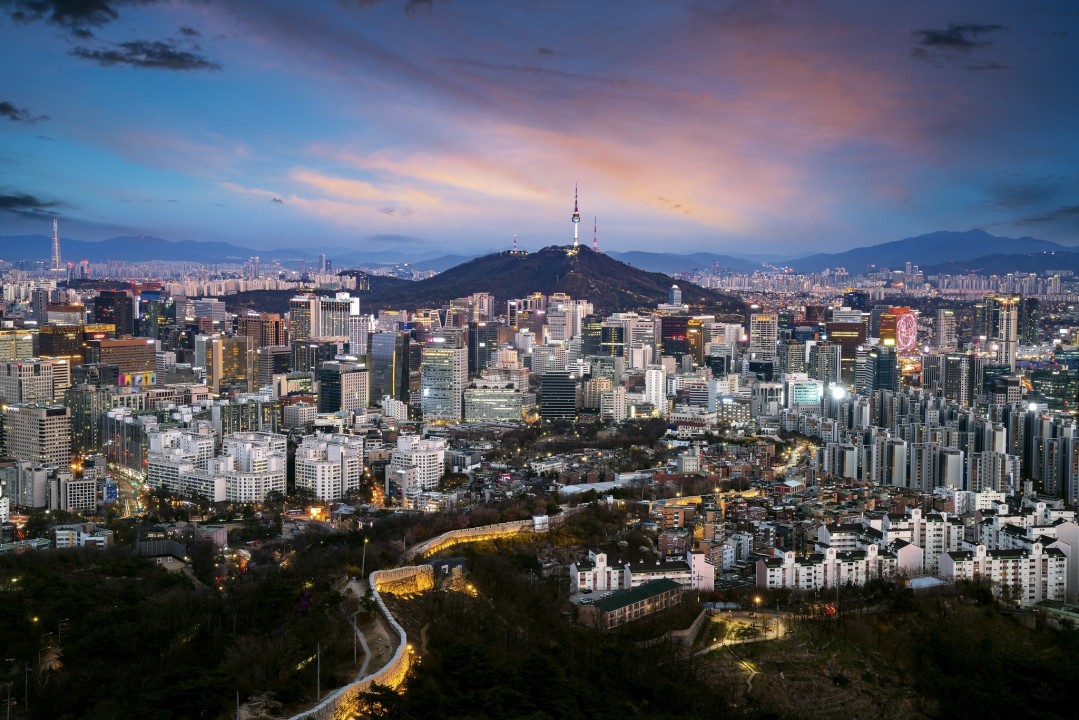
South Korea's journey from a post-war agrarian society to a global economic powerhouse stands as one of the most remarkable transformations of the 20th century.
This rapid development was not a matter of chance but the result of a deliberate and dynamic process involving massive capital investment, strategic industrial policy, and, eventually, critical structural reforms.
We are going to explore the key drivers behind this economic miracle, analyzing the foundational elements that propelled the nation's growth. Then, we will examine the core engines of development, from the explosive rise of the manufacturing sector to parallel transformations in construction and agriculture, and conclude with the essential corporate reforms that built a more resilient modern economy. This provides a blueprint for understanding a story of profound and rapid national change, beginning with the central debate over the primary sources of its extraordinary success.
#growth #capital accumulation #industrial policy #corporate reform #chaebol #manufacturing
Understanding the true sources of economic growth is of paramount strategic importance, as it informs policy and shapes future expectations. In the case of South Korea, a central debate has long focused on whether its success stemmed primarily from factor accumulation—simply investing more capital and mobilizing more labor—or from fundamental improvements in efficiency, known as Total Factor Productivity (TFP).
The argument that rapid capital accumulation served as a foundational driver of Korea’s economic growth is well-supported by the data. Investment rates remained exceptionally high, between 30 and 40 percent from the mid-1970s onward, eventually peaking at 40 percent in 1991.
This observation aligns with Paul Krugman’s influential interpretation, drawing on Alwin Young’s research, which posited that East Asia’s remarkable growth was largely the result of massive input mobilization. According to this view, growth driven primarily by capital deepening would inevitably encounter diminishing returns, leading to a future slowdown.
Subsequent analysis, however, provides a more nuanced understanding of Korea’s growth dynamics. A 2010 study by Chin Hee Hahn and Sukha Shin offers a detailed decomposition of the country’s growth sources. Between 1961 and 2004, Korea’s per-worker GDP increased by an impressive 4.7 percent annually, powered by two distinct components: per-worker capital accumulation, which contributed 2.9 percentage points, and Total Factor Productivity (TFP) growth, which contributed 1.8 percentage points. These results indicate that TFP growth accounted for 38 percent of Korea’s per-worker GDP growth.
For comparison, other industrialized economies over the same period experienced per-worker GDP growth of 2.1 percent annually, of which 1.1 percentage points came from capital accumulation, meaning 52 percent of their growth stemmed from TFP improvements. This contrast lends some support to the argument that Korea’s early growth relied more heavily on input mobilization than the experience of many advanced economies.
Despite the debate over its relative contribution, Korea’s absolute TFP growth of 1.8% was remarkable, significantly surpassing the 1.0% average TFP growth of advanced industrial nations during the same period. The primary sources of this impressive efficiency improvement were threefold: technological progress, the reallocation of resources from less productive to more productive sectors, and the expansion of international trade. These high-level economic drivers first found their most powerful expression in the sector that would become the initial engine of the nation's takeoff: manufacturing.
The manufacturing sector was the undisputed engine of South Korea's initial economic liftoff in the 1960s and 70s. During this period, it experienced explosive expansion, growing by an average of 17 percent per year between 1960 and 1970. Its share of the nation's gross value added more than doubled, and its contribution to total exports skyrocketed from roughly 25 percent in the early 1960s to nearly 90 percent just a decade later.
This early boom was dominated by labor-intensive light industries, particularly clothing and footwear. This industrial shift had a profound socioeconomic impact, as factories absorbed the vast surplus labor force migrating from rural areas. These new industrial complexes, such as the Guro complex in Seoul, were typically located near urban centers, accelerating the nation's urbanization and fundamentally reshaping its demographic landscape.
Several powerful factors converged to fuel this phenomenal manufacturing growth.Firstly, A new generation of entrepreneurs emerged from among small traders who had previously profited from importing goods; recognizing the vast opportunities in international markets, they shifted from trade to manufacturing and founded many of the firms that became the backbone of the new economy. Their entrepreneurial drive was complemented by an abundant and increasingly skilled labor force, as well-educated and diligent workers from the agricultural sector moved into industry. With globally competitive low wages, Korean labor-intensive industries quickly achieved cost advantages and captured a growing share of international markets.
Despite this strong labor base, capital remained scarce. Domestic savings were insufficient to meet the country’s substantial investment needs, making foreign borrowing indispensable. External financing reached roughly 3 percent of Gross National Disposal Income in the 1960s and rose to 6 percent in the 1970s. Additional sources of foreign currency—including Japanese reparation payments and commercial loans following the 1965 normalization of diplomatic relations—played a decisive role in projects such as the construction of the Pohang Iron and Steel Company (POSCO). Korea’s participation in the Vietnam War also became a significant source of foreign exchange, both through U.S. economic aid and through the contracts Korean companies secured by supplying services and products to the U.S. armed forces.
At the same time, the government assumed a highly proactive role in shaping industrialization. Through its first and second Five-Year Economic Development Plans, the state invested heavily in essential infrastructure—power plants, highways, and seaports—and established state-owned enterprises in strategic sectors such as fertilizer, cement, and steel. It also mobilized a broad array of policy instruments spanning finance, taxation, and foreign exchange to promote exports. This commitment was epitomized by the Monthly Export Promotion Meeting, chaired directly by the president to identify and resolve bottlenecks faced by exporters.
Although manufacturing was the star of this era, its rise did not occur in isolation; parallel developments in other major sectors were simultaneously transforming Korea’s broader economic landscape.
To appreciate the full scope of South Korea's economic transformation, it is essential to look beyond manufacturing. During the 1960s and 70s, other critical sectors of the economy were simultaneously experiencing their own distinct and significant changes, contributing to the nation's overall development in unique ways.
The construction sector grew rapidly, playing a dual role in the nation-building process. Domestically, it was responsible for building the physical infrastructure and industrial plants that were the backbone of industrialization. The experience gained from these large-scale domestic projects greatly enhanced the industry's competitiveness, enabling it to successfully expand overseas. By the 1970s, Korean construction firms were winning major international projects, with overseas orders soaring from 170 million dollars in 1973 to an astonishing 13 billion dollars in 1981, becoming a major source of foreign currency.
The story of the agricultural sector was more complex. While its overall output growth was relatively stagnant due to the massive migration of labor to urban factories, this period saw significant improvements in productivity. A key contribution came from the development of a new high-yield rice variant, "Tong-il," in the early 1970s. This, combined with the introduction of modern machinery, new farming methods, and the government-led "Saemaul (new village) Movement" aimed at modernizing rural life, led to a large improvement in agricultural efficiency. The goal of these programs, supported by the global "Green Revolution" in crops, was to achieve self-sufficiency in grain production. These efforts collectively enabled Korea to achieve self-sufficiency in its staple food, rice, and ensured a stable, low-cost food supply for the growing industrial workforce.
The fishing industry also experienced notable growth, supported by investments from Japanese reparation payments and the Korean-Japanese Fishing Agreement of 1965. Deep-sea commercial fishing emerged as a new business, earning valuable foreign currency and improving the nutritional standards of the Korean people. For a time, the country's large fishing fleets were a source of national pride, though their activities were later curbed after 1977 when many nations, including the U.S. and the Soviet Union, declared exclusive fishing zones.
This era of rapid industrialization and sectoral growth created immense wealth and opportunity, but it also produced structural imbalances and vulnerabilities. The period that followed would be defined by the necessary, and often difficult, task of reforming the corporate landscape to address these challenges.
The financial crisis of the late 1990s exposed deep structural weaknesses in the Korean economy, necessitating a comprehensive and urgent campaign of corporate sector reform. This reform effort was driven by two primary objectives: first, to restructure the massive number of insolvent firms that could not repay their debts, and second, to strengthen market discipline to prevent such a crisis from happening again.
To address the immediate challenge of insolvency, the government relied on two main strategies. One was the arrangement of government-enforced business swaps between major conglomerates, known as “big deals,” to rationalize operations. The other was the use of out-of-court debt settlements called “workout” programs, which allowed firms and their creditors to negotiate restructuring with more flexibility. These were emergency measures designed to handle an unprecedented volume of bad loans.
The more profound, long-term effort was a set of comprehensive structural reforms known as "the five plus three principles." In January 1998, president-elect Kim Dae-jung and the owners of the four largest conglomerates (chaebol) agreed on the initial five principles:
1. Enhancing the transparency of corporate management.
2. Eliminating cross-debt guarantees between group affiliates.
3. Improving corporate capital structure.
4. Focusing on core lines of business.
5. Increasing the accountability of controlling shareholders and managers.
In 1999, three additional principles were added. Their main objective was to stop the chaebol from exploiting non-bank financial institutions under their control to escape restructuring: 6. Improving the governance of non-bank financial institutions. 7. Restraining intra-group circular shareholdings. 8. Prohibiting unlawful inheritance and gifts.
The strategic purpose behind these principles was multifaceted. The key long-term measures designed to permanently strengthen market discipline were enhancing corporate transparency and increasing the accountability of controlling shareholders. Other rules, such as the uniform 200 percent debt-equity ratio ceiling, were viewed as temporary measures needed to stabilize the system while market mechanisms were not functioning properly. The pressing need for such discipline was starkly illustrated by the case of the Daewoo group, which issued an enormous 17 trillion won in corporate bonds between late 1997 and mid-1998, operating under the assumption that the government would not allow one of the largest conglomerates to fail.
Beyond these core principles, additional efforts were made to foster a healthier corporate environment. To dispel moral hazard, the government allowed major insolvent firms, including Daewoo in 1999, to go bankrupt, imposing real losses on shareholders and creditors. To improve corporate governance, shareholder rights were strengthened, and M&A activity was deregulated to increase pressure on management. Finally, competitive pressures were intensified by almost completely eliminating regulations on foreign direct investment (FDI) and discontinuing protectionist import systems.
South Korea's economic journey has been multifaceted and dynamic. It began with a growth model heavily reliant on the accumulation of labor and capital, which powered an explosive manufacturing boom and transformed the nation. This was accompanied by significant, if varied, developments across all major sectors of the economy. Ultimately, the challenges born from this rapid expansion necessitated a critical era of structural reform. By tackling corporate insolvency and, more importantly, building a new foundation of transparency, accountability, and market discipline, South Korea forged a more resilient and modern economy prepared for the challenges of the 21st century.

South Korea's journey from a post-war agrarian society to a global economic powerhouse stands as one of the most remarkable transformations of the 20th century.
This rapid development was not a matter of chance but the result of a deliberate and dynamic process involving massive capital investment, strategic industrial policy, and, eventually, critical structural reforms.
We are going to explore the key drivers behind this economic miracle, analyzing the foundational elements that propelled the nation's growth. Then, we will examine the core engines of development, from the explosive rise of the manufacturing sector to parallel transformations in construction and agriculture, and conclude with the essential corporate reforms that built a more resilient modern economy. This provides a blueprint for understanding a story of profound and rapid national change, beginning with the central debate over the primary sources of its extraordinary success.
#growth #capital accumulation #industrial policy #corporate reform #chaebol #manufacturing
Understanding the true sources of economic growth is of paramount strategic importance, as it informs policy and shapes future expectations. In the case of South Korea, a central debate has long focused on whether its success stemmed primarily from factor accumulation—simply investing more capital and mobilizing more labor—or from fundamental improvements in efficiency, known as Total Factor Productivity (TFP).
The argument that rapid capital accumulation served as a foundational driver of Korea’s economic growth is well-supported by the data. Investment rates remained exceptionally high, between 30 and 40 percent from the mid-1970s onward, eventually peaking at 40 percent in 1991.
This observation aligns with Paul Krugman’s influential interpretation, drawing on Alwin Young’s research, which posited that East Asia’s remarkable growth was largely the result of massive input mobilization. According to this view, growth driven primarily by capital deepening would inevitably encounter diminishing returns, leading to a future slowdown.
Subsequent analysis, however, provides a more nuanced understanding of Korea’s growth dynamics. A 2010 study by Chin Hee Hahn and Sukha Shin offers a detailed decomposition of the country’s growth sources. Between 1961 and 2004, Korea’s per-worker GDP increased by an impressive 4.7 percent annually, powered by two distinct components: per-worker capital accumulation, which contributed 2.9 percentage points, and Total Factor Productivity (TFP) growth, which contributed 1.8 percentage points. These results indicate that TFP growth accounted for 38 percent of Korea’s per-worker GDP growth.
For comparison, other industrialized economies over the same period experienced per-worker GDP growth of 2.1 percent annually, of which 1.1 percentage points came from capital accumulation, meaning 52 percent of their growth stemmed from TFP improvements. This contrast lends some support to the argument that Korea’s early growth relied more heavily on input mobilization than the experience of many advanced economies.
Despite the debate over its relative contribution, Korea’s absolute TFP growth of 1.8% was remarkable, significantly surpassing the 1.0% average TFP growth of advanced industrial nations during the same period. The primary sources of this impressive efficiency improvement were threefold: technological progress, the reallocation of resources from less productive to more productive sectors, and the expansion of international trade. These high-level economic drivers first found their most powerful expression in the sector that would become the initial engine of the nation's takeoff: manufacturing.
The manufacturing sector was the undisputed engine of South Korea's initial economic liftoff in the 1960s and 70s. During this period, it experienced explosive expansion, growing by an average of 17 percent per year between 1960 and 1970. Its share of the nation's gross value added more than doubled, and its contribution to total exports skyrocketed from roughly 25 percent in the early 1960s to nearly 90 percent just a decade later.
This early boom was dominated by labor-intensive light industries, particularly clothing and footwear. This industrial shift had a profound socioeconomic impact, as factories absorbed the vast surplus labor force migrating from rural areas. These new industrial complexes, such as the Guro complex in Seoul, were typically located near urban centers, accelerating the nation's urbanization and fundamentally reshaping its demographic landscape.
Several powerful factors converged to fuel this phenomenal manufacturing growth.Firstly, A new generation of entrepreneurs emerged from among small traders who had previously profited from importing goods; recognizing the vast opportunities in international markets, they shifted from trade to manufacturing and founded many of the firms that became the backbone of the new economy. Their entrepreneurial drive was complemented by an abundant and increasingly skilled labor force, as well-educated and diligent workers from the agricultural sector moved into industry. With globally competitive low wages, Korean labor-intensive industries quickly achieved cost advantages and captured a growing share of international markets.
Despite this strong labor base, capital remained scarce. Domestic savings were insufficient to meet the country’s substantial investment needs, making foreign borrowing indispensable. External financing reached roughly 3 percent of Gross National Disposal Income in the 1960s and rose to 6 percent in the 1970s. Additional sources of foreign currency—including Japanese reparation payments and commercial loans following the 1965 normalization of diplomatic relations—played a decisive role in projects such as the construction of the Pohang Iron and Steel Company (POSCO). Korea’s participation in the Vietnam War also became a significant source of foreign exchange, both through U.S. economic aid and through the contracts Korean companies secured by supplying services and products to the U.S. armed forces.
At the same time, the government assumed a highly proactive role in shaping industrialization. Through its first and second Five-Year Economic Development Plans, the state invested heavily in essential infrastructure—power plants, highways, and seaports—and established state-owned enterprises in strategic sectors such as fertilizer, cement, and steel. It also mobilized a broad array of policy instruments spanning finance, taxation, and foreign exchange to promote exports. This commitment was epitomized by the Monthly Export Promotion Meeting, chaired directly by the president to identify and resolve bottlenecks faced by exporters.
Although manufacturing was the star of this era, its rise did not occur in isolation; parallel developments in other major sectors were simultaneously transforming Korea’s broader economic landscape.
To appreciate the full scope of South Korea's economic transformation, it is essential to look beyond manufacturing. During the 1960s and 70s, other critical sectors of the economy were simultaneously experiencing their own distinct and significant changes, contributing to the nation's overall development in unique ways.
The construction sector grew rapidly, playing a dual role in the nation-building process. Domestically, it was responsible for building the physical infrastructure and industrial plants that were the backbone of industrialization. The experience gained from these large-scale domestic projects greatly enhanced the industry's competitiveness, enabling it to successfully expand overseas. By the 1970s, Korean construction firms were winning major international projects, with overseas orders soaring from 170 million dollars in 1973 to an astonishing 13 billion dollars in 1981, becoming a major source of foreign currency.
The story of the agricultural sector was more complex. While its overall output growth was relatively stagnant due to the massive migration of labor to urban factories, this period saw significant improvements in productivity. A key contribution came from the development of a new high-yield rice variant, "Tong-il," in the early 1970s. This, combined with the introduction of modern machinery, new farming methods, and the government-led "Saemaul (new village) Movement" aimed at modernizing rural life, led to a large improvement in agricultural efficiency. The goal of these programs, supported by the global "Green Revolution" in crops, was to achieve self-sufficiency in grain production. These efforts collectively enabled Korea to achieve self-sufficiency in its staple food, rice, and ensured a stable, low-cost food supply for the growing industrial workforce.
The fishing industry also experienced notable growth, supported by investments from Japanese reparation payments and the Korean-Japanese Fishing Agreement of 1965. Deep-sea commercial fishing emerged as a new business, earning valuable foreign currency and improving the nutritional standards of the Korean people. For a time, the country's large fishing fleets were a source of national pride, though their activities were later curbed after 1977 when many nations, including the U.S. and the Soviet Union, declared exclusive fishing zones.
This era of rapid industrialization and sectoral growth created immense wealth and opportunity, but it also produced structural imbalances and vulnerabilities. The period that followed would be defined by the necessary, and often difficult, task of reforming the corporate landscape to address these challenges.
The financial crisis of the late 1990s exposed deep structural weaknesses in the Korean economy, necessitating a comprehensive and urgent campaign of corporate sector reform. This reform effort was driven by two primary objectives: first, to restructure the massive number of insolvent firms that could not repay their debts, and second, to strengthen market discipline to prevent such a crisis from happening again.
To address the immediate challenge of insolvency, the government relied on two main strategies. One was the arrangement of government-enforced business swaps between major conglomerates, known as “big deals,” to rationalize operations. The other was the use of out-of-court debt settlements called “workout” programs, which allowed firms and their creditors to negotiate restructuring with more flexibility. These were emergency measures designed to handle an unprecedented volume of bad loans.
The more profound, long-term effort was a set of comprehensive structural reforms known as "the five plus three principles." In January 1998, president-elect Kim Dae-jung and the owners of the four largest conglomerates (chaebol) agreed on the initial five principles:
1. Enhancing the transparency of corporate management.
2. Eliminating cross-debt guarantees between group affiliates.
3. Improving corporate capital structure.
4. Focusing on core lines of business.
5. Increasing the accountability of controlling shareholders and managers.
In 1999, three additional principles were added. Their main objective was to stop the chaebol from exploiting non-bank financial institutions under their control to escape restructuring: 6. Improving the governance of non-bank financial institutions. 7. Restraining intra-group circular shareholdings. 8. Prohibiting unlawful inheritance and gifts.
The strategic purpose behind these principles was multifaceted. The key long-term measures designed to permanently strengthen market discipline were enhancing corporate transparency and increasing the accountability of controlling shareholders. Other rules, such as the uniform 200 percent debt-equity ratio ceiling, were viewed as temporary measures needed to stabilize the system while market mechanisms were not functioning properly. The pressing need for such discipline was starkly illustrated by the case of the Daewoo group, which issued an enormous 17 trillion won in corporate bonds between late 1997 and mid-1998, operating under the assumption that the government would not allow one of the largest conglomerates to fail.
Beyond these core principles, additional efforts were made to foster a healthier corporate environment. To dispel moral hazard, the government allowed major insolvent firms, including Daewoo in 1999, to go bankrupt, imposing real losses on shareholders and creditors. To improve corporate governance, shareholder rights were strengthened, and M&A activity was deregulated to increase pressure on management. Finally, competitive pressures were intensified by almost completely eliminating regulations on foreign direct investment (FDI) and discontinuing protectionist import systems.
South Korea's economic journey has been multifaceted and dynamic. It began with a growth model heavily reliant on the accumulation of labor and capital, which powered an explosive manufacturing boom and transformed the nation. This was accompanied by significant, if varied, developments across all major sectors of the economy. Ultimately, the challenges born from this rapid expansion necessitated a critical era of structural reform. By tackling corporate insolvency and, more importantly, building a new foundation of transparency, accountability, and market discipline, South Korea forged a more resilient and modern economy prepared for the challenges of the 21st century.

Understanding the true sources of economic growth is of paramount strategic importance, as it informs policy and shapes future expectations. In the case of South Korea, a central debate has long focused on whether its success stemmed primarily from factor accumulation—simply investing more capital and mobilizing more labor—or from fundamental improvements in efficiency, known as Total Factor Productivity (TFP).
The argument that rapid capital accumulation served as a foundational driver of Korea’s economic growth is well-supported by the data. Investment rates remained exceptionally high, between 30 and 40 percent from the mid-1970s onward, eventually peaking at 40 percent in 1991.
This observation aligns with Paul Krugman’s influential interpretation, drawing on Alwin Young’s research, which posited that East Asia’s remarkable growth was largely the result of massive input mobilization. According to this view, growth driven primarily by capital deepening would inevitably encounter diminishing returns, leading to a future slowdown.
Subsequent analysis, however, provides a more nuanced understanding of Korea’s growth dynamics. A 2010 study by Chin Hee Hahn and Sukha Shin offers a detailed decomposition of the country’s growth sources. Between 1961 and 2004, Korea’s per-worker GDP increased by an impressive 4.7 percent annually, powered by two distinct components: per-worker capital accumulation, which contributed 2.9 percentage points, and Total Factor Productivity (TFP) growth, which contributed 1.8 percentage points. These results indicate that TFP growth accounted for 38 percent of Korea’s per-worker GDP growth.
For comparison, other industrialized economies over the same period experienced per-worker GDP growth of 2.1 percent annually, of which 1.1 percentage points came from capital accumulation, meaning 52 percent of their growth stemmed from TFP improvements. This contrast lends some support to the argument that Korea’s early growth relied more heavily on input mobilization than the experience of many advanced economies.
Despite the debate over its relative contribution, Korea’s absolute TFP growth of 1.8% was remarkable, significantly surpassing the 1.0% average TFP growth of advanced industrial nations during the same period. The primary sources of this impressive efficiency improvement were threefold: technological progress, the reallocation of resources from less productive to more productive sectors, and the expansion of international trade. These high-level economic drivers first found their most powerful expression in the sector that would become the initial engine of the nation's takeoff: manufacturing.
The manufacturing sector was the undisputed engine of South Korea's initial economic liftoff in the 1960s and 70s. During this period, it experienced explosive expansion, growing by an average of 17 percent per year between 1960 and 1970. Its share of the nation's gross value added more than doubled, and its contribution to total exports skyrocketed from roughly 25 percent in the early 1960s to nearly 90 percent just a decade later.
This early boom was dominated by labor-intensive light industries, particularly clothing and footwear. This industrial shift had a profound socioeconomic impact, as factories absorbed the vast surplus labor force migrating from rural areas. These new industrial complexes, such as the Guro complex in Seoul, were typically located near urban centers, accelerating the nation's urbanization and fundamentally reshaping its demographic landscape.
Several powerful factors converged to fuel this phenomenal manufacturing growth.Firstly, A new generation of entrepreneurs emerged from among small traders who had previously profited from importing goods; recognizing the vast opportunities in international markets, they shifted from trade to manufacturing and founded many of the firms that became the backbone of the new economy. Their entrepreneurial drive was complemented by an abundant and increasingly skilled labor force, as well-educated and diligent workers from the agricultural sector moved into industry. With globally competitive low wages, Korean labor-intensive industries quickly achieved cost advantages and captured a growing share of international markets.
Despite this strong labor base, capital remained scarce. Domestic savings were insufficient to meet the country’s substantial investment needs, making foreign borrowing indispensable. External financing reached roughly 3 percent of Gross National Disposal Income in the 1960s and rose to 6 percent in the 1970s. Additional sources of foreign currency—including Japanese reparation payments and commercial loans following the 1965 normalization of diplomatic relations—played a decisive role in projects such as the construction of the Pohang Iron and Steel Company (POSCO). Korea’s participation in the Vietnam War also became a significant source of foreign exchange, both through U.S. economic aid and through the contracts Korean companies secured by supplying services and products to the U.S. armed forces.
At the same time, the government assumed a highly proactive role in shaping industrialization. Through its first and second Five-Year Economic Development Plans, the state invested heavily in essential infrastructure—power plants, highways, and seaports—and established state-owned enterprises in strategic sectors such as fertilizer, cement, and steel. It also mobilized a broad array of policy instruments spanning finance, taxation, and foreign exchange to promote exports. This commitment was epitomized by the Monthly Export Promotion Meeting, chaired directly by the president to identify and resolve bottlenecks faced by exporters.
Although manufacturing was the star of this era, its rise did not occur in isolation; parallel developments in other major sectors were simultaneously transforming Korea’s broader economic landscape.
To appreciate the full scope of South Korea's economic transformation, it is essential to look beyond manufacturing. During the 1960s and 70s, other critical sectors of the economy were simultaneously experiencing their own distinct and significant changes, contributing to the nation's overall development in unique ways.
The construction sector grew rapidly, playing a dual role in the nation-building process. Domestically, it was responsible for building the physical infrastructure and industrial plants that were the backbone of industrialization. The experience gained from these large-scale domestic projects greatly enhanced the industry's competitiveness, enabling it to successfully expand overseas. By the 1970s, Korean construction firms were winning major international projects, with overseas orders soaring from 170 million dollars in 1973 to an astonishing 13 billion dollars in 1981, becoming a major source of foreign currency.
The story of the agricultural sector was more complex. While its overall output growth was relatively stagnant due to the massive migration of labor to urban factories, this period saw significant improvements in productivity. A key contribution came from the development of a new high-yield rice variant, "Tong-il," in the early 1970s. This, combined with the introduction of modern machinery, new farming methods, and the government-led "Saemaul (new village) Movement" aimed at modernizing rural life, led to a large improvement in agricultural efficiency. The goal of these programs, supported by the global "Green Revolution" in crops, was to achieve self-sufficiency in grain production. These efforts collectively enabled Korea to achieve self-sufficiency in its staple food, rice, and ensured a stable, low-cost food supply for the growing industrial workforce.
The fishing industry also experienced notable growth, supported by investments from Japanese reparation payments and the Korean-Japanese Fishing Agreement of 1965. Deep-sea commercial fishing emerged as a new business, earning valuable foreign currency and improving the nutritional standards of the Korean people. For a time, the country's large fishing fleets were a source of national pride, though their activities were later curbed after 1977 when many nations, including the U.S. and the Soviet Union, declared exclusive fishing zones.
This era of rapid industrialization and sectoral growth created immense wealth and opportunity, but it also produced structural imbalances and vulnerabilities. The period that followed would be defined by the necessary, and often difficult, task of reforming the corporate landscape to address these challenges.
The financial crisis of the late 1990s exposed deep structural weaknesses in the Korean economy, necessitating a comprehensive and urgent campaign of corporate sector reform. This reform effort was driven by two primary objectives: first, to restructure the massive number of insolvent firms that could not repay their debts, and second, to strengthen market discipline to prevent such a crisis from happening again.
To address the immediate challenge of insolvency, the government relied on two main strategies. One was the arrangement of government-enforced business swaps between major conglomerates, known as “big deals,” to rationalize operations. The other was the use of out-of-court debt settlements called “workout” programs, which allowed firms and their creditors to negotiate restructuring with more flexibility. These were emergency measures designed to handle an unprecedented volume of bad loans.
The more profound, long-term effort was a set of comprehensive structural reforms known as "the five plus three principles." In January 1998, president-elect Kim Dae-jung and the owners of the four largest conglomerates (chaebol) agreed on the initial five principles:
1. Enhancing the transparency of corporate management.
2. Eliminating cross-debt guarantees between group affiliates.
3. Improving corporate capital structure.
4. Focusing on core lines of business.
5. Increasing the accountability of controlling shareholders and managers.
In 1999, three additional principles were added. Their main objective was to stop the chaebol from exploiting non-bank financial institutions under their control to escape restructuring: 6. Improving the governance of non-bank financial institutions. 7. Restraining intra-group circular shareholdings. 8. Prohibiting unlawful inheritance and gifts.
The strategic purpose behind these principles was multifaceted. The key long-term measures designed to permanently strengthen market discipline were enhancing corporate transparency and increasing the accountability of controlling shareholders. Other rules, such as the uniform 200 percent debt-equity ratio ceiling, were viewed as temporary measures needed to stabilize the system while market mechanisms were not functioning properly. The pressing need for such discipline was starkly illustrated by the case of the Daewoo group, which issued an enormous 17 trillion won in corporate bonds between late 1997 and mid-1998, operating under the assumption that the government would not allow one of the largest conglomerates to fail.
Beyond these core principles, additional efforts were made to foster a healthier corporate environment. To dispel moral hazard, the government allowed major insolvent firms, including Daewoo in 1999, to go bankrupt, imposing real losses on shareholders and creditors. To improve corporate governance, shareholder rights were strengthened, and M&A activity was deregulated to increase pressure on management. Finally, competitive pressures were intensified by almost completely eliminating regulations on foreign direct investment (FDI) and discontinuing protectionist import systems.
South Korea's economic journey has been multifaceted and dynamic. It began with a growth model heavily reliant on the accumulation of labor and capital, which powered an explosive manufacturing boom and transformed the nation. This was accompanied by significant, if varied, developments across all major sectors of the economy. Ultimately, the challenges born from this rapid expansion necessitated a critical era of structural reform. By tackling corporate insolvency and, more importantly, building a new foundation of transparency, accountability, and market discipline, South Korea forged a more resilient and modern economy prepared for the challenges of the 21st century.