

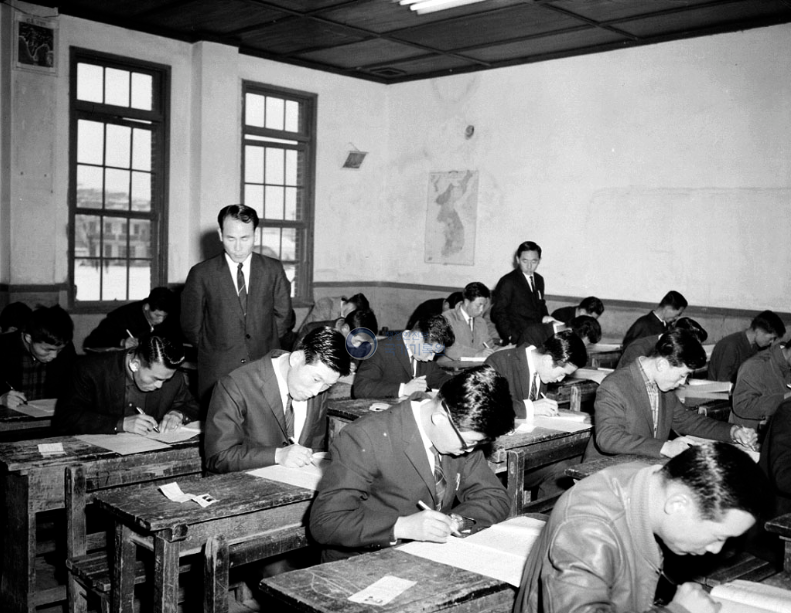
The evolution of South Korea's public hiring system is a story of the continuous tension between deep-seated cultural norms and the drive to establish a modern, merit-based bureaucracy. For decades, the administration has grappled with the legacy of a traditional culture rooted in authoritarianism and factionalism, where personal connections often outweighed formal qualifications. Simultaneously, successive governments have enacted legal and systemic reforms aimed at creating a civil service founded on principles of fairness, competition, and professionalism. This report traces this development chronologically through the nation's different Republics, analyzing the key legal frameworks, cultural influences, and systemic reforms that have shaped South Korea's public personnel administration.
#public administration #civil service #hiring system
Bureaucratic Culture: Authoritarianism and Factionalism
The profound and lasting impact of traditional bureaucratic culture on South Korea's nascent public personnel administration cannot be overstated. Core cultural features, shaped by Confucian traditions of paternalistic familism, social status discrimination, and deference to officials, cemented authoritarianism and factionalism within the bureaucracy. This culture positioned government employees as leaders and instructors above the citizenry rather than as accountable public servants. This perspective fostered a system where patronage was a tool for enhancing personal power and stature, leading to a spoils system based on personal connections. “The prominent characteristics of public personnel administration during this period were favoritism and the spoils system.” This entrenched culture was exemplified by President Rhee Syngman, whose cabinet appointments prioritized political supporters over more respected public figures, setting a precedent for the spoils system that would persist for decades. Consequently, although the Government Employees Act of 1949 mandated political neutrality, the ideal remained in name only, as the underlying cultural and political realities ensured that personal loyalties prevailed over meritocratic principles. These cultural underpinnings created a challenging environment for the formal hiring systems established during this time.
Laying the Foundation: The First Government Employees Act and Early Examinations
The formal hiring systems of the First and Second Republics were established by the Government Employees Act (GEA) of 1949. This legislation had a dual mandate: to institute a merit system based on competitive examinations while also permitting special screening for individuals who had contributed to the nation's independence movement. The hiring process was structured around a five-group pay grade system, and examinations, such as the Higher Civil Service Examination (HCSE), required a minimum level of education. However, this system was profoundly limited in practice. The lack of open recruitment, the prevalence of confidential hiring where jobs were not publicly announced, and an examination structure heavily focused on law-based constructive answer questions effectively barred the vast majority of the population from civil service. The vast majority of administrators during this period were not hired through the formal HCSE but through ‘nominal’ screening processes rooted in favoritism. The data illustrates this imbalance starkly: between 1949 and 1960, only 265 individuals were hired through the HCSE for administration, while 7,175 were hired through other forms of higher screening. A significant shift occurred in the Second Republic, which, responding to public demand for a more responsible government after the April 19 Revolution, introduced open recruitment tests in 1960. This change marked the first major step toward a more transparent and objective hiring process, setting the stage for the bureaucratic adaptations required by the coming era of rapid economic development.
Bureaucracy in an Age of Industrialization
The Third and Fourth Republics, under the Park Chunghee administration, were defined by ambitious plans for rapid, state-led economic development. This top-down industrialization strategy reinforced the power of bureaucrats, who emerged as a ruling elite essential to executing national policy. The Confucian legacy of deference to officials supported a heavy-handed administrative approach, but the traditional culture of favoritism and the spoils system persisted, adapting to new forms. Military and educational backgrounds became the new pillars of this practice. For instance, in the Third Republic, 23.6% of cabinet members were graduates of military academies. The influence of elite educational ties was even more pronounced; by 1978, graduates of Seoul National University constituted 42% of government employees at the director-general level or above. Political neutrality remained an elusive ideal, as personal and group connections continued to be decisive factors for career advancement. During this period, women were conspicuously absent from the bureaucratic structure, a stark reflection of the paternalistic authoritarianism of Korean culture that largely confined women to domestic roles. This deeply ingrained cultural context formed the backdrop against which new legal and administrative frameworks were established.
Formalizing the Merit System Amidst Contradictions
The Third and Fourth Republics saw significant legislative and practical changes to the hiring system. In 1963, a new Government Employees Act was passed with the stated goal of boosting the merit system through open, competitive tests. The law stipulated that appointments be based on verifiable merits like test scores and that details about vacancies and qualifications be publicly announced. However, these stated goals were often contradicted by actual hiring practices, which included an institutionalized preference for veterans and special appointments for former military officials. Initial efforts under the military government in 1961 aimed to rationalize the bureaucracy by minimizing quotas, resulting in an overall quota reduction of 15,754 positions. Yet, the demands of economic administration led to a subsequent expansion, particularly in high-ranking posts, with the number of officials at Grades 1 through 3 increasing by 11.9 percent between 1961 and 1963. The Fourth Republic introduced further changes, creating a contract government worker system and a special recruitment system to hire individuals with specific skills for national projects. This special recruitment became particularly popular in the later days of the Fourth Republic; for example, in 1979, special hires for Grade 5 positions (1,065) vastly outnumbered regular hires (231). These reforms, while advancing the formal structure of the merit system, operated within a political reality that continued to accommodate preferential treatment, anticipating the administrative shifts of the subsequent democratic transition.
A Culture in Slow Transition
The political context of the Fifth and Sixth Republics included the continuation of military rule under President Chun Doohwan, the introduction of direct presidential elections in 1987, and the rise of the first "Civilian Government" under President Kim Youngsam in 1993. Despite the societal diversification and pluralization of this era, the traditional bureaucratic culture—marked by authoritarianism, gender discrimination, and elitism—proved remarkably persistent. Favoritism based on regional and educational ties continued unabated. Officials from the Yeongnam region, the home of successive presidents, overwhelmingly dominated high-ranking positions, reaching as high as 40 percent of the Cabinet in the early days of the Fifth Republic. Similarly, graduates of Seoul National University solidified their influence, accounting for 52% of the Cabinet in the Sixth Republic. The ideal of political neutrality for high-ranking officials became a subject of debate, with some scholars arguing that it could contradict the principles of participatory democracy by creating a bureaucracy unresponsive to public demands. While the number of female government employees increased during this time, they remained concentrated in subordinate and junior positions, with extremely low representation in the upper echelons; as of 1987, only 0.4% of officials at Grade 5 or above were women. This slow-moving cultural landscape influenced the specific administrative reforms that were implemented during this transitional period.
Administrative Reforms and Structural Adjustments
The public hiring system continued its evolution through a series of legal amendments during the Fifth and Sixth Republics. Under the Chun Doohwan administration, the GEA was amended in 1981 to place a greater emphasis on expertise and efficiency, expanding the pay grade hierarchy from five to nine levels and introducing a new, more detailed disciplinary system. In an effort to create a "small government," the Chun administration also successfully slowed the bureaucracy's expansion by laying off employees. The subsequent Roh Taewoo administration made relatively minor changes to the system. The "Civilian Government" of Kim Youngsam, however, pursued more substantial reforms. GEA amendments in 1994 sought to foster a more motivated atmosphere by improving the promotion system, providing performance bonuses, and allowing for childcare leave to better support employees. A particularly significant amendment to the GEA in 1997 aimed to enhance competitiveness and professionalism by introducing the hiring of civilian experts for public duty and expanding the scope of special duty roles. This move signaled a growing recognition of the need for specialized skills within the civil service and set the stage for the more profound reforms that would follow in the late 1990s and early 2000s.
A New Paradigm: Reforming Bureaucratic Culture
The administrations of Kim Daejung and Roh Moohyun, beginning with the first peaceful transfer of power between opposing parties in 1998, ushered in a new era of reform. Major institutional shifts included the creation of the Central Personnel Committee (CPC) as a body under direct presidential supervision, tasked with moving public personnel administration away from the authoritarian culture of the past. There was a new emphasis on competitive, merit-based management, professionalism, and the adoption of private-sector techniques. Concerted efforts were made to dismantle factionalism. An analysis of the regional distribution of key government posts reveals a significant shift away from the overwhelming dominance of the Yeongnam region. Under the Kim Daejung administration, the proportion of officials from the Honam region in key posts rose to 27.3%, a dramatic increase from the 10-11% level seen under the two preceding administrations. In another landmark change, the Kim Daejung administration introduced an affirmative action policy for women, implementing gender quotas for civil service examinations. This policy proved successful, resulting in the hiring of an additional 238 women between 1996 and 2001 and significantly boosting female participation in the bureaucracy. These cultural and policy shifts were embodied in a series of sweeping systemic reforms.
Systemic Overhaul: The Central Personnel Committee and the Senior Executive Service
The hiring system underwent a major overhaul under the Kim Daejung and Roh Moohyun administrations. The "People's Government" of Kim Daejung focused on fostering competition and performance, introducing special recruitment for professionals like lawyers and accountants and lowering the retirement age to promote turnover. During a period of dual personnel management between the Ministry of Government Administration and Home Affairs (MGAHA) and the newly formed CPC, the government introduced "open posts," which were accessible to qualified candidates from both inside and outside the bureaucracy. A series of momentous reforms followed when the CPC gained centralized authority under the Roh administration. The core pillars of these reforms were enhancing expertise, abolishing discrimination, and improving representativeness through affirmative action for people with disabilities, scientists, women, and those from outside the Seoul region. The culmination of this reform drive was the introduction of the Senior Executive Service System (SESS) in 2005. This system was designed to improve the overall competence of the government by fundamentally restructuring the management of high-ranking officials. Its key features included the abolition of the rigid grade system for senior officials, the use of public recruitment to fill senior posts, and the implementation of enhanced accountability measures, including regular qualification evaluations.
The trajectory of South Korea's public hiring system has been one of gradual, often contested, reform. The journey reflects a slow but determined movement away from a system deeply entrenched in traditional favoritism and a spoils system toward a more open, competitive, and representative model grounded in meritocratic principles. Each republic has contributed to this transformation, layering legal frameworks and new administrative structures upon a resilient and slowly changing bureaucratic culture. Ultimately, the evolution of the civil service hiring system mirrors the broader democratic and social transformations that have reshaped South Korean society itself over the past several decades.

The evolution of South Korea's public hiring system is a story of the continuous tension between deep-seated cultural norms and the drive to establish a modern, merit-based bureaucracy. For decades, the administration has grappled with the legacy of a traditional culture rooted in authoritarianism and factionalism, where personal connections often outweighed formal qualifications. Simultaneously, successive governments have enacted legal and systemic reforms aimed at creating a civil service founded on principles of fairness, competition, and professionalism. This report traces this development chronologically through the nation's different Republics, analyzing the key legal frameworks, cultural influences, and systemic reforms that have shaped South Korea's public personnel administration.
#public administration #civil service #hiring system
Bureaucratic Culture: Authoritarianism and Factionalism
The profound and lasting impact of traditional bureaucratic culture on South Korea's nascent public personnel administration cannot be overstated. Core cultural features, shaped by Confucian traditions of paternalistic familism, social status discrimination, and deference to officials, cemented authoritarianism and factionalism within the bureaucracy. This culture positioned government employees as leaders and instructors above the citizenry rather than as accountable public servants. This perspective fostered a system where patronage was a tool for enhancing personal power and stature, leading to a spoils system based on personal connections. “The prominent characteristics of public personnel administration during this period were favoritism and the spoils system.” This entrenched culture was exemplified by President Rhee Syngman, whose cabinet appointments prioritized political supporters over more respected public figures, setting a precedent for the spoils system that would persist for decades. Consequently, although the Government Employees Act of 1949 mandated political neutrality, the ideal remained in name only, as the underlying cultural and political realities ensured that personal loyalties prevailed over meritocratic principles. These cultural underpinnings created a challenging environment for the formal hiring systems established during this time.
Laying the Foundation: The First Government Employees Act and Early Examinations
The formal hiring systems of the First and Second Republics were established by the Government Employees Act (GEA) of 1949. This legislation had a dual mandate: to institute a merit system based on competitive examinations while also permitting special screening for individuals who had contributed to the nation's independence movement. The hiring process was structured around a five-group pay grade system, and examinations, such as the Higher Civil Service Examination (HCSE), required a minimum level of education. However, this system was profoundly limited in practice. The lack of open recruitment, the prevalence of confidential hiring where jobs were not publicly announced, and an examination structure heavily focused on law-based constructive answer questions effectively barred the vast majority of the population from civil service. The vast majority of administrators during this period were not hired through the formal HCSE but through ‘nominal’ screening processes rooted in favoritism. The data illustrates this imbalance starkly: between 1949 and 1960, only 265 individuals were hired through the HCSE for administration, while 7,175 were hired through other forms of higher screening. A significant shift occurred in the Second Republic, which, responding to public demand for a more responsible government after the April 19 Revolution, introduced open recruitment tests in 1960. This change marked the first major step toward a more transparent and objective hiring process, setting the stage for the bureaucratic adaptations required by the coming era of rapid economic development.
Bureaucracy in an Age of Industrialization
The Third and Fourth Republics, under the Park Chunghee administration, were defined by ambitious plans for rapid, state-led economic development. This top-down industrialization strategy reinforced the power of bureaucrats, who emerged as a ruling elite essential to executing national policy. The Confucian legacy of deference to officials supported a heavy-handed administrative approach, but the traditional culture of favoritism and the spoils system persisted, adapting to new forms. Military and educational backgrounds became the new pillars of this practice. For instance, in the Third Republic, 23.6% of cabinet members were graduates of military academies. The influence of elite educational ties was even more pronounced; by 1978, graduates of Seoul National University constituted 42% of government employees at the director-general level or above. Political neutrality remained an elusive ideal, as personal and group connections continued to be decisive factors for career advancement. During this period, women were conspicuously absent from the bureaucratic structure, a stark reflection of the paternalistic authoritarianism of Korean culture that largely confined women to domestic roles. This deeply ingrained cultural context formed the backdrop against which new legal and administrative frameworks were established.
Formalizing the Merit System Amidst Contradictions
The Third and Fourth Republics saw significant legislative and practical changes to the hiring system. In 1963, a new Government Employees Act was passed with the stated goal of boosting the merit system through open, competitive tests. The law stipulated that appointments be based on verifiable merits like test scores and that details about vacancies and qualifications be publicly announced. However, these stated goals were often contradicted by actual hiring practices, which included an institutionalized preference for veterans and special appointments for former military officials. Initial efforts under the military government in 1961 aimed to rationalize the bureaucracy by minimizing quotas, resulting in an overall quota reduction of 15,754 positions. Yet, the demands of economic administration led to a subsequent expansion, particularly in high-ranking posts, with the number of officials at Grades 1 through 3 increasing by 11.9 percent between 1961 and 1963. The Fourth Republic introduced further changes, creating a contract government worker system and a special recruitment system to hire individuals with specific skills for national projects. This special recruitment became particularly popular in the later days of the Fourth Republic; for example, in 1979, special hires for Grade 5 positions (1,065) vastly outnumbered regular hires (231). These reforms, while advancing the formal structure of the merit system, operated within a political reality that continued to accommodate preferential treatment, anticipating the administrative shifts of the subsequent democratic transition.
A Culture in Slow Transition
The political context of the Fifth and Sixth Republics included the continuation of military rule under President Chun Doohwan, the introduction of direct presidential elections in 1987, and the rise of the first "Civilian Government" under President Kim Youngsam in 1993. Despite the societal diversification and pluralization of this era, the traditional bureaucratic culture—marked by authoritarianism, gender discrimination, and elitism—proved remarkably persistent. Favoritism based on regional and educational ties continued unabated. Officials from the Yeongnam region, the home of successive presidents, overwhelmingly dominated high-ranking positions, reaching as high as 40 percent of the Cabinet in the early days of the Fifth Republic. Similarly, graduates of Seoul National University solidified their influence, accounting for 52% of the Cabinet in the Sixth Republic. The ideal of political neutrality for high-ranking officials became a subject of debate, with some scholars arguing that it could contradict the principles of participatory democracy by creating a bureaucracy unresponsive to public demands. While the number of female government employees increased during this time, they remained concentrated in subordinate and junior positions, with extremely low representation in the upper echelons; as of 1987, only 0.4% of officials at Grade 5 or above were women. This slow-moving cultural landscape influenced the specific administrative reforms that were implemented during this transitional period.
Administrative Reforms and Structural Adjustments
The public hiring system continued its evolution through a series of legal amendments during the Fifth and Sixth Republics. Under the Chun Doohwan administration, the GEA was amended in 1981 to place a greater emphasis on expertise and efficiency, expanding the pay grade hierarchy from five to nine levels and introducing a new, more detailed disciplinary system. In an effort to create a "small government," the Chun administration also successfully slowed the bureaucracy's expansion by laying off employees. The subsequent Roh Taewoo administration made relatively minor changes to the system. The "Civilian Government" of Kim Youngsam, however, pursued more substantial reforms. GEA amendments in 1994 sought to foster a more motivated atmosphere by improving the promotion system, providing performance bonuses, and allowing for childcare leave to better support employees. A particularly significant amendment to the GEA in 1997 aimed to enhance competitiveness and professionalism by introducing the hiring of civilian experts for public duty and expanding the scope of special duty roles. This move signaled a growing recognition of the need for specialized skills within the civil service and set the stage for the more profound reforms that would follow in the late 1990s and early 2000s.
A New Paradigm: Reforming Bureaucratic Culture
The administrations of Kim Daejung and Roh Moohyun, beginning with the first peaceful transfer of power between opposing parties in 1998, ushered in a new era of reform. Major institutional shifts included the creation of the Central Personnel Committee (CPC) as a body under direct presidential supervision, tasked with moving public personnel administration away from the authoritarian culture of the past. There was a new emphasis on competitive, merit-based management, professionalism, and the adoption of private-sector techniques. Concerted efforts were made to dismantle factionalism. An analysis of the regional distribution of key government posts reveals a significant shift away from the overwhelming dominance of the Yeongnam region. Under the Kim Daejung administration, the proportion of officials from the Honam region in key posts rose to 27.3%, a dramatic increase from the 10-11% level seen under the two preceding administrations. In another landmark change, the Kim Daejung administration introduced an affirmative action policy for women, implementing gender quotas for civil service examinations. This policy proved successful, resulting in the hiring of an additional 238 women between 1996 and 2001 and significantly boosting female participation in the bureaucracy. These cultural and policy shifts were embodied in a series of sweeping systemic reforms.
Systemic Overhaul: The Central Personnel Committee and the Senior Executive Service
The hiring system underwent a major overhaul under the Kim Daejung and Roh Moohyun administrations. The "People's Government" of Kim Daejung focused on fostering competition and performance, introducing special recruitment for professionals like lawyers and accountants and lowering the retirement age to promote turnover. During a period of dual personnel management between the Ministry of Government Administration and Home Affairs (MGAHA) and the newly formed CPC, the government introduced "open posts," which were accessible to qualified candidates from both inside and outside the bureaucracy. A series of momentous reforms followed when the CPC gained centralized authority under the Roh administration. The core pillars of these reforms were enhancing expertise, abolishing discrimination, and improving representativeness through affirmative action for people with disabilities, scientists, women, and those from outside the Seoul region. The culmination of this reform drive was the introduction of the Senior Executive Service System (SESS) in 2005. This system was designed to improve the overall competence of the government by fundamentally restructuring the management of high-ranking officials. Its key features included the abolition of the rigid grade system for senior officials, the use of public recruitment to fill senior posts, and the implementation of enhanced accountability measures, including regular qualification evaluations.
The trajectory of South Korea's public hiring system has been one of gradual, often contested, reform. The journey reflects a slow but determined movement away from a system deeply entrenched in traditional favoritism and a spoils system toward a more open, competitive, and representative model grounded in meritocratic principles. Each republic has contributed to this transformation, layering legal frameworks and new administrative structures upon a resilient and slowly changing bureaucratic culture. Ultimately, the evolution of the civil service hiring system mirrors the broader democratic and social transformations that have reshaped South Korean society itself over the past several decades.

Bureaucratic Culture: Authoritarianism and Factionalism
The profound and lasting impact of traditional bureaucratic culture on South Korea's nascent public personnel administration cannot be overstated. Core cultural features, shaped by Confucian traditions of paternalistic familism, social status discrimination, and deference to officials, cemented authoritarianism and factionalism within the bureaucracy. This culture positioned government employees as leaders and instructors above the citizenry rather than as accountable public servants. This perspective fostered a system where patronage was a tool for enhancing personal power and stature, leading to a spoils system based on personal connections. “The prominent characteristics of public personnel administration during this period were favoritism and the spoils system.” This entrenched culture was exemplified by President Rhee Syngman, whose cabinet appointments prioritized political supporters over more respected public figures, setting a precedent for the spoils system that would persist for decades. Consequently, although the Government Employees Act of 1949 mandated political neutrality, the ideal remained in name only, as the underlying cultural and political realities ensured that personal loyalties prevailed over meritocratic principles. These cultural underpinnings created a challenging environment for the formal hiring systems established during this time.
Laying the Foundation: The First Government Employees Act and Early Examinations
The formal hiring systems of the First and Second Republics were established by the Government Employees Act (GEA) of 1949. This legislation had a dual mandate: to institute a merit system based on competitive examinations while also permitting special screening for individuals who had contributed to the nation's independence movement. The hiring process was structured around a five-group pay grade system, and examinations, such as the Higher Civil Service Examination (HCSE), required a minimum level of education. However, this system was profoundly limited in practice. The lack of open recruitment, the prevalence of confidential hiring where jobs were not publicly announced, and an examination structure heavily focused on law-based constructive answer questions effectively barred the vast majority of the population from civil service. The vast majority of administrators during this period were not hired through the formal HCSE but through ‘nominal’ screening processes rooted in favoritism. The data illustrates this imbalance starkly: between 1949 and 1960, only 265 individuals were hired through the HCSE for administration, while 7,175 were hired through other forms of higher screening. A significant shift occurred in the Second Republic, which, responding to public demand for a more responsible government after the April 19 Revolution, introduced open recruitment tests in 1960. This change marked the first major step toward a more transparent and objective hiring process, setting the stage for the bureaucratic adaptations required by the coming era of rapid economic development.
Bureaucracy in an Age of Industrialization
The Third and Fourth Republics, under the Park Chunghee administration, were defined by ambitious plans for rapid, state-led economic development. This top-down industrialization strategy reinforced the power of bureaucrats, who emerged as a ruling elite essential to executing national policy. The Confucian legacy of deference to officials supported a heavy-handed administrative approach, but the traditional culture of favoritism and the spoils system persisted, adapting to new forms. Military and educational backgrounds became the new pillars of this practice. For instance, in the Third Republic, 23.6% of cabinet members were graduates of military academies. The influence of elite educational ties was even more pronounced; by 1978, graduates of Seoul National University constituted 42% of government employees at the director-general level or above. Political neutrality remained an elusive ideal, as personal and group connections continued to be decisive factors for career advancement. During this period, women were conspicuously absent from the bureaucratic structure, a stark reflection of the paternalistic authoritarianism of Korean culture that largely confined women to domestic roles. This deeply ingrained cultural context formed the backdrop against which new legal and administrative frameworks were established.
Formalizing the Merit System Amidst Contradictions
The Third and Fourth Republics saw significant legislative and practical changes to the hiring system. In 1963, a new Government Employees Act was passed with the stated goal of boosting the merit system through open, competitive tests. The law stipulated that appointments be based on verifiable merits like test scores and that details about vacancies and qualifications be publicly announced. However, these stated goals were often contradicted by actual hiring practices, which included an institutionalized preference for veterans and special appointments for former military officials. Initial efforts under the military government in 1961 aimed to rationalize the bureaucracy by minimizing quotas, resulting in an overall quota reduction of 15,754 positions. Yet, the demands of economic administration led to a subsequent expansion, particularly in high-ranking posts, with the number of officials at Grades 1 through 3 increasing by 11.9 percent between 1961 and 1963. The Fourth Republic introduced further changes, creating a contract government worker system and a special recruitment system to hire individuals with specific skills for national projects. This special recruitment became particularly popular in the later days of the Fourth Republic; for example, in 1979, special hires for Grade 5 positions (1,065) vastly outnumbered regular hires (231). These reforms, while advancing the formal structure of the merit system, operated within a political reality that continued to accommodate preferential treatment, anticipating the administrative shifts of the subsequent democratic transition.
A Culture in Slow Transition
The political context of the Fifth and Sixth Republics included the continuation of military rule under President Chun Doohwan, the introduction of direct presidential elections in 1987, and the rise of the first "Civilian Government" under President Kim Youngsam in 1993. Despite the societal diversification and pluralization of this era, the traditional bureaucratic culture—marked by authoritarianism, gender discrimination, and elitism—proved remarkably persistent. Favoritism based on regional and educational ties continued unabated. Officials from the Yeongnam region, the home of successive presidents, overwhelmingly dominated high-ranking positions, reaching as high as 40 percent of the Cabinet in the early days of the Fifth Republic. Similarly, graduates of Seoul National University solidified their influence, accounting for 52% of the Cabinet in the Sixth Republic. The ideal of political neutrality for high-ranking officials became a subject of debate, with some scholars arguing that it could contradict the principles of participatory democracy by creating a bureaucracy unresponsive to public demands. While the number of female government employees increased during this time, they remained concentrated in subordinate and junior positions, with extremely low representation in the upper echelons; as of 1987, only 0.4% of officials at Grade 5 or above were women. This slow-moving cultural landscape influenced the specific administrative reforms that were implemented during this transitional period.
Administrative Reforms and Structural Adjustments
The public hiring system continued its evolution through a series of legal amendments during the Fifth and Sixth Republics. Under the Chun Doohwan administration, the GEA was amended in 1981 to place a greater emphasis on expertise and efficiency, expanding the pay grade hierarchy from five to nine levels and introducing a new, more detailed disciplinary system. In an effort to create a "small government," the Chun administration also successfully slowed the bureaucracy's expansion by laying off employees. The subsequent Roh Taewoo administration made relatively minor changes to the system. The "Civilian Government" of Kim Youngsam, however, pursued more substantial reforms. GEA amendments in 1994 sought to foster a more motivated atmosphere by improving the promotion system, providing performance bonuses, and allowing for childcare leave to better support employees. A particularly significant amendment to the GEA in 1997 aimed to enhance competitiveness and professionalism by introducing the hiring of civilian experts for public duty and expanding the scope of special duty roles. This move signaled a growing recognition of the need for specialized skills within the civil service and set the stage for the more profound reforms that would follow in the late 1990s and early 2000s.
A New Paradigm: Reforming Bureaucratic Culture
The administrations of Kim Daejung and Roh Moohyun, beginning with the first peaceful transfer of power between opposing parties in 1998, ushered in a new era of reform. Major institutional shifts included the creation of the Central Personnel Committee (CPC) as a body under direct presidential supervision, tasked with moving public personnel administration away from the authoritarian culture of the past. There was a new emphasis on competitive, merit-based management, professionalism, and the adoption of private-sector techniques. Concerted efforts were made to dismantle factionalism. An analysis of the regional distribution of key government posts reveals a significant shift away from the overwhelming dominance of the Yeongnam region. Under the Kim Daejung administration, the proportion of officials from the Honam region in key posts rose to 27.3%, a dramatic increase from the 10-11% level seen under the two preceding administrations. In another landmark change, the Kim Daejung administration introduced an affirmative action policy for women, implementing gender quotas for civil service examinations. This policy proved successful, resulting in the hiring of an additional 238 women between 1996 and 2001 and significantly boosting female participation in the bureaucracy. These cultural and policy shifts were embodied in a series of sweeping systemic reforms.
Systemic Overhaul: The Central Personnel Committee and the Senior Executive Service
The hiring system underwent a major overhaul under the Kim Daejung and Roh Moohyun administrations. The "People's Government" of Kim Daejung focused on fostering competition and performance, introducing special recruitment for professionals like lawyers and accountants and lowering the retirement age to promote turnover. During a period of dual personnel management between the Ministry of Government Administration and Home Affairs (MGAHA) and the newly formed CPC, the government introduced "open posts," which were accessible to qualified candidates from both inside and outside the bureaucracy. A series of momentous reforms followed when the CPC gained centralized authority under the Roh administration. The core pillars of these reforms were enhancing expertise, abolishing discrimination, and improving representativeness through affirmative action for people with disabilities, scientists, women, and those from outside the Seoul region. The culmination of this reform drive was the introduction of the Senior Executive Service System (SESS) in 2005. This system was designed to improve the overall competence of the government by fundamentally restructuring the management of high-ranking officials. Its key features included the abolition of the rigid grade system for senior officials, the use of public recruitment to fill senior posts, and the implementation of enhanced accountability measures, including regular qualification evaluations.
The trajectory of South Korea's public hiring system has been one of gradual, often contested, reform. The journey reflects a slow but determined movement away from a system deeply entrenched in traditional favoritism and a spoils system toward a more open, competitive, and representative model grounded in meritocratic principles. Each republic has contributed to this transformation, layering legal frameworks and new administrative structures upon a resilient and slowly changing bureaucratic culture. Ultimately, the evolution of the civil service hiring system mirrors the broader democratic and social transformations that have reshaped South Korean society itself over the past several decades.