


Back to List
Perspectives

From Policy to Power: The Role of Industrial Policy in the Strategic Divergence of the Semiconductor Industry in South Korea and Taiwan

Semiconductor Divide : Choosing the Strategic Focus

Semiconductors, often called the "rice of industry," have become pivotal to both the digital economy and global security, evolving from trade commodities to central elements in national security strategies. Amidst this shift, major global powers, notably the U.S. and China, are competing for dominance in the semiconductor sector, fueling a 'semiconductor war' to reorganize supply chains and bolster domestic high-tech industries. This global competition has compelled leading nations such as Korea and Taiwan to escalate their support for their respective semiconductor industries.

Market Dominance in Different Segment - Memory and System Chips

Korea's semiconductor industry, predominantly centered on memory chips, is highly sensitive to global economic fluctuations, leading to considerable market volatility. Additionally, challenges in maintaining cost competitiveness and a continuous downturn in market positioning contribute to a lack of robustness in Korea's industry outlook. These factors complicate predictions about the future stability and competitiveness of Korea's semiconductor sector.

In contrast, Taiwan has capitalized on the less volatile system semiconductor market, securing a dominant position with its advanced manufacturing capabilities. This strategic focus, especially evident during the turbulent times following the COVID-19 crisis and amidst geopolitical tensions, has established Taiwan's semiconductor industry as the most critical base for the global supply chain. This positioning not only bolsters Taiwan's role in international markets but also serves as a 'Silicon Shield,' enhancing its national security and solidifying its strategic importance on the global stage.

This divergence in focus—Taiwan's strength in system semiconductors versus Korea's dominance in memory chips—highlights a critical strategic variation. Korea's reliance on memory chips is seen as a vulnerability, given their susceptibility to economic downturns, while Taiwan's robust position in system semiconductors offers resilience against global disturbances, further emphasizing the strategic importance of industrial policy in shaping national security and economic stability.

To further explore the strategic divergence within the semiconductor industry between Korea and Taiwan, it's essential to delve into the economic histories and industrial policies that have shaped each country's sector. This investigation will focus on how different approaches to industrial policy have fostered the semiconductor industry as a strategic sector in each country. By examining these policies and their historical contexts, we aim to uncover potential systematic causes behind the differences in industry focus.

Industrial Policy Comparison - Taiwan vs. Korea in 1980s

From 1980s, both Korea and Taiwan emphasized the development of their semiconductor industries through distinct industrial policies, leading to differing trajectories. Korea prioritized export promotion and relied on large conglomerates (Chaebol) to dominate production, leading to a specialization in memory chips.
In contrast, Taiwan's economy, fueled by small-to-medium enterprises (SMEs), actively engaged foreign investors and multilateral parties, leading to specialization in the foundry business and logic(system) chips. This favorable position culminated in the creation of an ecosystem known as the 'Grand Alliance', led by TSMC, solidifying Taiwan's status as the global standard for logic chips, trusted by tech companies worldwide.

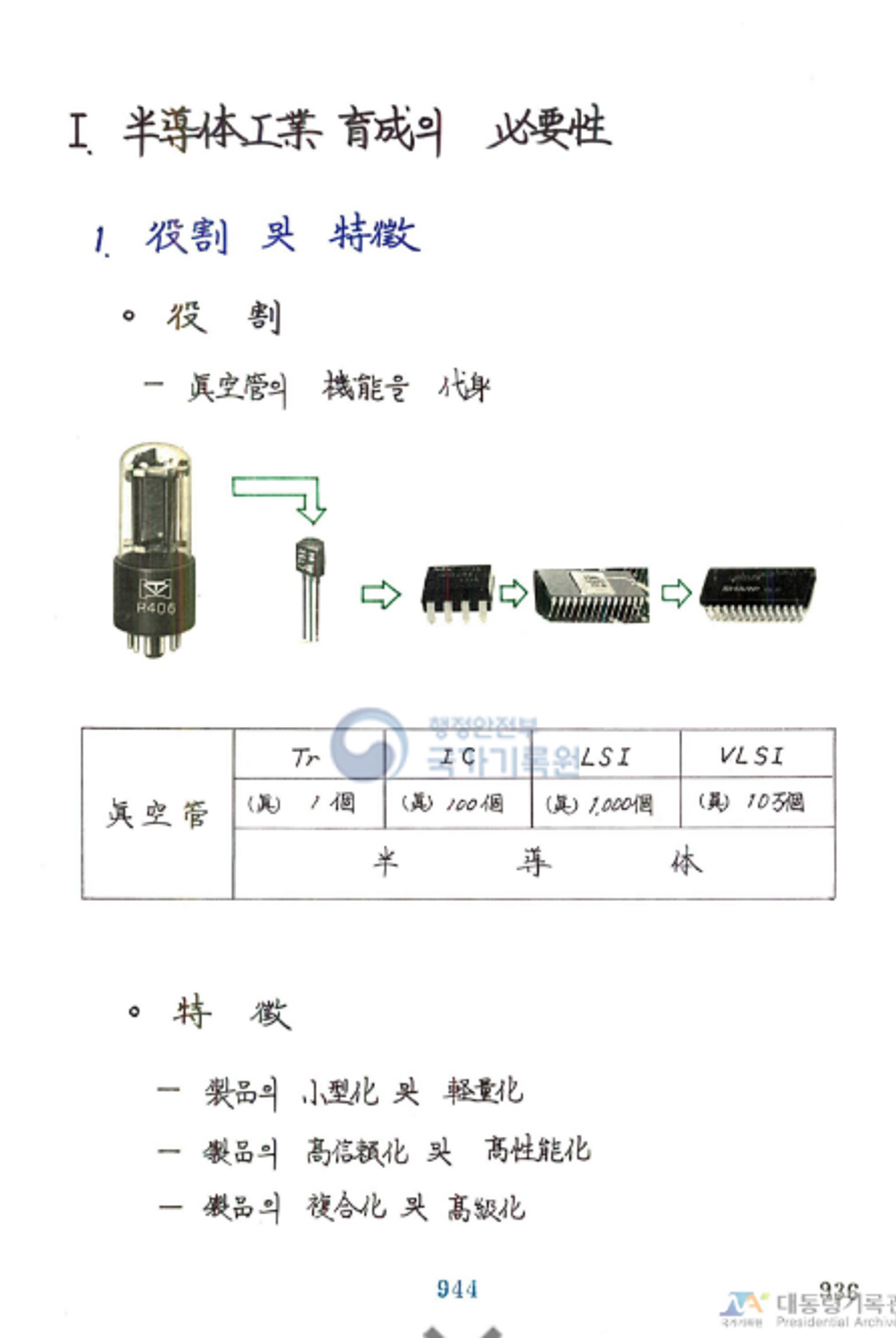
  • In the 1980s, Korean government adopted a top-down approach that heavily favored large conglomerates, known as chaebols, through direct financial support and protectionist policies. This included exclusive licenses, significant government-subsidized credit, and import barriers against foreign competitors. Korea's focus was particularly strong on manufacturing Dynamic Random Access Memory (DRAM) chips.
  • The government selected a few chaebols, most notably Samsung, and provided them with substantial support to develop their semiconductor capabilities, aiming to compete directly in global markets. The strategy relied on massive capital investment and rapidly scaling up production capacities.

Semiconductor Industry Development Plan 반도체공업육성계획 (1981)

  • Taiwan, on the other hand, adopted a more grassroots, market-oriented approach that emphasized the development of a competitive and innovative environment rather than picking and supporting specific large enterprises. The government played a facilitative role by investing in research and development through state-sponsored institutions such as the Industrial Technology Research Institute (ITRI). ITRI was crucial in transferring technology to fledgling companies and helped spawn leading firms such as Taiwan Semiconductor Manufacturing Company (TSMC).
  • Taiwan's policy encouraged entrepreneurship, the formation of small and medium-sized enterprises, and focused on the foundry model rather than end-to-end manufacture, which differentiated its market segment focus from Korea's. Taiwan's model encouraged a more distributed growth in the semiconductor industry, leading to a vibrant sector with numerous competitive firms specializing in various segments of the semiconductor process. The focus on the foundry business model, where companies like TSMC provided manufacturing services to design firms without their own factories, allowed a focus on technical excellence in production processes.

The Long-term Impact of Industrial Policy

From our previous discussion, it was established that Korea's approach led to the creation of dominant global players with substantial production capacities, propelling the country to the forefront of the DRAM market. Conversely, Taiwan's strategy nurtured a wider spectrum of innovative firms, positioning it as a leader in semiconductor foundries. Supported by earlier research from Lim and Cho (2023) for Korea and Feigenbaum and Nelson (2021) for Taiwan, we also verified that industrial policy has been fundamental to this strategic divergence.

Regarding the long-term impact of the 1980s industrial policies, there has been a notable divergence in the evolution of the two companies. Korea has emerged as a global leader in memory chips but faces increased competition from newer entrants in the sector. Additionally, the cost of producing memory and storage chips has consistently decreased. This trend highlights the cost competitiveness of Korean semiconductor companies. However, it also presents a significant risk as the revenue from the value-added aspects of memory chips declines, and the lower production costs reduce the barriers to entry for new competitors.

In terms of Taiwan, the industrial policy played a crucial role in facilitating the emergence of TSMC (Taiwan Semiconductor Manufacturing Company) and the establishment of its "Grand Alliance" in the foundry business. The Taiwanese government's policy framework was conducive to fostering a competitive semiconductor industry, particularly by nurturing an environment where small-to-medium enterprises (SMEs) could thrive. This policy allowed TSMC, founded in 1987, to emerge and grow rapidly as an independent foundry, specializing in the manufacturing of semiconductor chips for other companies without producing its own designs called ‘fabless companies’.

Additionally, the government's focus on attracting foreign investment and promoting collaboration with multiple parties aided TSMC in forging relationships with top global technology firms. By partnering with leading companies and capitalizing on Taiwan's skilled workforce and sophisticated infrastructure, TSMC established itself as a dependable and competitive entity in the foundry market. This strategic positioning allowed Taiwan to support other nations from a neutral standpoint, largely insulated from the competitive pressures faced by other semiconductor companies. Leveraging this advantageous market position, Taiwan is also setting the standard for global chip compatibility.
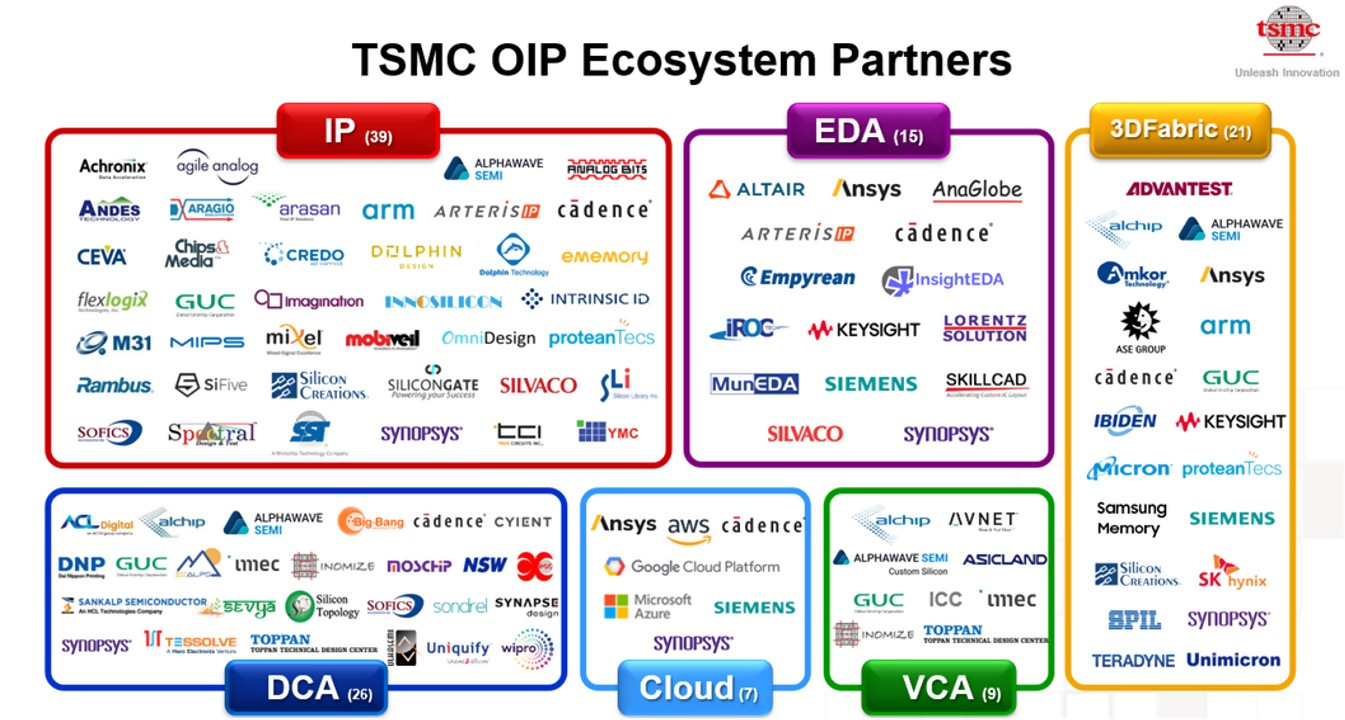
TSMC's Grand Alliance

Some Interesting Stats

Here are some interesting stats about Korea and Taiwan’s semiconductor industry that might capture your attention:

  • GDP Growth Comparison - Taiwan vs. South Korea (2023)

  • 1999-2023 Yearly semiconductor export trend by volume (KRW) : South Korea

  • Moore’s Law (as of 1971)

Conclusion

In conclusion, the development of the semiconductor industries in Korea and Taiwan, shaped by distinct industrial policies from the 1980s, demonstrates the profound impact of governmental strategy on market outcomes. Korea’s approach supported large conglomerates like Samsung, focusing on memory chips and leveraging government-backed financial and protectionist policies to become a global leader in memory chip production. This has led to formidable capabilities but also increased competition and challenges due to falling production costs. Conversely, Taiwan’s industrial policies fostered a competitive environment for small-to-medium(SME) enterprises, leading to the rise of TSMC and its dominance in the semiconductor foundry market through strategic global collaborations and technological leadership.

Both strategies underscore the effectiveness of tailored industrial policies in aligning national industries with global economic currents. While Korea developed massive production scale in memory chips, Taiwan cultivated a broad base of innovative firms, setting a global standard in foundries and logic chips. This divergence not only reflects the countries’ strategic priorities but also highlights how nuanced policy-making can influence global technological landscapes and economic trajectories.

Author
Soomin Lim
analyst at ebrd
References
cite this work

From Policy to Power: The Role of Industrial Policy in the Strategic Divergence of the Semiconductor Industry in South Korea and Taiwan

Perspectives
February 24, 2026
This is some text inside of a div block.

Semiconductor Divide : Choosing the Strategic Focus

Semiconductors, often called the "rice of industry," have become pivotal to both the digital economy and global security, evolving from trade commodities to central elements in national security strategies. Amidst this shift, major global powers, notably the U.S. and China, are competing for dominance in the semiconductor sector, fueling a 'semiconductor war' to reorganize supply chains and bolster domestic high-tech industries. This global competition has compelled leading nations such as Korea and Taiwan to escalate their support for their respective semiconductor industries.

Market Dominance in Different Segment - Memory and System Chips

Korea's semiconductor industry, predominantly centered on memory chips, is highly sensitive to global economic fluctuations, leading to considerable market volatility. Additionally, challenges in maintaining cost competitiveness and a continuous downturn in market positioning contribute to a lack of robustness in Korea's industry outlook. These factors complicate predictions about the future stability and competitiveness of Korea's semiconductor sector.

In contrast, Taiwan has capitalized on the less volatile system semiconductor market, securing a dominant position with its advanced manufacturing capabilities. This strategic focus, especially evident during the turbulent times following the COVID-19 crisis and amidst geopolitical tensions, has established Taiwan's semiconductor industry as the most critical base for the global supply chain. This positioning not only bolsters Taiwan's role in international markets but also serves as a 'Silicon Shield,' enhancing its national security and solidifying its strategic importance on the global stage.

This divergence in focus—Taiwan's strength in system semiconductors versus Korea's dominance in memory chips—highlights a critical strategic variation. Korea's reliance on memory chips is seen as a vulnerability, given their susceptibility to economic downturns, while Taiwan's robust position in system semiconductors offers resilience against global disturbances, further emphasizing the strategic importance of industrial policy in shaping national security and economic stability.

To further explore the strategic divergence within the semiconductor industry between Korea and Taiwan, it's essential to delve into the economic histories and industrial policies that have shaped each country's sector. This investigation will focus on how different approaches to industrial policy have fostered the semiconductor industry as a strategic sector in each country. By examining these policies and their historical contexts, we aim to uncover potential systematic causes behind the differences in industry focus.

Industrial Policy Comparison - Taiwan vs. Korea in 1980s

From 1980s, both Korea and Taiwan emphasized the development of their semiconductor industries through distinct industrial policies, leading to differing trajectories. Korea prioritized export promotion and relied on large conglomerates (Chaebol) to dominate production, leading to a specialization in memory chips.
In contrast, Taiwan's economy, fueled by small-to-medium enterprises (SMEs), actively engaged foreign investors and multilateral parties, leading to specialization in the foundry business and logic(system) chips. This favorable position culminated in the creation of an ecosystem known as the 'Grand Alliance', led by TSMC, solidifying Taiwan's status as the global standard for logic chips, trusted by tech companies worldwide.

  • In the 1980s, Korean government adopted a top-down approach that heavily favored large conglomerates, known as chaebols, through direct financial support and protectionist policies. This included exclusive licenses, significant government-subsidized credit, and import barriers against foreign competitors. Korea's focus was particularly strong on manufacturing Dynamic Random Access Memory (DRAM) chips.
  • The government selected a few chaebols, most notably Samsung, and provided them with substantial support to develop their semiconductor capabilities, aiming to compete directly in global markets. The strategy relied on massive capital investment and rapidly scaling up production capacities.

Semiconductor Industry Development Plan 반도체공업육성계획 (1981)

  • Taiwan, on the other hand, adopted a more grassroots, market-oriented approach that emphasized the development of a competitive and innovative environment rather than picking and supporting specific large enterprises. The government played a facilitative role by investing in research and development through state-sponsored institutions such as the Industrial Technology Research Institute (ITRI). ITRI was crucial in transferring technology to fledgling companies and helped spawn leading firms such as Taiwan Semiconductor Manufacturing Company (TSMC).
  • Taiwan's policy encouraged entrepreneurship, the formation of small and medium-sized enterprises, and focused on the foundry model rather than end-to-end manufacture, which differentiated its market segment focus from Korea's. Taiwan's model encouraged a more distributed growth in the semiconductor industry, leading to a vibrant sector with numerous competitive firms specializing in various segments of the semiconductor process. The focus on the foundry business model, where companies like TSMC provided manufacturing services to design firms without their own factories, allowed a focus on technical excellence in production processes.

The Long-term Impact of Industrial Policy

From our previous discussion, it was established that Korea's approach led to the creation of dominant global players with substantial production capacities, propelling the country to the forefront of the DRAM market. Conversely, Taiwan's strategy nurtured a wider spectrum of innovative firms, positioning it as a leader in semiconductor foundries. Supported by earlier research from Lim and Cho (2023) for Korea and Feigenbaum and Nelson (2021) for Taiwan, we also verified that industrial policy has been fundamental to this strategic divergence.

Regarding the long-term impact of the 1980s industrial policies, there has been a notable divergence in the evolution of the two companies. Korea has emerged as a global leader in memory chips but faces increased competition from newer entrants in the sector. Additionally, the cost of producing memory and storage chips has consistently decreased. This trend highlights the cost competitiveness of Korean semiconductor companies. However, it also presents a significant risk as the revenue from the value-added aspects of memory chips declines, and the lower production costs reduce the barriers to entry for new competitors.

In terms of Taiwan, the industrial policy played a crucial role in facilitating the emergence of TSMC (Taiwan Semiconductor Manufacturing Company) and the establishment of its "Grand Alliance" in the foundry business. The Taiwanese government's policy framework was conducive to fostering a competitive semiconductor industry, particularly by nurturing an environment where small-to-medium enterprises (SMEs) could thrive. This policy allowed TSMC, founded in 1987, to emerge and grow rapidly as an independent foundry, specializing in the manufacturing of semiconductor chips for other companies without producing its own designs called ‘fabless companies’.

Additionally, the government's focus on attracting foreign investment and promoting collaboration with multiple parties aided TSMC in forging relationships with top global technology firms. By partnering with leading companies and capitalizing on Taiwan's skilled workforce and sophisticated infrastructure, TSMC established itself as a dependable and competitive entity in the foundry market. This strategic positioning allowed Taiwan to support other nations from a neutral standpoint, largely insulated from the competitive pressures faced by other semiconductor companies. Leveraging this advantageous market position, Taiwan is also setting the standard for global chip compatibility.

TSMC's Grand Alliance

Some Interesting Stats

Here are some interesting stats about Korea and Taiwan’s semiconductor industry that might capture your attention:

  • GDP Growth Comparison - Taiwan vs. South Korea (2023)

  • 1999-2023 Yearly semiconductor export trend by volume (KRW) : South Korea

  • Moore’s Law (as of 1971)

Conclusion

In conclusion, the development of the semiconductor industries in Korea and Taiwan, shaped by distinct industrial policies from the 1980s, demonstrates the profound impact of governmental strategy on market outcomes. Korea’s approach supported large conglomerates like Samsung, focusing on memory chips and leveraging government-backed financial and protectionist policies to become a global leader in memory chip production. This has led to formidable capabilities but also increased competition and challenges due to falling production costs. Conversely, Taiwan’s industrial policies fostered a competitive environment for small-to-medium(SME) enterprises, leading to the rise of TSMC and its dominance in the semiconductor foundry market through strategic global collaborations and technological leadership.

Both strategies underscore the effectiveness of tailored industrial policies in aligning national industries with global economic currents. While Korea developed massive production scale in memory chips, Taiwan cultivated a broad base of innovative firms, setting a global standard in foundries and logic chips. This divergence not only reflects the countries’ strategic priorities but also highlights how nuanced policy-making can influence global technological landscapes and economic trajectories.

References
Cite this work
.

More to explore from
In Perspective

From Policy to Power: The Role of Industrial Policy in the Strategic Divergence of the Semiconductor Industry in South Korea and Taiwan

Perspectives
February 24, 2026

I am the text that will be copied.

Semiconductor Divide : Choosing the Strategic Focus

Semiconductors, often called the "rice of industry," have become pivotal to both the digital economy and global security, evolving from trade commodities to central elements in national security strategies. Amidst this shift, major global powers, notably the U.S. and China, are competing for dominance in the semiconductor sector, fueling a 'semiconductor war' to reorganize supply chains and bolster domestic high-tech industries. This global competition has compelled leading nations such as Korea and Taiwan to escalate their support for their respective semiconductor industries.

Market Dominance in Different Segment - Memory and System Chips

Korea's semiconductor industry, predominantly centered on memory chips, is highly sensitive to global economic fluctuations, leading to considerable market volatility. Additionally, challenges in maintaining cost competitiveness and a continuous downturn in market positioning contribute to a lack of robustness in Korea's industry outlook. These factors complicate predictions about the future stability and competitiveness of Korea's semiconductor sector.

In contrast, Taiwan has capitalized on the less volatile system semiconductor market, securing a dominant position with its advanced manufacturing capabilities. This strategic focus, especially evident during the turbulent times following the COVID-19 crisis and amidst geopolitical tensions, has established Taiwan's semiconductor industry as the most critical base for the global supply chain. This positioning not only bolsters Taiwan's role in international markets but also serves as a 'Silicon Shield,' enhancing its national security and solidifying its strategic importance on the global stage.

This divergence in focus—Taiwan's strength in system semiconductors versus Korea's dominance in memory chips—highlights a critical strategic variation. Korea's reliance on memory chips is seen as a vulnerability, given their susceptibility to economic downturns, while Taiwan's robust position in system semiconductors offers resilience against global disturbances, further emphasizing the strategic importance of industrial policy in shaping national security and economic stability.

To further explore the strategic divergence within the semiconductor industry between Korea and Taiwan, it's essential to delve into the economic histories and industrial policies that have shaped each country's sector. This investigation will focus on how different approaches to industrial policy have fostered the semiconductor industry as a strategic sector in each country. By examining these policies and their historical contexts, we aim to uncover potential systematic causes behind the differences in industry focus.

Industrial Policy Comparison - Taiwan vs. Korea in 1980s

From 1980s, both Korea and Taiwan emphasized the development of their semiconductor industries through distinct industrial policies, leading to differing trajectories. Korea prioritized export promotion and relied on large conglomerates (Chaebol) to dominate production, leading to a specialization in memory chips.
In contrast, Taiwan's economy, fueled by small-to-medium enterprises (SMEs), actively engaged foreign investors and multilateral parties, leading to specialization in the foundry business and logic(system) chips. This favorable position culminated in the creation of an ecosystem known as the 'Grand Alliance', led by TSMC, solidifying Taiwan's status as the global standard for logic chips, trusted by tech companies worldwide.

  • In the 1980s, Korean government adopted a top-down approach that heavily favored large conglomerates, known as chaebols, through direct financial support and protectionist policies. This included exclusive licenses, significant government-subsidized credit, and import barriers against foreign competitors. Korea's focus was particularly strong on manufacturing Dynamic Random Access Memory (DRAM) chips.
  • The government selected a few chaebols, most notably Samsung, and provided them with substantial support to develop their semiconductor capabilities, aiming to compete directly in global markets. The strategy relied on massive capital investment and rapidly scaling up production capacities.

Semiconductor Industry Development Plan 반도체공업육성계획 (1981)

  • Taiwan, on the other hand, adopted a more grassroots, market-oriented approach that emphasized the development of a competitive and innovative environment rather than picking and supporting specific large enterprises. The government played a facilitative role by investing in research and development through state-sponsored institutions such as the Industrial Technology Research Institute (ITRI). ITRI was crucial in transferring technology to fledgling companies and helped spawn leading firms such as Taiwan Semiconductor Manufacturing Company (TSMC).
  • Taiwan's policy encouraged entrepreneurship, the formation of small and medium-sized enterprises, and focused on the foundry model rather than end-to-end manufacture, which differentiated its market segment focus from Korea's. Taiwan's model encouraged a more distributed growth in the semiconductor industry, leading to a vibrant sector with numerous competitive firms specializing in various segments of the semiconductor process. The focus on the foundry business model, where companies like TSMC provided manufacturing services to design firms without their own factories, allowed a focus on technical excellence in production processes.

The Long-term Impact of Industrial Policy

From our previous discussion, it was established that Korea's approach led to the creation of dominant global players with substantial production capacities, propelling the country to the forefront of the DRAM market. Conversely, Taiwan's strategy nurtured a wider spectrum of innovative firms, positioning it as a leader in semiconductor foundries. Supported by earlier research from Lim and Cho (2023) for Korea and Feigenbaum and Nelson (2021) for Taiwan, we also verified that industrial policy has been fundamental to this strategic divergence.

Regarding the long-term impact of the 1980s industrial policies, there has been a notable divergence in the evolution of the two companies. Korea has emerged as a global leader in memory chips but faces increased competition from newer entrants in the sector. Additionally, the cost of producing memory and storage chips has consistently decreased. This trend highlights the cost competitiveness of Korean semiconductor companies. However, it also presents a significant risk as the revenue from the value-added aspects of memory chips declines, and the lower production costs reduce the barriers to entry for new competitors.

In terms of Taiwan, the industrial policy played a crucial role in facilitating the emergence of TSMC (Taiwan Semiconductor Manufacturing Company) and the establishment of its "Grand Alliance" in the foundry business. The Taiwanese government's policy framework was conducive to fostering a competitive semiconductor industry, particularly by nurturing an environment where small-to-medium enterprises (SMEs) could thrive. This policy allowed TSMC, founded in 1987, to emerge and grow rapidly as an independent foundry, specializing in the manufacturing of semiconductor chips for other companies without producing its own designs called ‘fabless companies’.

Additionally, the government's focus on attracting foreign investment and promoting collaboration with multiple parties aided TSMC in forging relationships with top global technology firms. By partnering with leading companies and capitalizing on Taiwan's skilled workforce and sophisticated infrastructure, TSMC established itself as a dependable and competitive entity in the foundry market. This strategic positioning allowed Taiwan to support other nations from a neutral standpoint, largely insulated from the competitive pressures faced by other semiconductor companies. Leveraging this advantageous market position, Taiwan is also setting the standard for global chip compatibility.

TSMC's Grand Alliance

Some Interesting Stats

Here are some interesting stats about Korea and Taiwan’s semiconductor industry that might capture your attention:

  • GDP Growth Comparison - Taiwan vs. South Korea (2023)

  • 1999-2023 Yearly semiconductor export trend by volume (KRW) : South Korea

  • Moore’s Law (as of 1971)

Conclusion

In conclusion, the development of the semiconductor industries in Korea and Taiwan, shaped by distinct industrial policies from the 1980s, demonstrates the profound impact of governmental strategy on market outcomes. Korea’s approach supported large conglomerates like Samsung, focusing on memory chips and leveraging government-backed financial and protectionist policies to become a global leader in memory chip production. This has led to formidable capabilities but also increased competition and challenges due to falling production costs. Conversely, Taiwan’s industrial policies fostered a competitive environment for small-to-medium(SME) enterprises, leading to the rise of TSMC and its dominance in the semiconductor foundry market through strategic global collaborations and technological leadership.

Both strategies underscore the effectiveness of tailored industrial policies in aligning national industries with global economic currents. While Korea developed massive production scale in memory chips, Taiwan cultivated a broad base of innovative firms, setting a global standard in foundries and logic chips. This divergence not only reflects the countries’ strategic priorities but also highlights how nuanced policy-making can influence global technological landscapes and economic trajectories.

References
Cite this work
.

More to explore from
In Perspective