

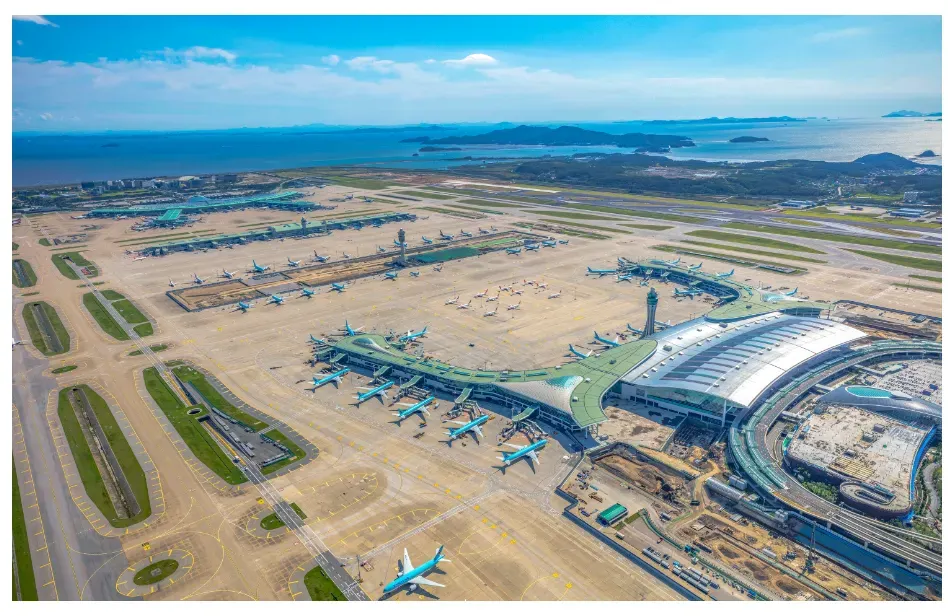
Incheon International Airport (IIA), Korea’s primary global gateway since 2001, rapidly became one of the world’s highest-performing airports in traffic volume, service quality, and operational efficiency. Its development was initiated when Gimpo Airport reached capacity in the late 1980s, prompting the government to pursue a new international hub. After extensive feasibility studies, Yeongjong-do was selected for its minimal noise impact, low reclamation costs, and ample room for long-term expansion. Construction began in 1992 under a phased master plan that anticipated future demand. IIA’s long-term success stems from strategic site selection, an autonomous yet publicly owned corporate structure, competition-oriented aviation policies, and a single-till system that keeps aeronautical charges competitive. Coordinated service delivery across CIQ agencies, airlines, and private concessionaires, combined with outsourcing and competitive tendering, further strengthened efficiency and service quality.
#airport #transportation #logistics
.png)
Most travellers visiting Korea use Incheon International Airport (IIA) as a gateway to the country. Since its opening in 2001, IIA has been recognized as a highly successful airport, represented by its spacious design and quick CIQ process (Customs, Immigration, and Quarantine; the mandatory departure and arrival procedures for airport passengers). It has also demonstrated strong performance in terms of passenger traffic, service quality, and commercial profitability.
In 2024, IIA was ranked as the world’s 3rd airport in terms of the volume of international passenger and cargo respectively, with 71 million passengers and 2.9 million tons of cargo.
IIA has been awarded the best Airport Service Quality (ASQ) prize by Airport Council International (ACI) consecutively for 12 years (2005-2016). [1] Its average processing time for departures (16 minutes) and arrivals (12 minutes) are the fastest among the world’s major international airports. On average, only 0.3 out of 100 thousand passenger processed experience lost or late arriving baggage, the lowest in the world and approximately 44 times more precise than the global average. The world’s first real-time baggage traffic monitoring system was developed at IIA.
Before the COVID-19 pandemic, Incheon International Airport (IIA) maintained a strong operational profit margin, generally exceeding 40%, supported by a revenue structure in which approximately 60% of profits were generated from non-aviation activities, particularly rental income from commercial and retail facilities within the terminals. This business model enabled IIA to sustain high profitability while keeping aviation charges relatively competitive. Although passenger and cargo volumes have largely recovered in the post-pandemic period, overall profitability has not yet returned to pre-pandemic levels. In response, IIA is implementing measures to restore its profit base, including adjustments to commercial lease structures, diversification of non-aviation services, and phased recovery of aeronautical fees.
The decision to build a new international airport for the Seoul metropolitan area was primarily driven by the fact that the existing Gimpo International Airport (GIA) had reached capacity by the late 1980s. GIA lacked room for expansion due to genuine disadvantages, including geographical constraints such as mountains and its proximity to the DMZ. Furthermore, nearby residential areas prohibited 24-hour operation due to noise restrictions. The need for a replacement became pressing after the government relaxed its restrictive international travel policy for Korean citizens as part of hosting the 1988 Seoul Summer Olympics, which led to a dramatic increase in international air travelers and made future congestion easily foreseeable.
After the government decided to proceed with a new airport in 1989, a rigorous site selection process took over a year, involving economic feasibility tests and preliminary evaluations. The site selection comprised more than 10 criteria, including proximity to Seoul (within 100 kilometers), distance from residential areas for 24-hour, noise-free operation, sufficient airspace and favorable weather conditions, no obstacles to aircraft approach, and affordable construction costs with ample space for future expansions.
After reviewing seven alternatives, the government ultimately selected the Yeongjong-do (Island) area. This site was advantageous because land purchasing costs were reduced by using mountains on the island cluster for surrounding land reclamation. Additionally, noise was not a concern, as there were only a few villages nearby. Although the location was criticized for being 58 km from the center of Seoul, this problem was overcome by constructing an exclusive highway for airport traffic, followed later by an airport railway. IIA construction commenced in 1992 and the airport opened in 2001, completing a construction period of eight years and four months.
.jpg)
Korea’s location as a peninsula surrounded by major powers—China, Japan, and Russia—made a ‘Gateway Airport’ or ‘Hub Airport’ strategy essential for the country’s sustainability. Korea continues to develop IIA as a ‘Hub Airport’ for Northeast Asia. This strategy goes beyond economic benefits, forming a national strategy aimed at transforming the entire country into a hub for Northeast Asia, linking international trade and travel spokes.
This country-level hub strategy naturally led to adopting air transport ‘Open Sky’ and ‘Globalization’ policies. These policies have been instrumental in broadening markets and strengthening the competitive power of both the national airlines and airports.
Another foundational policy is the ‘Principles of Competition and Privatization’. This allows competition between airlines by licensing small carriers (LCCs) for domestic and international routes. Furthermore, competition between airports is encouraged by establishing two different airport corporations: Incheon International Airport Corporation (IIAC) and Korea Airport Corporation (KAC). Both corporations are designated as market-based public corporations, empowering them to enhance efficiency and profitability through autonomous management. All eight airlines based in Korea are private companies, and the government has maintained its air transport privatization policy since Korean Air (KAL) ceased being a private monopoly in 1969. Inherently, this structure permits airport corporations to pursue profits like private companies.
The ‘Policy of Harmony’ assigns both GIA and IIA to service Metropolitan Seoul. While IIA was originally designated for international operations and GIA for domestic routes, GIA’s better access to central Seoul led the government to permit a few international flights from GIA to neighboring countries (Tokyo, Osaka, Beijing, Shanghai, and Taipei), which are major cities within a 2,000-km radius of Seoul. Good road and rail ground transportation links make connections between GIA and IIA relatively easy. To prevent conflicting policies, air transport and airport policies are legislated as part of “Long and Medium Term Five-year Plans,” which govern itemized policies year-by-year.
The Korean government’s ‘Policy of Performance Evaluation’ for public entities has helped enhance IIAC’s operating efficiency and profitability, with evaluation results directly linked to incentivized employee salary scales. All airport development plans must pass screening and feasibility tests conducted by the Ministry of Land, Infrastructure, and Transport (MOLIT). Additionally, investment projects that exceed US$50 million must pass multiple feasibility tests from both MOLIT and the Ministry of Strategy and Finance (MOSF).
To provide legal support for the massive development work, the Korean government passed the ‘New Airport Development Law’ in 1990 following the decision to construct the new gateway airport around the Yeongjong-do island cluster. In 1992, the ‘Division for New Airport Construction’ was created within the Korea Airport Authority (KAA), and this entity was upgraded to the independent ‘New Airport Construction Authority for the Seoul Metropolitan Area’ in 1994. Finally, the ‘Incheon International Airport Corporation Law’ passed in 1999, providing the legal foundation for building an enterprise in the form of a market-based public corporation for the efficient operation and management of the new airport.
Before construction began in the early 1990s, the government created a master plan for phase-by-phase expansion based on medium- and long-term demand forecasting. The goal of Phase 1 construction (1992 to 2001) was to build a modern airport that was consumer-friendly for both passengers and facility users, including airlines. A key design concept prioritized public transport in the curbside plan: buses were assigned the lanes closest to the passenger terminal, followed by taxis, with private cars relegated to the farthest lanes.
Due to the difficulty in correctly forecasting future demand, and drawing on Korea’s earlier experience with road congestion, the demand forecasts in IIA’s original master plan were deliberately over estimated to reduce the chance of congestion. During Phase 2 construction (2001–2008), essential cost savings were achieved by modifying the original forecasts downward by more than 10%. Phase 3 construction, which included the 2nd passenger terminal and connecting highway, was completed in 2018.
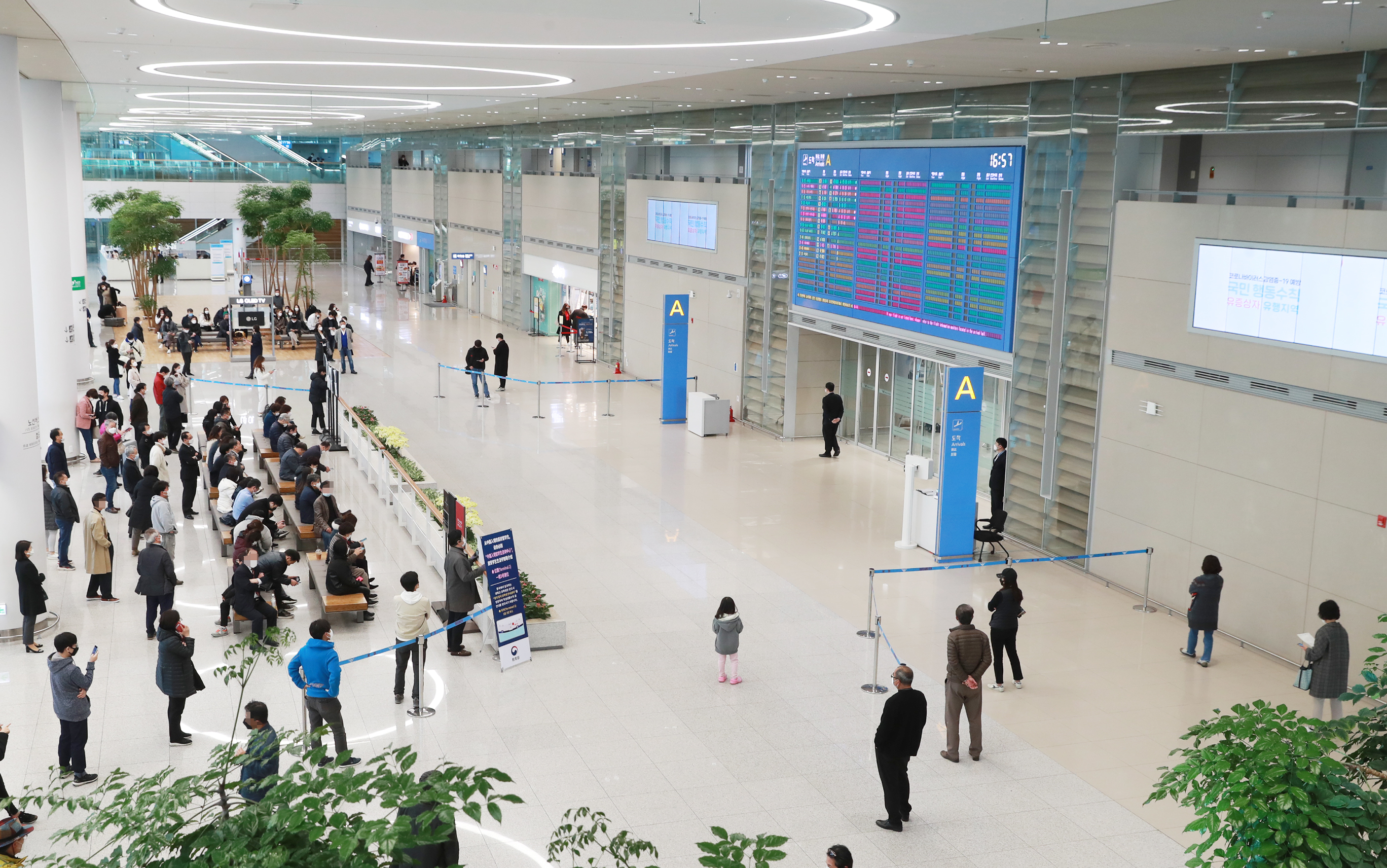
The success of IIA is attributed to several key factors: 1) close cooperation among the airport, government agencies, and airlines; 2) the use of outsourcing and a tendering system for private concessions; and 3) a single-till managing system that combines airside and landside operations.
IIA utilizes a single-till managing system, which combines airside and landside operations in one management basket, permitting cross-subsidy between the two sectors. Based on the single-till system, IIA’s airside charges, including landing fees, can be kept relatively low by cross-subsidizing them with high profits generated from the landside operations. These low aeronautical charges help IIA attract airlines, flights, and passengers. For instance, IIA’s landing fee is only 30% of the fee charged by Kansai Airport in Japan. The passenger terminal is able to earn high enough profits from passenger sales to compensate for the airside losses.
The government periodically allows concession holders to invest in building their own facilities, such as the limited Build, Transfer, and Operate (BTO) projects like cargo terminals built by Korean Air, Asiana Airlines, and DHL.
Close cooperation among organizations providing passenger services is essential because when passengers evaluate service quality, they evaluate the overall quality rather than differentiating between specific service providers. Passenger services from government agencies (like CIQ), public corporations, and private companies are well coordinated across sectors in IIA. Various committees, such as the SMS Committee, Contingency Plan Committee, Service Improvement Committee, and Customers Committee, exist to foster collaboration among the airport, CIQ institutions, airlines, and tenants.
To increase efficiency and reduce costs, airport authorities utilize ‘outsourcing’ for auxiliary services like routine daily cleaning, and they lease terminal space to private businesses through a tendering system. Utilizing outsourcing allows IIA to be managed conveniently and achieve cost efficiency by maintaining a relatively small number of human resources. In particular, the tendering system used to rent space to duty-free shops and other concessions results in high profitability and efficiency in the airport's operation and management.
The human factor is regarded as an important source of IIA’s high efficiency and productivity. Not only CEOs, but most employees are highly qualified and strongly motivated with good job disciplines. Remarkably, since construction began 25 years ago, there have been no corruption scandals involving government officials or airport employees.
In managing such a substantial investment project, resolving conflicts of interests and resulting trade-offs are crucial tasks for government policy makers.
A significant trade-off emerged between equal development among regions and the efficiency of resource allocation. While building IIA, the central government simultaneously invested nearly the same amount in local airports by building three new ones and remodeling others to address the politically sensitive issue of equitable development across provinces. However, many local airports now struggle with excess capacity after losing traffic to competitive modes like high-speed rail (KTX) and highways.
There is also an ongoing conflict between GIA and IIA. Despite GIA being closer to central Seoul and possessing enough excess capacity to accommodate additional international flights, the government has been hesitant to grant new licenses in order to maintain the policy objective of promoting IIA as a hub airport. This conflict between the efficient use of existing infrastructure (GIA) and promoting a hub airport (IIA) has been partially resolved by minimizing government subsidies to IIA, which is possible due to the airport’s high profitability.
Another trade-off involves the single-till system: while low user charges resulting from the system are effective for attracting flights and promoting the competitive position of the airport, they conflict with the ‘principle of beneficiaries-pay’. Furthermore, although outsourcing routine daily maintenance work is a key source of efficiency and profitability, it is now being criticized as an abuse of workers' human rights. The government is attempting to transition outsourced maintenance positions to regular, in-house employees, balancing workers’ happiness and human rights with IIA’s efficiency and profitability.
Drawing on its high service quality and extensive construction and operation experience, IIA officials have provided consulting services to overseas airports since 2009. This assistance includes providing airport master plans, evaluating the economic and technical validity of projects, and assisting with operations in locations such as Khabarovsk Airport (Russia), Mactan-Cebu Airport (Philippines), and new airports in Nepal and Bangladesh. Since 2012, IIA has also provided technical consulting as Project Manager (PM) and Construction Manager (CM) for facilities worldwide, including airports in Cambodia, the Philippines, Iraq, Iran, and Indonesia. Furthermore, IIA professionals have been invited by various governments and airports to teach construction and operation know-how. Khabarovsk Airport solicited capital investment from IIA, which marks the only case of outbound foreign investment in Incheon Airport history.
In reflecting on IIA’s unprecedented success in achieving both superior service quality and high profitability, the sources suggest that two factors stand out: first, the ability to select an ideal site that was close to Seoul, had low construction costs, no noise issues, and easy capacity for expansion. Second, the government policy of promoting competition and outsourcing, while maintaining government ownership but allowing the airport to operate and manage itself autonomously, has proven highly successful in achieving IIA’s management targets. The sources conclude that in huge investment projects like this, the importance of using a no-corruption and efficiency principle in conflict resolution should not be overlooked.

Incheon International Airport (IIA), Korea’s primary global gateway since 2001, rapidly became one of the world’s highest-performing airports in traffic volume, service quality, and operational efficiency. Its development was initiated when Gimpo Airport reached capacity in the late 1980s, prompting the government to pursue a new international hub. After extensive feasibility studies, Yeongjong-do was selected for its minimal noise impact, low reclamation costs, and ample room for long-term expansion. Construction began in 1992 under a phased master plan that anticipated future demand. IIA’s long-term success stems from strategic site selection, an autonomous yet publicly owned corporate structure, competition-oriented aviation policies, and a single-till system that keeps aeronautical charges competitive. Coordinated service delivery across CIQ agencies, airlines, and private concessionaires, combined with outsourcing and competitive tendering, further strengthened efficiency and service quality.
#airport #transportation #logistics
.png)
Most travellers visiting Korea use Incheon International Airport (IIA) as a gateway to the country. Since its opening in 2001, IIA has been recognized as a highly successful airport, represented by its spacious design and quick CIQ process (Customs, Immigration, and Quarantine; the mandatory departure and arrival procedures for airport passengers). It has also demonstrated strong performance in terms of passenger traffic, service quality, and commercial profitability.
In 2024, IIA was ranked as the world’s 3rd airport in terms of the volume of international passenger and cargo respectively, with 71 million passengers and 2.9 million tons of cargo.
IIA has been awarded the best Airport Service Quality (ASQ) prize by Airport Council International (ACI) consecutively for 12 years (2005-2016). [1] Its average processing time for departures (16 minutes) and arrivals (12 minutes) are the fastest among the world’s major international airports. On average, only 0.3 out of 100 thousand passenger processed experience lost or late arriving baggage, the lowest in the world and approximately 44 times more precise than the global average. The world’s first real-time baggage traffic monitoring system was developed at IIA.
Before the COVID-19 pandemic, Incheon International Airport (IIA) maintained a strong operational profit margin, generally exceeding 40%, supported by a revenue structure in which approximately 60% of profits were generated from non-aviation activities, particularly rental income from commercial and retail facilities within the terminals. This business model enabled IIA to sustain high profitability while keeping aviation charges relatively competitive. Although passenger and cargo volumes have largely recovered in the post-pandemic period, overall profitability has not yet returned to pre-pandemic levels. In response, IIA is implementing measures to restore its profit base, including adjustments to commercial lease structures, diversification of non-aviation services, and phased recovery of aeronautical fees.
The decision to build a new international airport for the Seoul metropolitan area was primarily driven by the fact that the existing Gimpo International Airport (GIA) had reached capacity by the late 1980s. GIA lacked room for expansion due to genuine disadvantages, including geographical constraints such as mountains and its proximity to the DMZ. Furthermore, nearby residential areas prohibited 24-hour operation due to noise restrictions. The need for a replacement became pressing after the government relaxed its restrictive international travel policy for Korean citizens as part of hosting the 1988 Seoul Summer Olympics, which led to a dramatic increase in international air travelers and made future congestion easily foreseeable.
After the government decided to proceed with a new airport in 1989, a rigorous site selection process took over a year, involving economic feasibility tests and preliminary evaluations. The site selection comprised more than 10 criteria, including proximity to Seoul (within 100 kilometers), distance from residential areas for 24-hour, noise-free operation, sufficient airspace and favorable weather conditions, no obstacles to aircraft approach, and affordable construction costs with ample space for future expansions.
After reviewing seven alternatives, the government ultimately selected the Yeongjong-do (Island) area. This site was advantageous because land purchasing costs were reduced by using mountains on the island cluster for surrounding land reclamation. Additionally, noise was not a concern, as there were only a few villages nearby. Although the location was criticized for being 58 km from the center of Seoul, this problem was overcome by constructing an exclusive highway for airport traffic, followed later by an airport railway. IIA construction commenced in 1992 and the airport opened in 2001, completing a construction period of eight years and four months.
.jpg)
Korea’s location as a peninsula surrounded by major powers—China, Japan, and Russia—made a ‘Gateway Airport’ or ‘Hub Airport’ strategy essential for the country’s sustainability. Korea continues to develop IIA as a ‘Hub Airport’ for Northeast Asia. This strategy goes beyond economic benefits, forming a national strategy aimed at transforming the entire country into a hub for Northeast Asia, linking international trade and travel spokes.
This country-level hub strategy naturally led to adopting air transport ‘Open Sky’ and ‘Globalization’ policies. These policies have been instrumental in broadening markets and strengthening the competitive power of both the national airlines and airports.
Another foundational policy is the ‘Principles of Competition and Privatization’. This allows competition between airlines by licensing small carriers (LCCs) for domestic and international routes. Furthermore, competition between airports is encouraged by establishing two different airport corporations: Incheon International Airport Corporation (IIAC) and Korea Airport Corporation (KAC). Both corporations are designated as market-based public corporations, empowering them to enhance efficiency and profitability through autonomous management. All eight airlines based in Korea are private companies, and the government has maintained its air transport privatization policy since Korean Air (KAL) ceased being a private monopoly in 1969. Inherently, this structure permits airport corporations to pursue profits like private companies.
The ‘Policy of Harmony’ assigns both GIA and IIA to service Metropolitan Seoul. While IIA was originally designated for international operations and GIA for domestic routes, GIA’s better access to central Seoul led the government to permit a few international flights from GIA to neighboring countries (Tokyo, Osaka, Beijing, Shanghai, and Taipei), which are major cities within a 2,000-km radius of Seoul. Good road and rail ground transportation links make connections between GIA and IIA relatively easy. To prevent conflicting policies, air transport and airport policies are legislated as part of “Long and Medium Term Five-year Plans,” which govern itemized policies year-by-year.
The Korean government’s ‘Policy of Performance Evaluation’ for public entities has helped enhance IIAC’s operating efficiency and profitability, with evaluation results directly linked to incentivized employee salary scales. All airport development plans must pass screening and feasibility tests conducted by the Ministry of Land, Infrastructure, and Transport (MOLIT). Additionally, investment projects that exceed US$50 million must pass multiple feasibility tests from both MOLIT and the Ministry of Strategy and Finance (MOSF).
To provide legal support for the massive development work, the Korean government passed the ‘New Airport Development Law’ in 1990 following the decision to construct the new gateway airport around the Yeongjong-do island cluster. In 1992, the ‘Division for New Airport Construction’ was created within the Korea Airport Authority (KAA), and this entity was upgraded to the independent ‘New Airport Construction Authority for the Seoul Metropolitan Area’ in 1994. Finally, the ‘Incheon International Airport Corporation Law’ passed in 1999, providing the legal foundation for building an enterprise in the form of a market-based public corporation for the efficient operation and management of the new airport.
Before construction began in the early 1990s, the government created a master plan for phase-by-phase expansion based on medium- and long-term demand forecasting. The goal of Phase 1 construction (1992 to 2001) was to build a modern airport that was consumer-friendly for both passengers and facility users, including airlines. A key design concept prioritized public transport in the curbside plan: buses were assigned the lanes closest to the passenger terminal, followed by taxis, with private cars relegated to the farthest lanes.
Due to the difficulty in correctly forecasting future demand, and drawing on Korea’s earlier experience with road congestion, the demand forecasts in IIA’s original master plan were deliberately over estimated to reduce the chance of congestion. During Phase 2 construction (2001–2008), essential cost savings were achieved by modifying the original forecasts downward by more than 10%. Phase 3 construction, which included the 2nd passenger terminal and connecting highway, was completed in 2018.

The success of IIA is attributed to several key factors: 1) close cooperation among the airport, government agencies, and airlines; 2) the use of outsourcing and a tendering system for private concessions; and 3) a single-till managing system that combines airside and landside operations.
IIA utilizes a single-till managing system, which combines airside and landside operations in one management basket, permitting cross-subsidy between the two sectors. Based on the single-till system, IIA’s airside charges, including landing fees, can be kept relatively low by cross-subsidizing them with high profits generated from the landside operations. These low aeronautical charges help IIA attract airlines, flights, and passengers. For instance, IIA’s landing fee is only 30% of the fee charged by Kansai Airport in Japan. The passenger terminal is able to earn high enough profits from passenger sales to compensate for the airside losses.
The government periodically allows concession holders to invest in building their own facilities, such as the limited Build, Transfer, and Operate (BTO) projects like cargo terminals built by Korean Air, Asiana Airlines, and DHL.
Close cooperation among organizations providing passenger services is essential because when passengers evaluate service quality, they evaluate the overall quality rather than differentiating between specific service providers. Passenger services from government agencies (like CIQ), public corporations, and private companies are well coordinated across sectors in IIA. Various committees, such as the SMS Committee, Contingency Plan Committee, Service Improvement Committee, and Customers Committee, exist to foster collaboration among the airport, CIQ institutions, airlines, and tenants.
To increase efficiency and reduce costs, airport authorities utilize ‘outsourcing’ for auxiliary services like routine daily cleaning, and they lease terminal space to private businesses through a tendering system. Utilizing outsourcing allows IIA to be managed conveniently and achieve cost efficiency by maintaining a relatively small number of human resources. In particular, the tendering system used to rent space to duty-free shops and other concessions results in high profitability and efficiency in the airport's operation and management.
The human factor is regarded as an important source of IIA’s high efficiency and productivity. Not only CEOs, but most employees are highly qualified and strongly motivated with good job disciplines. Remarkably, since construction began 25 years ago, there have been no corruption scandals involving government officials or airport employees.
In managing such a substantial investment project, resolving conflicts of interests and resulting trade-offs are crucial tasks for government policy makers.
A significant trade-off emerged between equal development among regions and the efficiency of resource allocation. While building IIA, the central government simultaneously invested nearly the same amount in local airports by building three new ones and remodeling others to address the politically sensitive issue of equitable development across provinces. However, many local airports now struggle with excess capacity after losing traffic to competitive modes like high-speed rail (KTX) and highways.
There is also an ongoing conflict between GIA and IIA. Despite GIA being closer to central Seoul and possessing enough excess capacity to accommodate additional international flights, the government has been hesitant to grant new licenses in order to maintain the policy objective of promoting IIA as a hub airport. This conflict between the efficient use of existing infrastructure (GIA) and promoting a hub airport (IIA) has been partially resolved by minimizing government subsidies to IIA, which is possible due to the airport’s high profitability.
Another trade-off involves the single-till system: while low user charges resulting from the system are effective for attracting flights and promoting the competitive position of the airport, they conflict with the ‘principle of beneficiaries-pay’. Furthermore, although outsourcing routine daily maintenance work is a key source of efficiency and profitability, it is now being criticized as an abuse of workers' human rights. The government is attempting to transition outsourced maintenance positions to regular, in-house employees, balancing workers’ happiness and human rights with IIA’s efficiency and profitability.
Drawing on its high service quality and extensive construction and operation experience, IIA officials have provided consulting services to overseas airports since 2009. This assistance includes providing airport master plans, evaluating the economic and technical validity of projects, and assisting with operations in locations such as Khabarovsk Airport (Russia), Mactan-Cebu Airport (Philippines), and new airports in Nepal and Bangladesh. Since 2012, IIA has also provided technical consulting as Project Manager (PM) and Construction Manager (CM) for facilities worldwide, including airports in Cambodia, the Philippines, Iraq, Iran, and Indonesia. Furthermore, IIA professionals have been invited by various governments and airports to teach construction and operation know-how. Khabarovsk Airport solicited capital investment from IIA, which marks the only case of outbound foreign investment in Incheon Airport history.
In reflecting on IIA’s unprecedented success in achieving both superior service quality and high profitability, the sources suggest that two factors stand out: first, the ability to select an ideal site that was close to Seoul, had low construction costs, no noise issues, and easy capacity for expansion. Second, the government policy of promoting competition and outsourcing, while maintaining government ownership but allowing the airport to operate and manage itself autonomously, has proven highly successful in achieving IIA’s management targets. The sources conclude that in huge investment projects like this, the importance of using a no-corruption and efficiency principle in conflict resolution should not be overlooked.

.png)
Most travellers visiting Korea use Incheon International Airport (IIA) as a gateway to the country. Since its opening in 2001, IIA has been recognized as a highly successful airport, represented by its spacious design and quick CIQ process (Customs, Immigration, and Quarantine; the mandatory departure and arrival procedures for airport passengers). It has also demonstrated strong performance in terms of passenger traffic, service quality, and commercial profitability.
In 2024, IIA was ranked as the world’s 3rd airport in terms of the volume of international passenger and cargo respectively, with 71 million passengers and 2.9 million tons of cargo.
IIA has been awarded the best Airport Service Quality (ASQ) prize by Airport Council International (ACI) consecutively for 12 years (2005-2016). [1] Its average processing time for departures (16 minutes) and arrivals (12 minutes) are the fastest among the world’s major international airports. On average, only 0.3 out of 100 thousand passenger processed experience lost or late arriving baggage, the lowest in the world and approximately 44 times more precise than the global average. The world’s first real-time baggage traffic monitoring system was developed at IIA.
Before the COVID-19 pandemic, Incheon International Airport (IIA) maintained a strong operational profit margin, generally exceeding 40%, supported by a revenue structure in which approximately 60% of profits were generated from non-aviation activities, particularly rental income from commercial and retail facilities within the terminals. This business model enabled IIA to sustain high profitability while keeping aviation charges relatively competitive. Although passenger and cargo volumes have largely recovered in the post-pandemic period, overall profitability has not yet returned to pre-pandemic levels. In response, IIA is implementing measures to restore its profit base, including adjustments to commercial lease structures, diversification of non-aviation services, and phased recovery of aeronautical fees.
The decision to build a new international airport for the Seoul metropolitan area was primarily driven by the fact that the existing Gimpo International Airport (GIA) had reached capacity by the late 1980s. GIA lacked room for expansion due to genuine disadvantages, including geographical constraints such as mountains and its proximity to the DMZ. Furthermore, nearby residential areas prohibited 24-hour operation due to noise restrictions. The need for a replacement became pressing after the government relaxed its restrictive international travel policy for Korean citizens as part of hosting the 1988 Seoul Summer Olympics, which led to a dramatic increase in international air travelers and made future congestion easily foreseeable.
After the government decided to proceed with a new airport in 1989, a rigorous site selection process took over a year, involving economic feasibility tests and preliminary evaluations. The site selection comprised more than 10 criteria, including proximity to Seoul (within 100 kilometers), distance from residential areas for 24-hour, noise-free operation, sufficient airspace and favorable weather conditions, no obstacles to aircraft approach, and affordable construction costs with ample space for future expansions.
After reviewing seven alternatives, the government ultimately selected the Yeongjong-do (Island) area. This site was advantageous because land purchasing costs were reduced by using mountains on the island cluster for surrounding land reclamation. Additionally, noise was not a concern, as there were only a few villages nearby. Although the location was criticized for being 58 km from the center of Seoul, this problem was overcome by constructing an exclusive highway for airport traffic, followed later by an airport railway. IIA construction commenced in 1992 and the airport opened in 2001, completing a construction period of eight years and four months.
.jpg)
Korea’s location as a peninsula surrounded by major powers—China, Japan, and Russia—made a ‘Gateway Airport’ or ‘Hub Airport’ strategy essential for the country’s sustainability. Korea continues to develop IIA as a ‘Hub Airport’ for Northeast Asia. This strategy goes beyond economic benefits, forming a national strategy aimed at transforming the entire country into a hub for Northeast Asia, linking international trade and travel spokes.
This country-level hub strategy naturally led to adopting air transport ‘Open Sky’ and ‘Globalization’ policies. These policies have been instrumental in broadening markets and strengthening the competitive power of both the national airlines and airports.
Another foundational policy is the ‘Principles of Competition and Privatization’. This allows competition between airlines by licensing small carriers (LCCs) for domestic and international routes. Furthermore, competition between airports is encouraged by establishing two different airport corporations: Incheon International Airport Corporation (IIAC) and Korea Airport Corporation (KAC). Both corporations are designated as market-based public corporations, empowering them to enhance efficiency and profitability through autonomous management. All eight airlines based in Korea are private companies, and the government has maintained its air transport privatization policy since Korean Air (KAL) ceased being a private monopoly in 1969. Inherently, this structure permits airport corporations to pursue profits like private companies.
The ‘Policy of Harmony’ assigns both GIA and IIA to service Metropolitan Seoul. While IIA was originally designated for international operations and GIA for domestic routes, GIA’s better access to central Seoul led the government to permit a few international flights from GIA to neighboring countries (Tokyo, Osaka, Beijing, Shanghai, and Taipei), which are major cities within a 2,000-km radius of Seoul. Good road and rail ground transportation links make connections between GIA and IIA relatively easy. To prevent conflicting policies, air transport and airport policies are legislated as part of “Long and Medium Term Five-year Plans,” which govern itemized policies year-by-year.
The Korean government’s ‘Policy of Performance Evaluation’ for public entities has helped enhance IIAC’s operating efficiency and profitability, with evaluation results directly linked to incentivized employee salary scales. All airport development plans must pass screening and feasibility tests conducted by the Ministry of Land, Infrastructure, and Transport (MOLIT). Additionally, investment projects that exceed US$50 million must pass multiple feasibility tests from both MOLIT and the Ministry of Strategy and Finance (MOSF).
To provide legal support for the massive development work, the Korean government passed the ‘New Airport Development Law’ in 1990 following the decision to construct the new gateway airport around the Yeongjong-do island cluster. In 1992, the ‘Division for New Airport Construction’ was created within the Korea Airport Authority (KAA), and this entity was upgraded to the independent ‘New Airport Construction Authority for the Seoul Metropolitan Area’ in 1994. Finally, the ‘Incheon International Airport Corporation Law’ passed in 1999, providing the legal foundation for building an enterprise in the form of a market-based public corporation for the efficient operation and management of the new airport.
Before construction began in the early 1990s, the government created a master plan for phase-by-phase expansion based on medium- and long-term demand forecasting. The goal of Phase 1 construction (1992 to 2001) was to build a modern airport that was consumer-friendly for both passengers and facility users, including airlines. A key design concept prioritized public transport in the curbside plan: buses were assigned the lanes closest to the passenger terminal, followed by taxis, with private cars relegated to the farthest lanes.
Due to the difficulty in correctly forecasting future demand, and drawing on Korea’s earlier experience with road congestion, the demand forecasts in IIA’s original master plan were deliberately over estimated to reduce the chance of congestion. During Phase 2 construction (2001–2008), essential cost savings were achieved by modifying the original forecasts downward by more than 10%. Phase 3 construction, which included the 2nd passenger terminal and connecting highway, was completed in 2018.

The success of IIA is attributed to several key factors: 1) close cooperation among the airport, government agencies, and airlines; 2) the use of outsourcing and a tendering system for private concessions; and 3) a single-till managing system that combines airside and landside operations.
IIA utilizes a single-till managing system, which combines airside and landside operations in one management basket, permitting cross-subsidy between the two sectors. Based on the single-till system, IIA’s airside charges, including landing fees, can be kept relatively low by cross-subsidizing them with high profits generated from the landside operations. These low aeronautical charges help IIA attract airlines, flights, and passengers. For instance, IIA’s landing fee is only 30% of the fee charged by Kansai Airport in Japan. The passenger terminal is able to earn high enough profits from passenger sales to compensate for the airside losses.
The government periodically allows concession holders to invest in building their own facilities, such as the limited Build, Transfer, and Operate (BTO) projects like cargo terminals built by Korean Air, Asiana Airlines, and DHL.
Close cooperation among organizations providing passenger services is essential because when passengers evaluate service quality, they evaluate the overall quality rather than differentiating between specific service providers. Passenger services from government agencies (like CIQ), public corporations, and private companies are well coordinated across sectors in IIA. Various committees, such as the SMS Committee, Contingency Plan Committee, Service Improvement Committee, and Customers Committee, exist to foster collaboration among the airport, CIQ institutions, airlines, and tenants.
To increase efficiency and reduce costs, airport authorities utilize ‘outsourcing’ for auxiliary services like routine daily cleaning, and they lease terminal space to private businesses through a tendering system. Utilizing outsourcing allows IIA to be managed conveniently and achieve cost efficiency by maintaining a relatively small number of human resources. In particular, the tendering system used to rent space to duty-free shops and other concessions results in high profitability and efficiency in the airport's operation and management.
The human factor is regarded as an important source of IIA’s high efficiency and productivity. Not only CEOs, but most employees are highly qualified and strongly motivated with good job disciplines. Remarkably, since construction began 25 years ago, there have been no corruption scandals involving government officials or airport employees.
In managing such a substantial investment project, resolving conflicts of interests and resulting trade-offs are crucial tasks for government policy makers.
A significant trade-off emerged between equal development among regions and the efficiency of resource allocation. While building IIA, the central government simultaneously invested nearly the same amount in local airports by building three new ones and remodeling others to address the politically sensitive issue of equitable development across provinces. However, many local airports now struggle with excess capacity after losing traffic to competitive modes like high-speed rail (KTX) and highways.
There is also an ongoing conflict between GIA and IIA. Despite GIA being closer to central Seoul and possessing enough excess capacity to accommodate additional international flights, the government has been hesitant to grant new licenses in order to maintain the policy objective of promoting IIA as a hub airport. This conflict between the efficient use of existing infrastructure (GIA) and promoting a hub airport (IIA) has been partially resolved by minimizing government subsidies to IIA, which is possible due to the airport’s high profitability.
Another trade-off involves the single-till system: while low user charges resulting from the system are effective for attracting flights and promoting the competitive position of the airport, they conflict with the ‘principle of beneficiaries-pay’. Furthermore, although outsourcing routine daily maintenance work is a key source of efficiency and profitability, it is now being criticized as an abuse of workers' human rights. The government is attempting to transition outsourced maintenance positions to regular, in-house employees, balancing workers’ happiness and human rights with IIA’s efficiency and profitability.
Drawing on its high service quality and extensive construction and operation experience, IIA officials have provided consulting services to overseas airports since 2009. This assistance includes providing airport master plans, evaluating the economic and technical validity of projects, and assisting with operations in locations such as Khabarovsk Airport (Russia), Mactan-Cebu Airport (Philippines), and new airports in Nepal and Bangladesh. Since 2012, IIA has also provided technical consulting as Project Manager (PM) and Construction Manager (CM) for facilities worldwide, including airports in Cambodia, the Philippines, Iraq, Iran, and Indonesia. Furthermore, IIA professionals have been invited by various governments and airports to teach construction and operation know-how. Khabarovsk Airport solicited capital investment from IIA, which marks the only case of outbound foreign investment in Incheon Airport history.
In reflecting on IIA’s unprecedented success in achieving both superior service quality and high profitability, the sources suggest that two factors stand out: first, the ability to select an ideal site that was close to Seoul, had low construction costs, no noise issues, and easy capacity for expansion. Second, the government policy of promoting competition and outsourcing, while maintaining government ownership but allowing the airport to operate and manage itself autonomously, has proven highly successful in achieving IIA’s management targets. The sources conclude that in huge investment projects like this, the importance of using a no-corruption and efficiency principle in conflict resolution should not be overlooked.