

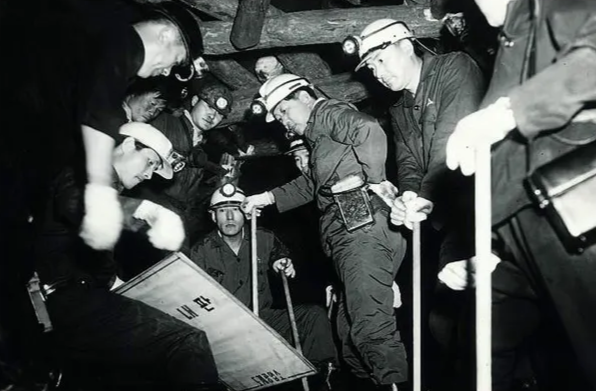
By the mid-1980s, South Korea’s coal industry faced irreversible decline amid rising oil and gas use and mounting inefficiencies. The government launched the “coal industry rationalization” policy to close unproductive mines, stabilize prices, and manage social fallout. Over 300 mines were shut and thousands lost jobs, revealing both the effectiveness and limits of state-led industrial restructuring in balancing economic efficiency with regional and social stability.
#energy transition #local development
For much of the 20th century, anthracite coal was the backbone of Korea’s energy economy, powering homes and industries alike. By the mid-1980s, however, the country’s rapid industrialization and shift toward cleaner fuels had made the coal sector increasingly unsustainable. Despite peak production, its role within the national energy mix was steadily diminishing, exposing the inefficiencies of government-led management and a lack of market adaptation. This transition ultimately prompted the government to introduce the “coal industry rationalization” policy in the late 1980s. To understand why such an intervention became unavoidable, it is necessary to examine the conditions that led to this crisis.
The policies that governed South Korea's coal industry in the decades leading up to the rationalization period created a complex and ultimately unsustainable environment. While intended to support a vital energy source, these government interventions inadvertently fostered inefficiency, poor quality, and a deep-seated financial dependency that made a painful restructuring all but inevitable.
Perverse Incentives: How Subsidies Undermined the Industry
Following the 1973 oil crisis, the government reinstated price controls and implemented a subsidy system to ensure a stable supply of affordable coal. This policy successfully spurred production but created a perverse incentive structure with severe negative consequences. The subsidy, by guaranteeing compensation for the price-cost gap, inadvertently prioritized production volume over caloric value, leading to a systemic decline in coal quality that further eroded its market position. This framework, combined with the legalization of a subcontract system, also encouraged the proliferation of small, inefficient mines, weakening the industry's overall structure and productivity.
Structural Decline: The Erosion of Market Dominance
While government policy propped up production, fundamental changes were occurring on the demand side. Anthracite's long-held dominance as a home-heating fuel was steadily eroding as national economic growth drove improvements in home-heating systems and a widespread consumer shift toward more convenient and cleaner fuels like petroleum, city gas, and LNG. This structural change is starkly illustrated in the figure of Primary Energy Consumption (Oil Equivalent), which shows anthracite's share of the national energy mix falling from 45.7% in 1966 to just 21.5% by 1986. Compounding this issue was worsening price competitiveness; by the mid-1980s, anthracite was no longer the most cost-effective heating option compared to substitutes like B-C oil, effectively losing its primary market.
The Industry's Condition on the Eve of Change
By the late 1980s, the South Korean coal industry was caught in a government-created dependency trap. Subsidies encouraged the production of low-quality coal, which made it less competitive against superior alternatives, which in turn required more subsidies to sustain production. This cycle of deteriorating quality, stagnant labor productivity, and a crippling fiscal burden on the national budget created a situation where the government's only viable option was a drastic new policy to fundamentally restructure the sector.
The "coal industry rationalization" policy was conceived as a necessary structural adjustment. Its fundamental economic objective was to facilitate the movement of inefficiently used resources—capital, labor, and assets—from the declining coal sector to more productive areas of the rapidly growing South Korean economy. It was an official acknowledgment that the industry could no longer be sustained in its current form.
The policy's implementation triggered an immediate and dramatic contraction. Official data (figure Production, Consumption and Stocks of Anthracite) shows that anthracite production plummeted after 1988, following a sharp drop in consumption that began two years earlier. The scale of this reduction was staggering: in the seven years between 1988 and 1995 alone, production fell from 25 million tons to just 5 million tons as a direct result of the government's strategic closure of inefficient mines.
Executing such a drastic policy was fraught with challenges due to the coal industry's exceptionally high exit barriers. These structural impediments were not merely financial but also physical and social, including non-transferrable assets with low liquidating value, enormous costs for worker retirement allowances and environmental compensation, and institutional resistance born from decades of policy promoting coal as a strategic energy source. Furthermore, communities in coal-mining regions, whose economies were entirely dependent on the mines, organized protests to defend their livelihoods. Therefore, the rationalization policy was fundamentally an exercise in mediating the competing interests of diverse stakeholders, including mine-owners, laborers, regional communities, government agencies, and consumers. This challenging environment required a multifaceted approach, prompting the government to develop a detailed program to navigate these barriers and execute its mandate.
The coal industry rationalization was not a monolithic policy but a comprehensive program built on several distinct pillars. These components—scrap-down, build-up, price stabilization, and regional development—were designed to work in concert, though they were implemented with vastly different levels of success and emphasis.
The 'Scrap-down' Process
The centerpiece of the rationalization effort was the "scrap-down" of inefficient mines through a highly structured five-step process, as outlined in the Process of Mine-closing diagram. The criteria for closure evolved over time: initially targeting small mines based on annual output, the standard soon shifted to "mining performance," a more sophisticated metric of productivity and quality. As the program progressed, the criteria were loosened until, by 1993, any mine could apply.
Between 1989 and 1995, this process resulted in the closure of 334 mines, reducing national production by 14.4 million tons and dismissing 33,422 workers. Surprisingly, this massive downsizing met with little resistance. For indebted mine-owners, the government support offered a path to resolving their financial problems. For workers, the acceptance was a rational economic decision based on extreme precarity; facing a situation where delayed wages were common and receiving a retirement allowance was uncertain, the government's closure packages provided a guaranteed and often welcome financial settlement.

The 'Build-up' Strategy
The policy's second pillar was a "build-up" strategy to support a core group of efficient mines, with an initial goal of maintaining 16 million tons of annual production for energy security. This component largely failed. The government did not actively drive the build-up, and the faster-than-expected decline in coal demand rendered the production targets obsolete. By 1992, even with a lowered target of 10 million tons, government coal stocks were increasing, demonstrating a clear and persistent oversupply.
Coal Price Stabilization
For decades, the government had pursued a low-coal-price policy to protect low-income households, and this continued during the rationalization period. The government set a ceiling price below the cost of production and compensated mines for the difference through direct subsidies. This subsidy for price stabilization was the single largest component of the government's financial support for the coal industry.
Development Policies for Coal-Mining Regions
The policy's most significant initial failure was its neglect of the coal-mining regions. The economies of these areas were almost entirely dependent on the industry, and the wave of mine closings led to mass job losses and economic devastation. With no effective policies in place to regenerate these regions by the time the mine-closing program concluded in 1995, residents were left with few prospects. This neglect and the ensuing disappointment fueled the rise of organized social movements demanding government action. The human consequences of the rationalization plan spurred powerful activism that would ultimately force the government to reshape its approach.
The rationalization policy's most profound impacts were on the thousands of workers and entire communities whose livelihoods were tied to the coal industry. The mass displacement and regional economic collapse triggered two distinct but historically significant responses: a passive adaptation by the workforce and a dynamic activist movement by regional residents.
The Workers' Situation
The policy resulted in mass unemployment, with over 33,000 workers dismissed between 1989 and 1995. As shown in the Employment Situation of the Dismissed Workers table, a significant portion remained unemployed or found only unstable, temporary positions. The government's support focused almost exclusively on financial compensation, including retirement allowances and various compassionate payments. This was coupled, however, with what was described as "negligible support" for re-employment. Kwang Sik Kim, former Chief Director of the implementation body, explained that skill-training was not viable as workers could not afford to participate and there were no alternative jobs in the mining regions. This perspective reveals a crucial policy trade-off: in the absence of viable regional economic alternatives, the government prioritized immediate financial pacification of the workforce over the more complex, long-term challenge of structural re-employment, a decision that contained the labor response but exacerbated regional decline. Consequently, workers adopted a "passive adaptive strategy," accepting financial packages rather than organizing widespread protest.
The Residents' Movement
In stark contrast to the dwindling labor movement, a powerful residents' movement emerged to fight the economic desolation of their communities. Led by social activists like GiJoon Won, the movement aimed to revitalize the regions from the ground up. The dynamic, resident-led nature of this activism was a uniquely Korean phenomenon; as Won observed, in other countries facing similar declines, "the revitalization policies...were executed for long periods, and the residents followed the government policies," rather than initiating their own.
A key initiative was the "citizens' corporation," an ambitious project involving over 3,000 residents to create a locally-owned engine for development. However, the corporation's foundation was too vulnerable, and it ultimately failed due to internal conflicts and a lack of sustained solidarity. Despite this setback, the movement achieved a monumental political victory with the 1995 passage of the Special Law on the Assistance to the Development of Abandoned Mine Areas. Known as the "Casino Law," it authorized the establishment of a casino open to Korean nationals—a major exception to national policy—to create a new tourism industry. The law mandated that a portion of the casino's profits be directed to a Fund for Development of Coal-Mining Regions, institutionalizing a new path for regional revitalization born directly from resident activism.
The implementation of South Korea's ambitious rationalization policy required a robust framework of specialized institutions, enabling legislation, and substantial financial resources. The government constructed this machinery to manage the complex and politically sensitive task of closing hundreds of mines and disbursing enormous sums of money.
The formal process began with the establishment of the Coal Industry Promotion Board (CIPB) in 1987. However, a policy tug-of-war quickly emerged. The Ministry of Energy and Resources (MER), the parent ministry, sought to maintain the industry, believing demand would stabilize. In contrast, the newly formed CIPB argued that structural adjustment through mine closures was essential. The decisive player was the Economic Planning Board (EPB), which controlled the national budget. Siding with the CIPB, the EPB concluded that restructuring was necessary for efficient financing and adopted mine-closing as official government policy. This intervention was critical, as it guaranteed the financial aid indispensable for executing the plan.
The legal basis for the policy was formalized through a December 1988 amendment to the Coal Industry Act of 1986, which added specific clauses authorizing the closure of inefficient mines. The CIPB served as the primary implementation body. While it executed the day-to-day work, it operated under the dominant influence of the MER, with major decisions ratified by various stakeholder councils.
The entire effort was underpinned by three major financial sources:
1. The Coal Industry Subsidy: Financed primarily by a tax on B-C oil, this was a general fund for activities like mine maintenance and worker welfare.
2. The Coal Industry Stabilization Fund: Sourced from the Petroleum Enterprise Fund and managed by the CIPB, this was the main vehicle for funding mine closures and coal price subsidies.
3. The Coal Industry Promotion Fund: Intended to promote rational development, this fund primarily provided loans for mines to build up coal stocks.
This carefully constructed framework enabled the government to carry out one of the most rapid industrial restructurings in the nation's history.
The South Korean coal industry rationalization policy stands as a significant case study in state-led industrial restructuring. Its legacy is complex, marked by both notable successes and critical failures that offer important lessons about the challenges of managing industrial decline, particularly in developing nations.
The policy was built on the dual goals of closing inefficient mines ("scrap-down") and building up efficient ones ("build-up"). It succeeded decisively in the first goal but failed in the second. The failure of the "build-up" strategy can be traced to a fundamental inconsistency in planning. While the EPB pushed for contraction, residual thinking from MER's initial goal of industry maintenance led to a plan that failed to proactively create new, stable demand for the remaining "efficient" mines, such as through long-term contracts for power generation, thereby dooming them to a shrinking market.
The government played a dominant and interventionist role, a common necessity in industries with high exit barriers. However, execution was flawed by a lack of centralized coordination. With no single "headquarters" to oversee the interconnected issues of mine closures, worker re-employment, and regional revitalization, the policy suffered from inefficiency and critical gaps. The government's approach relied heavily on financial incentives, which, while effective in smoothing the process, revealed a critical flaw: the heavy dependence on subsidies meant the rationalization program was no longer aimed at fostering the coal industry's self-reliance but at managing its orderly dissolution.
The Korean experience codifies a set of critical lessons for policymakers managing similar transitions, highlighting the imperative for holistic planning that integrates economic, social, and political considerations from the outset.

By the mid-1980s, South Korea’s coal industry faced irreversible decline amid rising oil and gas use and mounting inefficiencies. The government launched the “coal industry rationalization” policy to close unproductive mines, stabilize prices, and manage social fallout. Over 300 mines were shut and thousands lost jobs, revealing both the effectiveness and limits of state-led industrial restructuring in balancing economic efficiency with regional and social stability.
#energy transition #local development
For much of the 20th century, anthracite coal was the backbone of Korea’s energy economy, powering homes and industries alike. By the mid-1980s, however, the country’s rapid industrialization and shift toward cleaner fuels had made the coal sector increasingly unsustainable. Despite peak production, its role within the national energy mix was steadily diminishing, exposing the inefficiencies of government-led management and a lack of market adaptation. This transition ultimately prompted the government to introduce the “coal industry rationalization” policy in the late 1980s. To understand why such an intervention became unavoidable, it is necessary to examine the conditions that led to this crisis.
The policies that governed South Korea's coal industry in the decades leading up to the rationalization period created a complex and ultimately unsustainable environment. While intended to support a vital energy source, these government interventions inadvertently fostered inefficiency, poor quality, and a deep-seated financial dependency that made a painful restructuring all but inevitable.
Perverse Incentives: How Subsidies Undermined the Industry
Following the 1973 oil crisis, the government reinstated price controls and implemented a subsidy system to ensure a stable supply of affordable coal. This policy successfully spurred production but created a perverse incentive structure with severe negative consequences. The subsidy, by guaranteeing compensation for the price-cost gap, inadvertently prioritized production volume over caloric value, leading to a systemic decline in coal quality that further eroded its market position. This framework, combined with the legalization of a subcontract system, also encouraged the proliferation of small, inefficient mines, weakening the industry's overall structure and productivity.
Structural Decline: The Erosion of Market Dominance
While government policy propped up production, fundamental changes were occurring on the demand side. Anthracite's long-held dominance as a home-heating fuel was steadily eroding as national economic growth drove improvements in home-heating systems and a widespread consumer shift toward more convenient and cleaner fuels like petroleum, city gas, and LNG. This structural change is starkly illustrated in the figure of Primary Energy Consumption (Oil Equivalent), which shows anthracite's share of the national energy mix falling from 45.7% in 1966 to just 21.5% by 1986. Compounding this issue was worsening price competitiveness; by the mid-1980s, anthracite was no longer the most cost-effective heating option compared to substitutes like B-C oil, effectively losing its primary market.
The Industry's Condition on the Eve of Change
By the late 1980s, the South Korean coal industry was caught in a government-created dependency trap. Subsidies encouraged the production of low-quality coal, which made it less competitive against superior alternatives, which in turn required more subsidies to sustain production. This cycle of deteriorating quality, stagnant labor productivity, and a crippling fiscal burden on the national budget created a situation where the government's only viable option was a drastic new policy to fundamentally restructure the sector.
The "coal industry rationalization" policy was conceived as a necessary structural adjustment. Its fundamental economic objective was to facilitate the movement of inefficiently used resources—capital, labor, and assets—from the declining coal sector to more productive areas of the rapidly growing South Korean economy. It was an official acknowledgment that the industry could no longer be sustained in its current form.
The policy's implementation triggered an immediate and dramatic contraction. Official data (figure Production, Consumption and Stocks of Anthracite) shows that anthracite production plummeted after 1988, following a sharp drop in consumption that began two years earlier. The scale of this reduction was staggering: in the seven years between 1988 and 1995 alone, production fell from 25 million tons to just 5 million tons as a direct result of the government's strategic closure of inefficient mines.
Executing such a drastic policy was fraught with challenges due to the coal industry's exceptionally high exit barriers. These structural impediments were not merely financial but also physical and social, including non-transferrable assets with low liquidating value, enormous costs for worker retirement allowances and environmental compensation, and institutional resistance born from decades of policy promoting coal as a strategic energy source. Furthermore, communities in coal-mining regions, whose economies were entirely dependent on the mines, organized protests to defend their livelihoods. Therefore, the rationalization policy was fundamentally an exercise in mediating the competing interests of diverse stakeholders, including mine-owners, laborers, regional communities, government agencies, and consumers. This challenging environment required a multifaceted approach, prompting the government to develop a detailed program to navigate these barriers and execute its mandate.
The coal industry rationalization was not a monolithic policy but a comprehensive program built on several distinct pillars. These components—scrap-down, build-up, price stabilization, and regional development—were designed to work in concert, though they were implemented with vastly different levels of success and emphasis.
The 'Scrap-down' Process
The centerpiece of the rationalization effort was the "scrap-down" of inefficient mines through a highly structured five-step process, as outlined in the Process of Mine-closing diagram. The criteria for closure evolved over time: initially targeting small mines based on annual output, the standard soon shifted to "mining performance," a more sophisticated metric of productivity and quality. As the program progressed, the criteria were loosened until, by 1993, any mine could apply.
Between 1989 and 1995, this process resulted in the closure of 334 mines, reducing national production by 14.4 million tons and dismissing 33,422 workers. Surprisingly, this massive downsizing met with little resistance. For indebted mine-owners, the government support offered a path to resolving their financial problems. For workers, the acceptance was a rational economic decision based on extreme precarity; facing a situation where delayed wages were common and receiving a retirement allowance was uncertain, the government's closure packages provided a guaranteed and often welcome financial settlement.

The 'Build-up' Strategy
The policy's second pillar was a "build-up" strategy to support a core group of efficient mines, with an initial goal of maintaining 16 million tons of annual production for energy security. This component largely failed. The government did not actively drive the build-up, and the faster-than-expected decline in coal demand rendered the production targets obsolete. By 1992, even with a lowered target of 10 million tons, government coal stocks were increasing, demonstrating a clear and persistent oversupply.
Coal Price Stabilization
For decades, the government had pursued a low-coal-price policy to protect low-income households, and this continued during the rationalization period. The government set a ceiling price below the cost of production and compensated mines for the difference through direct subsidies. This subsidy for price stabilization was the single largest component of the government's financial support for the coal industry.
Development Policies for Coal-Mining Regions
The policy's most significant initial failure was its neglect of the coal-mining regions. The economies of these areas were almost entirely dependent on the industry, and the wave of mine closings led to mass job losses and economic devastation. With no effective policies in place to regenerate these regions by the time the mine-closing program concluded in 1995, residents were left with few prospects. This neglect and the ensuing disappointment fueled the rise of organized social movements demanding government action. The human consequences of the rationalization plan spurred powerful activism that would ultimately force the government to reshape its approach.
The rationalization policy's most profound impacts were on the thousands of workers and entire communities whose livelihoods were tied to the coal industry. The mass displacement and regional economic collapse triggered two distinct but historically significant responses: a passive adaptation by the workforce and a dynamic activist movement by regional residents.
The Workers' Situation
The policy resulted in mass unemployment, with over 33,000 workers dismissed between 1989 and 1995. As shown in the Employment Situation of the Dismissed Workers table, a significant portion remained unemployed or found only unstable, temporary positions. The government's support focused almost exclusively on financial compensation, including retirement allowances and various compassionate payments. This was coupled, however, with what was described as "negligible support" for re-employment. Kwang Sik Kim, former Chief Director of the implementation body, explained that skill-training was not viable as workers could not afford to participate and there were no alternative jobs in the mining regions. This perspective reveals a crucial policy trade-off: in the absence of viable regional economic alternatives, the government prioritized immediate financial pacification of the workforce over the more complex, long-term challenge of structural re-employment, a decision that contained the labor response but exacerbated regional decline. Consequently, workers adopted a "passive adaptive strategy," accepting financial packages rather than organizing widespread protest.
The Residents' Movement
In stark contrast to the dwindling labor movement, a powerful residents' movement emerged to fight the economic desolation of their communities. Led by social activists like GiJoon Won, the movement aimed to revitalize the regions from the ground up. The dynamic, resident-led nature of this activism was a uniquely Korean phenomenon; as Won observed, in other countries facing similar declines, "the revitalization policies...were executed for long periods, and the residents followed the government policies," rather than initiating their own.
A key initiative was the "citizens' corporation," an ambitious project involving over 3,000 residents to create a locally-owned engine for development. However, the corporation's foundation was too vulnerable, and it ultimately failed due to internal conflicts and a lack of sustained solidarity. Despite this setback, the movement achieved a monumental political victory with the 1995 passage of the Special Law on the Assistance to the Development of Abandoned Mine Areas. Known as the "Casino Law," it authorized the establishment of a casino open to Korean nationals—a major exception to national policy—to create a new tourism industry. The law mandated that a portion of the casino's profits be directed to a Fund for Development of Coal-Mining Regions, institutionalizing a new path for regional revitalization born directly from resident activism.
The implementation of South Korea's ambitious rationalization policy required a robust framework of specialized institutions, enabling legislation, and substantial financial resources. The government constructed this machinery to manage the complex and politically sensitive task of closing hundreds of mines and disbursing enormous sums of money.
The formal process began with the establishment of the Coal Industry Promotion Board (CIPB) in 1987. However, a policy tug-of-war quickly emerged. The Ministry of Energy and Resources (MER), the parent ministry, sought to maintain the industry, believing demand would stabilize. In contrast, the newly formed CIPB argued that structural adjustment through mine closures was essential. The decisive player was the Economic Planning Board (EPB), which controlled the national budget. Siding with the CIPB, the EPB concluded that restructuring was necessary for efficient financing and adopted mine-closing as official government policy. This intervention was critical, as it guaranteed the financial aid indispensable for executing the plan.
The legal basis for the policy was formalized through a December 1988 amendment to the Coal Industry Act of 1986, which added specific clauses authorizing the closure of inefficient mines. The CIPB served as the primary implementation body. While it executed the day-to-day work, it operated under the dominant influence of the MER, with major decisions ratified by various stakeholder councils.
The entire effort was underpinned by three major financial sources:
1. The Coal Industry Subsidy: Financed primarily by a tax on B-C oil, this was a general fund for activities like mine maintenance and worker welfare.
2. The Coal Industry Stabilization Fund: Sourced from the Petroleum Enterprise Fund and managed by the CIPB, this was the main vehicle for funding mine closures and coal price subsidies.
3. The Coal Industry Promotion Fund: Intended to promote rational development, this fund primarily provided loans for mines to build up coal stocks.
This carefully constructed framework enabled the government to carry out one of the most rapid industrial restructurings in the nation's history.
The South Korean coal industry rationalization policy stands as a significant case study in state-led industrial restructuring. Its legacy is complex, marked by both notable successes and critical failures that offer important lessons about the challenges of managing industrial decline, particularly in developing nations.
The policy was built on the dual goals of closing inefficient mines ("scrap-down") and building up efficient ones ("build-up"). It succeeded decisively in the first goal but failed in the second. The failure of the "build-up" strategy can be traced to a fundamental inconsistency in planning. While the EPB pushed for contraction, residual thinking from MER's initial goal of industry maintenance led to a plan that failed to proactively create new, stable demand for the remaining "efficient" mines, such as through long-term contracts for power generation, thereby dooming them to a shrinking market.
The government played a dominant and interventionist role, a common necessity in industries with high exit barriers. However, execution was flawed by a lack of centralized coordination. With no single "headquarters" to oversee the interconnected issues of mine closures, worker re-employment, and regional revitalization, the policy suffered from inefficiency and critical gaps. The government's approach relied heavily on financial incentives, which, while effective in smoothing the process, revealed a critical flaw: the heavy dependence on subsidies meant the rationalization program was no longer aimed at fostering the coal industry's self-reliance but at managing its orderly dissolution.
The Korean experience codifies a set of critical lessons for policymakers managing similar transitions, highlighting the imperative for holistic planning that integrates economic, social, and political considerations from the outset.

For much of the 20th century, anthracite coal was the backbone of Korea’s energy economy, powering homes and industries alike. By the mid-1980s, however, the country’s rapid industrialization and shift toward cleaner fuels had made the coal sector increasingly unsustainable. Despite peak production, its role within the national energy mix was steadily diminishing, exposing the inefficiencies of government-led management and a lack of market adaptation. This transition ultimately prompted the government to introduce the “coal industry rationalization” policy in the late 1980s. To understand why such an intervention became unavoidable, it is necessary to examine the conditions that led to this crisis.
The policies that governed South Korea's coal industry in the decades leading up to the rationalization period created a complex and ultimately unsustainable environment. While intended to support a vital energy source, these government interventions inadvertently fostered inefficiency, poor quality, and a deep-seated financial dependency that made a painful restructuring all but inevitable.
Perverse Incentives: How Subsidies Undermined the Industry
Following the 1973 oil crisis, the government reinstated price controls and implemented a subsidy system to ensure a stable supply of affordable coal. This policy successfully spurred production but created a perverse incentive structure with severe negative consequences. The subsidy, by guaranteeing compensation for the price-cost gap, inadvertently prioritized production volume over caloric value, leading to a systemic decline in coal quality that further eroded its market position. This framework, combined with the legalization of a subcontract system, also encouraged the proliferation of small, inefficient mines, weakening the industry's overall structure and productivity.
Structural Decline: The Erosion of Market Dominance
While government policy propped up production, fundamental changes were occurring on the demand side. Anthracite's long-held dominance as a home-heating fuel was steadily eroding as national economic growth drove improvements in home-heating systems and a widespread consumer shift toward more convenient and cleaner fuels like petroleum, city gas, and LNG. This structural change is starkly illustrated in the figure of Primary Energy Consumption (Oil Equivalent), which shows anthracite's share of the national energy mix falling from 45.7% in 1966 to just 21.5% by 1986. Compounding this issue was worsening price competitiveness; by the mid-1980s, anthracite was no longer the most cost-effective heating option compared to substitutes like B-C oil, effectively losing its primary market.
The Industry's Condition on the Eve of Change
By the late 1980s, the South Korean coal industry was caught in a government-created dependency trap. Subsidies encouraged the production of low-quality coal, which made it less competitive against superior alternatives, which in turn required more subsidies to sustain production. This cycle of deteriorating quality, stagnant labor productivity, and a crippling fiscal burden on the national budget created a situation where the government's only viable option was a drastic new policy to fundamentally restructure the sector.
The "coal industry rationalization" policy was conceived as a necessary structural adjustment. Its fundamental economic objective was to facilitate the movement of inefficiently used resources—capital, labor, and assets—from the declining coal sector to more productive areas of the rapidly growing South Korean economy. It was an official acknowledgment that the industry could no longer be sustained in its current form.
The policy's implementation triggered an immediate and dramatic contraction. Official data (figure Production, Consumption and Stocks of Anthracite) shows that anthracite production plummeted after 1988, following a sharp drop in consumption that began two years earlier. The scale of this reduction was staggering: in the seven years between 1988 and 1995 alone, production fell from 25 million tons to just 5 million tons as a direct result of the government's strategic closure of inefficient mines.
Executing such a drastic policy was fraught with challenges due to the coal industry's exceptionally high exit barriers. These structural impediments were not merely financial but also physical and social, including non-transferrable assets with low liquidating value, enormous costs for worker retirement allowances and environmental compensation, and institutional resistance born from decades of policy promoting coal as a strategic energy source. Furthermore, communities in coal-mining regions, whose economies were entirely dependent on the mines, organized protests to defend their livelihoods. Therefore, the rationalization policy was fundamentally an exercise in mediating the competing interests of diverse stakeholders, including mine-owners, laborers, regional communities, government agencies, and consumers. This challenging environment required a multifaceted approach, prompting the government to develop a detailed program to navigate these barriers and execute its mandate.
The coal industry rationalization was not a monolithic policy but a comprehensive program built on several distinct pillars. These components—scrap-down, build-up, price stabilization, and regional development—were designed to work in concert, though they were implemented with vastly different levels of success and emphasis.
The 'Scrap-down' Process
The centerpiece of the rationalization effort was the "scrap-down" of inefficient mines through a highly structured five-step process, as outlined in the Process of Mine-closing diagram. The criteria for closure evolved over time: initially targeting small mines based on annual output, the standard soon shifted to "mining performance," a more sophisticated metric of productivity and quality. As the program progressed, the criteria were loosened until, by 1993, any mine could apply.
Between 1989 and 1995, this process resulted in the closure of 334 mines, reducing national production by 14.4 million tons and dismissing 33,422 workers. Surprisingly, this massive downsizing met with little resistance. For indebted mine-owners, the government support offered a path to resolving their financial problems. For workers, the acceptance was a rational economic decision based on extreme precarity; facing a situation where delayed wages were common and receiving a retirement allowance was uncertain, the government's closure packages provided a guaranteed and often welcome financial settlement.

The 'Build-up' Strategy
The policy's second pillar was a "build-up" strategy to support a core group of efficient mines, with an initial goal of maintaining 16 million tons of annual production for energy security. This component largely failed. The government did not actively drive the build-up, and the faster-than-expected decline in coal demand rendered the production targets obsolete. By 1992, even with a lowered target of 10 million tons, government coal stocks were increasing, demonstrating a clear and persistent oversupply.
Coal Price Stabilization
For decades, the government had pursued a low-coal-price policy to protect low-income households, and this continued during the rationalization period. The government set a ceiling price below the cost of production and compensated mines for the difference through direct subsidies. This subsidy for price stabilization was the single largest component of the government's financial support for the coal industry.
Development Policies for Coal-Mining Regions
The policy's most significant initial failure was its neglect of the coal-mining regions. The economies of these areas were almost entirely dependent on the industry, and the wave of mine closings led to mass job losses and economic devastation. With no effective policies in place to regenerate these regions by the time the mine-closing program concluded in 1995, residents were left with few prospects. This neglect and the ensuing disappointment fueled the rise of organized social movements demanding government action. The human consequences of the rationalization plan spurred powerful activism that would ultimately force the government to reshape its approach.
The rationalization policy's most profound impacts were on the thousands of workers and entire communities whose livelihoods were tied to the coal industry. The mass displacement and regional economic collapse triggered two distinct but historically significant responses: a passive adaptation by the workforce and a dynamic activist movement by regional residents.
The Workers' Situation
The policy resulted in mass unemployment, with over 33,000 workers dismissed between 1989 and 1995. As shown in the Employment Situation of the Dismissed Workers table, a significant portion remained unemployed or found only unstable, temporary positions. The government's support focused almost exclusively on financial compensation, including retirement allowances and various compassionate payments. This was coupled, however, with what was described as "negligible support" for re-employment. Kwang Sik Kim, former Chief Director of the implementation body, explained that skill-training was not viable as workers could not afford to participate and there were no alternative jobs in the mining regions. This perspective reveals a crucial policy trade-off: in the absence of viable regional economic alternatives, the government prioritized immediate financial pacification of the workforce over the more complex, long-term challenge of structural re-employment, a decision that contained the labor response but exacerbated regional decline. Consequently, workers adopted a "passive adaptive strategy," accepting financial packages rather than organizing widespread protest.
The Residents' Movement
In stark contrast to the dwindling labor movement, a powerful residents' movement emerged to fight the economic desolation of their communities. Led by social activists like GiJoon Won, the movement aimed to revitalize the regions from the ground up. The dynamic, resident-led nature of this activism was a uniquely Korean phenomenon; as Won observed, in other countries facing similar declines, "the revitalization policies...were executed for long periods, and the residents followed the government policies," rather than initiating their own.
A key initiative was the "citizens' corporation," an ambitious project involving over 3,000 residents to create a locally-owned engine for development. However, the corporation's foundation was too vulnerable, and it ultimately failed due to internal conflicts and a lack of sustained solidarity. Despite this setback, the movement achieved a monumental political victory with the 1995 passage of the Special Law on the Assistance to the Development of Abandoned Mine Areas. Known as the "Casino Law," it authorized the establishment of a casino open to Korean nationals—a major exception to national policy—to create a new tourism industry. The law mandated that a portion of the casino's profits be directed to a Fund for Development of Coal-Mining Regions, institutionalizing a new path for regional revitalization born directly from resident activism.
The implementation of South Korea's ambitious rationalization policy required a robust framework of specialized institutions, enabling legislation, and substantial financial resources. The government constructed this machinery to manage the complex and politically sensitive task of closing hundreds of mines and disbursing enormous sums of money.
The formal process began with the establishment of the Coal Industry Promotion Board (CIPB) in 1987. However, a policy tug-of-war quickly emerged. The Ministry of Energy and Resources (MER), the parent ministry, sought to maintain the industry, believing demand would stabilize. In contrast, the newly formed CIPB argued that structural adjustment through mine closures was essential. The decisive player was the Economic Planning Board (EPB), which controlled the national budget. Siding with the CIPB, the EPB concluded that restructuring was necessary for efficient financing and adopted mine-closing as official government policy. This intervention was critical, as it guaranteed the financial aid indispensable for executing the plan.
The legal basis for the policy was formalized through a December 1988 amendment to the Coal Industry Act of 1986, which added specific clauses authorizing the closure of inefficient mines. The CIPB served as the primary implementation body. While it executed the day-to-day work, it operated under the dominant influence of the MER, with major decisions ratified by various stakeholder councils.
The entire effort was underpinned by three major financial sources:
1. The Coal Industry Subsidy: Financed primarily by a tax on B-C oil, this was a general fund for activities like mine maintenance and worker welfare.
2. The Coal Industry Stabilization Fund: Sourced from the Petroleum Enterprise Fund and managed by the CIPB, this was the main vehicle for funding mine closures and coal price subsidies.
3. The Coal Industry Promotion Fund: Intended to promote rational development, this fund primarily provided loans for mines to build up coal stocks.
This carefully constructed framework enabled the government to carry out one of the most rapid industrial restructurings in the nation's history.
The South Korean coal industry rationalization policy stands as a significant case study in state-led industrial restructuring. Its legacy is complex, marked by both notable successes and critical failures that offer important lessons about the challenges of managing industrial decline, particularly in developing nations.
The policy was built on the dual goals of closing inefficient mines ("scrap-down") and building up efficient ones ("build-up"). It succeeded decisively in the first goal but failed in the second. The failure of the "build-up" strategy can be traced to a fundamental inconsistency in planning. While the EPB pushed for contraction, residual thinking from MER's initial goal of industry maintenance led to a plan that failed to proactively create new, stable demand for the remaining "efficient" mines, such as through long-term contracts for power generation, thereby dooming them to a shrinking market.
The government played a dominant and interventionist role, a common necessity in industries with high exit barriers. However, execution was flawed by a lack of centralized coordination. With no single "headquarters" to oversee the interconnected issues of mine closures, worker re-employment, and regional revitalization, the policy suffered from inefficiency and critical gaps. The government's approach relied heavily on financial incentives, which, while effective in smoothing the process, revealed a critical flaw: the heavy dependence on subsidies meant the rationalization program was no longer aimed at fostering the coal industry's self-reliance but at managing its orderly dissolution.
The Korean experience codifies a set of critical lessons for policymakers managing similar transitions, highlighting the imperative for holistic planning that integrates economic, social, and political considerations from the outset.