

Back to List
K-Dev Original

The Evolution of ICT in South Korean Education: From Infrastructure to Human-Centered Learning

Summary

South Korea’s ICT in education has evolved over nearly four decades—from building foundational infrastructure to creating a sophisticated, human-centered learning ecosystem. Between 1996 and 2023, the government implemented six successive national plans that systematically expanded access, enhanced teacher capacity, and developed digital content. Korea’s experience demonstrates that effective digital transformation in education depends not on technology itself, but on long-term planning, institutional cooperation, and a strong commitment to equity.

Key Questions

  • How did South Korea’s long-term, phased planning contribute to the sustained success of ICT integration in education?
  • What strategies has South Korea implemented to bridge the digital divide and promote equitable access to education?
  • In an era of rapid technological change, how should education models evolve to remain effective and inclusive?

#ICT in Education #Digital Transformation in Education #Educational Technology Policy #Educational Equity

South Korea is globally recognized as a technological powerhouse built on innovation and hyper-connectivity. But how did the nation transform this technological strength into one of the world's leading digital education systems? The answer lies not merely in providing devices, but in a deliberate, multi-decade strategy grounded in planning, execution, and equity. This article explores South Korea's journey and reveals key lessons that offer a blueprint for building a truly effective ICT-integrated education system.

The Genesis of a National Strategy: Early ICT Initiatives (1980s-1990s)

In the 1980s, the Korean government's efforts to foster the information industry and spread computers and information communication services were intensified, and the demand for workers in these areas also increased rapidly. As the need for computer education in schools was increasing, the Korean government started to discuss computer education as one of the national education reform agendas.

This focus was formalized in 1987 when the Education Reform Deliberation Committee (ERDC) released its final report. The committee emphasized the urgent need to introduce computer education into schools to improve teaching methods, promote science and technology education, and prepare the nation for a future information society (ERDC 1987). Based on this, the Ministry of Education developed a "plan for Strengthening Computer Education in Schools," which set three clear policy objectives: expanding computer education opportunities, expanding learning methods using computers, and computerizing school management. The initial focus was on building infrastructure and fostering basic computer literacy.

The 1990s marked a significant conceptual shift, guided by the vision of the presidential advisory Education Reform Committee (ERC). The ERC expanded the definition of ICT in education beyond simple computer literacy to its use across all educational sectors. The ERC defined the goal of ICT in education as 'allowing everyone to receive education that was free from time or space constraints by using ICT'. This broader vision transformed ICT from a subject into a tool for delivering education itself, prompting the Ministry to consolidate initiatives into a unified, long-term strategy.

A Phased Approach: Charting Three Decades of Progress Through Five-Year Plans

Beginning in 1996, the South Korean government adopted a highly structured and systematic approach to ICT policy by establishing a series of five-year basic plans. These initiatives were categorized into five key areas: education information service, teacher capacity building, content and standardization development, infrastructure, and policy and governance structure.

Initiatives of ICT Use in Education

Source: Hwang, et. al. (2010). 19

Over nearly three decades, the policy has evolved through six distinct phases, each with specific objectives that reflect the nation's shifting priorities-from building foundational infrastructure to creating sophisticated, human-centered learning environments.

Evolution of ICT in Education Plans in Korea (1996–2023)

Phase 1: Base Creation (1996-2000)
The primary outcome of the first Basic Plan was the establishment of a stable infrastructure and a solid institutional foundation for ICT in primary and secondary schools. This era saw the creation of crucial national platforms, including the launch of the educational service system 'EDUNET' in 1996 and the 'Research Information Service' the following year. A pivotal development was the establishment of the Korean Education and Research Information Service (KERIS) in 1999, which would become the central professional organization for implementing ICT in education nationwide.

Phase 2: Expanding and Settlement (2001-2005)
The second Basic Plan shifted focus from infrastructure to application, aiming to enhance the quality of education. The core objectives were to provide open access to educational content and deliver comprehensive teacher training to support the integration of ICT into classroom practices. A major administrative tool developed during this phase was the National Education Information System (NEIS), a computer network designed to facilitate the electronic management of all education-related administrative tasks.

Phase 3: Enhancement (2006-2010)  
The third plan centered on creating sustainable, flexible, and secure learning environments aligned with the vision of a "u-Learning" (ubiquitous learning) society. This phase saw key developments such as the creation of digital textbooks. In response to growing concerns about online safety, an educational cyber safety center was established in 2006 to handle cyber-infringement incidents, and the Certification Authority Central of educational organization was created in 2007.

Phase 4: Integration of Education and Technology (2010-2014)  
This phase focused on promoting the use of ICT in education for Science and Technology, following the integration and reorganization of the Ministry of Education & Human Resources Development and the Ministry of Science and Technology into the Ministry of Education, Science and Technology (MEST). MEST introduced a new policy direction that moved beyond infrastructure-centered goals to address the fundamental needs of the education sector, supporting the holistic development of both education and science.

Phase 5: Expanding Information Service (2014-2018)  
The fifth Basic Plan set ambitious goals to establish South Korea as a global leader in ICT education. It aimed to provide world-class information infrastructure and promote innovation in teaching and learning methods by developing an ICT service system, advancing infrastructure, and expanding information services across the entire education sector. In addition, it contributed to the cultivation of creative and integrated talents and to the advancement of education by establishing detailed annual implementation plans for ICT in education.

Phase 6: Implementing a Human-Centered Environment (2019-2023)
The sixth and most recent plan articulated a forward-looking vision to meet the demands of a rapidly changing social and technological landscape. Under the vision of "implementing a human-centered, future-oriented intelligent education environment," the plan consists of four goals and areas, 13 major policy tasks, and 51 implementation tasks. To monitor and evaluate progress, 17 performance indicators were developed across four key areas (KERIS, 2018):
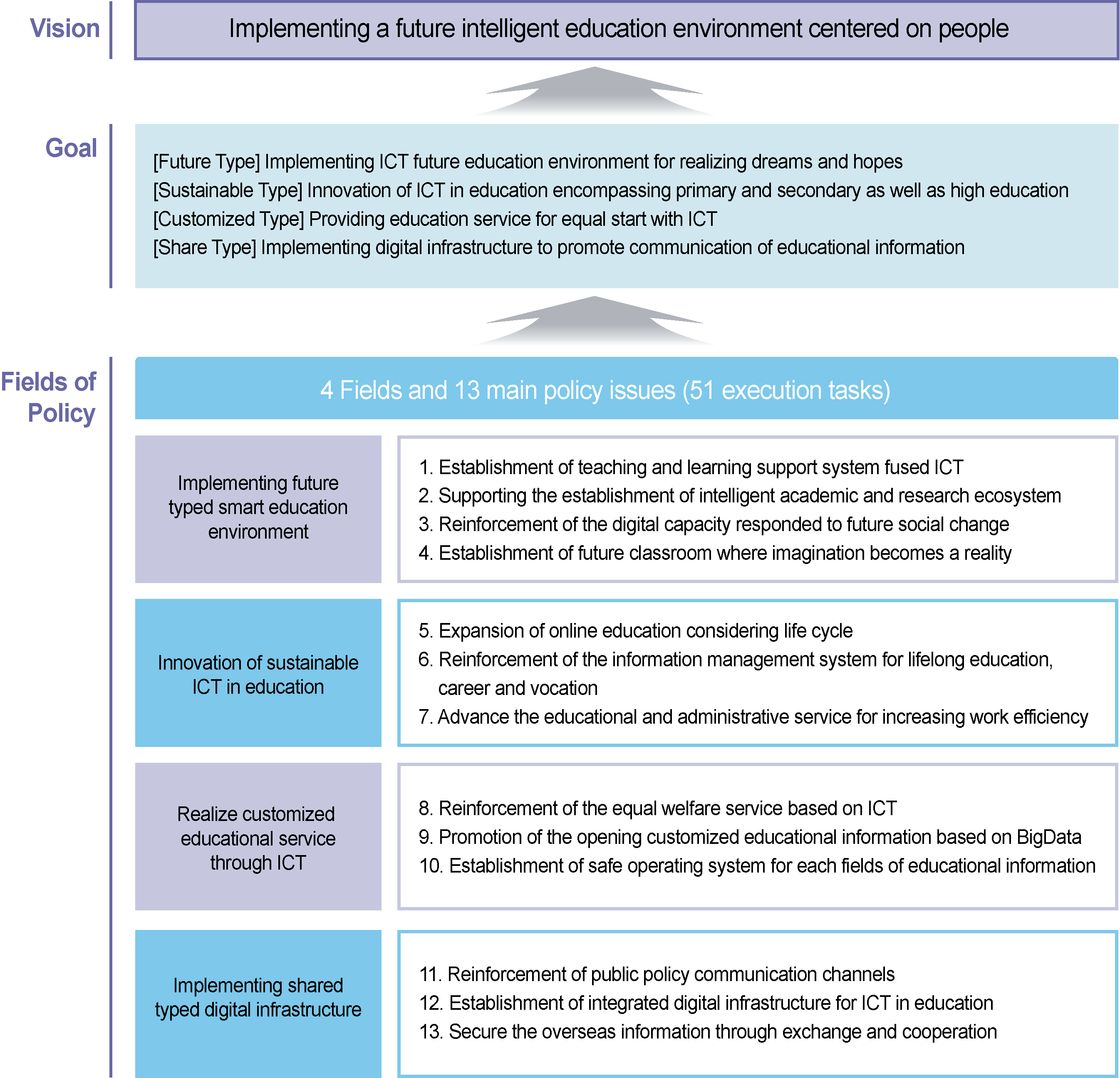
  • Creating a future smart education environment
  • Promoting sustainable ICT innovation in education
  • Realizing customized education services through ICT
  • Strengthening the digital sharing and education information infrastructure

Vision of the 6th Basic Plan for ICT in education

Source: KERIS (2018). 37

The Collaborative Engine: ICT Governance Structure

The effective execution of a nationwide ICT in education policy requires a clear and cooperative organizational system. In South Korea, responsibilities are strategically distributed among the Ministry of Education, metropolitan and provincial education offices, universities, and related organizations-creating a framework for organic cooperation across all levels of the education system.

  • Ministry of Education: Responsible for establishing, managing, and adjusting the national basic plan for ICT in education. It sets the overall vision and strategic direction.
  • Metropolitan and Provincial Education Offices: Responsible for implementing ICT education policy at the local level for kindergarten, primary, and secondary education.
  • Universities: Responsible for managing and implementing ICT initiatives within higher education.
  • Related Organizations: Support ICT implementation across all educational sectors-including special, lifelong, and vocational education-according to their specific duties.

Organization system of ICT in education

Source: KERIS (2018). 51

This well-organized governance structure provides the foundation for launching targeted programs designed to ensure educational equity for all citizens.

Education for All: Initiatives to Bridge the Information Gap

A core principle of South Korea's ICT strategy is ensuring that technological advancements in education benefit all segments of the population. To achieve this, the government has implemented a range of targeted initiatives designed to support information-alienated groups and provide lifelong learning opportunities. These programs are essential for bridging the digital divide and promoting educational equity across society.

Bridging the Educational Gap for Information-Alienated Groups  
The Ministry of Education actively supports low-income students through the 'Project to Support ICT in Education for Elementary, Middle and High School Students'. This project provides essential resources, including personal computers and subsidies for internet fees, to ensure students are not left behind. It also grants access to educational content such as EBS content and cyber learning content to provide equal learning opportunities.
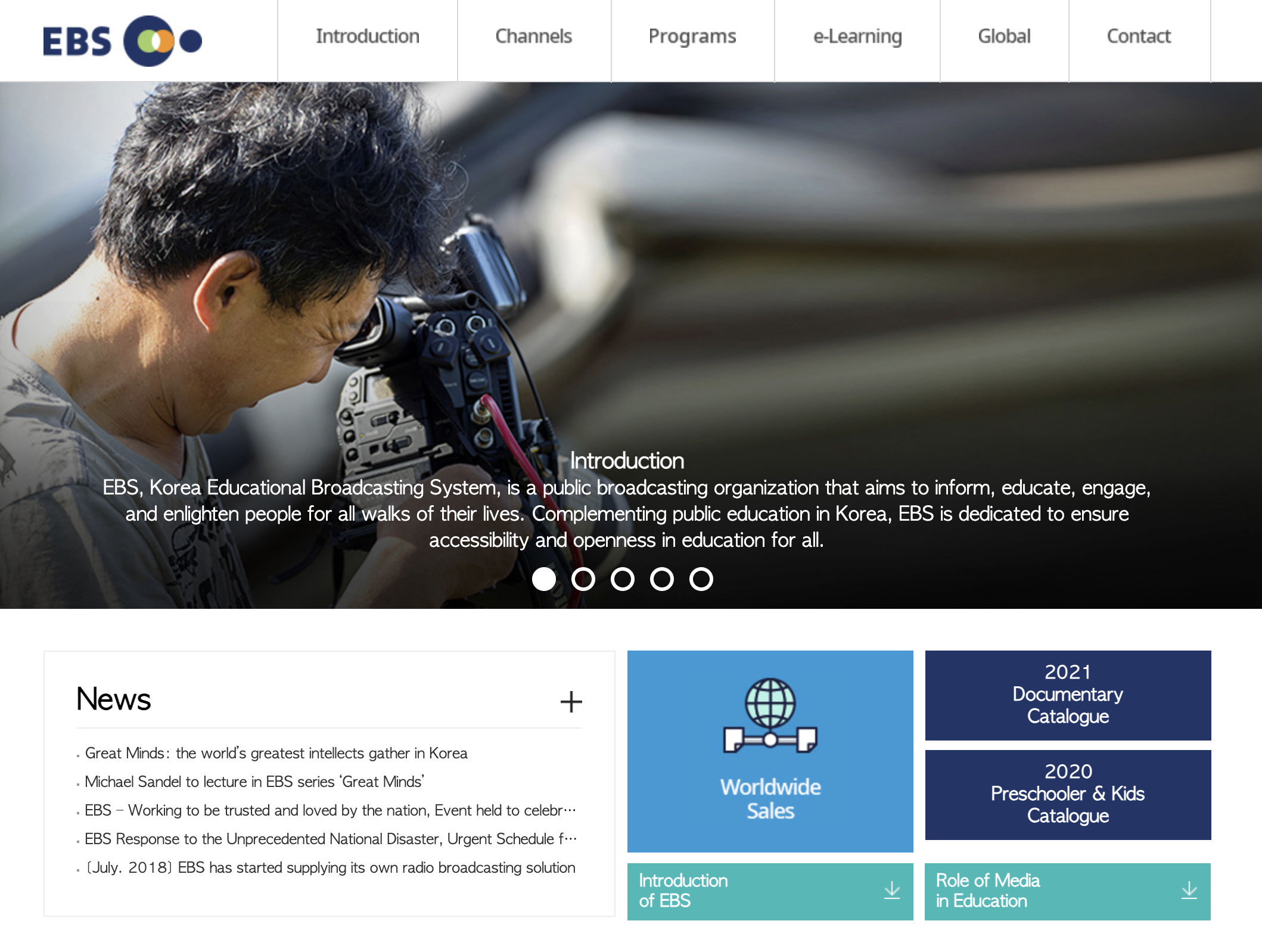
EBS: Korea’s Public Educational Broadcasting System

Source: EBS official website

ICT in Special Education  
The National Institute of Special Education leads efforts to support students with disabilities. Since 1998, it has systematically promoted major projects, including the operation of the Eduable, which provides teaching and learning support for students with disabilities. Other initiatives focus on addressing the digital divide, strengthening information service capabilities, and operating a remote education training system for this student population.

Korean Massive Open Online Course (K-MOOC)  
Launched by the Ministry of Education in 2015, K-MOOC makes high-quality university courses available to the general public online. The platform aims to expand educational opportunities, support adult learners and workers adapting to the Fourth Industrial Revolution, and promote innovative teaching methods in higher education, all under the vision of "Revitalizing Lifelong Learning."
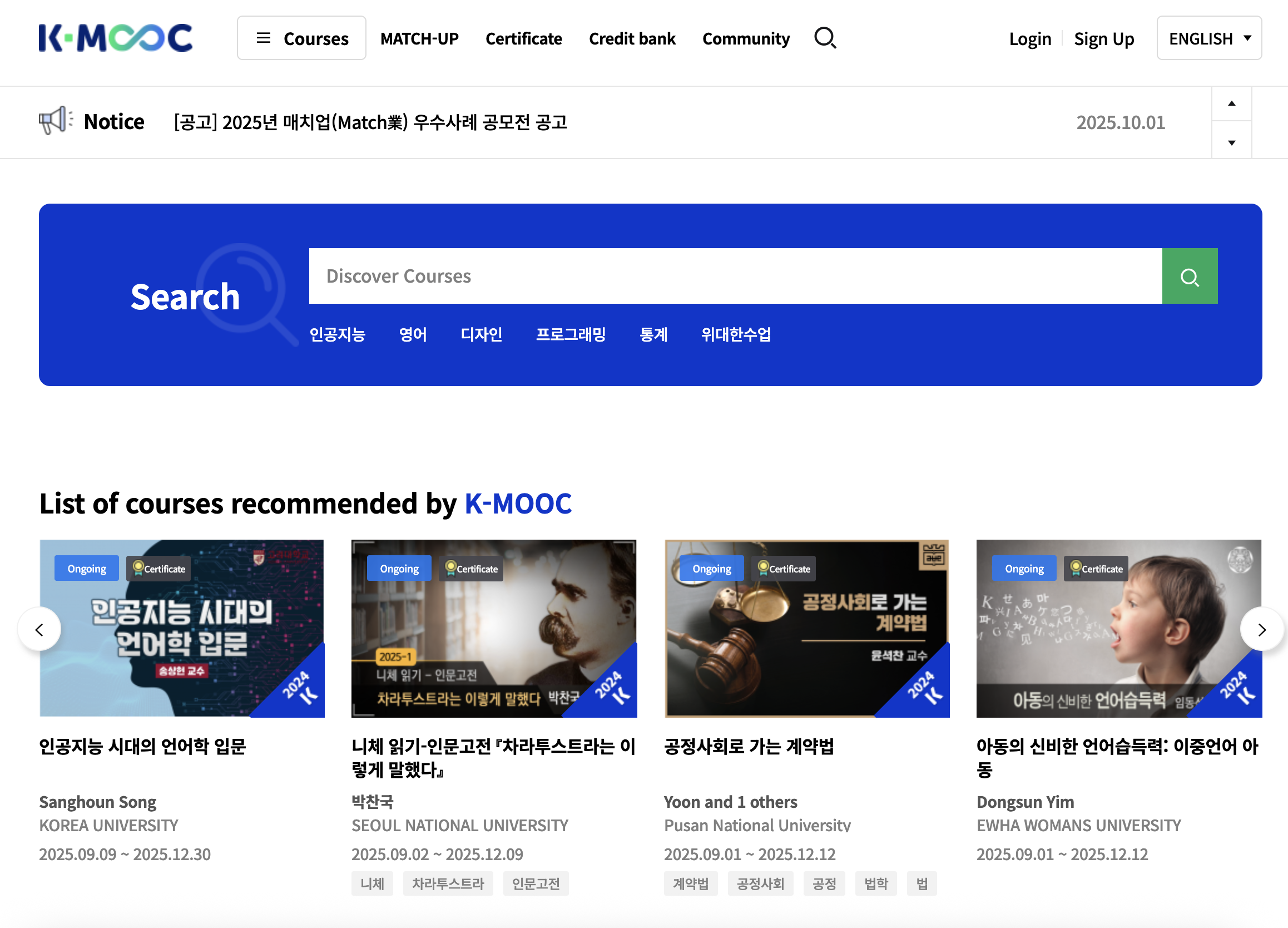
K-MOOC: Korea Massive Open Online Courses Platform

Source: K-MOOC official website

Korea Open Courses Ware (KOCW)
KOCW
is a service that provides free public access to university lecture videos and materials. Launched in 2007, it serves not only college students but also adult learners preparing for a second career and high school students exploring future paths. By offering a variety of themed lectures, KOCW enhances the competitiveness of higher education and expands lifelong learning opportunities.

National Support Center for Parents (Parents On-Nuri)
This center empowers parents by providing them with accurate educational information and online courses. The goal is to help parents understand the changing educational environment, establish effective education plans for their children, and enhance their ability to support their children's learning, thereby easing anxiety about their education.

Together, these five initiatives represent a multi-faceted and comprehensive approach to achieving inclusive education in the digital age.

Key Takeaways: Lessons from South Korea's Success

South Korea's remarkable journey in implementing ICT in education offers valuable insights for other nations. This success can be attributed to a solid legal framework, systemic implementation mechanisms, secured budget and support, and successful cooperation between public and private sectors, and an effective organization. The following sections outline the key factors that have shaped South Korea’s success in ICT in education.

1.  Systematic National Planning
The development of ICT policy in South Korea has been implemented systematically under long-term national plans, which included practical initiatives like establishing communication networks infrastructure with LAN connections at each school and nationwide high-speed Internet for elementary and secondary schools. This structured, phased approach has been a critical factor in responding effectively to environmental changes and ensuring the consistent, forward-looking implementation of ICT policies.

2. Dedicated Professional Institutions  
The establishment of a professional institution to support policy and provide technical assistance is essential. In Korea, the Korean Education and Research Information Service (KERIS), a public institution under the Ministry of Education, plays this critical role. It provides high-quality information services, develops and shares educational resources, and ensures that policy is supported by deep institutional expertise.

3.  A Strong Cooperative System
The promotion of ICT in education has been driven by a robust cooperation system involving the Ministry of Education, Metropolitan and Provincial Education Offices, and professional organizations like KERIS.
The Ministry develops and coordinates policy, local offices autonomously implement it to meet regional goals, and KERIS provides specialized support. This cooperative framework is a cornerstone of successful policy implementation.

The core lessons from Korea's success are not about specific technologies, but about the foundational pillars that support them: disciplined long-term planning, organic cross-institutional collaboration, dedicated expert institutions to drive implementation, and an unwavering commitment to equity.

Author
Curated by K-Dev Team
cite this work

The Evolution of ICT in South Korean Education: From Infrastructure to Human-Centered Learning

K-Dev Original
February 3, 2026
This is some text inside of a div block.

Summary

South Korea’s ICT in education has evolved over nearly four decades—from building foundational infrastructure to creating a sophisticated, human-centered learning ecosystem. Between 1996 and 2023, the government implemented six successive national plans that systematically expanded access, enhanced teacher capacity, and developed digital content. Korea’s experience demonstrates that effective digital transformation in education depends not on technology itself, but on long-term planning, institutional cooperation, and a strong commitment to equity.

Key Questions

  • How did South Korea’s long-term, phased planning contribute to the sustained success of ICT integration in education?
  • What strategies has South Korea implemented to bridge the digital divide and promote equitable access to education?
  • In an era of rapid technological change, how should education models evolve to remain effective and inclusive?

#ICT in Education #Digital Transformation in Education #Educational Technology Policy #Educational Equity

South Korea is globally recognized as a technological powerhouse built on innovation and hyper-connectivity. But how did the nation transform this technological strength into one of the world's leading digital education systems? The answer lies not merely in providing devices, but in a deliberate, multi-decade strategy grounded in planning, execution, and equity. This article explores South Korea's journey and reveals key lessons that offer a blueprint for building a truly effective ICT-integrated education system.

The Genesis of a National Strategy: Early ICT Initiatives (1980s-1990s)

In the 1980s, the Korean government's efforts to foster the information industry and spread computers and information communication services were intensified, and the demand for workers in these areas also increased rapidly. As the need for computer education in schools was increasing, the Korean government started to discuss computer education as one of the national education reform agendas.

This focus was formalized in 1987 when the Education Reform Deliberation Committee (ERDC) released its final report. The committee emphasized the urgent need to introduce computer education into schools to improve teaching methods, promote science and technology education, and prepare the nation for a future information society (ERDC 1987). Based on this, the Ministry of Education developed a "plan for Strengthening Computer Education in Schools," which set three clear policy objectives: expanding computer education opportunities, expanding learning methods using computers, and computerizing school management. The initial focus was on building infrastructure and fostering basic computer literacy.

The 1990s marked a significant conceptual shift, guided by the vision of the presidential advisory Education Reform Committee (ERC). The ERC expanded the definition of ICT in education beyond simple computer literacy to its use across all educational sectors. The ERC defined the goal of ICT in education as 'allowing everyone to receive education that was free from time or space constraints by using ICT'. This broader vision transformed ICT from a subject into a tool for delivering education itself, prompting the Ministry to consolidate initiatives into a unified, long-term strategy.

A Phased Approach: Charting Three Decades of Progress Through Five-Year Plans

Beginning in 1996, the South Korean government adopted a highly structured and systematic approach to ICT policy by establishing a series of five-year basic plans. These initiatives were categorized into five key areas: education information service, teacher capacity building, content and standardization development, infrastructure, and policy and governance structure.

Initiatives of ICT Use in Education

Source: Hwang, et. al. (2010). 19

Over nearly three decades, the policy has evolved through six distinct phases, each with specific objectives that reflect the nation's shifting priorities-from building foundational infrastructure to creating sophisticated, human-centered learning environments.

Evolution of ICT in Education Plans in Korea (1996–2023)

Phase 1: Base Creation (1996-2000)
The primary outcome of the first Basic Plan was the establishment of a stable infrastructure and a solid institutional foundation for ICT in primary and secondary schools. This era saw the creation of crucial national platforms, including the launch of the educational service system 'EDUNET' in 1996 and the 'Research Information Service' the following year. A pivotal development was the establishment of the Korean Education and Research Information Service (KERIS) in 1999, which would become the central professional organization for implementing ICT in education nationwide.

Phase 2: Expanding and Settlement (2001-2005)
The second Basic Plan shifted focus from infrastructure to application, aiming to enhance the quality of education. The core objectives were to provide open access to educational content and deliver comprehensive teacher training to support the integration of ICT into classroom practices. A major administrative tool developed during this phase was the National Education Information System (NEIS), a computer network designed to facilitate the electronic management of all education-related administrative tasks.

Phase 3: Enhancement (2006-2010)  
The third plan centered on creating sustainable, flexible, and secure learning environments aligned with the vision of a "u-Learning" (ubiquitous learning) society. This phase saw key developments such as the creation of digital textbooks. In response to growing concerns about online safety, an educational cyber safety center was established in 2006 to handle cyber-infringement incidents, and the Certification Authority Central of educational organization was created in 2007.

Phase 4: Integration of Education and Technology (2010-2014)  
This phase focused on promoting the use of ICT in education for Science and Technology, following the integration and reorganization of the Ministry of Education & Human Resources Development and the Ministry of Science and Technology into the Ministry of Education, Science and Technology (MEST). MEST introduced a new policy direction that moved beyond infrastructure-centered goals to address the fundamental needs of the education sector, supporting the holistic development of both education and science.

Phase 5: Expanding Information Service (2014-2018)  
The fifth Basic Plan set ambitious goals to establish South Korea as a global leader in ICT education. It aimed to provide world-class information infrastructure and promote innovation in teaching and learning methods by developing an ICT service system, advancing infrastructure, and expanding information services across the entire education sector. In addition, it contributed to the cultivation of creative and integrated talents and to the advancement of education by establishing detailed annual implementation plans for ICT in education.

Phase 6: Implementing a Human-Centered Environment (2019-2023)
The sixth and most recent plan articulated a forward-looking vision to meet the demands of a rapidly changing social and technological landscape. Under the vision of "implementing a human-centered, future-oriented intelligent education environment," the plan consists of four goals and areas, 13 major policy tasks, and 51 implementation tasks. To monitor and evaluate progress, 17 performance indicators were developed across four key areas (KERIS, 2018):

  • Creating a future smart education environment
  • Promoting sustainable ICT innovation in education
  • Realizing customized education services through ICT
  • Strengthening the digital sharing and education information infrastructure

Vision of the 6th Basic Plan for ICT in education

Source: KERIS (2018). 37

The Collaborative Engine: ICT Governance Structure

The effective execution of a nationwide ICT in education policy requires a clear and cooperative organizational system. In South Korea, responsibilities are strategically distributed among the Ministry of Education, metropolitan and provincial education offices, universities, and related organizations-creating a framework for organic cooperation across all levels of the education system.

  • Ministry of Education: Responsible for establishing, managing, and adjusting the national basic plan for ICT in education. It sets the overall vision and strategic direction.
  • Metropolitan and Provincial Education Offices: Responsible for implementing ICT education policy at the local level for kindergarten, primary, and secondary education.
  • Universities: Responsible for managing and implementing ICT initiatives within higher education.
  • Related Organizations: Support ICT implementation across all educational sectors-including special, lifelong, and vocational education-according to their specific duties.

Organization system of ICT in education

Source: KERIS (2018). 51

This well-organized governance structure provides the foundation for launching targeted programs designed to ensure educational equity for all citizens.

Education for All: Initiatives to Bridge the Information Gap

A core principle of South Korea's ICT strategy is ensuring that technological advancements in education benefit all segments of the population. To achieve this, the government has implemented a range of targeted initiatives designed to support information-alienated groups and provide lifelong learning opportunities. These programs are essential for bridging the digital divide and promoting educational equity across society.

Bridging the Educational Gap for Information-Alienated Groups  
The Ministry of Education actively supports low-income students through the 'Project to Support ICT in Education for Elementary, Middle and High School Students'. This project provides essential resources, including personal computers and subsidies for internet fees, to ensure students are not left behind. It also grants access to educational content such as EBS content and cyber learning content to provide equal learning opportunities.

EBS: Korea’s Public Educational Broadcasting System

Source: EBS official website

ICT in Special Education  
The National Institute of Special Education leads efforts to support students with disabilities. Since 1998, it has systematically promoted major projects, including the operation of the Eduable, which provides teaching and learning support for students with disabilities. Other initiatives focus on addressing the digital divide, strengthening information service capabilities, and operating a remote education training system for this student population.

Korean Massive Open Online Course (K-MOOC)  
Launched by the Ministry of Education in 2015, K-MOOC makes high-quality university courses available to the general public online. The platform aims to expand educational opportunities, support adult learners and workers adapting to the Fourth Industrial Revolution, and promote innovative teaching methods in higher education, all under the vision of "Revitalizing Lifelong Learning."

K-MOOC: Korea Massive Open Online Courses Platform

Source: K-MOOC official website

Korea Open Courses Ware (KOCW)
KOCW
is a service that provides free public access to university lecture videos and materials. Launched in 2007, it serves not only college students but also adult learners preparing for a second career and high school students exploring future paths. By offering a variety of themed lectures, KOCW enhances the competitiveness of higher education and expands lifelong learning opportunities.

National Support Center for Parents (Parents On-Nuri)
This center empowers parents by providing them with accurate educational information and online courses. The goal is to help parents understand the changing educational environment, establish effective education plans for their children, and enhance their ability to support their children's learning, thereby easing anxiety about their education.

Together, these five initiatives represent a multi-faceted and comprehensive approach to achieving inclusive education in the digital age.

Key Takeaways: Lessons from South Korea's Success

South Korea's remarkable journey in implementing ICT in education offers valuable insights for other nations. This success can be attributed to a solid legal framework, systemic implementation mechanisms, secured budget and support, and successful cooperation between public and private sectors, and an effective organization. The following sections outline the key factors that have shaped South Korea’s success in ICT in education.

1.  Systematic National Planning
The development of ICT policy in South Korea has been implemented systematically under long-term national plans, which included practical initiatives like establishing communication networks infrastructure with LAN connections at each school and nationwide high-speed Internet for elementary and secondary schools. This structured, phased approach has been a critical factor in responding effectively to environmental changes and ensuring the consistent, forward-looking implementation of ICT policies.

2. Dedicated Professional Institutions  
The establishment of a professional institution to support policy and provide technical assistance is essential. In Korea, the Korean Education and Research Information Service (KERIS), a public institution under the Ministry of Education, plays this critical role. It provides high-quality information services, develops and shares educational resources, and ensures that policy is supported by deep institutional expertise.

3.  A Strong Cooperative System
The promotion of ICT in education has been driven by a robust cooperation system involving the Ministry of Education, Metropolitan and Provincial Education Offices, and professional organizations like KERIS.
The Ministry develops and coordinates policy, local offices autonomously implement it to meet regional goals, and KERIS provides specialized support. This cooperative framework is a cornerstone of successful policy implementation.

The core lessons from Korea's success are not about specific technologies, but about the foundational pillars that support them: disciplined long-term planning, organic cross-institutional collaboration, dedicated expert institutions to drive implementation, and an unwavering commitment to equity.

References
Cite this work
.

More to explore from
In Perspective

The Evolution of ICT in South Korean Education: From Infrastructure to Human-Centered Learning

K-Dev Original
February 3, 2026

I am the text that will be copied.

South Korea is globally recognized as a technological powerhouse built on innovation and hyper-connectivity. But how did the nation transform this technological strength into one of the world's leading digital education systems? The answer lies not merely in providing devices, but in a deliberate, multi-decade strategy grounded in planning, execution, and equity. This article explores South Korea's journey and reveals key lessons that offer a blueprint for building a truly effective ICT-integrated education system.

The Genesis of a National Strategy: Early ICT Initiatives (1980s-1990s)

In the 1980s, the Korean government's efforts to foster the information industry and spread computers and information communication services were intensified, and the demand for workers in these areas also increased rapidly. As the need for computer education in schools was increasing, the Korean government started to discuss computer education as one of the national education reform agendas.

This focus was formalized in 1987 when the Education Reform Deliberation Committee (ERDC) released its final report. The committee emphasized the urgent need to introduce computer education into schools to improve teaching methods, promote science and technology education, and prepare the nation for a future information society (ERDC 1987). Based on this, the Ministry of Education developed a "plan for Strengthening Computer Education in Schools," which set three clear policy objectives: expanding computer education opportunities, expanding learning methods using computers, and computerizing school management. The initial focus was on building infrastructure and fostering basic computer literacy.

The 1990s marked a significant conceptual shift, guided by the vision of the presidential advisory Education Reform Committee (ERC). The ERC expanded the definition of ICT in education beyond simple computer literacy to its use across all educational sectors. The ERC defined the goal of ICT in education as 'allowing everyone to receive education that was free from time or space constraints by using ICT'. This broader vision transformed ICT from a subject into a tool for delivering education itself, prompting the Ministry to consolidate initiatives into a unified, long-term strategy.

A Phased Approach: Charting Three Decades of Progress Through Five-Year Plans

Beginning in 1996, the South Korean government adopted a highly structured and systematic approach to ICT policy by establishing a series of five-year basic plans. These initiatives were categorized into five key areas: education information service, teacher capacity building, content and standardization development, infrastructure, and policy and governance structure.

Initiatives of ICT Use in Education

Source: Hwang, et. al. (2010). 19

Over nearly three decades, the policy has evolved through six distinct phases, each with specific objectives that reflect the nation's shifting priorities-from building foundational infrastructure to creating sophisticated, human-centered learning environments.

Evolution of ICT in Education Plans in Korea (1996–2023)

Phase 1: Base Creation (1996-2000)
The primary outcome of the first Basic Plan was the establishment of a stable infrastructure and a solid institutional foundation for ICT in primary and secondary schools. This era saw the creation of crucial national platforms, including the launch of the educational service system 'EDUNET' in 1996 and the 'Research Information Service' the following year. A pivotal development was the establishment of the Korean Education and Research Information Service (KERIS) in 1999, which would become the central professional organization for implementing ICT in education nationwide.

Phase 2: Expanding and Settlement (2001-2005)
The second Basic Plan shifted focus from infrastructure to application, aiming to enhance the quality of education. The core objectives were to provide open access to educational content and deliver comprehensive teacher training to support the integration of ICT into classroom practices. A major administrative tool developed during this phase was the National Education Information System (NEIS), a computer network designed to facilitate the electronic management of all education-related administrative tasks.

Phase 3: Enhancement (2006-2010)  
The third plan centered on creating sustainable, flexible, and secure learning environments aligned with the vision of a "u-Learning" (ubiquitous learning) society. This phase saw key developments such as the creation of digital textbooks. In response to growing concerns about online safety, an educational cyber safety center was established in 2006 to handle cyber-infringement incidents, and the Certification Authority Central of educational organization was created in 2007.

Phase 4: Integration of Education and Technology (2010-2014)  
This phase focused on promoting the use of ICT in education for Science and Technology, following the integration and reorganization of the Ministry of Education & Human Resources Development and the Ministry of Science and Technology into the Ministry of Education, Science and Technology (MEST). MEST introduced a new policy direction that moved beyond infrastructure-centered goals to address the fundamental needs of the education sector, supporting the holistic development of both education and science.

Phase 5: Expanding Information Service (2014-2018)  
The fifth Basic Plan set ambitious goals to establish South Korea as a global leader in ICT education. It aimed to provide world-class information infrastructure and promote innovation in teaching and learning methods by developing an ICT service system, advancing infrastructure, and expanding information services across the entire education sector. In addition, it contributed to the cultivation of creative and integrated talents and to the advancement of education by establishing detailed annual implementation plans for ICT in education.

Phase 6: Implementing a Human-Centered Environment (2019-2023)
The sixth and most recent plan articulated a forward-looking vision to meet the demands of a rapidly changing social and technological landscape. Under the vision of "implementing a human-centered, future-oriented intelligent education environment," the plan consists of four goals and areas, 13 major policy tasks, and 51 implementation tasks. To monitor and evaluate progress, 17 performance indicators were developed across four key areas (KERIS, 2018):

  • Creating a future smart education environment
  • Promoting sustainable ICT innovation in education
  • Realizing customized education services through ICT
  • Strengthening the digital sharing and education information infrastructure

Vision of the 6th Basic Plan for ICT in education

Source: KERIS (2018). 37

The Collaborative Engine: ICT Governance Structure

The effective execution of a nationwide ICT in education policy requires a clear and cooperative organizational system. In South Korea, responsibilities are strategically distributed among the Ministry of Education, metropolitan and provincial education offices, universities, and related organizations-creating a framework for organic cooperation across all levels of the education system.

  • Ministry of Education: Responsible for establishing, managing, and adjusting the national basic plan for ICT in education. It sets the overall vision and strategic direction.
  • Metropolitan and Provincial Education Offices: Responsible for implementing ICT education policy at the local level for kindergarten, primary, and secondary education.
  • Universities: Responsible for managing and implementing ICT initiatives within higher education.
  • Related Organizations: Support ICT implementation across all educational sectors-including special, lifelong, and vocational education-according to their specific duties.

Organization system of ICT in education

Source: KERIS (2018). 51

This well-organized governance structure provides the foundation for launching targeted programs designed to ensure educational equity for all citizens.

Education for All: Initiatives to Bridge the Information Gap

A core principle of South Korea's ICT strategy is ensuring that technological advancements in education benefit all segments of the population. To achieve this, the government has implemented a range of targeted initiatives designed to support information-alienated groups and provide lifelong learning opportunities. These programs are essential for bridging the digital divide and promoting educational equity across society.

Bridging the Educational Gap for Information-Alienated Groups  
The Ministry of Education actively supports low-income students through the 'Project to Support ICT in Education for Elementary, Middle and High School Students'. This project provides essential resources, including personal computers and subsidies for internet fees, to ensure students are not left behind. It also grants access to educational content such as EBS content and cyber learning content to provide equal learning opportunities.

EBS: Korea’s Public Educational Broadcasting System

Source: EBS official website

ICT in Special Education  
The National Institute of Special Education leads efforts to support students with disabilities. Since 1998, it has systematically promoted major projects, including the operation of the Eduable, which provides teaching and learning support for students with disabilities. Other initiatives focus on addressing the digital divide, strengthening information service capabilities, and operating a remote education training system for this student population.

Korean Massive Open Online Course (K-MOOC)  
Launched by the Ministry of Education in 2015, K-MOOC makes high-quality university courses available to the general public online. The platform aims to expand educational opportunities, support adult learners and workers adapting to the Fourth Industrial Revolution, and promote innovative teaching methods in higher education, all under the vision of "Revitalizing Lifelong Learning."

K-MOOC: Korea Massive Open Online Courses Platform

Source: K-MOOC official website

Korea Open Courses Ware (KOCW)
KOCW
is a service that provides free public access to university lecture videos and materials. Launched in 2007, it serves not only college students but also adult learners preparing for a second career and high school students exploring future paths. By offering a variety of themed lectures, KOCW enhances the competitiveness of higher education and expands lifelong learning opportunities.

National Support Center for Parents (Parents On-Nuri)
This center empowers parents by providing them with accurate educational information and online courses. The goal is to help parents understand the changing educational environment, establish effective education plans for their children, and enhance their ability to support their children's learning, thereby easing anxiety about their education.

Together, these five initiatives represent a multi-faceted and comprehensive approach to achieving inclusive education in the digital age.

Key Takeaways: Lessons from South Korea's Success

South Korea's remarkable journey in implementing ICT in education offers valuable insights for other nations. This success can be attributed to a solid legal framework, systemic implementation mechanisms, secured budget and support, and successful cooperation between public and private sectors, and an effective organization. The following sections outline the key factors that have shaped South Korea’s success in ICT in education.

1.  Systematic National Planning
The development of ICT policy in South Korea has been implemented systematically under long-term national plans, which included practical initiatives like establishing communication networks infrastructure with LAN connections at each school and nationwide high-speed Internet for elementary and secondary schools. This structured, phased approach has been a critical factor in responding effectively to environmental changes and ensuring the consistent, forward-looking implementation of ICT policies.

2. Dedicated Professional Institutions  
The establishment of a professional institution to support policy and provide technical assistance is essential. In Korea, the Korean Education and Research Information Service (KERIS), a public institution under the Ministry of Education, plays this critical role. It provides high-quality information services, develops and shares educational resources, and ensures that policy is supported by deep institutional expertise.

3.  A Strong Cooperative System
The promotion of ICT in education has been driven by a robust cooperation system involving the Ministry of Education, Metropolitan and Provincial Education Offices, and professional organizations like KERIS.
The Ministry develops and coordinates policy, local offices autonomously implement it to meet regional goals, and KERIS provides specialized support. This cooperative framework is a cornerstone of successful policy implementation.

The core lessons from Korea's success are not about specific technologies, but about the foundational pillars that support them: disciplined long-term planning, organic cross-institutional collaboration, dedicated expert institutions to drive implementation, and an unwavering commitment to equity.

References
Cite this work
.

More to explore from
In Perspective