

Back to List
Perspectives

A Comparative Study of Post-War Rural Development and Modernization in Korea and Japan: From State-Driven Initiatives to Lasting Legacies

Summary

This report examines how Korea and Japan pursued fundamentally different paths to rural modernization in the post-war era. Korea's state-driven Saemaul Movement (1970s) rapidly closed the urban-rural income gap through centralized mobilization and massive resource transfers, while Japan's 1961 Basic Agricultural Act prioritized social stability by protecting small family farms and enabling part-time farming. Both approaches successfully modernized their rural sectors, but Korea's efficiency-focused strategy served industrial growth under authoritarian rule, whereas Japan's welfare-oriented approach preserved traditional social structures at the cost of agricultural efficiency. These divergent paths, rooted in distinct political contexts and policy priorities, continue to shape each country's agricultural landscape today.

Key Questions

  • How did Korea's Saemaul Movement and Japan's Basic Agricultural Act differ in their approaches to rural modernization, and what political and economic factors drove these differences?
  • What were the economic and social outcomes of each country's rural development strategy, and how did they balance efficiency versus social stability?
  • What can contemporary rural development policies learn from the contrasting experiences of state-led modernization in Korea and Japan?

#rural development #saemaul movement #agricultural reform

🔆
"The morning bell has rung, a new morning has dawned. Let’s all rise and cultivate the new village. Let’s build a better village with our own hands."

This is the theme song of the Saemaul Movement, which my grandma used to sing a lot. She had lived through the Korean War and would talk about how completely destroyed her hometown had become after it. People who lived near the Battle of Tabu-dong, where residents fought with all their might to stop North Korean forces from moving south, must have had even worse scars.

Even before the scars of war had healed, people in the countryside were living in extreme poverty. My grandmother often talked about those hard times, saying that the Saemaul Movement finally helped people get out of extreme poverty.

The 1970s, which are often thought of as the darkest time for Korean democracy, came after the war years when people were very poor. The Saemaul Movement came about during a time of liberation, division, the April 19 Revolution, and the May 16 military coup. It was both a response to the people's urgent desire to escape poverty and a planned move by the Park Chung-hee regime, which had not come to power through democratic means, to gain political legitimacy and create a stable base for governing the country through social integration.
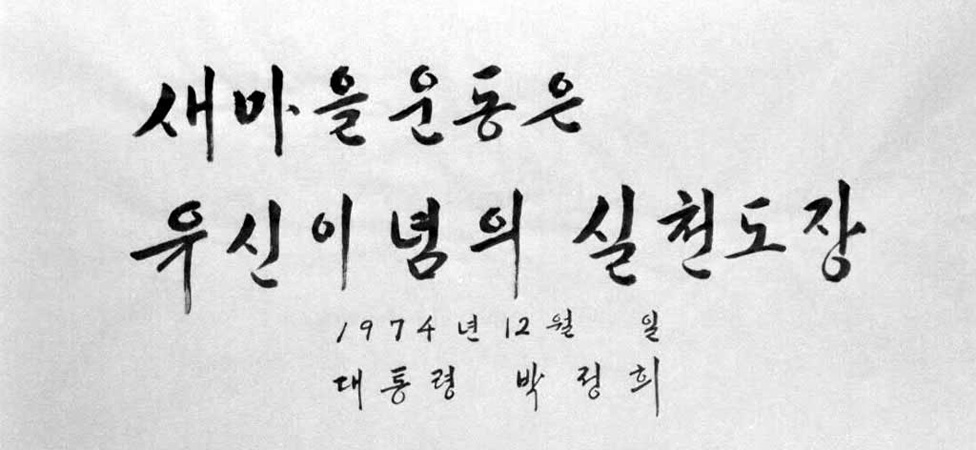
The Saemaul movement is a training ground for realizing the Yushin ideology [President Park Chung-hee's calligraphy]

Introduction: The Rural Question in Post-War East Asia

After World War II, which caused a lot of damage, both the Republic of Korea and Japan started to grow their economies and industries very quickly. This is often called the "miracles" of the East Asian economy (Kim, 2025).

However, this period of remarkable economic growth in the country was accompanied by significant domestic challenges. As both countries put a lot of effort into building up urban industrial centers, a big gap grew between the quality of life in these busy cities and the conditions in the stagnant rural areas (Kim, 2025; Moon, 1978; Kim & Topel, 1995). This widening economic gap posed a significant threat to social stability and necessitated a strategic policy response.

This report asserts that although Korea and Japan effectively modernized their rural sectors, they achieved these results through fundamentally distinct state-led initiatives. The Saemaul Movement in Korea was a very centralized and ambitious movement that was politically useful and successfully closed the income gap between cities and rural areas.

However, this movement inextricably linked itself to an authoritarian regime. Japan's post-war rural policy, on the other hand, was a more gradual and protective system that put social stability and the protection of small, family-owned farms first. The 1961 Basic Agricultural Act strengthened this policy. These different policy paths, which were based on different historical contexts and political priorities, created long-lasting agricultural and social structures that still shape each country's modern landscape (Kim, 2025).

The passage of the Basic Agricultural Act in the Japanese Diet, April 29, 1961.

Source: Yamashita( 2021)

To validate this argument, this report initially analyzes the foundational context of the post-war period, encompassing the collective colonial legacy and the pivotal significance of land reform. Then, it goes into excellent detail about the Korean and Japanese case studies before ending with a comparison.

The Foundational Context: A Shared Colonial Legacy and Post-War Land Reform

The State of Rural Communities and the Precedent of State Control

Their shared history, particularly the economic policies of Japanese imperialism, influenced the rural situations in Korea and Japan immediately after World War II. During the colonial period, peasant farmers in Korea lived in extreme poverty and hardship. Both the Land Survey Project (1910) and the Rice Production Increase Plan, targeting landlords, exacerbated exploitation and debt (Lee, 2022).

These policies systematically impeded the development of self-sufficient farmers and resulted in the economic collapse of the majority of Korean agricultural households. The end result was a tremendous rise in the number of pure tenant farmers, who didn't own any land. The poor daily lives of these farmers were very different from the new modernity that was starting to show up in cities like Gyeongseong (Lee, 2022).

Korean Food and Nutritional Status During the Colonial Era

During Japan's rule over Korea, farmers faced significant challenges in meeting their basic needs. According to data from the Government-General of Chosŏn, the daily per capita supply of major food items dropped sharply. For example, total grain consumption dropped by 18% from 454g in 1913–15 to 372g in 1930–32, and rice consumption dropped by 35% over the same time period.

Most of the extra rice that was grown was sent to Japan, which is why this drop happened. Seventy-seven percent of all farm families in 1924 were tenant farmers, which means they rented land to farm on. The percentage of pure tenant farmers rose from 37.7% in 1918 to 53.8% in 1932 (Lee, 2022).

The "top-down" approach of Korea's post-war Saemaul Movement was not an entirely new concept developed by the Park regime but a continuation and adaptation of a pattern of state intervention in rural social life established during the colonial period. Studies show that the colonial government had already changed its policy for rural areas from one that only focused on production to one that tried to "appease rural discontent and enhance village stability" (Hur, 2010). This strategy also entailed the manipulation of cultural values, including Confucianism, for imperial assimilation (Hur, 2010).

This history of the government getting involved in the economic and social lives of rural people, even to take advantage of them, set a standard for how the government and society should work together. The post-war South Korean government took over and changed a historical model in which the government actively tried to manage and reorganize the rural population to reach national goals.

The Divergent Legacies of Post-War Land Reform

Both countries underwent substantial redistributive land reforms in the post-war era, which effectively abolished the conventional tenancy system and established a prevalence of small, owner-operated farms (Kawagoe, 1999; Asian Development Bank, n.d.). However, the seemingly similar results of these reforms hid very different economic legacies that led to very different policy paths after the war.

Japan's reform, which took away almost 80% of tenant farmers' land and gave it to other tenant farmers, was a huge political success (Kawagoe, 1999; Yoshikawa, 2024). It effectively broke up the landlord class system and made the rural population support the ruling conservative party (Kawagoe, 1999). The reform is criticized for having little impact on agricultural production and for preserving the pre-war "traditional agricultural production structure" (Kawagoe, 1999). More than the reform itself, the growth of agriculture after the war is due to the recovery of important inputs and better technical knowledge (Kawagoe, 1999). Japan's reforms created a rural base that was a stable political asset but an economically stagnant area.
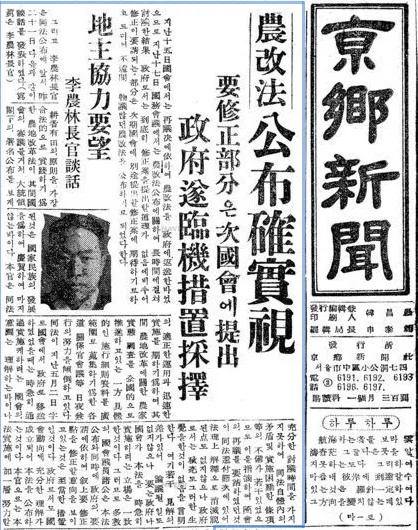
Kyunghyang news. (1949, June 22). Promulgation of the farmland reform law is expected. Kyunghyang news, p. 1.

The 1949 Land Reform Act in Korea, on the other hand, wanted to turn more than two million farm families into owner-operators (Asian Development Bank, n.d.). The equal distribution of land in rural areas had a unique economic effect: it made peasant labor more expensive (Kim & Topel, 1995). This meant that Korea's growing manufacturing sector had to pay higher real wages to get workers from the newly empowered rural areas (Kim & Topel, 1995).

This is an important difference. Japan's policies were a reaction to a stable but economically stagnant rural sector, which led to a protective, welfare-oriented approach. Korea's policy, on the other hand, had to deal with a new reality in which the rural sector's viability and productivity were important parts of—and a necessary condition for—the success of the urban industrial sector (Kim & Topel, 1995). This dynamic became the main reason why Korea's rural development policies became more ambitious and state-directed in the years that followed.

The Korean Case Study: The Saemaul movement as a Catalyst for Change

The Problem and the Program

By the end of the 1960s, Korea's industrialization had caused the income gap between cities and the countryside to grow very quickly (Saemaul Movement Central Association, n.d.; Moon, 1978). The government's previous focus on urban policies had caused them to ignore the agricultural sector (Park, 2009). The government had to change its economic strategy because of this difference, a "world food crisis," and a perceived "electoral erosion" in rural areas (Park, 2009). The Saemaul Movement, also known as the New Village Movement, started in the 1970s as a direct response to this complex crisis (Baek et al., 2012; Park, 2009).

Handwritten directive by President Park Chung-hee emphasizing the principles of the Saemaul Movement (1972)

Source: Ministry of the Interior and Safety, Republic of Korea. (1972). Saemaul Movement - Handwritten Document by President Park Chung-hee. National Archives of Korea. Retrieved from https://theme.archives.go.kr/next/semaul2016/viewSub.do?dir=sub02&subPage=sub02-2-1

The movement was based on the ideas of "diligence, self-help, and cooperation" and was meant to give rural Koreans a "can-do" attitude (Park, 2009; Saemaul Movement Central Association, n.d.). The program was carried out in stages, starting with projects to improve basic living conditions and then moving on to projects to create jobs and improve rural infrastructure (Park, 2009; Saemaul Movement Central Association, n.d.). The central government played a crucial role, offering "seed money," a "comprehensive support system," and intensive education to village leaders at the Saemaul Training Center (Baek et al., 2012; Asian Development Bank, n.d.; Hwang, 1979).

Phase 1: Basic Village Development (1971-1973)

The initial phase focused on environmental improvement projects targeting villages with populations under 500 residents. The central government provided seed money in the form of 335 sacks of cement (approximately 16 tons) per village, worth about 500,000 won at the time.

This material support was deliberately modest—villages had to demonstrate collective action and contribution of labor to qualify for subsequent support. Target beneficiaries included all rural households, with particular emphasis on mobilizing underutilized family labor, especially women and youth. Village leaders, selected through community meetings, coordinated local participation. Key stakeholders included the Ministry of Home Affairs as the central coordinating body, provincial and county governments for implementation oversight, and the Saemaul Training Center for leadership education. Measurable outcomes from this phase included the widening and improvement of 67,084 km of village roads, construction of 248,000 small bridges, replacement of 1.2 million thatched roofs with tiles or slate, and installation of communal facilities in over 16,000 villages (Park, 2009; Hwang, 1979).

Phase 2: Income Generation and Productivity Enhancement (1974-1976)

The second phase shifted focus to economic development, targeting villages that had successfully completed Phase 1 projects. Interventions included introducing high-yielding rice varieties (Tongil rice) to 768,000 hectares of paddy fields, establishing 8,532 cooperative work groups for shared agricultural machinery, and creating 20,941 village-level income projects including greenhouses, livestock raising, and small-scale manufacturing. The government expanded financial support through the National Agricultural Cooperative Federation, providing low-interest loans (6-8% annual interest compared to 20-30% from private lenders) totaling 255 billion won between 1974-1976.

Target beneficiaries expanded to include landless rural households through factory Saemaul programs that created an estimated 86,000 jobs, primarily for rural women. Key stakeholders now included the Ministry of Agriculture and Forestry for technical guidance, commercial banks for credit provision, and private sector partners for factory Saemaul projects.

Measurable outcomes included a 45% increase in farm household income from 1973 to 1976, expansion of irrigated farmland by 190,000 hectares, and establishment of 17,000 village community halls serving as cooperative work centers (Park, 2009; Saemaul Movement Central Association, n.d.; Hwang, 1979).

Phase 3: Comprehensive Development and Consolidation (1977-1979)

The final phase integrated previous interventions with expanded infrastructure development. The scope broadened to include connection of villages to national infrastructure systems. Major interventions included rural electrification reaching 98.4% of villages by 1979 (up from 60% in 1970), expansion of piped water systems to 47% of rural households, construction of 27,823 km of paved rural roads, and establishment of 934 rural telephone exchanges.

The government invested heavily in human capital development, training 320,000 village leaders at the Saemaul Training Center in intensive 2-week residential programs emphasizing leadership skills, agricultural techniques, and cooperative management.

Women received targeted training through separate programs, with 67,000 women leaders completing specialized courses in nutrition, family planning, and income generation.

The expansion of Saemaul factories accelerated, with 3,844 facilities established employing over 153,000 workers by 1979. Stakeholders now included the Ministry of Construction for infrastructure projects, the Ministry of Health and Social Affairs for community welfare programs, and international organizations as observers and potential recipients of the "Saemaul model."

Measurable outcomes included achievement of farm household income parity with urban households by 1974-1975, with farm household income reaching 101% of urban household income in 1975, increase in rural savings from 4.4% of total national savings in 1972 to 9.5% in 1977, and mechanization of agriculture with tractor numbers increasing from 2,400 in 1971 to 14,700 in 1979 (Park, 2009; Hwang, 1979; Asian Development Bank, n.d.).

National Archives of Korea. (1972). Saemaul Movement project in Gyeonggi Province [Photograph]. In Yonhap News Agency (2015, November 23), “Saemaul Movement through the ages” (Figure: “1972 Saemaul Movement in Gyeonggi Province”; image provided by Ministry of the Interior and Safety). https://www.yna.co.kr/view/AKR20151123070500004*

Critiques and Controversies

Scholars contend that participation was frequently administratively engineered rather than truly voluntary, despite the movement's quick improvements.  A culture of "coerced voluntarism" was fostered by political oversight, public performance rankings, and incentive-based competition among villages.  Following President Park's death in 1979, the program also deteriorated, exposing its reliance on political mobilization and centralized authority.  The legacy of the movement is further complicated by worries about political surveillance, corruption, and the repression of local autonomy.

The Japanese Case Study: Sustaining the Small Farm System

A Policy of Social Preservation

Japan's post-war agricultural policy was more gradual and protective than Korea's ambitious movement. Japan's first full agricultural policy was the 1961 Basic Agricultural Act (Yoshikawa, 2024).

The main idea behind it was that farmers who owned land were the "foundation of the country's social stability," and its main goal was to protect the small and micro family farms that had become the main system after the land reform after World War II (Yoshikawa, 2024).

This policy was not meant to force farms to combine or change quickly, but to make sure that the many farmers who made up more than a third of the population in 1960 could make a living (Yoshikawa, 2024).

The act dealt with a number of important issues, such as protecting small farmers, stabilizing prices, and increasing productivity through high-value crops (Yoshikawa, 2024).
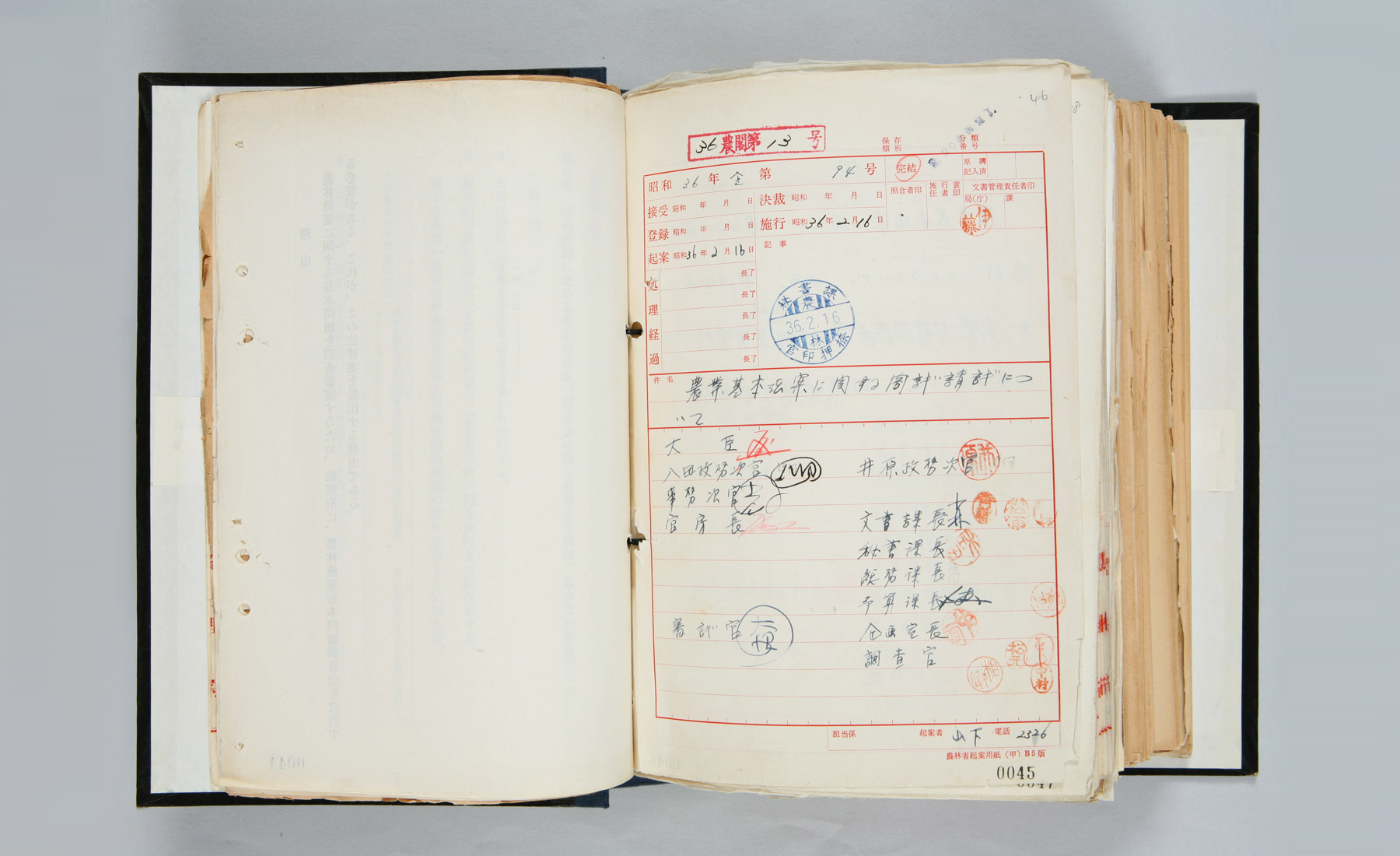
National Archives of Japan. (2007). Cabinet discussion request concerning the Basic Agriculture Law [Photograph]. National Archives of Japan. Retrieved from https://www.digital.archives.go.jp

Implementation and Effects

By the end of the 1980s, 85.5% of Japan's farmers also had jobs outside of farming, and most of these jobs were not farming-related (Kim & Lee, 2004). The "off-farm income" became the main way that farm families made money, which set Japan apart from Korea and let the government make structural changes early on without much protest from farmers (Kim & Lee, 2004).

Other programs, like the Livelihood Improvement Program (LIP), were more focused on empowering rural women to become "self-reliant farmers" by doing a lot of activities to improve their lives in the countryside (Tatsumi, 2021).

Japan's agricultural structure has not changed much over the years. Small family farms still make up the majority of farms, and there are fewer full-time farmers. This was not a policy failure but rather a planned, though expensive, result of a strategy that put social stability ahead of economic efficiency (Yoshikawa, 2024; Kim & Lee, 2004).

The emergence of the part-time farmer was the principal mechanism that facilitated the political and economic sustainability of this trade-off. The government was willing to put up with inefficiencies on farms and a lack of farm consolidation in exchange for keeping the social and political base in the rural sector (Yoshikawa, 2024; Kim & Lee, 2004).

The fact that the economy was doing so well meant that people could make this choice without having to worry about money.

This shows a big difference in what each country values: Korea's state-led modernization needed rural efficiency to help industry grow, while Japan's state-led policy was meant to protect a traditional social structure, using the money it made from industry to pay for this choice.

Conclusion: Divergent Paths to Modernity

The narratives of rural modernization in Korea and Japan offer an essential and intricate viewpoint on national development. There is no universally applicable "miracle" model for rural development; the success of any program hinges on the unique historical, political, and socio-economic context in which it operates (Baek et al., 2012; Yoon & Yoon, 2024).

The Saemaul Movement in Korea shows how a centralized, politically motivated movement that was backed by a huge shift of national resources could quickly close the income gap between cities and rural areas (Park, 2009).

But it only worked well because it was part of an authoritarian government, and its methods of "coerced voluntarism" didn't work without constant state guidance (Baek et al., 2012).

Japan, on the other hand, put social stability ahead of economic efficiency, as shown by the 1961 Basic Agricultural Act (Yoshikawa, 2024). It made a long-lasting system of part-time farming that let rural areas support themselves with a mix of farming and income from other jobs (Yoshikawa, 2024; Brown, 1961).

This policy, which resulted in a stagnant agricultural structure (Yoshikawa, 2024), effectively safeguarded a cherished social and political foundation amid swift industrialization.

In the end, the lessons from Korea and Japan aren't about a simple "spirit" of self-help. Instead, they show how states deal with the rural question in complicated and often controversial ways during times of rapid change.  The agricultural and social structures of both countries are still shaped by their policies, such as Korea's full-time, state-supported farming system and Japan's part-time, off-farm-income-dependent model. This is a strong example of how two countries have taken different paths to modernity.

Contemporary Policy Implications for Korea

The historical paths of rural development in Japan and Korea provide important lessons for tackling the problems facing rural communities today.  The crisis facing Korea's rural areas today is essentially different from that of the 1970s: demographic collapse and community extinction rather than income inequality.  As of 2023, more than 40% of farm household heads are 70 years of age or older, and depopulation is threatening to wipe out countless villages.

The legacy of the Saemaul Movement offers contemporary policy both opportunities and cautionary lessons.  Because it matched the economic demands of the industrial growth era, its strength—the quick, centralized mobilization of resources—succeeded.  However, top-down resource transfers are insufficient to address the current rural crisis.  The movement's shortcomings—its reliance on authoritarian state control and its transient nature after political support waned—show that real community empowerment, not forced participation, is necessary for sustainable rural development.

The experience of Japan provides a different viewpoint.  Its recognition of off-farm income and part-time farming as enduring aspects of rural life might offer a more practical model for Korea's aging countryside.  Policies could concentrate on developing hybrid rural-urban lifestyles that support remote work, seasonal agriculture, and cultural preservation rather than trying to revive full-time farming communities.

Korea's proven ability to mobilize resources and develop infrastructure, along with Japan's acceptance of structural diversity and long-term social investment, should be combined in modern Korean rural policy.  Building institutional frameworks that support sustainable, self-determined rural futures in an era of demographic decline and economic restructuring is more difficult than trying to recreate the Saemaul spirit through campaigns.  This entails moving away from the productivity and income parity of the development era and toward post-growth policies that prioritize community resilience, quality of life, and the inherent worth of rural areas in contemporary society.

Author
Hyemin Park
KDI School of Public Policy and Management
cite this work

A Comparative Study of Post-War Rural Development and Modernization in Korea and Japan: From State-Driven Initiatives to Lasting Legacies

Perspectives
February 4, 2026
This is some text inside of a div block.

Summary

This report examines how Korea and Japan pursued fundamentally different paths to rural modernization in the post-war era. Korea's state-driven Saemaul Movement (1970s) rapidly closed the urban-rural income gap through centralized mobilization and massive resource transfers, while Japan's 1961 Basic Agricultural Act prioritized social stability by protecting small family farms and enabling part-time farming. Both approaches successfully modernized their rural sectors, but Korea's efficiency-focused strategy served industrial growth under authoritarian rule, whereas Japan's welfare-oriented approach preserved traditional social structures at the cost of agricultural efficiency. These divergent paths, rooted in distinct political contexts and policy priorities, continue to shape each country's agricultural landscape today.

Key Questions

  • How did Korea's Saemaul Movement and Japan's Basic Agricultural Act differ in their approaches to rural modernization, and what political and economic factors drove these differences?
  • What were the economic and social outcomes of each country's rural development strategy, and how did they balance efficiency versus social stability?
  • What can contemporary rural development policies learn from the contrasting experiences of state-led modernization in Korea and Japan?

#rural development #saemaul movement #agricultural reform

🔆
"The morning bell has rung, a new morning has dawned. Let’s all rise and cultivate the new village. Let’s build a better village with our own hands."

This is the theme song of the Saemaul Movement, which my grandma used to sing a lot. She had lived through the Korean War and would talk about how completely destroyed her hometown had become after it. People who lived near the Battle of Tabu-dong, where residents fought with all their might to stop North Korean forces from moving south, must have had even worse scars.

Even before the scars of war had healed, people in the countryside were living in extreme poverty. My grandmother often talked about those hard times, saying that the Saemaul Movement finally helped people get out of extreme poverty.

The 1970s, which are often thought of as the darkest time for Korean democracy, came after the war years when people were very poor. The Saemaul Movement came about during a time of liberation, division, the April 19 Revolution, and the May 16 military coup. It was both a response to the people's urgent desire to escape poverty and a planned move by the Park Chung-hee regime, which had not come to power through democratic means, to gain political legitimacy and create a stable base for governing the country through social integration.

The Saemaul movement is a training ground for realizing the Yushin ideology [President Park Chung-hee's calligraphy]

Introduction: The Rural Question in Post-War East Asia

After World War II, which caused a lot of damage, both the Republic of Korea and Japan started to grow their economies and industries very quickly. This is often called the "miracles" of the East Asian economy (Kim, 2025).

However, this period of remarkable economic growth in the country was accompanied by significant domestic challenges. As both countries put a lot of effort into building up urban industrial centers, a big gap grew between the quality of life in these busy cities and the conditions in the stagnant rural areas (Kim, 2025; Moon, 1978; Kim & Topel, 1995). This widening economic gap posed a significant threat to social stability and necessitated a strategic policy response.

This report asserts that although Korea and Japan effectively modernized their rural sectors, they achieved these results through fundamentally distinct state-led initiatives. The Saemaul Movement in Korea was a very centralized and ambitious movement that was politically useful and successfully closed the income gap between cities and rural areas.

However, this movement inextricably linked itself to an authoritarian regime. Japan's post-war rural policy, on the other hand, was a more gradual and protective system that put social stability and the protection of small, family-owned farms first. The 1961 Basic Agricultural Act strengthened this policy. These different policy paths, which were based on different historical contexts and political priorities, created long-lasting agricultural and social structures that still shape each country's modern landscape (Kim, 2025).

The passage of the Basic Agricultural Act in the Japanese Diet, April 29, 1961.

Source: Yamashita( 2021)

To validate this argument, this report initially analyzes the foundational context of the post-war period, encompassing the collective colonial legacy and the pivotal significance of land reform. Then, it goes into excellent detail about the Korean and Japanese case studies before ending with a comparison.

The Foundational Context: A Shared Colonial Legacy and Post-War Land Reform

The State of Rural Communities and the Precedent of State Control

Their shared history, particularly the economic policies of Japanese imperialism, influenced the rural situations in Korea and Japan immediately after World War II. During the colonial period, peasant farmers in Korea lived in extreme poverty and hardship. Both the Land Survey Project (1910) and the Rice Production Increase Plan, targeting landlords, exacerbated exploitation and debt (Lee, 2022).

These policies systematically impeded the development of self-sufficient farmers and resulted in the economic collapse of the majority of Korean agricultural households. The end result was a tremendous rise in the number of pure tenant farmers, who didn't own any land. The poor daily lives of these farmers were very different from the new modernity that was starting to show up in cities like Gyeongseong (Lee, 2022).

Korean Food and Nutritional Status During the Colonial Era

During Japan's rule over Korea, farmers faced significant challenges in meeting their basic needs. According to data from the Government-General of Chosŏn, the daily per capita supply of major food items dropped sharply. For example, total grain consumption dropped by 18% from 454g in 1913–15 to 372g in 1930–32, and rice consumption dropped by 35% over the same time period.

Most of the extra rice that was grown was sent to Japan, which is why this drop happened. Seventy-seven percent of all farm families in 1924 were tenant farmers, which means they rented land to farm on. The percentage of pure tenant farmers rose from 37.7% in 1918 to 53.8% in 1932 (Lee, 2022).

The "top-down" approach of Korea's post-war Saemaul Movement was not an entirely new concept developed by the Park regime but a continuation and adaptation of a pattern of state intervention in rural social life established during the colonial period. Studies show that the colonial government had already changed its policy for rural areas from one that only focused on production to one that tried to "appease rural discontent and enhance village stability" (Hur, 2010). This strategy also entailed the manipulation of cultural values, including Confucianism, for imperial assimilation (Hur, 2010).

This history of the government getting involved in the economic and social lives of rural people, even to take advantage of them, set a standard for how the government and society should work together. The post-war South Korean government took over and changed a historical model in which the government actively tried to manage and reorganize the rural population to reach national goals.

The Divergent Legacies of Post-War Land Reform

Both countries underwent substantial redistributive land reforms in the post-war era, which effectively abolished the conventional tenancy system and established a prevalence of small, owner-operated farms (Kawagoe, 1999; Asian Development Bank, n.d.). However, the seemingly similar results of these reforms hid very different economic legacies that led to very different policy paths after the war.

Japan's reform, which took away almost 80% of tenant farmers' land and gave it to other tenant farmers, was a huge political success (Kawagoe, 1999; Yoshikawa, 2024). It effectively broke up the landlord class system and made the rural population support the ruling conservative party (Kawagoe, 1999). The reform is criticized for having little impact on agricultural production and for preserving the pre-war "traditional agricultural production structure" (Kawagoe, 1999). More than the reform itself, the growth of agriculture after the war is due to the recovery of important inputs and better technical knowledge (Kawagoe, 1999). Japan's reforms created a rural base that was a stable political asset but an economically stagnant area.

Kyunghyang news. (1949, June 22). Promulgation of the farmland reform law is expected. Kyunghyang news, p. 1.

The 1949 Land Reform Act in Korea, on the other hand, wanted to turn more than two million farm families into owner-operators (Asian Development Bank, n.d.). The equal distribution of land in rural areas had a unique economic effect: it made peasant labor more expensive (Kim & Topel, 1995). This meant that Korea's growing manufacturing sector had to pay higher real wages to get workers from the newly empowered rural areas (Kim & Topel, 1995).

This is an important difference. Japan's policies were a reaction to a stable but economically stagnant rural sector, which led to a protective, welfare-oriented approach. Korea's policy, on the other hand, had to deal with a new reality in which the rural sector's viability and productivity were important parts of—and a necessary condition for—the success of the urban industrial sector (Kim & Topel, 1995). This dynamic became the main reason why Korea's rural development policies became more ambitious and state-directed in the years that followed.

The Korean Case Study: The Saemaul movement as a Catalyst for Change

The Problem and the Program

By the end of the 1960s, Korea's industrialization had caused the income gap between cities and the countryside to grow very quickly (Saemaul Movement Central Association, n.d.; Moon, 1978). The government's previous focus on urban policies had caused them to ignore the agricultural sector (Park, 2009). The government had to change its economic strategy because of this difference, a "world food crisis," and a perceived "electoral erosion" in rural areas (Park, 2009). The Saemaul Movement, also known as the New Village Movement, started in the 1970s as a direct response to this complex crisis (Baek et al., 2012; Park, 2009).

Handwritten directive by President Park Chung-hee emphasizing the principles of the Saemaul Movement (1972)

Source: Ministry of the Interior and Safety, Republic of Korea. (1972). Saemaul Movement - Handwritten Document by President Park Chung-hee. National Archives of Korea. Retrieved from https://theme.archives.go.kr/next/semaul2016/viewSub.do?dir=sub02&subPage=sub02-2-1

The movement was based on the ideas of "diligence, self-help, and cooperation" and was meant to give rural Koreans a "can-do" attitude (Park, 2009; Saemaul Movement Central Association, n.d.). The program was carried out in stages, starting with projects to improve basic living conditions and then moving on to projects to create jobs and improve rural infrastructure (Park, 2009; Saemaul Movement Central Association, n.d.). The central government played a crucial role, offering "seed money," a "comprehensive support system," and intensive education to village leaders at the Saemaul Training Center (Baek et al., 2012; Asian Development Bank, n.d.; Hwang, 1979).

Phase 1: Basic Village Development (1971-1973)

The initial phase focused on environmental improvement projects targeting villages with populations under 500 residents. The central government provided seed money in the form of 335 sacks of cement (approximately 16 tons) per village, worth about 500,000 won at the time.

This material support was deliberately modest—villages had to demonstrate collective action and contribution of labor to qualify for subsequent support. Target beneficiaries included all rural households, with particular emphasis on mobilizing underutilized family labor, especially women and youth. Village leaders, selected through community meetings, coordinated local participation. Key stakeholders included the Ministry of Home Affairs as the central coordinating body, provincial and county governments for implementation oversight, and the Saemaul Training Center for leadership education. Measurable outcomes from this phase included the widening and improvement of 67,084 km of village roads, construction of 248,000 small bridges, replacement of 1.2 million thatched roofs with tiles or slate, and installation of communal facilities in over 16,000 villages (Park, 2009; Hwang, 1979).

Phase 2: Income Generation and Productivity Enhancement (1974-1976)

The second phase shifted focus to economic development, targeting villages that had successfully completed Phase 1 projects. Interventions included introducing high-yielding rice varieties (Tongil rice) to 768,000 hectares of paddy fields, establishing 8,532 cooperative work groups for shared agricultural machinery, and creating 20,941 village-level income projects including greenhouses, livestock raising, and small-scale manufacturing. The government expanded financial support through the National Agricultural Cooperative Federation, providing low-interest loans (6-8% annual interest compared to 20-30% from private lenders) totaling 255 billion won between 1974-1976.

Target beneficiaries expanded to include landless rural households through factory Saemaul programs that created an estimated 86,000 jobs, primarily for rural women. Key stakeholders now included the Ministry of Agriculture and Forestry for technical guidance, commercial banks for credit provision, and private sector partners for factory Saemaul projects.

Measurable outcomes included a 45% increase in farm household income from 1973 to 1976, expansion of irrigated farmland by 190,000 hectares, and establishment of 17,000 village community halls serving as cooperative work centers (Park, 2009; Saemaul Movement Central Association, n.d.; Hwang, 1979).

Phase 3: Comprehensive Development and Consolidation (1977-1979)

The final phase integrated previous interventions with expanded infrastructure development. The scope broadened to include connection of villages to national infrastructure systems. Major interventions included rural electrification reaching 98.4% of villages by 1979 (up from 60% in 1970), expansion of piped water systems to 47% of rural households, construction of 27,823 km of paved rural roads, and establishment of 934 rural telephone exchanges.

The government invested heavily in human capital development, training 320,000 village leaders at the Saemaul Training Center in intensive 2-week residential programs emphasizing leadership skills, agricultural techniques, and cooperative management.

Women received targeted training through separate programs, with 67,000 women leaders completing specialized courses in nutrition, family planning, and income generation.

The expansion of Saemaul factories accelerated, with 3,844 facilities established employing over 153,000 workers by 1979. Stakeholders now included the Ministry of Construction for infrastructure projects, the Ministry of Health and Social Affairs for community welfare programs, and international organizations as observers and potential recipients of the "Saemaul model."

Measurable outcomes included achievement of farm household income parity with urban households by 1974-1975, with farm household income reaching 101% of urban household income in 1975, increase in rural savings from 4.4% of total national savings in 1972 to 9.5% in 1977, and mechanization of agriculture with tractor numbers increasing from 2,400 in 1971 to 14,700 in 1979 (Park, 2009; Hwang, 1979; Asian Development Bank, n.d.).

National Archives of Korea. (1972). Saemaul Movement project in Gyeonggi Province [Photograph]. In Yonhap News Agency (2015, November 23), “Saemaul Movement through the ages” (Figure: “1972 Saemaul Movement in Gyeonggi Province”; image provided by Ministry of the Interior and Safety). https://www.yna.co.kr/view/AKR20151123070500004*

Critiques and Controversies

Scholars contend that participation was frequently administratively engineered rather than truly voluntary, despite the movement's quick improvements.  A culture of "coerced voluntarism" was fostered by political oversight, public performance rankings, and incentive-based competition among villages.  Following President Park's death in 1979, the program also deteriorated, exposing its reliance on political mobilization and centralized authority.  The legacy of the movement is further complicated by worries about political surveillance, corruption, and the repression of local autonomy.

The Japanese Case Study: Sustaining the Small Farm System

A Policy of Social Preservation

Japan's post-war agricultural policy was more gradual and protective than Korea's ambitious movement. Japan's first full agricultural policy was the 1961 Basic Agricultural Act (Yoshikawa, 2024).

The main idea behind it was that farmers who owned land were the "foundation of the country's social stability," and its main goal was to protect the small and micro family farms that had become the main system after the land reform after World War II (Yoshikawa, 2024).

This policy was not meant to force farms to combine or change quickly, but to make sure that the many farmers who made up more than a third of the population in 1960 could make a living (Yoshikawa, 2024).

The act dealt with a number of important issues, such as protecting small farmers, stabilizing prices, and increasing productivity through high-value crops (Yoshikawa, 2024).

National Archives of Japan. (2007). Cabinet discussion request concerning the Basic Agriculture Law [Photograph]. National Archives of Japan. Retrieved from https://www.digital.archives.go.jp

Implementation and Effects

By the end of the 1980s, 85.5% of Japan's farmers also had jobs outside of farming, and most of these jobs were not farming-related (Kim & Lee, 2004). The "off-farm income" became the main way that farm families made money, which set Japan apart from Korea and let the government make structural changes early on without much protest from farmers (Kim & Lee, 2004).

Other programs, like the Livelihood Improvement Program (LIP), were more focused on empowering rural women to become "self-reliant farmers" by doing a lot of activities to improve their lives in the countryside (Tatsumi, 2021).

Japan's agricultural structure has not changed much over the years. Small family farms still make up the majority of farms, and there are fewer full-time farmers. This was not a policy failure but rather a planned, though expensive, result of a strategy that put social stability ahead of economic efficiency (Yoshikawa, 2024; Kim & Lee, 2004).

The emergence of the part-time farmer was the principal mechanism that facilitated the political and economic sustainability of this trade-off. The government was willing to put up with inefficiencies on farms and a lack of farm consolidation in exchange for keeping the social and political base in the rural sector (Yoshikawa, 2024; Kim & Lee, 2004).

The fact that the economy was doing so well meant that people could make this choice without having to worry about money.

This shows a big difference in what each country values: Korea's state-led modernization needed rural efficiency to help industry grow, while Japan's state-led policy was meant to protect a traditional social structure, using the money it made from industry to pay for this choice.

Conclusion: Divergent Paths to Modernity

The narratives of rural modernization in Korea and Japan offer an essential and intricate viewpoint on national development. There is no universally applicable "miracle" model for rural development; the success of any program hinges on the unique historical, political, and socio-economic context in which it operates (Baek et al., 2012; Yoon & Yoon, 2024).

The Saemaul Movement in Korea shows how a centralized, politically motivated movement that was backed by a huge shift of national resources could quickly close the income gap between cities and rural areas (Park, 2009).

But it only worked well because it was part of an authoritarian government, and its methods of "coerced voluntarism" didn't work without constant state guidance (Baek et al., 2012).

Japan, on the other hand, put social stability ahead of economic efficiency, as shown by the 1961 Basic Agricultural Act (Yoshikawa, 2024). It made a long-lasting system of part-time farming that let rural areas support themselves with a mix of farming and income from other jobs (Yoshikawa, 2024; Brown, 1961).

This policy, which resulted in a stagnant agricultural structure (Yoshikawa, 2024), effectively safeguarded a cherished social and political foundation amid swift industrialization.

In the end, the lessons from Korea and Japan aren't about a simple "spirit" of self-help. Instead, they show how states deal with the rural question in complicated and often controversial ways during times of rapid change.  The agricultural and social structures of both countries are still shaped by their policies, such as Korea's full-time, state-supported farming system and Japan's part-time, off-farm-income-dependent model. This is a strong example of how two countries have taken different paths to modernity.

Contemporary Policy Implications for Korea

The historical paths of rural development in Japan and Korea provide important lessons for tackling the problems facing rural communities today.  The crisis facing Korea's rural areas today is essentially different from that of the 1970s: demographic collapse and community extinction rather than income inequality.  As of 2023, more than 40% of farm household heads are 70 years of age or older, and depopulation is threatening to wipe out countless villages.

The legacy of the Saemaul Movement offers contemporary policy both opportunities and cautionary lessons.  Because it matched the economic demands of the industrial growth era, its strength—the quick, centralized mobilization of resources—succeeded.  However, top-down resource transfers are insufficient to address the current rural crisis.  The movement's shortcomings—its reliance on authoritarian state control and its transient nature after political support waned—show that real community empowerment, not forced participation, is necessary for sustainable rural development.

The experience of Japan provides a different viewpoint.  Its recognition of off-farm income and part-time farming as enduring aspects of rural life might offer a more practical model for Korea's aging countryside.  Policies could concentrate on developing hybrid rural-urban lifestyles that support remote work, seasonal agriculture, and cultural preservation rather than trying to revive full-time farming communities.

Korea's proven ability to mobilize resources and develop infrastructure, along with Japan's acceptance of structural diversity and long-term social investment, should be combined in modern Korean rural policy.  Building institutional frameworks that support sustainable, self-determined rural futures in an era of demographic decline and economic restructuring is more difficult than trying to recreate the Saemaul spirit through campaigns.  This entails moving away from the productivity and income parity of the development era and toward post-growth policies that prioritize community resilience, quality of life, and the inherent worth of rural areas in contemporary society.

References
Cite this work
.

More to explore from
In Perspective

A Comparative Study of Post-War Rural Development and Modernization in Korea and Japan: From State-Driven Initiatives to Lasting Legacies

Perspectives
February 4, 2026

I am the text that will be copied.

🔆
"The morning bell has rung, a new morning has dawned. Let’s all rise and cultivate the new village. Let’s build a better village with our own hands."

This is the theme song of the Saemaul Movement, which my grandma used to sing a lot. She had lived through the Korean War and would talk about how completely destroyed her hometown had become after it. People who lived near the Battle of Tabu-dong, where residents fought with all their might to stop North Korean forces from moving south, must have had even worse scars.

Even before the scars of war had healed, people in the countryside were living in extreme poverty. My grandmother often talked about those hard times, saying that the Saemaul Movement finally helped people get out of extreme poverty.

The 1970s, which are often thought of as the darkest time for Korean democracy, came after the war years when people were very poor. The Saemaul Movement came about during a time of liberation, division, the April 19 Revolution, and the May 16 military coup. It was both a response to the people's urgent desire to escape poverty and a planned move by the Park Chung-hee regime, which had not come to power through democratic means, to gain political legitimacy and create a stable base for governing the country through social integration.

The Saemaul movement is a training ground for realizing the Yushin ideology [President Park Chung-hee's calligraphy]

Introduction: The Rural Question in Post-War East Asia

After World War II, which caused a lot of damage, both the Republic of Korea and Japan started to grow their economies and industries very quickly. This is often called the "miracles" of the East Asian economy (Kim, 2025).

However, this period of remarkable economic growth in the country was accompanied by significant domestic challenges. As both countries put a lot of effort into building up urban industrial centers, a big gap grew between the quality of life in these busy cities and the conditions in the stagnant rural areas (Kim, 2025; Moon, 1978; Kim & Topel, 1995). This widening economic gap posed a significant threat to social stability and necessitated a strategic policy response.

This report asserts that although Korea and Japan effectively modernized their rural sectors, they achieved these results through fundamentally distinct state-led initiatives. The Saemaul Movement in Korea was a very centralized and ambitious movement that was politically useful and successfully closed the income gap between cities and rural areas.

However, this movement inextricably linked itself to an authoritarian regime. Japan's post-war rural policy, on the other hand, was a more gradual and protective system that put social stability and the protection of small, family-owned farms first. The 1961 Basic Agricultural Act strengthened this policy. These different policy paths, which were based on different historical contexts and political priorities, created long-lasting agricultural and social structures that still shape each country's modern landscape (Kim, 2025).

The passage of the Basic Agricultural Act in the Japanese Diet, April 29, 1961.

Source: Yamashita( 2021)

To validate this argument, this report initially analyzes the foundational context of the post-war period, encompassing the collective colonial legacy and the pivotal significance of land reform. Then, it goes into excellent detail about the Korean and Japanese case studies before ending with a comparison.

The Foundational Context: A Shared Colonial Legacy and Post-War Land Reform

The State of Rural Communities and the Precedent of State Control

Their shared history, particularly the economic policies of Japanese imperialism, influenced the rural situations in Korea and Japan immediately after World War II. During the colonial period, peasant farmers in Korea lived in extreme poverty and hardship. Both the Land Survey Project (1910) and the Rice Production Increase Plan, targeting landlords, exacerbated exploitation and debt (Lee, 2022).

These policies systematically impeded the development of self-sufficient farmers and resulted in the economic collapse of the majority of Korean agricultural households. The end result was a tremendous rise in the number of pure tenant farmers, who didn't own any land. The poor daily lives of these farmers were very different from the new modernity that was starting to show up in cities like Gyeongseong (Lee, 2022).

Korean Food and Nutritional Status During the Colonial Era

During Japan's rule over Korea, farmers faced significant challenges in meeting their basic needs. According to data from the Government-General of Chosŏn, the daily per capita supply of major food items dropped sharply. For example, total grain consumption dropped by 18% from 454g in 1913–15 to 372g in 1930–32, and rice consumption dropped by 35% over the same time period.

Most of the extra rice that was grown was sent to Japan, which is why this drop happened. Seventy-seven percent of all farm families in 1924 were tenant farmers, which means they rented land to farm on. The percentage of pure tenant farmers rose from 37.7% in 1918 to 53.8% in 1932 (Lee, 2022).

The "top-down" approach of Korea's post-war Saemaul Movement was not an entirely new concept developed by the Park regime but a continuation and adaptation of a pattern of state intervention in rural social life established during the colonial period. Studies show that the colonial government had already changed its policy for rural areas from one that only focused on production to one that tried to "appease rural discontent and enhance village stability" (Hur, 2010). This strategy also entailed the manipulation of cultural values, including Confucianism, for imperial assimilation (Hur, 2010).

This history of the government getting involved in the economic and social lives of rural people, even to take advantage of them, set a standard for how the government and society should work together. The post-war South Korean government took over and changed a historical model in which the government actively tried to manage and reorganize the rural population to reach national goals.

The Divergent Legacies of Post-War Land Reform

Both countries underwent substantial redistributive land reforms in the post-war era, which effectively abolished the conventional tenancy system and established a prevalence of small, owner-operated farms (Kawagoe, 1999; Asian Development Bank, n.d.). However, the seemingly similar results of these reforms hid very different economic legacies that led to very different policy paths after the war.

Japan's reform, which took away almost 80% of tenant farmers' land and gave it to other tenant farmers, was a huge political success (Kawagoe, 1999; Yoshikawa, 2024). It effectively broke up the landlord class system and made the rural population support the ruling conservative party (Kawagoe, 1999). The reform is criticized for having little impact on agricultural production and for preserving the pre-war "traditional agricultural production structure" (Kawagoe, 1999). More than the reform itself, the growth of agriculture after the war is due to the recovery of important inputs and better technical knowledge (Kawagoe, 1999). Japan's reforms created a rural base that was a stable political asset but an economically stagnant area.

Kyunghyang news. (1949, June 22). Promulgation of the farmland reform law is expected. Kyunghyang news, p. 1.

The 1949 Land Reform Act in Korea, on the other hand, wanted to turn more than two million farm families into owner-operators (Asian Development Bank, n.d.). The equal distribution of land in rural areas had a unique economic effect: it made peasant labor more expensive (Kim & Topel, 1995). This meant that Korea's growing manufacturing sector had to pay higher real wages to get workers from the newly empowered rural areas (Kim & Topel, 1995).

This is an important difference. Japan's policies were a reaction to a stable but economically stagnant rural sector, which led to a protective, welfare-oriented approach. Korea's policy, on the other hand, had to deal with a new reality in which the rural sector's viability and productivity were important parts of—and a necessary condition for—the success of the urban industrial sector (Kim & Topel, 1995). This dynamic became the main reason why Korea's rural development policies became more ambitious and state-directed in the years that followed.

The Korean Case Study: The Saemaul movement as a Catalyst for Change

The Problem and the Program

By the end of the 1960s, Korea's industrialization had caused the income gap between cities and the countryside to grow very quickly (Saemaul Movement Central Association, n.d.; Moon, 1978). The government's previous focus on urban policies had caused them to ignore the agricultural sector (Park, 2009). The government had to change its economic strategy because of this difference, a "world food crisis," and a perceived "electoral erosion" in rural areas (Park, 2009). The Saemaul Movement, also known as the New Village Movement, started in the 1970s as a direct response to this complex crisis (Baek et al., 2012; Park, 2009).

Handwritten directive by President Park Chung-hee emphasizing the principles of the Saemaul Movement (1972)

Source: Ministry of the Interior and Safety, Republic of Korea. (1972). Saemaul Movement - Handwritten Document by President Park Chung-hee. National Archives of Korea. Retrieved from https://theme.archives.go.kr/next/semaul2016/viewSub.do?dir=sub02&subPage=sub02-2-1

The movement was based on the ideas of "diligence, self-help, and cooperation" and was meant to give rural Koreans a "can-do" attitude (Park, 2009; Saemaul Movement Central Association, n.d.). The program was carried out in stages, starting with projects to improve basic living conditions and then moving on to projects to create jobs and improve rural infrastructure (Park, 2009; Saemaul Movement Central Association, n.d.). The central government played a crucial role, offering "seed money," a "comprehensive support system," and intensive education to village leaders at the Saemaul Training Center (Baek et al., 2012; Asian Development Bank, n.d.; Hwang, 1979).

Phase 1: Basic Village Development (1971-1973)

The initial phase focused on environmental improvement projects targeting villages with populations under 500 residents. The central government provided seed money in the form of 335 sacks of cement (approximately 16 tons) per village, worth about 500,000 won at the time.

This material support was deliberately modest—villages had to demonstrate collective action and contribution of labor to qualify for subsequent support. Target beneficiaries included all rural households, with particular emphasis on mobilizing underutilized family labor, especially women and youth. Village leaders, selected through community meetings, coordinated local participation. Key stakeholders included the Ministry of Home Affairs as the central coordinating body, provincial and county governments for implementation oversight, and the Saemaul Training Center for leadership education. Measurable outcomes from this phase included the widening and improvement of 67,084 km of village roads, construction of 248,000 small bridges, replacement of 1.2 million thatched roofs with tiles or slate, and installation of communal facilities in over 16,000 villages (Park, 2009; Hwang, 1979).

Phase 2: Income Generation and Productivity Enhancement (1974-1976)

The second phase shifted focus to economic development, targeting villages that had successfully completed Phase 1 projects. Interventions included introducing high-yielding rice varieties (Tongil rice) to 768,000 hectares of paddy fields, establishing 8,532 cooperative work groups for shared agricultural machinery, and creating 20,941 village-level income projects including greenhouses, livestock raising, and small-scale manufacturing. The government expanded financial support through the National Agricultural Cooperative Federation, providing low-interest loans (6-8% annual interest compared to 20-30% from private lenders) totaling 255 billion won between 1974-1976.

Target beneficiaries expanded to include landless rural households through factory Saemaul programs that created an estimated 86,000 jobs, primarily for rural women. Key stakeholders now included the Ministry of Agriculture and Forestry for technical guidance, commercial banks for credit provision, and private sector partners for factory Saemaul projects.

Measurable outcomes included a 45% increase in farm household income from 1973 to 1976, expansion of irrigated farmland by 190,000 hectares, and establishment of 17,000 village community halls serving as cooperative work centers (Park, 2009; Saemaul Movement Central Association, n.d.; Hwang, 1979).

Phase 3: Comprehensive Development and Consolidation (1977-1979)

The final phase integrated previous interventions with expanded infrastructure development. The scope broadened to include connection of villages to national infrastructure systems. Major interventions included rural electrification reaching 98.4% of villages by 1979 (up from 60% in 1970), expansion of piped water systems to 47% of rural households, construction of 27,823 km of paved rural roads, and establishment of 934 rural telephone exchanges.

The government invested heavily in human capital development, training 320,000 village leaders at the Saemaul Training Center in intensive 2-week residential programs emphasizing leadership skills, agricultural techniques, and cooperative management.

Women received targeted training through separate programs, with 67,000 women leaders completing specialized courses in nutrition, family planning, and income generation.

The expansion of Saemaul factories accelerated, with 3,844 facilities established employing over 153,000 workers by 1979. Stakeholders now included the Ministry of Construction for infrastructure projects, the Ministry of Health and Social Affairs for community welfare programs, and international organizations as observers and potential recipients of the "Saemaul model."

Measurable outcomes included achievement of farm household income parity with urban households by 1974-1975, with farm household income reaching 101% of urban household income in 1975, increase in rural savings from 4.4% of total national savings in 1972 to 9.5% in 1977, and mechanization of agriculture with tractor numbers increasing from 2,400 in 1971 to 14,700 in 1979 (Park, 2009; Hwang, 1979; Asian Development Bank, n.d.).

National Archives of Korea. (1972). Saemaul Movement project in Gyeonggi Province [Photograph]. In Yonhap News Agency (2015, November 23), “Saemaul Movement through the ages” (Figure: “1972 Saemaul Movement in Gyeonggi Province”; image provided by Ministry of the Interior and Safety). https://www.yna.co.kr/view/AKR20151123070500004*

Critiques and Controversies

Scholars contend that participation was frequently administratively engineered rather than truly voluntary, despite the movement's quick improvements.  A culture of "coerced voluntarism" was fostered by political oversight, public performance rankings, and incentive-based competition among villages.  Following President Park's death in 1979, the program also deteriorated, exposing its reliance on political mobilization and centralized authority.  The legacy of the movement is further complicated by worries about political surveillance, corruption, and the repression of local autonomy.

The Japanese Case Study: Sustaining the Small Farm System

A Policy of Social Preservation

Japan's post-war agricultural policy was more gradual and protective than Korea's ambitious movement. Japan's first full agricultural policy was the 1961 Basic Agricultural Act (Yoshikawa, 2024).

The main idea behind it was that farmers who owned land were the "foundation of the country's social stability," and its main goal was to protect the small and micro family farms that had become the main system after the land reform after World War II (Yoshikawa, 2024).

This policy was not meant to force farms to combine or change quickly, but to make sure that the many farmers who made up more than a third of the population in 1960 could make a living (Yoshikawa, 2024).

The act dealt with a number of important issues, such as protecting small farmers, stabilizing prices, and increasing productivity through high-value crops (Yoshikawa, 2024).

National Archives of Japan. (2007). Cabinet discussion request concerning the Basic Agriculture Law [Photograph]. National Archives of Japan. Retrieved from https://www.digital.archives.go.jp

Implementation and Effects

By the end of the 1980s, 85.5% of Japan's farmers also had jobs outside of farming, and most of these jobs were not farming-related (Kim & Lee, 2004). The "off-farm income" became the main way that farm families made money, which set Japan apart from Korea and let the government make structural changes early on without much protest from farmers (Kim & Lee, 2004).

Other programs, like the Livelihood Improvement Program (LIP), were more focused on empowering rural women to become "self-reliant farmers" by doing a lot of activities to improve their lives in the countryside (Tatsumi, 2021).

Japan's agricultural structure has not changed much over the years. Small family farms still make up the majority of farms, and there are fewer full-time farmers. This was not a policy failure but rather a planned, though expensive, result of a strategy that put social stability ahead of economic efficiency (Yoshikawa, 2024; Kim & Lee, 2004).

The emergence of the part-time farmer was the principal mechanism that facilitated the political and economic sustainability of this trade-off. The government was willing to put up with inefficiencies on farms and a lack of farm consolidation in exchange for keeping the social and political base in the rural sector (Yoshikawa, 2024; Kim & Lee, 2004).

The fact that the economy was doing so well meant that people could make this choice without having to worry about money.

This shows a big difference in what each country values: Korea's state-led modernization needed rural efficiency to help industry grow, while Japan's state-led policy was meant to protect a traditional social structure, using the money it made from industry to pay for this choice.

Conclusion: Divergent Paths to Modernity

The narratives of rural modernization in Korea and Japan offer an essential and intricate viewpoint on national development. There is no universally applicable "miracle" model for rural development; the success of any program hinges on the unique historical, political, and socio-economic context in which it operates (Baek et al., 2012; Yoon & Yoon, 2024).

The Saemaul Movement in Korea shows how a centralized, politically motivated movement that was backed by a huge shift of national resources could quickly close the income gap between cities and rural areas (Park, 2009).

But it only worked well because it was part of an authoritarian government, and its methods of "coerced voluntarism" didn't work without constant state guidance (Baek et al., 2012).

Japan, on the other hand, put social stability ahead of economic efficiency, as shown by the 1961 Basic Agricultural Act (Yoshikawa, 2024). It made a long-lasting system of part-time farming that let rural areas support themselves with a mix of farming and income from other jobs (Yoshikawa, 2024; Brown, 1961).

This policy, which resulted in a stagnant agricultural structure (Yoshikawa, 2024), effectively safeguarded a cherished social and political foundation amid swift industrialization.

In the end, the lessons from Korea and Japan aren't about a simple "spirit" of self-help. Instead, they show how states deal with the rural question in complicated and often controversial ways during times of rapid change.  The agricultural and social structures of both countries are still shaped by their policies, such as Korea's full-time, state-supported farming system and Japan's part-time, off-farm-income-dependent model. This is a strong example of how two countries have taken different paths to modernity.

Contemporary Policy Implications for Korea

The historical paths of rural development in Japan and Korea provide important lessons for tackling the problems facing rural communities today.  The crisis facing Korea's rural areas today is essentially different from that of the 1970s: demographic collapse and community extinction rather than income inequality.  As of 2023, more than 40% of farm household heads are 70 years of age or older, and depopulation is threatening to wipe out countless villages.

The legacy of the Saemaul Movement offers contemporary policy both opportunities and cautionary lessons.  Because it matched the economic demands of the industrial growth era, its strength—the quick, centralized mobilization of resources—succeeded.  However, top-down resource transfers are insufficient to address the current rural crisis.  The movement's shortcomings—its reliance on authoritarian state control and its transient nature after political support waned—show that real community empowerment, not forced participation, is necessary for sustainable rural development.

The experience of Japan provides a different viewpoint.  Its recognition of off-farm income and part-time farming as enduring aspects of rural life might offer a more practical model for Korea's aging countryside.  Policies could concentrate on developing hybrid rural-urban lifestyles that support remote work, seasonal agriculture, and cultural preservation rather than trying to revive full-time farming communities.

Korea's proven ability to mobilize resources and develop infrastructure, along with Japan's acceptance of structural diversity and long-term social investment, should be combined in modern Korean rural policy.  Building institutional frameworks that support sustainable, self-determined rural futures in an era of demographic decline and economic restructuring is more difficult than trying to recreate the Saemaul spirit through campaigns.  This entails moving away from the productivity and income parity of the development era and toward post-growth policies that prioritize community resilience, quality of life, and the inherent worth of rural areas in contemporary society.

References
Cite this work
.

More to explore from
In Perspective