

Back to List
K-Dev Original

Building Data-Driven Transport System & Investment: Korea’s National Transport Database (DB)

Summary

The establishment of Korea's National Transport Database (DB) was initiated to address concerns about inefficient transport infrastructure investment. This inefficiency stemmed from a lack of fundamental transport-related data needed for validity analysis. The project was formalized by the Integrated Transport System Efficiency Act led by a central government ministry, the Ministry of Land, Infrastructure and Transport. The Korea Transport Institute acts as the government’s substitute agency. The project also requires cooperation with municipal governments. This national effort aims to arrange a basis for utilizing the DB for the evaluation of investment projects. It works to establish a systematic foundation for fundamental transport statistics. The primary objective is to provide data required for policy evaluation and planning. This ultimately enhances the validity and efficiency of transport investment decisions. The ongoing initiative involves conducting continuous surveys and research analysis. The national transport DB is publicly released for external utilization. This data is accessible for use by the government, academia, industry, and general citizens.

Key Questions

  • What specific quantitative improvements have been documented in the validity analysis of transport infrastructure investment projects since the standardized DB was implemented?
  • How has the established national transport DB been specifically leveraged to collect, manage, and apply these external cost statistics in subsequent large-scale transport infrastructure investment evaluations?
  • What specific legal or procedural safeguards are used to guarantee periodic continuity and consistent adherence to standardized survey guidelines across all collaborating entities?

Tags #national transport database #transport investment #transport policy #data

The Foundation of Modern Infrastructure Planning

Across the globe, nations are increasingly implementing national transport surveys and databases to ensure that massive investments in infrastructure are effective and that public policies are built on a solid evidence base. These data-driven systems are critical for steering economic development and enhancing quality of life. The case of the Republic of Korea stands as a significant example for other government-driven development projects, offering a compelling model for how a nation can transition to a more strategic and efficient approach to infrastructure planning. Launched with the goal of preventing redundant surveys and prioritizing investments with reliable data, Korea's initiative provides invaluable lessons for countries facing similar challenges. To fully appreciate this achievement, it is essential to first understand the critical data gaps and policy concerns that Korea faced before this transformative project began.

Why Did Korea Need a Centralized Transport Database?

To understand the strategic value of any large-scale government project, one must first examine the problems it was designed to solve. In the case of Korea’s National Transport Database (DB), the initiative was not a mere technical upgrade but a direct response to a series of escalating data gaps and policy challenges that threatened the efficiency and reliability of the nation’s infrastructure development. This section explores the critical circumstances that drove Korea to action.
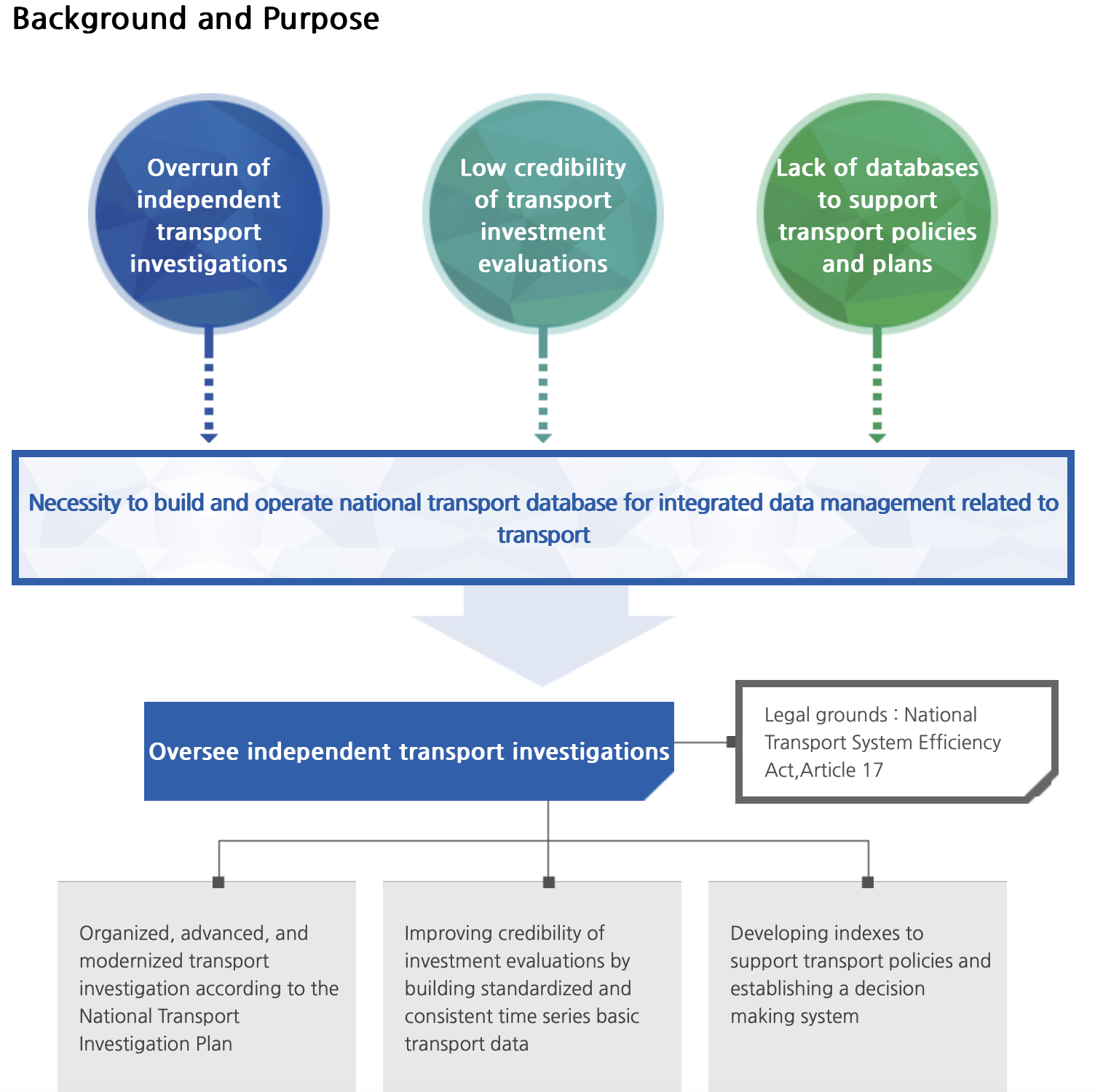
Background and Purposes for National Transport Data Base (Source: Korea Transport DataBase)

By the late 1990s, Korea was pursuing an aggressive expansion of its transport infrastructure. However, this rapid development raised serious concerns about potential over-investment, as the underlying systems for evaluation and analysis had not kept pace. The government found itself grappling with a deterioration of policy reliability due to the absence of fundamental data needed for effective decision-making. This deficiency was particularly acute when attempting to formulate complex policies related to inter-modalism, sustainable transport, and the prevention of redundant investments between different modes of transit. Without a standardized, systematic collection of preliminary data, policy objectives were difficult to set, and their outcomes were even harder to measure.
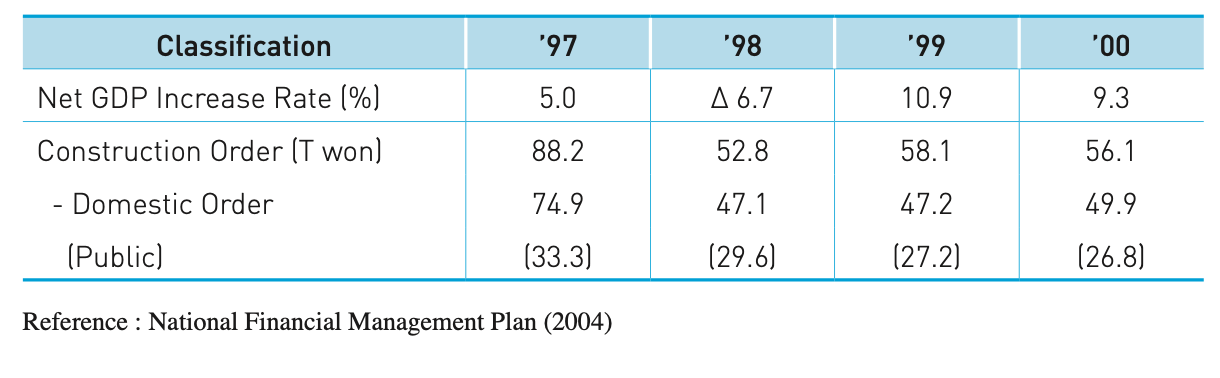
Economic Situation before and after IMF Foreign Exchange Crisis (Source: Kim & Park, 2012, p.19)

The consequences of this data deficiency were felt directly in transport price policy and infrastructure investment. The government struggled with the underpricing of transport infrastructure use, as critical external costs like congestion and accidents were not being statistically measured or factored into planning. Furthermore, while there was growing recognition of the need to evaluate the efficiency of large-scale projects, the basic data required for such analysis—including origin-destination (O/D) transport volumes and network statistics—was inconsistent and unreliable. Individual projects relied on one-off surveys that were conducted using different methods at different times, making it impossible to build a continuous, nationwide time-series of data.

Trend of Congestion Fee and National Distribution Cost (Source: Kim & Park, 2012, p.19)

The government diagnosed that despite making tremendous investments in transport infrastructure, it was suffering from inefficient investment due to the lack of fundamental data required for the validity and effect analysis of its policies and projects. Faced with these mounting challenges, the government recognized the urgent need for a decisive legislative and administrative response to build a unified data framework.

Laying Legal Foundation and Institutional Framework

Establishing a strong legal and institutional basis is the crucial first step in ensuring the success, continuity, and authority of a major national project. In a demonstration of strategic foresight, the Korean government established the necessary legal framework years before the full-scale database project was launched, creating a durable foundation that would later guide the initiative.

Well ahead of the project's launch, the government legislated the Transport System Efficiency Act in February 1992 and enforced it in August of that year. This proactive measure provided the legal basis to continuously conduct transport surveys and develop a database. When the data-related challenges of the late 1990s became critical, this pre-existing legislation enabled the government to formally initiate the national transport database project, starting with a public employment project in 1998 and launching at the central government level in 1999. The government elucidated the National Transport Demand Survey and DB Construction Project in the "Integrated Transport System Efficiency Act," the law of highest authority in transport. This act mandated the use of the database for evaluating investment projects, cementing its role in the national planning process. With the legal mandate in place, a clear institutional structure was established to execute the project. This collaborative framework involved key organizations at the national and local levels. The central government’s Ministry of Land, Infrastructure and Transport (formerly the Ministry of Land, Transport, and Maritime Affairs) was tasked with leading the project. The Korea Transport Institute, a government agency with specialized expertise, was appointed to handle the technical and operational duties. Finally, local governments across the country were integrated into the structure to ensure comprehensive data collection and implementation.

Collaborative Roles of Key Stakeholders

In complex, multi-agency government initiatives, success hinges on clearly defined roles and responsibilities. The architecture of Korea's National Transport DB project is a model of such clarity, assigning specific duties to the central government, municipal governments, and a designated substitute agency. This division of labor created a cohesive and efficient system for nationwide implementation.

Source: Kim & Park, 2012, p.19

The Central Government, represented by the Ministry of Land, Transport, and Maritime Affairs, serves as the project's strategic leader. Its primary duties include establishing the overall project plan, including annual implementation plans and medium-term five-year designs. The Ministry is also responsible for securing the total project cost through government funding and managing the National Transport DB Council, a legal consultative body that facilitates collaboration among central, local, and interagency stakeholders. Furthermore, it supervises an inspection team of external experts to oversee the project's execution and issues official transport survey guidelines to ensure objectivity and unity in data collection across the nation. Municipal Governments play an essential and collaborative role, particularly in the execution of nationwide surveys. Their administrative power is indispensable for tasks like the passenger transport survey, which requires visiting and interviewing individual households across every region. They also provide crucial cooperation when on-the-ground surveys require occupying parts of transport infrastructure. From the planning stage onward, municipal governments work with the central government to ensure smooth execution and also follow a formal consultation procedure for any individual transport surveys they wish to conduct.

To ensure technical excellence and operational efficiency, the government appointed a Substitute Agency to handle the core functions of the project. The Korea Transport Institute, a government-supported research institute, takes full charge of and substitutes the national transport survey and DB construction duties on behalf of the Ministry of Land, Transport, and Maritime Affairs. Its comprehensive responsibilities include establishing detailed annual survey plans, analyzing results, and implementing and managing the DB's hardware and software. The institute is also tasked with constantly improving the data supply system, analyzing user demand, handling the practical work of the DB council, and assisting with inspection tasks, making it the technical and administrative engine of the entire initiative. With this well-defined operational structure in place, the project was positioned to deliver tangible outcomes and benefits for the nation.

The Impact and Utilization of the National Transport Database

The ultimate measure of a public data project's success lies in its real-world application and impact. Korea’s National Transport DB has proven its value by becoming an indispensable tool for a wide range of users, from national policymakers to academic researchers and the general public. This section explores the diverse ways the database is used and the significant benefits it has generated for the country. The National Transport DB serves as foundational preliminary data for a variety of critical sectors. For central and municipal governments, it is essential for the effective establishment and execution of transport-related policies and plans. For industry, academia, and research institutes, it provides a rich source of data for analysis and innovation. The system also enhances public information accessibility, with GIS-T data, statistics, and other information propagated to the general public via the internet, allowing citizens to procure and utilize necessary data.
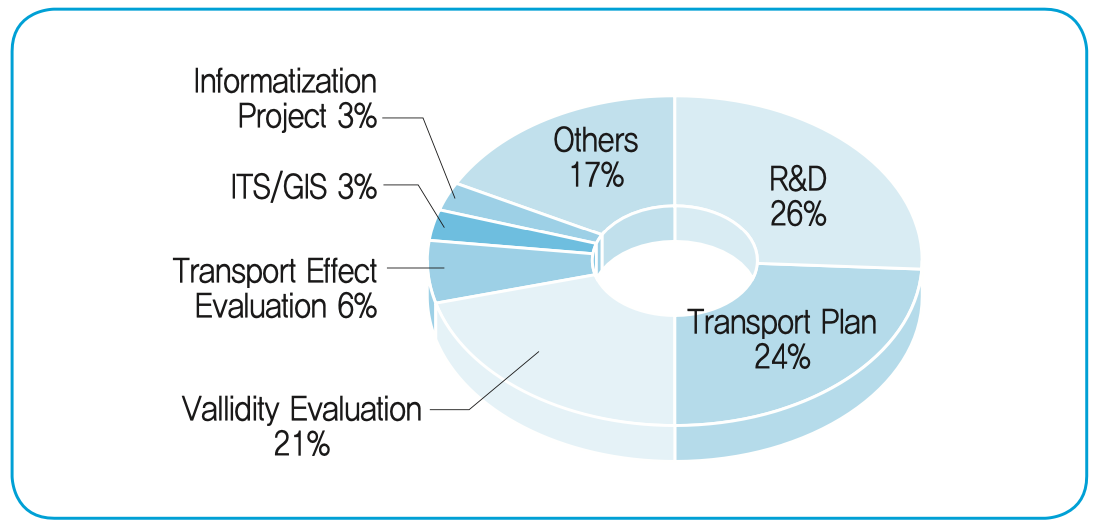
National Transport DB Utilization Objective Analysis (Source: Kim & Park, 2012, p.60)

The database delivers specific economic and efficiency benefits. By providing standardized, ready-to-use survey data, it allows government bodies to save significant costs on individual projects, such as national backbone transport network plans and infrastructure validity studies, by cutting the budget for redundant survey and analysis tasks. The enhanced reliability of this standardized data also makes it possible to establish more effective transport policies aimed at reducing national transport congestion and distribution fees. The evaluation of transport facility investment plans is the largest area of demand, with the DB being utilized in a vast number of validity analyses and extending into diverse fields like public transport management and accident management systems.
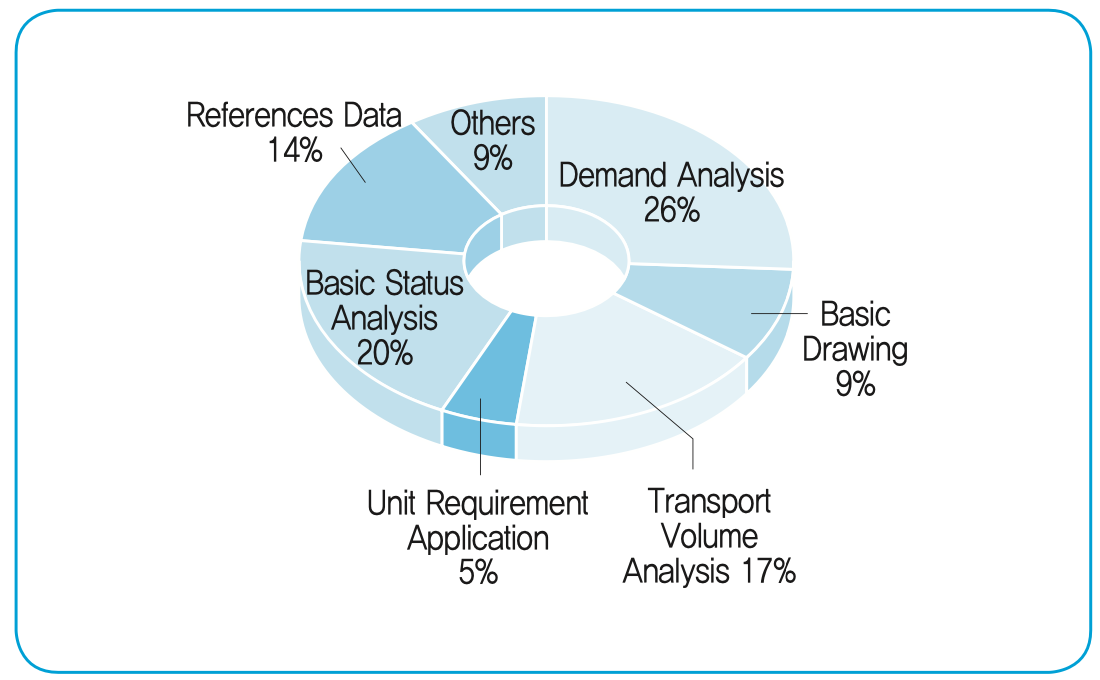
Analysis of National Transport DB Utilization Methods (Source: Kim & Park, 2012, p.60)

Over time, the system for providing data has evolved significantly. After starting its external service for public utilization in April 2001, data was initially offered through online provision or direct, detailed requests, which involved a complicated application process. To reduce civil complaints and extend the shared use of the transport DB, the data provision system was improved as part of a 2009 project and is now managed on the project website to fulfill direct data application and reception. This improved website not only simplifies access but also provides a wealth of additional resources, including transport statistics, literature, and online basic analysis functions to enhance user convenience. The widespread impact and utilization of the database are a direct result of the project's strong foundational principles and sustained government support, which have ensured its long-term success.

Utilization of National Transport DB in Yearly Validity Analysis (Source: Kim & Park, 2012, p.59)

Lasting Contributions and Key Takeaways

Over more than a decade of development, Korea’s National Transport DB project has successfully established itself as a reliable cornerstone of the nation's advanced transport sector. Its steady progress and expanding influence are not accidental but are the result of a clear strategic vision, strong legal and institutional support, and a sustained commitment from all stakeholders.

The project's enduring success can be attributed to several key factors. Foremost among them was the government's active endeavor and unwavering will to address the pre-existing data deficiencies. This commitment was translated into concrete action through the establishment of clear five-year plans that guided the DB's development from its foundational stages to later phases focused on improving data reliability. Critically, the government also secured the necessary budget through national informatization programs, ensuring the project had the resources to thrive. Systematic endeavors—including survey implementation from the planning stage, legal and administrative support, the appointment of a specialized agency, and a commitment to cooperative use through data release—are the key gears that prepared the foundation for the database's constant development.

The project has made two significant and lasting contributions to Korea's national development. First, it established a comprehensive collection system for fundamental transport statistics. By performing numerous regular and unscheduled surveys over many years, it created a foundational basis of data on passenger and freight characteristics. This system proved adaptable, later incorporating green indices to respond to new policy priorities around energy and the environment. Second, the project created a reasonable and reliable evaluation basis for transport policy. By providing essential data for pre- and post-evaluations of infrastructure investments, it has greatly enhanced the validity of these assessments and fostered a culture of evidence-based research and analysis in both the public and private sectors.

Author
Chan Sung Kim
The Korea Transport Institute
cite this work

Building Data-Driven Transport System & Investment: Korea’s National Transport Database (DB)

K-Dev Original
April 3, 2026
This is some text inside of a div block.

Summary

The establishment of Korea's National Transport Database (DB) was initiated to address concerns about inefficient transport infrastructure investment. This inefficiency stemmed from a lack of fundamental transport-related data needed for validity analysis. The project was formalized by the Integrated Transport System Efficiency Act led by a central government ministry, the Ministry of Land, Infrastructure and Transport. The Korea Transport Institute acts as the government’s substitute agency. The project also requires cooperation with municipal governments. This national effort aims to arrange a basis for utilizing the DB for the evaluation of investment projects. It works to establish a systematic foundation for fundamental transport statistics. The primary objective is to provide data required for policy evaluation and planning. This ultimately enhances the validity and efficiency of transport investment decisions. The ongoing initiative involves conducting continuous surveys and research analysis. The national transport DB is publicly released for external utilization. This data is accessible for use by the government, academia, industry, and general citizens.

Key Questions

  • What specific quantitative improvements have been documented in the validity analysis of transport infrastructure investment projects since the standardized DB was implemented?
  • How has the established national transport DB been specifically leveraged to collect, manage, and apply these external cost statistics in subsequent large-scale transport infrastructure investment evaluations?
  • What specific legal or procedural safeguards are used to guarantee periodic continuity and consistent adherence to standardized survey guidelines across all collaborating entities?

Tags #national transport database #transport investment #transport policy #data

The Foundation of Modern Infrastructure Planning

Across the globe, nations are increasingly implementing national transport surveys and databases to ensure that massive investments in infrastructure are effective and that public policies are built on a solid evidence base. These data-driven systems are critical for steering economic development and enhancing quality of life. The case of the Republic of Korea stands as a significant example for other government-driven development projects, offering a compelling model for how a nation can transition to a more strategic and efficient approach to infrastructure planning. Launched with the goal of preventing redundant surveys and prioritizing investments with reliable data, Korea's initiative provides invaluable lessons for countries facing similar challenges. To fully appreciate this achievement, it is essential to first understand the critical data gaps and policy concerns that Korea faced before this transformative project began.

Why Did Korea Need a Centralized Transport Database?

To understand the strategic value of any large-scale government project, one must first examine the problems it was designed to solve. In the case of Korea’s National Transport Database (DB), the initiative was not a mere technical upgrade but a direct response to a series of escalating data gaps and policy challenges that threatened the efficiency and reliability of the nation’s infrastructure development. This section explores the critical circumstances that drove Korea to action.

Background and Purposes for National Transport Data Base (Source: Korea Transport DataBase)

By the late 1990s, Korea was pursuing an aggressive expansion of its transport infrastructure. However, this rapid development raised serious concerns about potential over-investment, as the underlying systems for evaluation and analysis had not kept pace. The government found itself grappling with a deterioration of policy reliability due to the absence of fundamental data needed for effective decision-making. This deficiency was particularly acute when attempting to formulate complex policies related to inter-modalism, sustainable transport, and the prevention of redundant investments between different modes of transit. Without a standardized, systematic collection of preliminary data, policy objectives were difficult to set, and their outcomes were even harder to measure.

Economic Situation before and after IMF Foreign Exchange Crisis (Source: Kim & Park, 2012, p.19)

The consequences of this data deficiency were felt directly in transport price policy and infrastructure investment. The government struggled with the underpricing of transport infrastructure use, as critical external costs like congestion and accidents were not being statistically measured or factored into planning. Furthermore, while there was growing recognition of the need to evaluate the efficiency of large-scale projects, the basic data required for such analysis—including origin-destination (O/D) transport volumes and network statistics—was inconsistent and unreliable. Individual projects relied on one-off surveys that were conducted using different methods at different times, making it impossible to build a continuous, nationwide time-series of data.

Trend of Congestion Fee and National Distribution Cost (Source: Kim & Park, 2012, p.19)

The government diagnosed that despite making tremendous investments in transport infrastructure, it was suffering from inefficient investment due to the lack of fundamental data required for the validity and effect analysis of its policies and projects. Faced with these mounting challenges, the government recognized the urgent need for a decisive legislative and administrative response to build a unified data framework.

Laying Legal Foundation and Institutional Framework

Establishing a strong legal and institutional basis is the crucial first step in ensuring the success, continuity, and authority of a major national project. In a demonstration of strategic foresight, the Korean government established the necessary legal framework years before the full-scale database project was launched, creating a durable foundation that would later guide the initiative.

Well ahead of the project's launch, the government legislated the Transport System Efficiency Act in February 1992 and enforced it in August of that year. This proactive measure provided the legal basis to continuously conduct transport surveys and develop a database. When the data-related challenges of the late 1990s became critical, this pre-existing legislation enabled the government to formally initiate the national transport database project, starting with a public employment project in 1998 and launching at the central government level in 1999. The government elucidated the National Transport Demand Survey and DB Construction Project in the "Integrated Transport System Efficiency Act," the law of highest authority in transport. This act mandated the use of the database for evaluating investment projects, cementing its role in the national planning process. With the legal mandate in place, a clear institutional structure was established to execute the project. This collaborative framework involved key organizations at the national and local levels. The central government’s Ministry of Land, Infrastructure and Transport (formerly the Ministry of Land, Transport, and Maritime Affairs) was tasked with leading the project. The Korea Transport Institute, a government agency with specialized expertise, was appointed to handle the technical and operational duties. Finally, local governments across the country were integrated into the structure to ensure comprehensive data collection and implementation.

Collaborative Roles of Key Stakeholders

In complex, multi-agency government initiatives, success hinges on clearly defined roles and responsibilities. The architecture of Korea's National Transport DB project is a model of such clarity, assigning specific duties to the central government, municipal governments, and a designated substitute agency. This division of labor created a cohesive and efficient system for nationwide implementation.

Source: Kim & Park, 2012, p.19

The Central Government, represented by the Ministry of Land, Transport, and Maritime Affairs, serves as the project's strategic leader. Its primary duties include establishing the overall project plan, including annual implementation plans and medium-term five-year designs. The Ministry is also responsible for securing the total project cost through government funding and managing the National Transport DB Council, a legal consultative body that facilitates collaboration among central, local, and interagency stakeholders. Furthermore, it supervises an inspection team of external experts to oversee the project's execution and issues official transport survey guidelines to ensure objectivity and unity in data collection across the nation. Municipal Governments play an essential and collaborative role, particularly in the execution of nationwide surveys. Their administrative power is indispensable for tasks like the passenger transport survey, which requires visiting and interviewing individual households across every region. They also provide crucial cooperation when on-the-ground surveys require occupying parts of transport infrastructure. From the planning stage onward, municipal governments work with the central government to ensure smooth execution and also follow a formal consultation procedure for any individual transport surveys they wish to conduct.

To ensure technical excellence and operational efficiency, the government appointed a Substitute Agency to handle the core functions of the project. The Korea Transport Institute, a government-supported research institute, takes full charge of and substitutes the national transport survey and DB construction duties on behalf of the Ministry of Land, Transport, and Maritime Affairs. Its comprehensive responsibilities include establishing detailed annual survey plans, analyzing results, and implementing and managing the DB's hardware and software. The institute is also tasked with constantly improving the data supply system, analyzing user demand, handling the practical work of the DB council, and assisting with inspection tasks, making it the technical and administrative engine of the entire initiative. With this well-defined operational structure in place, the project was positioned to deliver tangible outcomes and benefits for the nation.

The Impact and Utilization of the National Transport Database

The ultimate measure of a public data project's success lies in its real-world application and impact. Korea’s National Transport DB has proven its value by becoming an indispensable tool for a wide range of users, from national policymakers to academic researchers and the general public. This section explores the diverse ways the database is used and the significant benefits it has generated for the country. The National Transport DB serves as foundational preliminary data for a variety of critical sectors. For central and municipal governments, it is essential for the effective establishment and execution of transport-related policies and plans. For industry, academia, and research institutes, it provides a rich source of data for analysis and innovation. The system also enhances public information accessibility, with GIS-T data, statistics, and other information propagated to the general public via the internet, allowing citizens to procure and utilize necessary data.

National Transport DB Utilization Objective Analysis (Source: Kim & Park, 2012, p.60)

The database delivers specific economic and efficiency benefits. By providing standardized, ready-to-use survey data, it allows government bodies to save significant costs on individual projects, such as national backbone transport network plans and infrastructure validity studies, by cutting the budget for redundant survey and analysis tasks. The enhanced reliability of this standardized data also makes it possible to establish more effective transport policies aimed at reducing national transport congestion and distribution fees. The evaluation of transport facility investment plans is the largest area of demand, with the DB being utilized in a vast number of validity analyses and extending into diverse fields like public transport management and accident management systems.

Analysis of National Transport DB Utilization Methods (Source: Kim & Park, 2012, p.60)

Over time, the system for providing data has evolved significantly. After starting its external service for public utilization in April 2001, data was initially offered through online provision or direct, detailed requests, which involved a complicated application process. To reduce civil complaints and extend the shared use of the transport DB, the data provision system was improved as part of a 2009 project and is now managed on the project website to fulfill direct data application and reception. This improved website not only simplifies access but also provides a wealth of additional resources, including transport statistics, literature, and online basic analysis functions to enhance user convenience. The widespread impact and utilization of the database are a direct result of the project's strong foundational principles and sustained government support, which have ensured its long-term success.

Utilization of National Transport DB in Yearly Validity Analysis (Source: Kim & Park, 2012, p.59)

Lasting Contributions and Key Takeaways

Over more than a decade of development, Korea’s National Transport DB project has successfully established itself as a reliable cornerstone of the nation's advanced transport sector. Its steady progress and expanding influence are not accidental but are the result of a clear strategic vision, strong legal and institutional support, and a sustained commitment from all stakeholders.

The project's enduring success can be attributed to several key factors. Foremost among them was the government's active endeavor and unwavering will to address the pre-existing data deficiencies. This commitment was translated into concrete action through the establishment of clear five-year plans that guided the DB's development from its foundational stages to later phases focused on improving data reliability. Critically, the government also secured the necessary budget through national informatization programs, ensuring the project had the resources to thrive. Systematic endeavors—including survey implementation from the planning stage, legal and administrative support, the appointment of a specialized agency, and a commitment to cooperative use through data release—are the key gears that prepared the foundation for the database's constant development.

The project has made two significant and lasting contributions to Korea's national development. First, it established a comprehensive collection system for fundamental transport statistics. By performing numerous regular and unscheduled surveys over many years, it created a foundational basis of data on passenger and freight characteristics. This system proved adaptable, later incorporating green indices to respond to new policy priorities around energy and the environment. Second, the project created a reasonable and reliable evaluation basis for transport policy. By providing essential data for pre- and post-evaluations of infrastructure investments, it has greatly enhanced the validity of these assessments and fostered a culture of evidence-based research and analysis in both the public and private sectors.

References
Cite this work
.

More to explore from
In Perspective

Building Data-Driven Transport System & Investment: Korea’s National Transport Database (DB)

K-Dev Original
April 3, 2026

I am the text that will be copied.

The Foundation of Modern Infrastructure Planning

Across the globe, nations are increasingly implementing national transport surveys and databases to ensure that massive investments in infrastructure are effective and that public policies are built on a solid evidence base. These data-driven systems are critical for steering economic development and enhancing quality of life. The case of the Republic of Korea stands as a significant example for other government-driven development projects, offering a compelling model for how a nation can transition to a more strategic and efficient approach to infrastructure planning. Launched with the goal of preventing redundant surveys and prioritizing investments with reliable data, Korea's initiative provides invaluable lessons for countries facing similar challenges. To fully appreciate this achievement, it is essential to first understand the critical data gaps and policy concerns that Korea faced before this transformative project began.

Why Did Korea Need a Centralized Transport Database?

To understand the strategic value of any large-scale government project, one must first examine the problems it was designed to solve. In the case of Korea’s National Transport Database (DB), the initiative was not a mere technical upgrade but a direct response to a series of escalating data gaps and policy challenges that threatened the efficiency and reliability of the nation’s infrastructure development. This section explores the critical circumstances that drove Korea to action.

Background and Purposes for National Transport Data Base (Source: Korea Transport DataBase)

By the late 1990s, Korea was pursuing an aggressive expansion of its transport infrastructure. However, this rapid development raised serious concerns about potential over-investment, as the underlying systems for evaluation and analysis had not kept pace. The government found itself grappling with a deterioration of policy reliability due to the absence of fundamental data needed for effective decision-making. This deficiency was particularly acute when attempting to formulate complex policies related to inter-modalism, sustainable transport, and the prevention of redundant investments between different modes of transit. Without a standardized, systematic collection of preliminary data, policy objectives were difficult to set, and their outcomes were even harder to measure.

Economic Situation before and after IMF Foreign Exchange Crisis (Source: Kim & Park, 2012, p.19)

The consequences of this data deficiency were felt directly in transport price policy and infrastructure investment. The government struggled with the underpricing of transport infrastructure use, as critical external costs like congestion and accidents were not being statistically measured or factored into planning. Furthermore, while there was growing recognition of the need to evaluate the efficiency of large-scale projects, the basic data required for such analysis—including origin-destination (O/D) transport volumes and network statistics—was inconsistent and unreliable. Individual projects relied on one-off surveys that were conducted using different methods at different times, making it impossible to build a continuous, nationwide time-series of data.

Trend of Congestion Fee and National Distribution Cost (Source: Kim & Park, 2012, p.19)

The government diagnosed that despite making tremendous investments in transport infrastructure, it was suffering from inefficient investment due to the lack of fundamental data required for the validity and effect analysis of its policies and projects. Faced with these mounting challenges, the government recognized the urgent need for a decisive legislative and administrative response to build a unified data framework.

Laying Legal Foundation and Institutional Framework

Establishing a strong legal and institutional basis is the crucial first step in ensuring the success, continuity, and authority of a major national project. In a demonstration of strategic foresight, the Korean government established the necessary legal framework years before the full-scale database project was launched, creating a durable foundation that would later guide the initiative.

Well ahead of the project's launch, the government legislated the Transport System Efficiency Act in February 1992 and enforced it in August of that year. This proactive measure provided the legal basis to continuously conduct transport surveys and develop a database. When the data-related challenges of the late 1990s became critical, this pre-existing legislation enabled the government to formally initiate the national transport database project, starting with a public employment project in 1998 and launching at the central government level in 1999. The government elucidated the National Transport Demand Survey and DB Construction Project in the "Integrated Transport System Efficiency Act," the law of highest authority in transport. This act mandated the use of the database for evaluating investment projects, cementing its role in the national planning process. With the legal mandate in place, a clear institutional structure was established to execute the project. This collaborative framework involved key organizations at the national and local levels. The central government’s Ministry of Land, Infrastructure and Transport (formerly the Ministry of Land, Transport, and Maritime Affairs) was tasked with leading the project. The Korea Transport Institute, a government agency with specialized expertise, was appointed to handle the technical and operational duties. Finally, local governments across the country were integrated into the structure to ensure comprehensive data collection and implementation.

Collaborative Roles of Key Stakeholders

In complex, multi-agency government initiatives, success hinges on clearly defined roles and responsibilities. The architecture of Korea's National Transport DB project is a model of such clarity, assigning specific duties to the central government, municipal governments, and a designated substitute agency. This division of labor created a cohesive and efficient system for nationwide implementation.

Source: Kim & Park, 2012, p.19

The Central Government, represented by the Ministry of Land, Transport, and Maritime Affairs, serves as the project's strategic leader. Its primary duties include establishing the overall project plan, including annual implementation plans and medium-term five-year designs. The Ministry is also responsible for securing the total project cost through government funding and managing the National Transport DB Council, a legal consultative body that facilitates collaboration among central, local, and interagency stakeholders. Furthermore, it supervises an inspection team of external experts to oversee the project's execution and issues official transport survey guidelines to ensure objectivity and unity in data collection across the nation. Municipal Governments play an essential and collaborative role, particularly in the execution of nationwide surveys. Their administrative power is indispensable for tasks like the passenger transport survey, which requires visiting and interviewing individual households across every region. They also provide crucial cooperation when on-the-ground surveys require occupying parts of transport infrastructure. From the planning stage onward, municipal governments work with the central government to ensure smooth execution and also follow a formal consultation procedure for any individual transport surveys they wish to conduct.

To ensure technical excellence and operational efficiency, the government appointed a Substitute Agency to handle the core functions of the project. The Korea Transport Institute, a government-supported research institute, takes full charge of and substitutes the national transport survey and DB construction duties on behalf of the Ministry of Land, Transport, and Maritime Affairs. Its comprehensive responsibilities include establishing detailed annual survey plans, analyzing results, and implementing and managing the DB's hardware and software. The institute is also tasked with constantly improving the data supply system, analyzing user demand, handling the practical work of the DB council, and assisting with inspection tasks, making it the technical and administrative engine of the entire initiative. With this well-defined operational structure in place, the project was positioned to deliver tangible outcomes and benefits for the nation.

The Impact and Utilization of the National Transport Database

The ultimate measure of a public data project's success lies in its real-world application and impact. Korea’s National Transport DB has proven its value by becoming an indispensable tool for a wide range of users, from national policymakers to academic researchers and the general public. This section explores the diverse ways the database is used and the significant benefits it has generated for the country. The National Transport DB serves as foundational preliminary data for a variety of critical sectors. For central and municipal governments, it is essential for the effective establishment and execution of transport-related policies and plans. For industry, academia, and research institutes, it provides a rich source of data for analysis and innovation. The system also enhances public information accessibility, with GIS-T data, statistics, and other information propagated to the general public via the internet, allowing citizens to procure and utilize necessary data.

National Transport DB Utilization Objective Analysis (Source: Kim & Park, 2012, p.60)

The database delivers specific economic and efficiency benefits. By providing standardized, ready-to-use survey data, it allows government bodies to save significant costs on individual projects, such as national backbone transport network plans and infrastructure validity studies, by cutting the budget for redundant survey and analysis tasks. The enhanced reliability of this standardized data also makes it possible to establish more effective transport policies aimed at reducing national transport congestion and distribution fees. The evaluation of transport facility investment plans is the largest area of demand, with the DB being utilized in a vast number of validity analyses and extending into diverse fields like public transport management and accident management systems.

Analysis of National Transport DB Utilization Methods (Source: Kim & Park, 2012, p.60)

Over time, the system for providing data has evolved significantly. After starting its external service for public utilization in April 2001, data was initially offered through online provision or direct, detailed requests, which involved a complicated application process. To reduce civil complaints and extend the shared use of the transport DB, the data provision system was improved as part of a 2009 project and is now managed on the project website to fulfill direct data application and reception. This improved website not only simplifies access but also provides a wealth of additional resources, including transport statistics, literature, and online basic analysis functions to enhance user convenience. The widespread impact and utilization of the database are a direct result of the project's strong foundational principles and sustained government support, which have ensured its long-term success.

Utilization of National Transport DB in Yearly Validity Analysis (Source: Kim & Park, 2012, p.59)

Lasting Contributions and Key Takeaways

Over more than a decade of development, Korea’s National Transport DB project has successfully established itself as a reliable cornerstone of the nation's advanced transport sector. Its steady progress and expanding influence are not accidental but are the result of a clear strategic vision, strong legal and institutional support, and a sustained commitment from all stakeholders.

The project's enduring success can be attributed to several key factors. Foremost among them was the government's active endeavor and unwavering will to address the pre-existing data deficiencies. This commitment was translated into concrete action through the establishment of clear five-year plans that guided the DB's development from its foundational stages to later phases focused on improving data reliability. Critically, the government also secured the necessary budget through national informatization programs, ensuring the project had the resources to thrive. Systematic endeavors—including survey implementation from the planning stage, legal and administrative support, the appointment of a specialized agency, and a commitment to cooperative use through data release—are the key gears that prepared the foundation for the database's constant development.

The project has made two significant and lasting contributions to Korea's national development. First, it established a comprehensive collection system for fundamental transport statistics. By performing numerous regular and unscheduled surveys over many years, it created a foundational basis of data on passenger and freight characteristics. This system proved adaptable, later incorporating green indices to respond to new policy priorities around energy and the environment. Second, the project created a reasonable and reliable evaluation basis for transport policy. By providing essential data for pre- and post-evaluations of infrastructure investments, it has greatly enhanced the validity of these assessments and fostered a culture of evidence-based research and analysis in both the public and private sectors.

References
Cite this work
.

More to explore from
In Perspective