

Korea had pushed through evolution and subsequent major reform of urban transportation, specifically public bus services and especially in Seoul. Historically, Korea prioritized infrastructure restoration and expansion following the Korean War, but the rise of car ownership and resulting traffic congestion eventually necessitated major changes to enhance the efficiency and competitiveness of public transit. The core of the reform involved transitioning from a private to a semi-public bus operation system, which granted the Seoul Metropolitan Government greater control over routes, while still utilizing private management. Key infrastructural and technological improvements were introduced, including exclusive median bus lanes and the Bus Management System (BMS), alongside fare policy changes such as integrated distance-based fares and transfer discounts, all aimed at improving service quality, punctuality, and passenger satisfaction. These reforms collectively sought to reverse the decline in bus ridership and establish buses as a reliable and competitive mode of urban transport.
Tags #bus #public transport #reform #semi public bus operation system
.png)
Korea's post-war urban transport narrative was one of rapid, reactive expansion, initially focused on trams and buses before shifting to a massive build-out of its urban railway network. By the 1980s and 90s, as car ownership became the norm, intensifying traffic congestion became a central policy challenge.
.png)
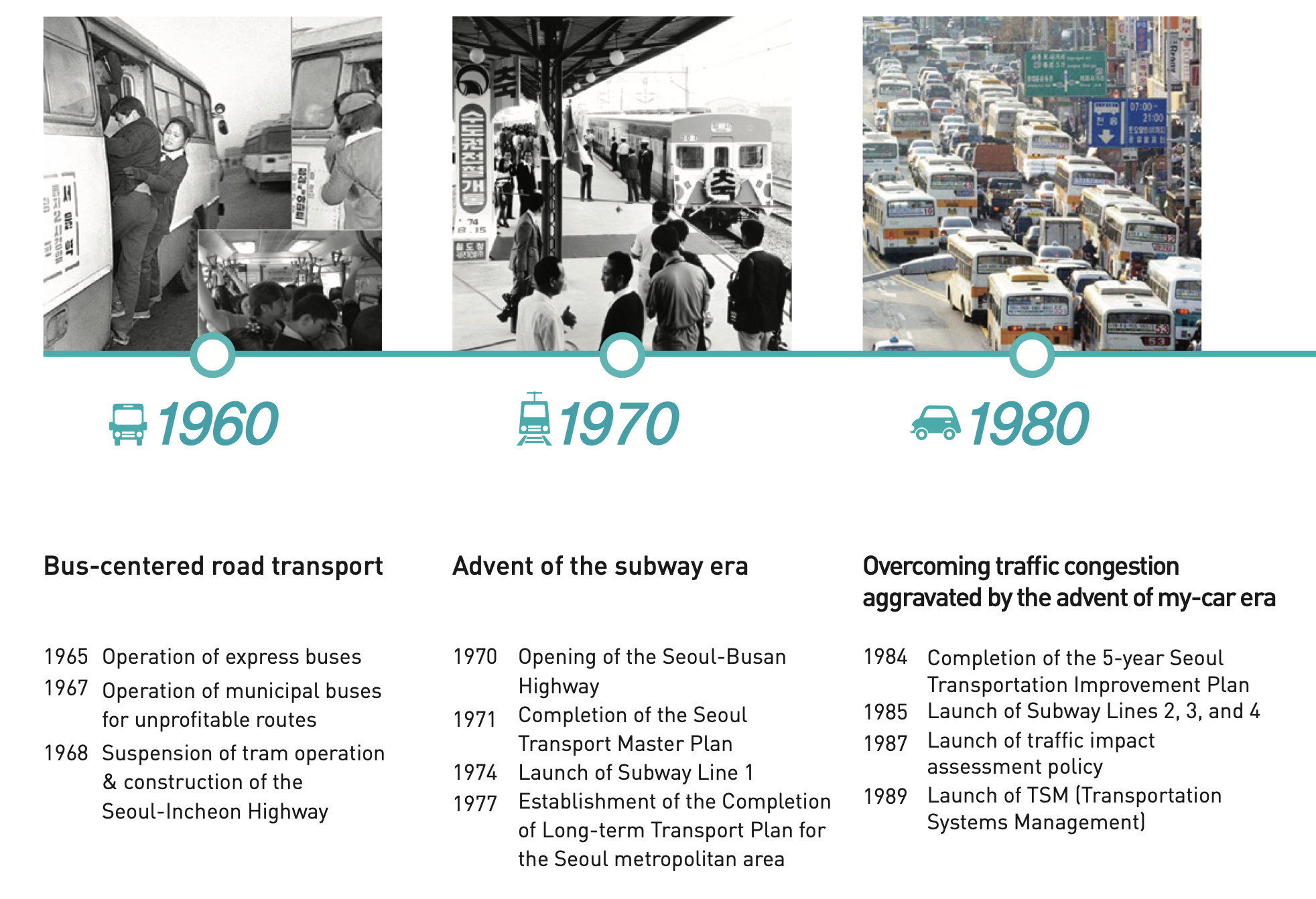
However, this focus on railway expansion and road construction came at a cost. By the early 2000s, the city's bus system, once the most popular mode of transport, saw its competitiveness weaken significantly. The resulting drop in passengers plunged the private bus industry into a structural recession, creating a system that satisfied neither the struggling operators nor the frustrated consumers. This crisis demanded a bold, bus-centered reform of the public transportation system to reclaim the streets for the public good.
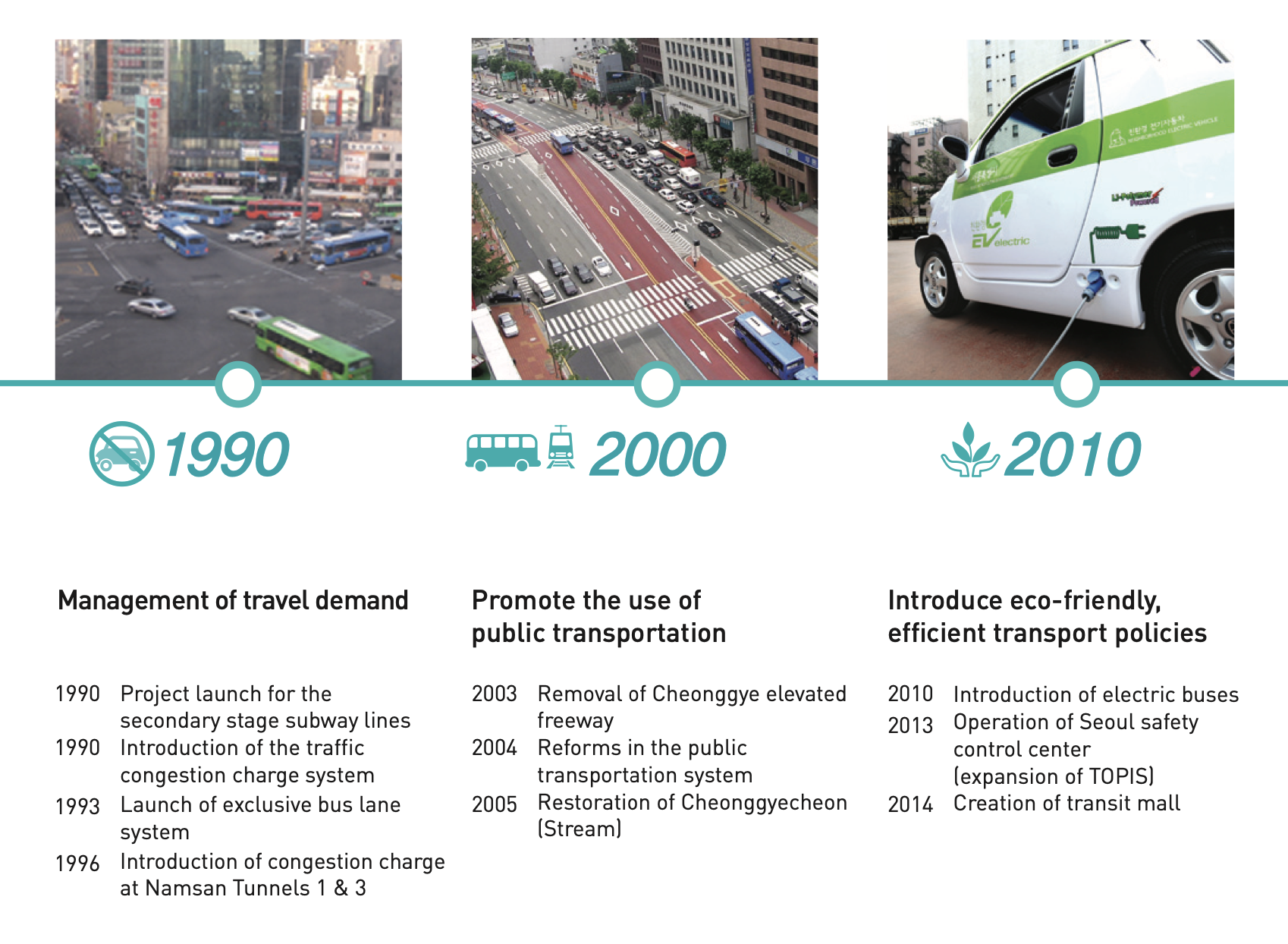
At the heart of Seoul's transportation crisis was an operational model that prioritized private profit over public convenience. To fundamentally revitalize the bus system, the city recognized the need for a strategic shift in philosophy, moving away from a purely private system toward a semi-public model that placed citizens' needs first.
The previous private operation system was plagued by chronic failures rooted in its profit-making preoccupation. Bus companies insisted on providing services along inefficient, unnecessarily long, and convoluted routes. This profit-driven model created a patchwork of redundant, over-served corridors while actively alienating other regions from the benefits of public transport. This practice not only fueled public dissatisfaction and eroded ridership but also ultimately undermined the financial viability of the bus companies themselves by compromising efficiency.
As a solution, Seoul implemented the semi-public operation system, a model built on three guiding principles:
To navigate the politically difficult negotiations this shift required, the city established the Citizens Committee for Bus Reform (CCBR). This body served as the primary engine for forging a crucial society-wide consensus, bringing together civil society representatives, researchers, and the bus industry to coordinate public-private interests and ensure the reforms were viable.
The adoption of the semi-public system yielded significant results, rectifying chronic problems like the inequitable distribution of bus services. While it placed new constraints on the management autonomy of private companies—forcing them to focus on cost minimization rather than chasing profits through inefficient routes—the model proved highly effective. This new operational framework, however, required the city to physically reshape its urban landscape to be fully realized.
Seoul Metropolitan Government reviewed the redundancy and competition of bus routes and services in five zones of the city, excluding the downtown areas, and encouraged existing bus companies to come together and launch a consortium for the operation of trunk buses.
Final agreement with Seoul Metropolitan Government was reached on February 4, 2004 [Terms of Agreement].
Reforming the operational model was a critical first step, but it was insufficient on its own. To make buses a truly competitive and attractive mode of transport, Seoul needed to physically reshape the urban landscape and overhaul its financial structures. These foundational investments were essential to reflect the city’s new public-service philosophy by improving the speed, reliability, and affordability of the bus system for everyday passengers.
The core problem crippling the bus system was the explosive growth in car ownership, which led to intense traffic congestion that slowed buses and made their schedules unpredictable. Initial attempts to introduce exclusive bus lanes along the roadside proved significantly less effective at ensuring speed and punctuality. In response, the city shifted its focus to developing exclusive median bus lanes, moving buses away from the chaotic curb and into the center of the road.
.png)


The implementation was not without challenges. When the first lanes opened in 2004, the large number of buses converging on them created a "train bus" congestion problem, particularly on the major thoroughfare of Gangnam-daero. Planners rectified this by rerouting some regional and feeder buses to roadside stops. As citizens grew more familiar with the new system, congestion cleared, and the benefits became apparent, leading to active public support for the reform.
The tangible effects were transformative. The median bus lanes dramatically improved the pace and punctuality of bus services, allowing passengers to predict arrival times with a new level of accuracy. The system became so reliable that the headway between buses was reduced to about two minutes at most, making them nearly as dependable as the subway, a success confirmed by data showing an increase in bus speeds of 31.74 percent and a rise in passenger numbers along these lanes of 26.8 percent.

The pre-reform fare system was deeply inequitable. Subway passengers enjoyed transfer discounts, but bus riders did not. A passenger traveling a short distance on two different buses could pay nearly double the fare of someone traveling a long distance on a single bus. To address this, Seoul implemented the Integrated Fare System for Public Transportation (IFSPT).
The IFSPT was built on two pillars: 1) integrated distance-based fare rates applicable to both buses and subways, and 2) a fixed rate for buses traveling into the city from surrounding areas. This new policy ensured that passengers were charged fairly based on the total distance of their journey, regardless of the number of transfers.
The IFSPT applies to all modes of public transportation in Seoul.
Fare formula = basic fare + additional unit fare (travel distance – basic fare distance) / additional distance unit
In order to ensure that long-distance travelers are charged reasonable public transportation fares, Seoul City applies a fixed fare rate for travel distances of 40 kilometers or more. Also, the basic fare rates are differentiated by mode of transportation so as to reflect the differences in the quality and value of services provided by different modes. Both buses and subways inside Seoul apply the fare formula described above. Passengers traveling by bus only benefit from the flat fare system applied to buses traveling into and out of the city.
Seoul has extended the distance-based fare system to apply to all subway zones inside the city’s limits, thereby applying the basic rate to the basic distance of 10 kilometers and charging extra fares on every five additional kilometers of travel. Buses likewise adopted the same system of distance-based fares, charging the basic fare for the first 10 kilometers of travel and extra fares for every five additional kilometers. Considering that 50 percent of bus passengers in Seoul travel six kilometers or less by bus, passengers traveling by bus only would pay fares in accordance with the existing flat fare system.
Implementing this system required overcoming significant negotiation hurdles. Opposition came from KORAIL (the national railroad operator) and Gyeonggi bus companies, who were concerned about revenue impacts. Agreements were reached only through difficult negotiations and strategic concessions. KORAIL, for instance, had to absorb a politically difficult fare hike without the benefit of offering new, compensatory transfer discounts. Ultimately, Seoul increased subsidies for long-distance commuters and developed a fair subsidization formula with Gyeonggi-do province to finalize the agreements.
The direct result was a significant financial benefit for the public. By making public transportation more affordable and seamless, the city enhanced its competitiveness and fairness, reducing the average cost per passenger per trip from KRW 620 to KRW 592, a reduction of 4.5 percent. These physical and financial infrastructure upgrades were powered by a new digital backbone designed to manage the complexity of the reformed system.

The IFSPT applies to all modes of public transportation in Seoul.
Fare formula = basic fare + additional unit fare (travel distance – basic fare distance) / additional distance unit
In order to ensure that long-distance travelers are charged reasonable public transportation fares, Seoul City applies a fixed fare rate for travel distances of 40 kilometers or more. Also, the basic fare rates are differentiated by mode of transportation so as to reflect the differences in the quality and value of services provided by different modes. Both buses and subways inside Seoul apply the fare formula described above. Passengers traveling by bus only benefit from the flat fare system applied to buses traveling into and out of the city.
Seoul has extended the distance-based fare system to apply to all subway zones inside the city’s limits, thereby applying the basic rate to the basic distance of 10 kilometers and charging extra fares on every five additional kilometers of travel. Buses likewise adopted the same system of distance-based fares, charging the basic fare for the first 10 kilometers of travel and extra fares for every five additional kilometers. Considering that 50 percent of bus passengers in Seoul travel six kilometers or less by bus, passengers traveling by bus only would pay fares in accordance with the existing flat fare system.
Implementing this system required overcoming significant negotiation hurdles. Opposition came from KORAIL (the national railroad operator) and Gyeonggi bus companies, who were concerned about revenue impacts. Agreements were reached only through difficult negotiations and strategic concessions. KORAIL, for instance, had to absorb a politically difficult fare hike without the benefit of offering new, compensatory transfer discounts. Ultimately, Seoul increased subsidies for long-distance commuters and developed a fair subsidization formula with Gyeonggi-do province to finalize the agreements.
The direct result was a significant financial benefit for the public. By making public transportation more affordable and seamless, the city enhanced its competitiveness and fairness, reducing the average cost per passenger per trip from KRW 620 to KRW 592, a reduction of 4.5 percent. These physical and financial infrastructure upgrades were powered by a new digital backbone designed to manage the complexity of the reformed system.
An efficient, modern public transit system relies on a robust technological foundation. To manage the newly integrated network, provide real-time information to the public, and collect data for continuous improvement, Seoul developed an advanced, centralized system that became the digital nerve center of its bus reform.
The primary objective of the Bus Management System (BMS) was to improve public satisfaction by using data to enhance the punctuality and reliability of bus services. The system was engineered to deliver benefits to all key stakeholders:

By leveraging GPS devices on buses and integrating transit card data, the BMS transformed bus operations from an imprecise art into a data-driven science, providing real-time monitoring and transparent information for all.
Launched in 2005, the Transportation Operation and Information Service (TOPIS) acts as the central command center for all of Seoul's transportation management. It integrates vast amounts of data from the BMS with information from numerous other sources, including the National Police Agency, the Korea Expressway Corporation, and surveillance cameras across the city.

The primary functions of TOPIS include:
The broad impact of TOPIS has been to solidify public trust in the bus system. By improving punctuality and providing accurate, accessible information, it has made bus travel a more predictable and pleasant experience. For officials, this comprehensive data stream is invaluable.
TOPIS enables policymakers to make more informed decisions by providing them with rational, accurate, and objective data.
Together, these technological systems provided the intelligence and control needed to successfully manage the reformed bus network, leading to key lessons for urban planners worldwide.
Seoul's experience offers a valuable case study for other cities seeking to revitalize their public transportation networks. The success of its landmark reform can be distilled into several core strategies related to system design, stakeholder management, and infrastructure development.
1. Prioritize Public Convenience over Private Profit
The most critical lesson is the need to design a system that rationally organizes routes for public convenience, not private profit. The pre-reform system, which favored long and convoluted routes, failed citizens. By replacing this with the semi-public operation system, Seoul's government gained the authority to create and coordinate routes based on public need, dramatically improving accessibility and efficiency.
2. Engineer Consensus Through Proactive Stakeholder Management
Transformative change inevitably creates friction. Seoul's success hinged on its ability to manage conflicts among diverse stakeholders. The city established the Citizens Committee for Bus Reform (CCBR) to bring together civil society, researchers, and the bus industry, building a society-wide consensus around the need for reform. Furthermore, public hearings and town hall meetings were held to incorporate citizens' opinions on route changes, ensuring a smoother and more inclusive implementation.
3. Build a Foundation of Integrated Physical and Digital Infrastructure
A modern bus service cannot run on policy alone; it requires robust infrastructure. Seoul's reform was built on a foundation of both physical and digital investments. Physical improvements like public bus garages and transfer centers worked in tandem with advanced information systems like the Bus Management System (BMS) and the integrated transit card system. This combination of hardware and software was essential for creating a more efficient, competitive, and user-friendly bus service.
By reasserting public control over a system captured by private interests and then methodically rebuilding its physical and digital foundations, Seoul did more than fix its bus system; it crafted a new social contract for urban mobility, creating a global benchmark for citizen-centric public transportation.

Korea had pushed through evolution and subsequent major reform of urban transportation, specifically public bus services and especially in Seoul. Historically, Korea prioritized infrastructure restoration and expansion following the Korean War, but the rise of car ownership and resulting traffic congestion eventually necessitated major changes to enhance the efficiency and competitiveness of public transit. The core of the reform involved transitioning from a private to a semi-public bus operation system, which granted the Seoul Metropolitan Government greater control over routes, while still utilizing private management. Key infrastructural and technological improvements were introduced, including exclusive median bus lanes and the Bus Management System (BMS), alongside fare policy changes such as integrated distance-based fares and transfer discounts, all aimed at improving service quality, punctuality, and passenger satisfaction. These reforms collectively sought to reverse the decline in bus ridership and establish buses as a reliable and competitive mode of urban transport.
Tags #bus #public transport #reform #semi public bus operation system
.png)
Korea's post-war urban transport narrative was one of rapid, reactive expansion, initially focused on trams and buses before shifting to a massive build-out of its urban railway network. By the 1980s and 90s, as car ownership became the norm, intensifying traffic congestion became a central policy challenge.
.png)

However, this focus on railway expansion and road construction came at a cost. By the early 2000s, the city's bus system, once the most popular mode of transport, saw its competitiveness weaken significantly. The resulting drop in passengers plunged the private bus industry into a structural recession, creating a system that satisfied neither the struggling operators nor the frustrated consumers. This crisis demanded a bold, bus-centered reform of the public transportation system to reclaim the streets for the public good.

At the heart of Seoul's transportation crisis was an operational model that prioritized private profit over public convenience. To fundamentally revitalize the bus system, the city recognized the need for a strategic shift in philosophy, moving away from a purely private system toward a semi-public model that placed citizens' needs first.
The previous private operation system was plagued by chronic failures rooted in its profit-making preoccupation. Bus companies insisted on providing services along inefficient, unnecessarily long, and convoluted routes. This profit-driven model created a patchwork of redundant, over-served corridors while actively alienating other regions from the benefits of public transport. This practice not only fueled public dissatisfaction and eroded ridership but also ultimately undermined the financial viability of the bus companies themselves by compromising efficiency.
As a solution, Seoul implemented the semi-public operation system, a model built on three guiding principles:
To navigate the politically difficult negotiations this shift required, the city established the Citizens Committee for Bus Reform (CCBR). This body served as the primary engine for forging a crucial society-wide consensus, bringing together civil society representatives, researchers, and the bus industry to coordinate public-private interests and ensure the reforms were viable.
The adoption of the semi-public system yielded significant results, rectifying chronic problems like the inequitable distribution of bus services. While it placed new constraints on the management autonomy of private companies—forcing them to focus on cost minimization rather than chasing profits through inefficient routes—the model proved highly effective. This new operational framework, however, required the city to physically reshape its urban landscape to be fully realized.
Seoul Metropolitan Government reviewed the redundancy and competition of bus routes and services in five zones of the city, excluding the downtown areas, and encouraged existing bus companies to come together and launch a consortium for the operation of trunk buses.
Final agreement with Seoul Metropolitan Government was reached on February 4, 2004 [Terms of Agreement].
Reforming the operational model was a critical first step, but it was insufficient on its own. To make buses a truly competitive and attractive mode of transport, Seoul needed to physically reshape the urban landscape and overhaul its financial structures. These foundational investments were essential to reflect the city’s new public-service philosophy by improving the speed, reliability, and affordability of the bus system for everyday passengers.
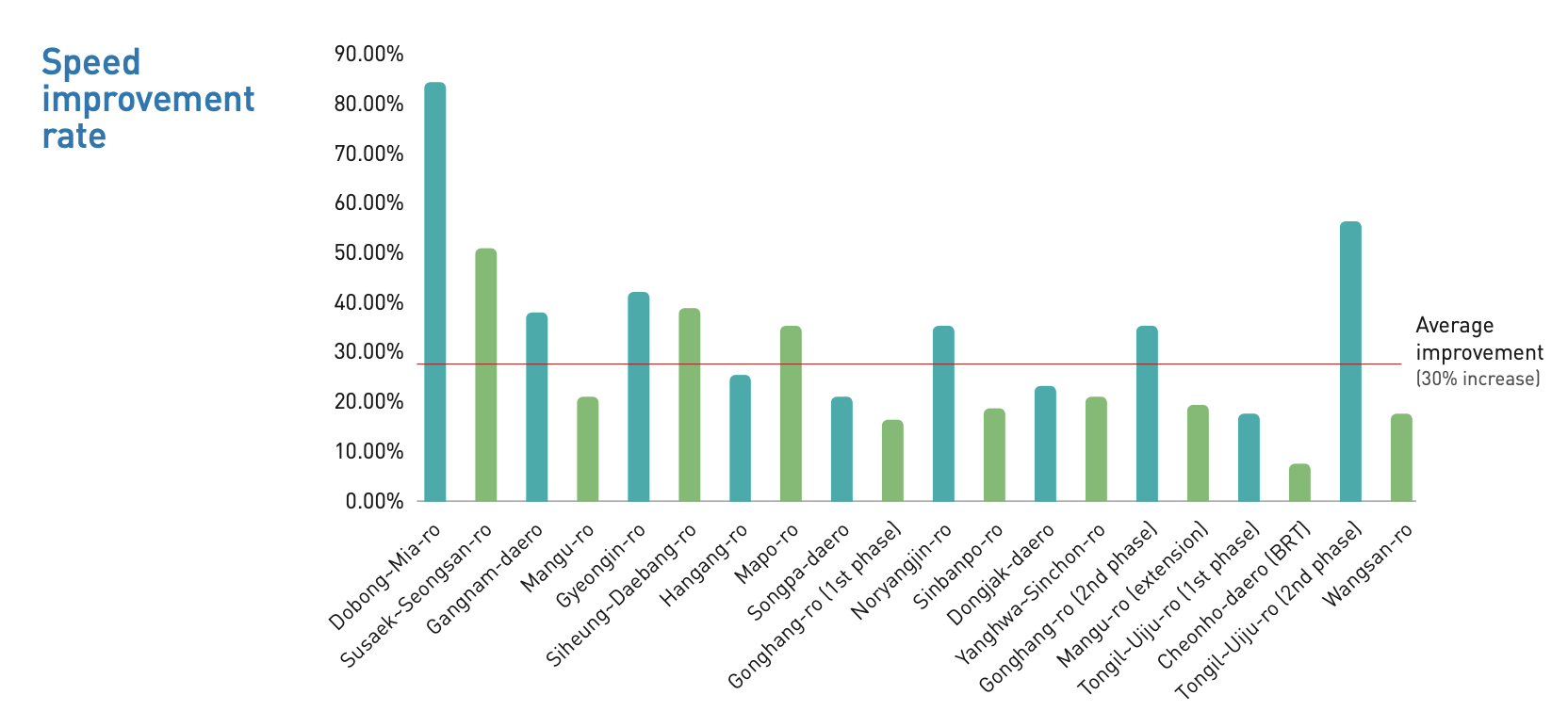
The core problem crippling the bus system was the explosive growth in car ownership, which led to intense traffic congestion that slowed buses and made their schedules unpredictable. Initial attempts to introduce exclusive bus lanes along the roadside proved significantly less effective at ensuring speed and punctuality. In response, the city shifted its focus to developing exclusive median bus lanes, moving buses away from the chaotic curb and into the center of the road.
.png)
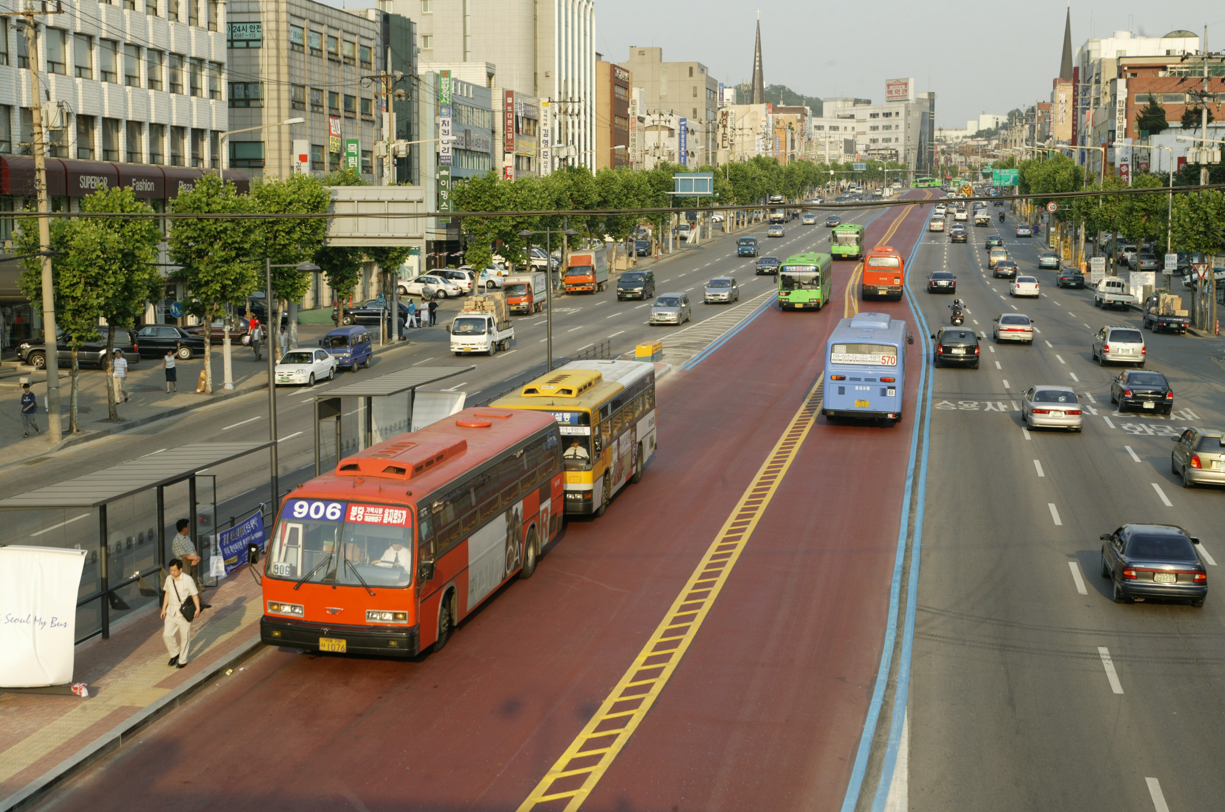
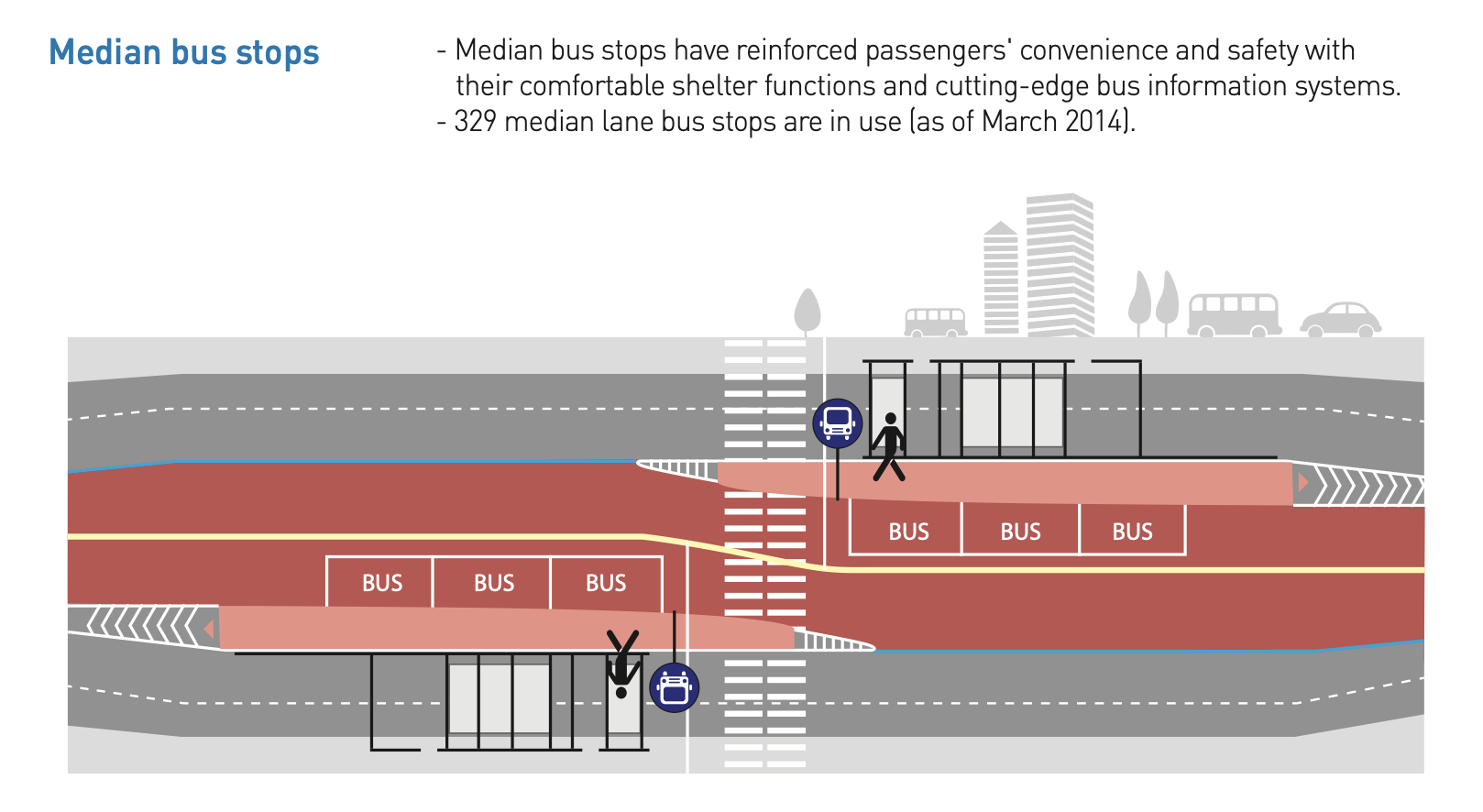
The implementation was not without challenges. When the first lanes opened in 2004, the large number of buses converging on them created a "train bus" congestion problem, particularly on the major thoroughfare of Gangnam-daero. Planners rectified this by rerouting some regional and feeder buses to roadside stops. As citizens grew more familiar with the new system, congestion cleared, and the benefits became apparent, leading to active public support for the reform.
The tangible effects were transformative. The median bus lanes dramatically improved the pace and punctuality of bus services, allowing passengers to predict arrival times with a new level of accuracy. The system became so reliable that the headway between buses was reduced to about two minutes at most, making them nearly as dependable as the subway, a success confirmed by data showing an increase in bus speeds of 31.74 percent and a rise in passenger numbers along these lanes of 26.8 percent.
The pre-reform fare system was deeply inequitable. Subway passengers enjoyed transfer discounts, but bus riders did not. A passenger traveling a short distance on two different buses could pay nearly double the fare of someone traveling a long distance on a single bus. To address this, Seoul implemented the Integrated Fare System for Public Transportation (IFSPT).
The IFSPT was built on two pillars: 1) integrated distance-based fare rates applicable to both buses and subways, and 2) a fixed rate for buses traveling into the city from surrounding areas. This new policy ensured that passengers were charged fairly based on the total distance of their journey, regardless of the number of transfers.
The IFSPT applies to all modes of public transportation in Seoul.
Fare formula = basic fare + additional unit fare (travel distance – basic fare distance) / additional distance unit
In order to ensure that long-distance travelers are charged reasonable public transportation fares, Seoul City applies a fixed fare rate for travel distances of 40 kilometers or more. Also, the basic fare rates are differentiated by mode of transportation so as to reflect the differences in the quality and value of services provided by different modes. Both buses and subways inside Seoul apply the fare formula described above. Passengers traveling by bus only benefit from the flat fare system applied to buses traveling into and out of the city.
Seoul has extended the distance-based fare system to apply to all subway zones inside the city’s limits, thereby applying the basic rate to the basic distance of 10 kilometers and charging extra fares on every five additional kilometers of travel. Buses likewise adopted the same system of distance-based fares, charging the basic fare for the first 10 kilometers of travel and extra fares for every five additional kilometers. Considering that 50 percent of bus passengers in Seoul travel six kilometers or less by bus, passengers traveling by bus only would pay fares in accordance with the existing flat fare system.
Implementing this system required overcoming significant negotiation hurdles. Opposition came from KORAIL (the national railroad operator) and Gyeonggi bus companies, who were concerned about revenue impacts. Agreements were reached only through difficult negotiations and strategic concessions. KORAIL, for instance, had to absorb a politically difficult fare hike without the benefit of offering new, compensatory transfer discounts. Ultimately, Seoul increased subsidies for long-distance commuters and developed a fair subsidization formula with Gyeonggi-do province to finalize the agreements.
The direct result was a significant financial benefit for the public. By making public transportation more affordable and seamless, the city enhanced its competitiveness and fairness, reducing the average cost per passenger per trip from KRW 620 to KRW 592, a reduction of 4.5 percent. These physical and financial infrastructure upgrades were powered by a new digital backbone designed to manage the complexity of the reformed system.

The IFSPT applies to all modes of public transportation in Seoul.
Fare formula = basic fare + additional unit fare (travel distance – basic fare distance) / additional distance unit
In order to ensure that long-distance travelers are charged reasonable public transportation fares, Seoul City applies a fixed fare rate for travel distances of 40 kilometers or more. Also, the basic fare rates are differentiated by mode of transportation so as to reflect the differences in the quality and value of services provided by different modes. Both buses and subways inside Seoul apply the fare formula described above. Passengers traveling by bus only benefit from the flat fare system applied to buses traveling into and out of the city.
Seoul has extended the distance-based fare system to apply to all subway zones inside the city’s limits, thereby applying the basic rate to the basic distance of 10 kilometers and charging extra fares on every five additional kilometers of travel. Buses likewise adopted the same system of distance-based fares, charging the basic fare for the first 10 kilometers of travel and extra fares for every five additional kilometers. Considering that 50 percent of bus passengers in Seoul travel six kilometers or less by bus, passengers traveling by bus only would pay fares in accordance with the existing flat fare system.
Implementing this system required overcoming significant negotiation hurdles. Opposition came from KORAIL (the national railroad operator) and Gyeonggi bus companies, who were concerned about revenue impacts. Agreements were reached only through difficult negotiations and strategic concessions. KORAIL, for instance, had to absorb a politically difficult fare hike without the benefit of offering new, compensatory transfer discounts. Ultimately, Seoul increased subsidies for long-distance commuters and developed a fair subsidization formula with Gyeonggi-do province to finalize the agreements.
The direct result was a significant financial benefit for the public. By making public transportation more affordable and seamless, the city enhanced its competitiveness and fairness, reducing the average cost per passenger per trip from KRW 620 to KRW 592, a reduction of 4.5 percent. These physical and financial infrastructure upgrades were powered by a new digital backbone designed to manage the complexity of the reformed system.
An efficient, modern public transit system relies on a robust technological foundation. To manage the newly integrated network, provide real-time information to the public, and collect data for continuous improvement, Seoul developed an advanced, centralized system that became the digital nerve center of its bus reform.
The primary objective of the Bus Management System (BMS) was to improve public satisfaction by using data to enhance the punctuality and reliability of bus services. The system was engineered to deliver benefits to all key stakeholders:

By leveraging GPS devices on buses and integrating transit card data, the BMS transformed bus operations from an imprecise art into a data-driven science, providing real-time monitoring and transparent information for all.
Launched in 2005, the Transportation Operation and Information Service (TOPIS) acts as the central command center for all of Seoul's transportation management. It integrates vast amounts of data from the BMS with information from numerous other sources, including the National Police Agency, the Korea Expressway Corporation, and surveillance cameras across the city.
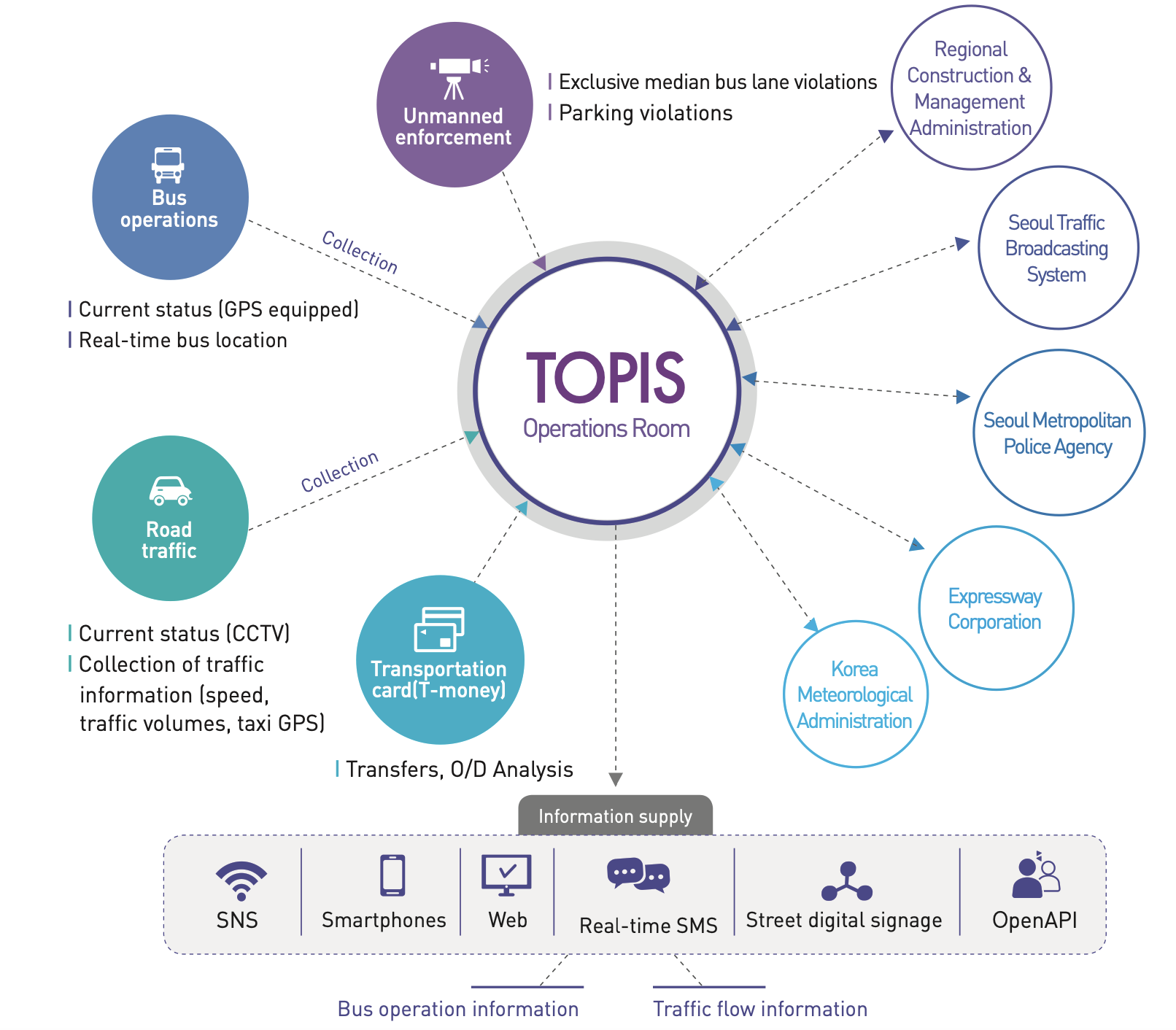
The primary functions of TOPIS include:
The broad impact of TOPIS has been to solidify public trust in the bus system. By improving punctuality and providing accurate, accessible information, it has made bus travel a more predictable and pleasant experience. For officials, this comprehensive data stream is invaluable.
TOPIS enables policymakers to make more informed decisions by providing them with rational, accurate, and objective data.
Together, these technological systems provided the intelligence and control needed to successfully manage the reformed bus network, leading to key lessons for urban planners worldwide.
Seoul's experience offers a valuable case study for other cities seeking to revitalize their public transportation networks. The success of its landmark reform can be distilled into several core strategies related to system design, stakeholder management, and infrastructure development.
1. Prioritize Public Convenience over Private Profit
The most critical lesson is the need to design a system that rationally organizes routes for public convenience, not private profit. The pre-reform system, which favored long and convoluted routes, failed citizens. By replacing this with the semi-public operation system, Seoul's government gained the authority to create and coordinate routes based on public need, dramatically improving accessibility and efficiency.
2. Engineer Consensus Through Proactive Stakeholder Management
Transformative change inevitably creates friction. Seoul's success hinged on its ability to manage conflicts among diverse stakeholders. The city established the Citizens Committee for Bus Reform (CCBR) to bring together civil society, researchers, and the bus industry, building a society-wide consensus around the need for reform. Furthermore, public hearings and town hall meetings were held to incorporate citizens' opinions on route changes, ensuring a smoother and more inclusive implementation.
3. Build a Foundation of Integrated Physical and Digital Infrastructure
A modern bus service cannot run on policy alone; it requires robust infrastructure. Seoul's reform was built on a foundation of both physical and digital investments. Physical improvements like public bus garages and transfer centers worked in tandem with advanced information systems like the Bus Management System (BMS) and the integrated transit card system. This combination of hardware and software was essential for creating a more efficient, competitive, and user-friendly bus service.
By reasserting public control over a system captured by private interests and then methodically rebuilding its physical and digital foundations, Seoul did more than fix its bus system; it crafted a new social contract for urban mobility, creating a global benchmark for citizen-centric public transportation.

.png)
Korea's post-war urban transport narrative was one of rapid, reactive expansion, initially focused on trams and buses before shifting to a massive build-out of its urban railway network. By the 1980s and 90s, as car ownership became the norm, intensifying traffic congestion became a central policy challenge.
.png)

However, this focus on railway expansion and road construction came at a cost. By the early 2000s, the city's bus system, once the most popular mode of transport, saw its competitiveness weaken significantly. The resulting drop in passengers plunged the private bus industry into a structural recession, creating a system that satisfied neither the struggling operators nor the frustrated consumers. This crisis demanded a bold, bus-centered reform of the public transportation system to reclaim the streets for the public good.

At the heart of Seoul's transportation crisis was an operational model that prioritized private profit over public convenience. To fundamentally revitalize the bus system, the city recognized the need for a strategic shift in philosophy, moving away from a purely private system toward a semi-public model that placed citizens' needs first.
The previous private operation system was plagued by chronic failures rooted in its profit-making preoccupation. Bus companies insisted on providing services along inefficient, unnecessarily long, and convoluted routes. This profit-driven model created a patchwork of redundant, over-served corridors while actively alienating other regions from the benefits of public transport. This practice not only fueled public dissatisfaction and eroded ridership but also ultimately undermined the financial viability of the bus companies themselves by compromising efficiency.
As a solution, Seoul implemented the semi-public operation system, a model built on three guiding principles:
To navigate the politically difficult negotiations this shift required, the city established the Citizens Committee for Bus Reform (CCBR). This body served as the primary engine for forging a crucial society-wide consensus, bringing together civil society representatives, researchers, and the bus industry to coordinate public-private interests and ensure the reforms were viable.
The adoption of the semi-public system yielded significant results, rectifying chronic problems like the inequitable distribution of bus services. While it placed new constraints on the management autonomy of private companies—forcing them to focus on cost minimization rather than chasing profits through inefficient routes—the model proved highly effective. This new operational framework, however, required the city to physically reshape its urban landscape to be fully realized.
Seoul Metropolitan Government reviewed the redundancy and competition of bus routes and services in five zones of the city, excluding the downtown areas, and encouraged existing bus companies to come together and launch a consortium for the operation of trunk buses.
Final agreement with Seoul Metropolitan Government was reached on February 4, 2004 [Terms of Agreement].
Reforming the operational model was a critical first step, but it was insufficient on its own. To make buses a truly competitive and attractive mode of transport, Seoul needed to physically reshape the urban landscape and overhaul its financial structures. These foundational investments were essential to reflect the city’s new public-service philosophy by improving the speed, reliability, and affordability of the bus system for everyday passengers.
The core problem crippling the bus system was the explosive growth in car ownership, which led to intense traffic congestion that slowed buses and made their schedules unpredictable. Initial attempts to introduce exclusive bus lanes along the roadside proved significantly less effective at ensuring speed and punctuality. In response, the city shifted its focus to developing exclusive median bus lanes, moving buses away from the chaotic curb and into the center of the road.
.png)


The implementation was not without challenges. When the first lanes opened in 2004, the large number of buses converging on them created a "train bus" congestion problem, particularly on the major thoroughfare of Gangnam-daero. Planners rectified this by rerouting some regional and feeder buses to roadside stops. As citizens grew more familiar with the new system, congestion cleared, and the benefits became apparent, leading to active public support for the reform.
The tangible effects were transformative. The median bus lanes dramatically improved the pace and punctuality of bus services, allowing passengers to predict arrival times with a new level of accuracy. The system became so reliable that the headway between buses was reduced to about two minutes at most, making them nearly as dependable as the subway, a success confirmed by data showing an increase in bus speeds of 31.74 percent and a rise in passenger numbers along these lanes of 26.8 percent.

The pre-reform fare system was deeply inequitable. Subway passengers enjoyed transfer discounts, but bus riders did not. A passenger traveling a short distance on two different buses could pay nearly double the fare of someone traveling a long distance on a single bus. To address this, Seoul implemented the Integrated Fare System for Public Transportation (IFSPT).
The IFSPT was built on two pillars: 1) integrated distance-based fare rates applicable to both buses and subways, and 2) a fixed rate for buses traveling into the city from surrounding areas. This new policy ensured that passengers were charged fairly based on the total distance of their journey, regardless of the number of transfers.
The IFSPT applies to all modes of public transportation in Seoul.
Fare formula = basic fare + additional unit fare (travel distance – basic fare distance) / additional distance unit
In order to ensure that long-distance travelers are charged reasonable public transportation fares, Seoul City applies a fixed fare rate for travel distances of 40 kilometers or more. Also, the basic fare rates are differentiated by mode of transportation so as to reflect the differences in the quality and value of services provided by different modes. Both buses and subways inside Seoul apply the fare formula described above. Passengers traveling by bus only benefit from the flat fare system applied to buses traveling into and out of the city.
Seoul has extended the distance-based fare system to apply to all subway zones inside the city’s limits, thereby applying the basic rate to the basic distance of 10 kilometers and charging extra fares on every five additional kilometers of travel. Buses likewise adopted the same system of distance-based fares, charging the basic fare for the first 10 kilometers of travel and extra fares for every five additional kilometers. Considering that 50 percent of bus passengers in Seoul travel six kilometers or less by bus, passengers traveling by bus only would pay fares in accordance with the existing flat fare system.
Implementing this system required overcoming significant negotiation hurdles. Opposition came from KORAIL (the national railroad operator) and Gyeonggi bus companies, who were concerned about revenue impacts. Agreements were reached only through difficult negotiations and strategic concessions. KORAIL, for instance, had to absorb a politically difficult fare hike without the benefit of offering new, compensatory transfer discounts. Ultimately, Seoul increased subsidies for long-distance commuters and developed a fair subsidization formula with Gyeonggi-do province to finalize the agreements.
The direct result was a significant financial benefit for the public. By making public transportation more affordable and seamless, the city enhanced its competitiveness and fairness, reducing the average cost per passenger per trip from KRW 620 to KRW 592, a reduction of 4.5 percent. These physical and financial infrastructure upgrades were powered by a new digital backbone designed to manage the complexity of the reformed system.

The IFSPT applies to all modes of public transportation in Seoul.
Fare formula = basic fare + additional unit fare (travel distance – basic fare distance) / additional distance unit
In order to ensure that long-distance travelers are charged reasonable public transportation fares, Seoul City applies a fixed fare rate for travel distances of 40 kilometers or more. Also, the basic fare rates are differentiated by mode of transportation so as to reflect the differences in the quality and value of services provided by different modes. Both buses and subways inside Seoul apply the fare formula described above. Passengers traveling by bus only benefit from the flat fare system applied to buses traveling into and out of the city.
Seoul has extended the distance-based fare system to apply to all subway zones inside the city’s limits, thereby applying the basic rate to the basic distance of 10 kilometers and charging extra fares on every five additional kilometers of travel. Buses likewise adopted the same system of distance-based fares, charging the basic fare for the first 10 kilometers of travel and extra fares for every five additional kilometers. Considering that 50 percent of bus passengers in Seoul travel six kilometers or less by bus, passengers traveling by bus only would pay fares in accordance with the existing flat fare system.
Implementing this system required overcoming significant negotiation hurdles. Opposition came from KORAIL (the national railroad operator) and Gyeonggi bus companies, who were concerned about revenue impacts. Agreements were reached only through difficult negotiations and strategic concessions. KORAIL, for instance, had to absorb a politically difficult fare hike without the benefit of offering new, compensatory transfer discounts. Ultimately, Seoul increased subsidies for long-distance commuters and developed a fair subsidization formula with Gyeonggi-do province to finalize the agreements.
The direct result was a significant financial benefit for the public. By making public transportation more affordable and seamless, the city enhanced its competitiveness and fairness, reducing the average cost per passenger per trip from KRW 620 to KRW 592, a reduction of 4.5 percent. These physical and financial infrastructure upgrades were powered by a new digital backbone designed to manage the complexity of the reformed system.
An efficient, modern public transit system relies on a robust technological foundation. To manage the newly integrated network, provide real-time information to the public, and collect data for continuous improvement, Seoul developed an advanced, centralized system that became the digital nerve center of its bus reform.
The primary objective of the Bus Management System (BMS) was to improve public satisfaction by using data to enhance the punctuality and reliability of bus services. The system was engineered to deliver benefits to all key stakeholders:

By leveraging GPS devices on buses and integrating transit card data, the BMS transformed bus operations from an imprecise art into a data-driven science, providing real-time monitoring and transparent information for all.
Launched in 2005, the Transportation Operation and Information Service (TOPIS) acts as the central command center for all of Seoul's transportation management. It integrates vast amounts of data from the BMS with information from numerous other sources, including the National Police Agency, the Korea Expressway Corporation, and surveillance cameras across the city.

The primary functions of TOPIS include:
The broad impact of TOPIS has been to solidify public trust in the bus system. By improving punctuality and providing accurate, accessible information, it has made bus travel a more predictable and pleasant experience. For officials, this comprehensive data stream is invaluable.
TOPIS enables policymakers to make more informed decisions by providing them with rational, accurate, and objective data.
Together, these technological systems provided the intelligence and control needed to successfully manage the reformed bus network, leading to key lessons for urban planners worldwide.
Seoul's experience offers a valuable case study for other cities seeking to revitalize their public transportation networks. The success of its landmark reform can be distilled into several core strategies related to system design, stakeholder management, and infrastructure development.
1. Prioritize Public Convenience over Private Profit
The most critical lesson is the need to design a system that rationally organizes routes for public convenience, not private profit. The pre-reform system, which favored long and convoluted routes, failed citizens. By replacing this with the semi-public operation system, Seoul's government gained the authority to create and coordinate routes based on public need, dramatically improving accessibility and efficiency.
2. Engineer Consensus Through Proactive Stakeholder Management
Transformative change inevitably creates friction. Seoul's success hinged on its ability to manage conflicts among diverse stakeholders. The city established the Citizens Committee for Bus Reform (CCBR) to bring together civil society, researchers, and the bus industry, building a society-wide consensus around the need for reform. Furthermore, public hearings and town hall meetings were held to incorporate citizens' opinions on route changes, ensuring a smoother and more inclusive implementation.
3. Build a Foundation of Integrated Physical and Digital Infrastructure
A modern bus service cannot run on policy alone; it requires robust infrastructure. Seoul's reform was built on a foundation of both physical and digital investments. Physical improvements like public bus garages and transfer centers worked in tandem with advanced information systems like the Bus Management System (BMS) and the integrated transit card system. This combination of hardware and software was essential for creating a more efficient, competitive, and user-friendly bus service.
By reasserting public control over a system captured by private interests and then methodically rebuilding its physical and digital foundations, Seoul did more than fix its bus system; it crafted a new social contract for urban mobility, creating a global benchmark for citizen-centric public transportation.