

Back to List

South Korea’s Intelligent Transportation System (ITS): Implementation of Comprehensive Approach of Technology and Legal Frameworks

Summary

Rapid urbanization, a sharp increase in registered vehicles which was disproportionate to road expansion and heavy social cost from traffic congestion and accident are the main catalysts for South Korea’s Intelligent Transportation Systems (ITS) adoption after the 1970s and full implementation around 2000. The objectives and substantial achievements of the ITS are in reducing congestion, enhancing road safety and decreasing environmental pollution. Strategic and legal framework that facilitate the rollout of the ITS includes master plans, new legislation, standardization effort and pilot programs. The comprehensive approach between technological solution and strong legal framework contributes to the success of delivering nationwide positive impact on transportation.

Key Questions

  • What were the primary issues, such as heavy traffic congestion costs and disconnected information flow, that necessitated the introduction of the ITS in Korea?
  • What measurable improvements did the ITS deliver in terms of traffic flow and environmental impact?
  • How were non-technological actions such as legal frameworks etc. crucial to the systematic implementation of the ITS?

Tags #ITS #intelligent transport system #transportation

A Remedy to Congestion After Explosive Growth

In the decades following 1970, South Korea underwent a period of extraordinary economic development and rapid urbanization, concentrating a significant portion of its population in major cities like Seoul. This explosive growth, however, placed immense pressure on the nation's transportation infrastructure. The number of registered vehicles surged, but road construction could not keep pace, leading to a critical state of traffic congestion that crippled urban mobility and incurred massive social and economic costs. In response to this escalating crisis, the South Korean government embarked on a strategic and ambitious national project: the adoption of an Intelligent Transportation System (ITS) designed to optimize traffic flow, enhance safety, and create a more efficient and sustainable transportation network for the future.

The Breaking Point: Korea's Urban Transportation Crisis

To appreciate the scale of South Korea's success, it is essential to first understand the root causes of the transportation crisis it faced. The problem was not a single issue but a convergence of factors where infrastructure development was fundamentally outpaced by societal and economic change. This multifaceted challenge manifested in overwhelmed roadways, staggering economic losses, systemic inefficiencies, and an outdated, manually operated management system.

The nation's core transportation challenges were deeply interconnected. First, there was a severe disparity between the growth in vehicle ownership and the expansion of the road network. Between 1994 and 2012 alone, the number of registered vehicles increased by a staggering 155%, while the total length of roads grew by only 43%. This gap was exacerbated by the geographical and financial unsustainability of physical expansion; with limited space for new roads, the cost for the government to acquire land became prohibitive, making a technological solution a strategic necessity.

Second, this gridlock carried a quantifiable economic burden; social costs attributed to traffic congestion reached 10 trillion KRW by 1994 and continued to climb steadily. Third, the system was plagued by operational inefficiencies. Traffic signals operated on inflexible cycles, unlinked to one another and unresponsive to real-time conditions. Drivers had no access to information on congestion or accidents, and critically, cargo transport operators were unable to obtain location data for buses and trucks, crippling logistics management. Finally, traffic management itself was a bottleneck. Key functions like toll collection and violation detection were performed manually, preventing consistent enforcement and data integration between agencies. Faced with a system on the verge of collapse, it became clear that simply building more roads was not a viable solution. The South Korean government recognized the need for a decisive and comprehensive strategy to modernize its entire transportation framework.

A Strategic Solution: The Transformative Impact of ITS

The adoption of Intelligent Transportation Systems was not merely a technological upgrade; it was a calculated national strategy to combat the specific economic, safety, and environmental crises crippling the country. The urgency of this intervention was underscored by the staggering costs in the year 2000, when congestion costs had ballooned to 19.4 trillion KRW and traffic accident costs reached 11 trillion KRW. In response, the government launched the ITS initiative, initially estimating it would reduce congestion costs by 4.59 trillion KRW and significantly cut accidents and pollution.

Intelligent Transport System (ITS)’s Conceptual Design and Organization Chart

The Intelligent Transport Systems (ITS) are a type of the transport system which aims automated and scientific management and operation of the transport system and improved efficiency and safety of the traffic by introducing electronic control systems, communications technologies, and other advanced technologies to different modes of transport and traffic facilities and by utilizing traffic-related information.
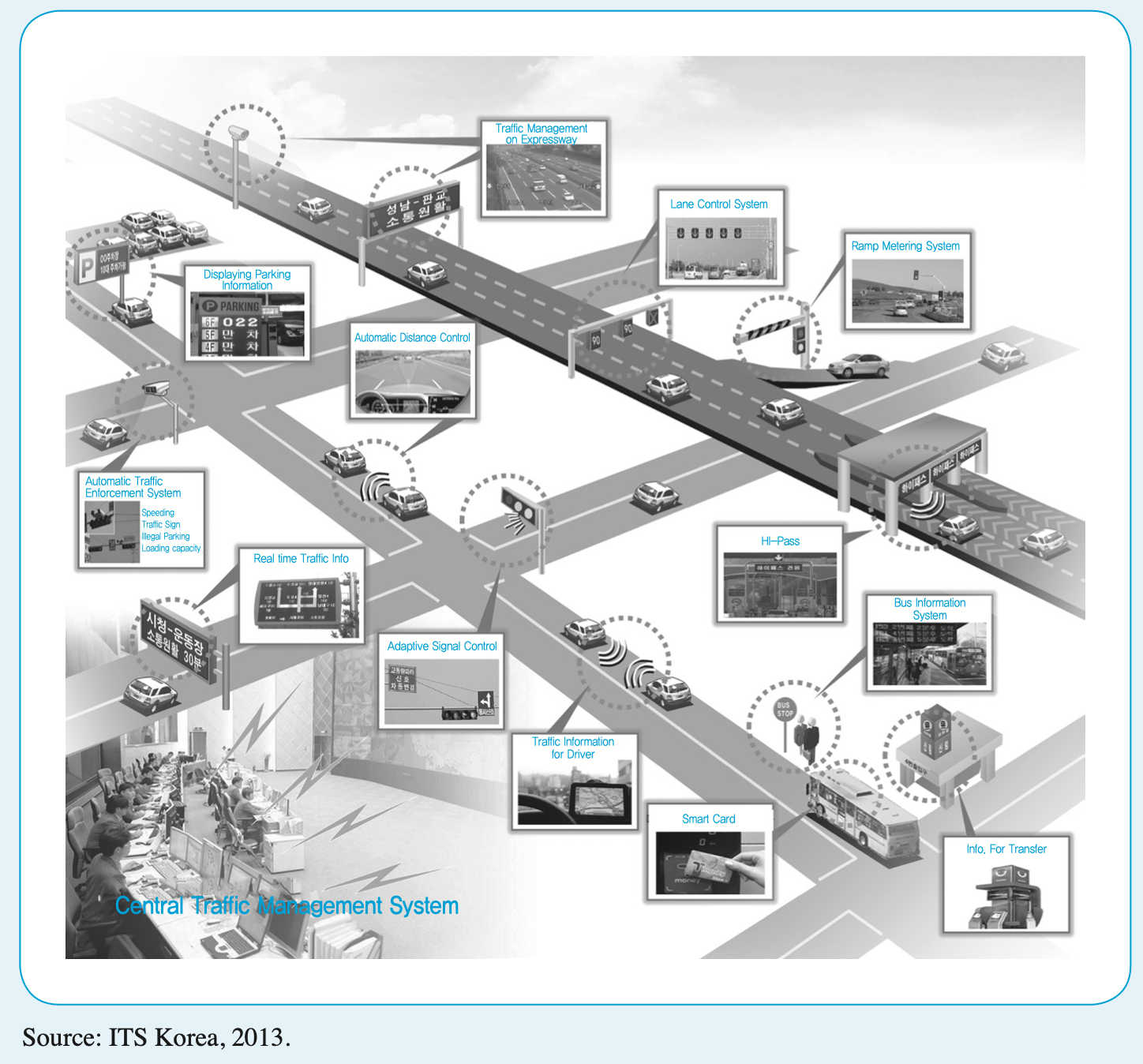
Screenshot of ITS conceptual design (Source: Korea Institute for Advancement and ITS Korea, 2013, p. 48)

Organization: Ministry in Charge of the ITS from 1994-present; changes due to reorganization
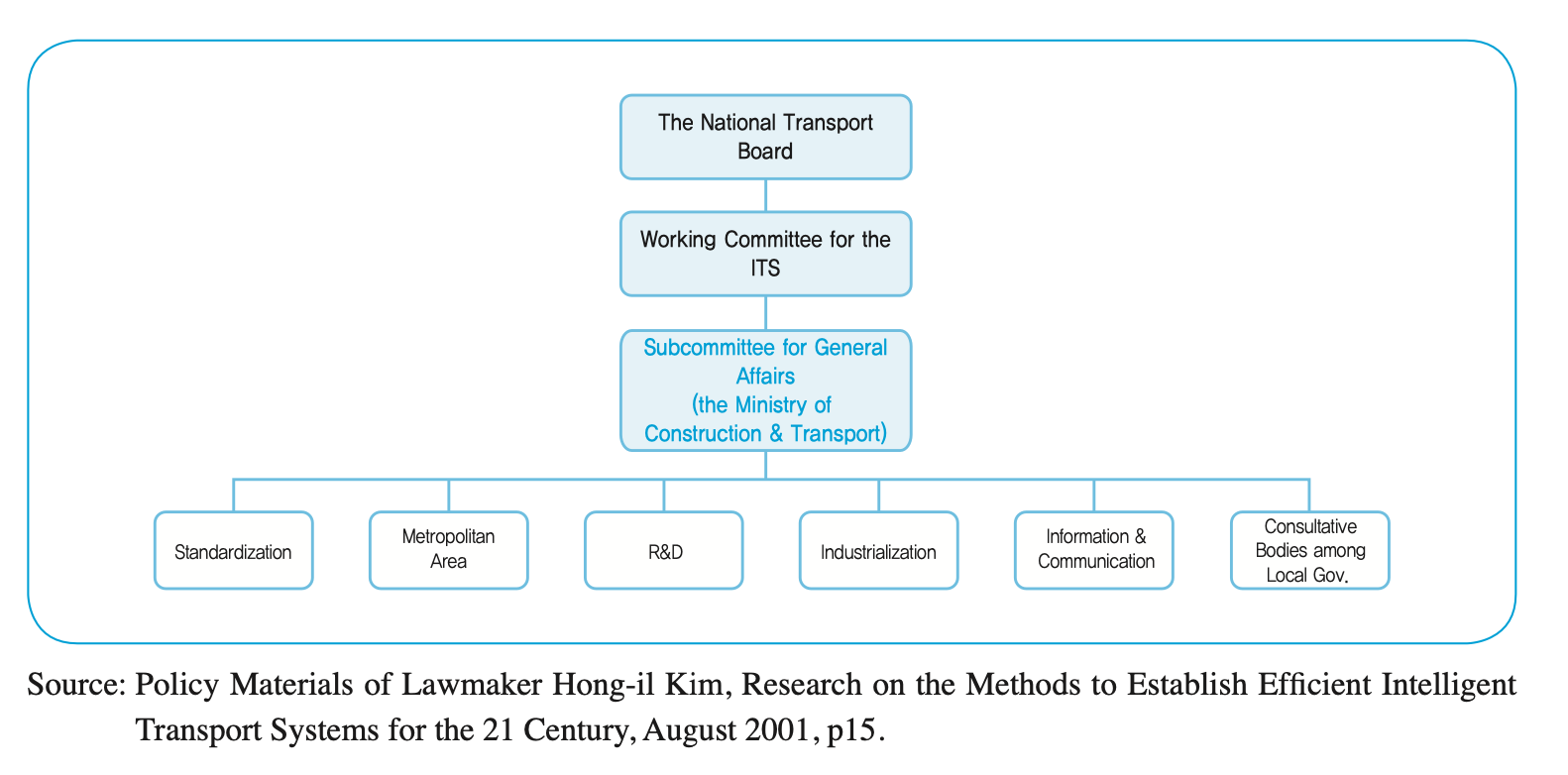
  • the Ministry of Construction and Transportation: 1994 to 2008
  • the Ministry of Land, Transport and Maritime Affairs: 2008 to 2013
  • the Ministry of Land, Infrastructure and Transport: 2013 to now
Organizational Chart of the National Transport Board

The most immediate impact was on traffic congestion. The government implemented adaptive traffic signals that could change according to real-time conditions and provided real-time information to drivers via variable-message signs, empowering them to choose detours. This combination of smarter infrastructure and informed drivers dramatically reduced travel times, leading to 11.8 trillion KRW in yearly social benefits—a result that far exceeded initial projections and showcased a profound return on investment. Overall, the system increased average traffic speeds by 15-20%. The efficiency of this approach was remarkable. The cost to adopt the ITS was only 1% of the expense to build a four-lane national highway, but it resulted in 20% reduction of traffic congestion.

ITS also delivered significant gains in road safety. With accidents rising alongside vehicle ownership, the new system enabled the effective detection of traffic violations and provided a mechanism for swift response to emergencies. Vehicle detectors and CCTVs installed at key locations monitored traffic conditions in real-time, warning drivers of potential risks. This technological backbone was supported by institutional collaboration, with agencies like the Ministry of Land, Infrastructure, and Transport and the National Police Agency working together to analyze traffic data and proactively manage accident-prone areas.

The role of central government in ITS project according to project types (Korea Institute for Advancement and ITS Korea, 2013, p.52)

Finally, the ITS contributed directly to environmental improvements. By improving traffic flow and preventing speeding, the ITS reduced energy consumption and vehicle emissions. The system also facilitated improvements in public transportation, encouraging greater usage. The environmental benefits were quantifiable: on national highways, the ITS cut carbon dioxide emissions by 19,000 tons annually per 1,000 kilometers, while on national expressways, the reduction was 23,000 tons annually per 1,000 kilometers. These transformative outcomes were not accidental. They were the product of a deliberate and well-executed national strategy that provided the blueprint for success.

Frameworks as Success Factor: Korea's Implementation Strategy

The success of South Korea's ITS was not guaranteed by technology alone. It was underpinned by a robust, multi-layered implementation strategy that meticulously addressed legal, organizational, and practical challenges. This comprehensive approach ensured that the technological solution was supported by a framework capable of delivering nationwide impact.

National Transport System Efficiency Act

In the early 1990s, the government started to discuss the introduction of the ITS and established the plans to implement ITS projects in a more systematic way. As legal grounds which prescribed the method to secure the budget for the ITS and to carry out ITS projects were required, the government passed the Traffic System Efficiency Act in 1999 and the Act was revised into the National Transport System Efficiency Act in 2009, which is Korea’s principal legal grounds for ITS-related issues.

The foundation of the strategy was legal and planning-based. The passage of the National Transport System Efficiency Act in 1999 provided the crucial legal basis for the government to create and execute ITS-related plans. Demonstrating an adaptive governance strategy, this act was later revised in the mid-2000s to meet evolving social and technological changes. This was complemented by the Master Plan for ITS, a high-level document that set the project's basic direction, defined agency roles to prevent overlap, and established a framework for sharing information. To ensure nationwide interoperability and avoid redundant investment, the government also drafted a comprehensive standardization plan.

History of the Master Plan for the ITS

The government established the draft plan to promote the ITS in 1993 as it decided to introduce the ITS and the master plan for the ITS was first drawn up in 1997. After a series of researches to supplement the relevant plans and revisions, the Master Plan 21 for the ITS was finalized in 2001.

And as the National Transport System Efficiency Act prescribes that the master plan for the IPS should be revised every ten 10 years, the Master Plan 2020 for the ITS was formulated. To execute this vision, the government established a clear institutional architecture. A dedicated government body, the Traffic Information Planning Division, was created within the Ministry of Construction and Transportation to serve as the central authority. The 5th ITS World Congress, held in Seoul in 1998, served as a catalyst, crystallizing national interest in the field. This event highlighted the urgent need for a specialized organization to provide technical advice and bridge the public and private sectors, leading directly to the government's establishment of ITS Korea.

History of the Standardization of the ITS

The government realized that the standardization efforts for the ITS conducted by the International Organization for Standardization should be followed as the standardization is necessary for the introduction of the ITS. For this purpose, the government launched the Expert Committee for Traffic Information in 1995. Then the government developed relevant standards based on international efforts for ITS standardization and established the national plan for the standardization of the ITS in 2002 in accordance with the Traffic System Efficiency Act 1999.

The deployment of the system was managed through a phased and supportive rollout. The government first selected the city of Gwacheon for a comprehensive test-run to refine the projects. Recognizing that local governments lacked the budget and experience to implement such systems, the Ministry of Construction and Transportation (MOLIT) launched the "Advanced Transportation Model City" projects in Daejeon, Jeonju, and Jeju, strategically timing their establishment to be complete by July 2002 for the FIFA World Cup. The central government provided direct financial support, offering subsidies for core systems like the Bus Information System (BIS) and promoting a nationwide compatible transportation card standard.

This tripartite strategy of establishing legal mandates, building institutional capacity, and executing a phased, data-driven rollout created a resilient and replicable implementation model.

History of the ITS Test-Run

The Ministry of Construction and Transportation, the government of Gwacheon, and National Police Agency agreed to select Gwacheon as the place for the test-run as Gwacheon had higher level of fiscal self-reliance and were the ideal location to monitor urban as well as regional traffic status.

Governance, Policy and Investment: Key Drivers for Success

South Korea's triumphant implementation of its Intelligent Transportation System can be attributed to four critical factors that worked in synergy. These deliberate choices in governance, policy, and investment transformed a technological initiative into a nationwide success story.

The success was anchored by the central government's decisive top-down governance, which established master plans, laws, and standards that provided a clear framework for local governments. This guidance was complemented by the creation of dedicated institutions—a responsible government department and the specialized association ITS Korea—which ensured high-quality implementation and served as a vital bridge connecting the public and private sectors.

Critically, the effect of ITS was maximized by accompanying it with appropriate policy changes. For instance, when the Bus Information System (BIS) and transportation card services were introduced in Seoul, the city simultaneously revised its bus management and fare systems, a move that boosted service adoption and improved operational accuracy. Finally, this entire effort was fueled by active government investment in ITS infrastructure and a forward-thinking policy of sharing publicly collected traffic data with private industry for free, which encouraged private companies to develop innovative services.

These success factors are not merely historical observations; they offer a set of valuable lessons that can form a functional model for other nations confronting similar infrastructure and mobility challenges.
A Model for the Future: Lessons for Developing Nations

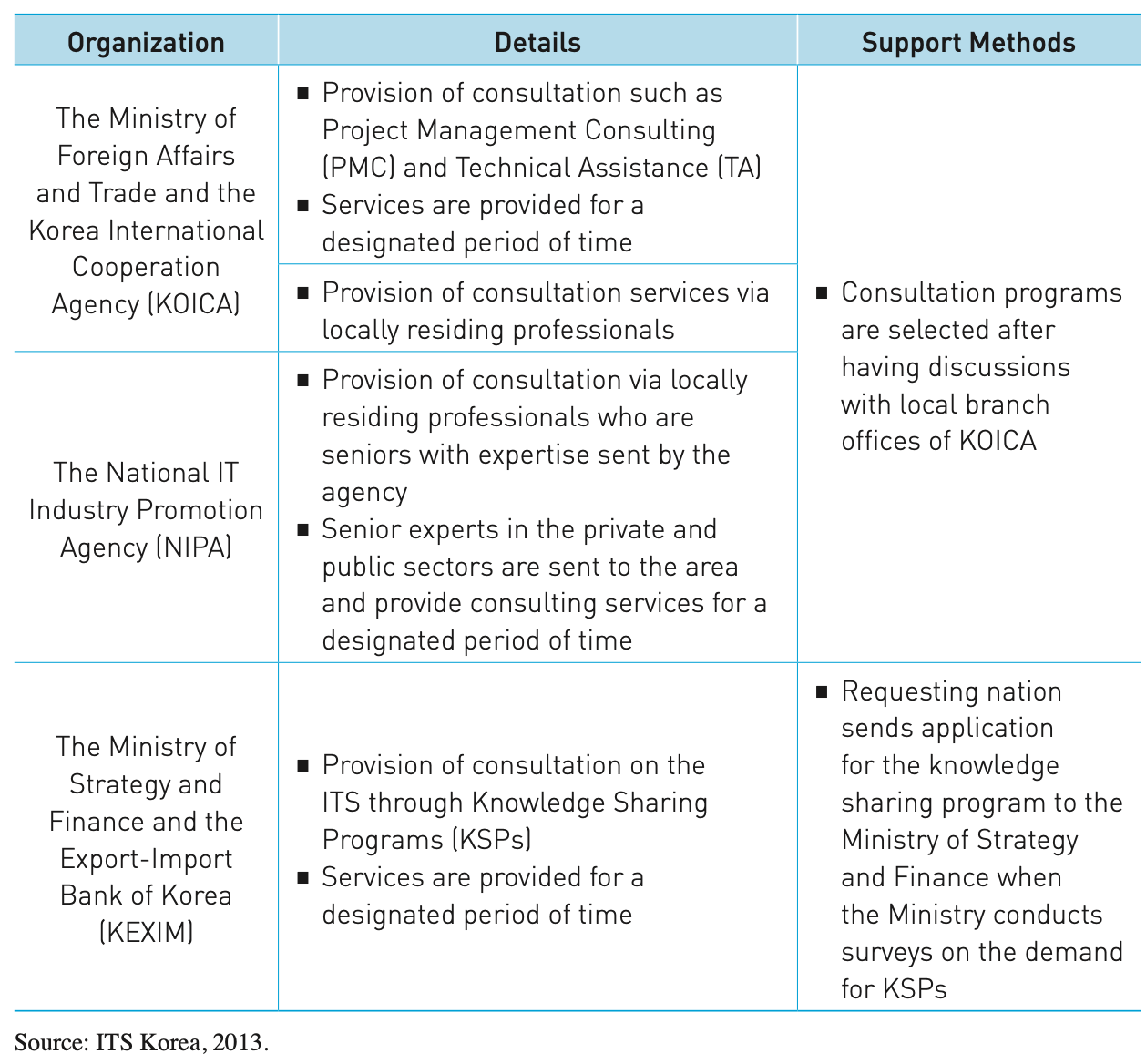
Korea’s Consulting Programs to Support the Establishment of the ITS (Source: Korea Institute for Advancement and ITS Korea, 2013, p.154)

South Korea's journey in building its Intelligent Transportation System provides a replicable roadmap for developing countries aiming to tackle the complex challenges of urbanization and traffic congestion. The experience offers a structured, phased approach to implementing large-scale technology projects, demonstrating how strategic planning and clear governance can lead to transformative results.

For developing nations, the Korean experience prescribes a clear, three-stage implementation model: introductory, development, and maturity. A critical lesson is that laying the foundation for the systematic establishment of future ITS projects at the introductory stage is very important. This involves creating the necessary legal frameworks, master plans, and technical standards from the outset to prevent confusion as the system expands. To fund such ambitious projects, it is necessary to secure clear financial resources through mechanisms like Official Development Assistance (ODA) or Public-Private-Partnerships (PPP). South Korea itself has become a valuable partner in this regard; since joining the OECD's Development Assistance Committee in 2010, it has significantly increased its ODA efforts and now offers consulting and support programs to help other nations build their own successful ITS initiatives.

Author
Seung-hwan Lee
Intelligent Transport Society of Korea
References
cite this work

South Korea’s Intelligent Transportation System (ITS): Implementation of Comprehensive Approach of Technology and Legal Frameworks

March 15, 2026
This is some text inside of a div block.

Summary

Rapid urbanization, a sharp increase in registered vehicles which was disproportionate to road expansion and heavy social cost from traffic congestion and accident are the main catalysts for South Korea’s Intelligent Transportation Systems (ITS) adoption after the 1970s and full implementation around 2000. The objectives and substantial achievements of the ITS are in reducing congestion, enhancing road safety and decreasing environmental pollution. Strategic and legal framework that facilitate the rollout of the ITS includes master plans, new legislation, standardization effort and pilot programs. The comprehensive approach between technological solution and strong legal framework contributes to the success of delivering nationwide positive impact on transportation.

Key Questions

  • What were the primary issues, such as heavy traffic congestion costs and disconnected information flow, that necessitated the introduction of the ITS in Korea?
  • What measurable improvements did the ITS deliver in terms of traffic flow and environmental impact?
  • How were non-technological actions such as legal frameworks etc. crucial to the systematic implementation of the ITS?

Tags #ITS #intelligent transport system #transportation

A Remedy to Congestion After Explosive Growth

In the decades following 1970, South Korea underwent a period of extraordinary economic development and rapid urbanization, concentrating a significant portion of its population in major cities like Seoul. This explosive growth, however, placed immense pressure on the nation's transportation infrastructure. The number of registered vehicles surged, but road construction could not keep pace, leading to a critical state of traffic congestion that crippled urban mobility and incurred massive social and economic costs. In response to this escalating crisis, the South Korean government embarked on a strategic and ambitious national project: the adoption of an Intelligent Transportation System (ITS) designed to optimize traffic flow, enhance safety, and create a more efficient and sustainable transportation network for the future.

The Breaking Point: Korea's Urban Transportation Crisis

To appreciate the scale of South Korea's success, it is essential to first understand the root causes of the transportation crisis it faced. The problem was not a single issue but a convergence of factors where infrastructure development was fundamentally outpaced by societal and economic change. This multifaceted challenge manifested in overwhelmed roadways, staggering economic losses, systemic inefficiencies, and an outdated, manually operated management system.

The nation's core transportation challenges were deeply interconnected. First, there was a severe disparity between the growth in vehicle ownership and the expansion of the road network. Between 1994 and 2012 alone, the number of registered vehicles increased by a staggering 155%, while the total length of roads grew by only 43%. This gap was exacerbated by the geographical and financial unsustainability of physical expansion; with limited space for new roads, the cost for the government to acquire land became prohibitive, making a technological solution a strategic necessity.

Second, this gridlock carried a quantifiable economic burden; social costs attributed to traffic congestion reached 10 trillion KRW by 1994 and continued to climb steadily. Third, the system was plagued by operational inefficiencies. Traffic signals operated on inflexible cycles, unlinked to one another and unresponsive to real-time conditions. Drivers had no access to information on congestion or accidents, and critically, cargo transport operators were unable to obtain location data for buses and trucks, crippling logistics management. Finally, traffic management itself was a bottleneck. Key functions like toll collection and violation detection were performed manually, preventing consistent enforcement and data integration between agencies. Faced with a system on the verge of collapse, it became clear that simply building more roads was not a viable solution. The South Korean government recognized the need for a decisive and comprehensive strategy to modernize its entire transportation framework.

A Strategic Solution: The Transformative Impact of ITS

The adoption of Intelligent Transportation Systems was not merely a technological upgrade; it was a calculated national strategy to combat the specific economic, safety, and environmental crises crippling the country. The urgency of this intervention was underscored by the staggering costs in the year 2000, when congestion costs had ballooned to 19.4 trillion KRW and traffic accident costs reached 11 trillion KRW. In response, the government launched the ITS initiative, initially estimating it would reduce congestion costs by 4.59 trillion KRW and significantly cut accidents and pollution.

Intelligent Transport System (ITS)’s Conceptual Design and Organization Chart

The Intelligent Transport Systems (ITS) are a type of the transport system which aims automated and scientific management and operation of the transport system and improved efficiency and safety of the traffic by introducing electronic control systems, communications technologies, and other advanced technologies to different modes of transport and traffic facilities and by utilizing traffic-related information.

Screenshot of ITS conceptual design (Source: Korea Institute for Advancement and ITS Korea, 2013, p. 48)

Organization: Ministry in Charge of the ITS from 1994-present; changes due to reorganization

  • the Ministry of Construction and Transportation: 1994 to 2008
  • the Ministry of Land, Transport and Maritime Affairs: 2008 to 2013
  • the Ministry of Land, Infrastructure and Transport: 2013 to now
Organizational Chart of the National Transport Board

The most immediate impact was on traffic congestion. The government implemented adaptive traffic signals that could change according to real-time conditions and provided real-time information to drivers via variable-message signs, empowering them to choose detours. This combination of smarter infrastructure and informed drivers dramatically reduced travel times, leading to 11.8 trillion KRW in yearly social benefits—a result that far exceeded initial projections and showcased a profound return on investment. Overall, the system increased average traffic speeds by 15-20%. The efficiency of this approach was remarkable. The cost to adopt the ITS was only 1% of the expense to build a four-lane national highway, but it resulted in 20% reduction of traffic congestion.

ITS also delivered significant gains in road safety. With accidents rising alongside vehicle ownership, the new system enabled the effective detection of traffic violations and provided a mechanism for swift response to emergencies. Vehicle detectors and CCTVs installed at key locations monitored traffic conditions in real-time, warning drivers of potential risks. This technological backbone was supported by institutional collaboration, with agencies like the Ministry of Land, Infrastructure, and Transport and the National Police Agency working together to analyze traffic data and proactively manage accident-prone areas.

The role of central government in ITS project according to project types (Korea Institute for Advancement and ITS Korea, 2013, p.52)

Finally, the ITS contributed directly to environmental improvements. By improving traffic flow and preventing speeding, the ITS reduced energy consumption and vehicle emissions. The system also facilitated improvements in public transportation, encouraging greater usage. The environmental benefits were quantifiable: on national highways, the ITS cut carbon dioxide emissions by 19,000 tons annually per 1,000 kilometers, while on national expressways, the reduction was 23,000 tons annually per 1,000 kilometers. These transformative outcomes were not accidental. They were the product of a deliberate and well-executed national strategy that provided the blueprint for success.

Frameworks as Success Factor: Korea's Implementation Strategy

The success of South Korea's ITS was not guaranteed by technology alone. It was underpinned by a robust, multi-layered implementation strategy that meticulously addressed legal, organizational, and practical challenges. This comprehensive approach ensured that the technological solution was supported by a framework capable of delivering nationwide impact.

National Transport System Efficiency Act

In the early 1990s, the government started to discuss the introduction of the ITS and established the plans to implement ITS projects in a more systematic way. As legal grounds which prescribed the method to secure the budget for the ITS and to carry out ITS projects were required, the government passed the Traffic System Efficiency Act in 1999 and the Act was revised into the National Transport System Efficiency Act in 2009, which is Korea’s principal legal grounds for ITS-related issues.

The foundation of the strategy was legal and planning-based. The passage of the National Transport System Efficiency Act in 1999 provided the crucial legal basis for the government to create and execute ITS-related plans. Demonstrating an adaptive governance strategy, this act was later revised in the mid-2000s to meet evolving social and technological changes. This was complemented by the Master Plan for ITS, a high-level document that set the project's basic direction, defined agency roles to prevent overlap, and established a framework for sharing information. To ensure nationwide interoperability and avoid redundant investment, the government also drafted a comprehensive standardization plan.

History of the Master Plan for the ITS

The government established the draft plan to promote the ITS in 1993 as it decided to introduce the ITS and the master plan for the ITS was first drawn up in 1997. After a series of researches to supplement the relevant plans and revisions, the Master Plan 21 for the ITS was finalized in 2001.

And as the National Transport System Efficiency Act prescribes that the master plan for the IPS should be revised every ten 10 years, the Master Plan 2020 for the ITS was formulated. To execute this vision, the government established a clear institutional architecture. A dedicated government body, the Traffic Information Planning Division, was created within the Ministry of Construction and Transportation to serve as the central authority. The 5th ITS World Congress, held in Seoul in 1998, served as a catalyst, crystallizing national interest in the field. This event highlighted the urgent need for a specialized organization to provide technical advice and bridge the public and private sectors, leading directly to the government's establishment of ITS Korea.

History of the Standardization of the ITS

The government realized that the standardization efforts for the ITS conducted by the International Organization for Standardization should be followed as the standardization is necessary for the introduction of the ITS. For this purpose, the government launched the Expert Committee for Traffic Information in 1995. Then the government developed relevant standards based on international efforts for ITS standardization and established the national plan for the standardization of the ITS in 2002 in accordance with the Traffic System Efficiency Act 1999.

The deployment of the system was managed through a phased and supportive rollout. The government first selected the city of Gwacheon for a comprehensive test-run to refine the projects. Recognizing that local governments lacked the budget and experience to implement such systems, the Ministry of Construction and Transportation (MOLIT) launched the "Advanced Transportation Model City" projects in Daejeon, Jeonju, and Jeju, strategically timing their establishment to be complete by July 2002 for the FIFA World Cup. The central government provided direct financial support, offering subsidies for core systems like the Bus Information System (BIS) and promoting a nationwide compatible transportation card standard.

This tripartite strategy of establishing legal mandates, building institutional capacity, and executing a phased, data-driven rollout created a resilient and replicable implementation model.

History of the ITS Test-Run

The Ministry of Construction and Transportation, the government of Gwacheon, and National Police Agency agreed to select Gwacheon as the place for the test-run as Gwacheon had higher level of fiscal self-reliance and were the ideal location to monitor urban as well as regional traffic status.

Governance, Policy and Investment: Key Drivers for Success

South Korea's triumphant implementation of its Intelligent Transportation System can be attributed to four critical factors that worked in synergy. These deliberate choices in governance, policy, and investment transformed a technological initiative into a nationwide success story.

The success was anchored by the central government's decisive top-down governance, which established master plans, laws, and standards that provided a clear framework for local governments. This guidance was complemented by the creation of dedicated institutions—a responsible government department and the specialized association ITS Korea—which ensured high-quality implementation and served as a vital bridge connecting the public and private sectors.

Critically, the effect of ITS was maximized by accompanying it with appropriate policy changes. For instance, when the Bus Information System (BIS) and transportation card services were introduced in Seoul, the city simultaneously revised its bus management and fare systems, a move that boosted service adoption and improved operational accuracy. Finally, this entire effort was fueled by active government investment in ITS infrastructure and a forward-thinking policy of sharing publicly collected traffic data with private industry for free, which encouraged private companies to develop innovative services.

These success factors are not merely historical observations; they offer a set of valuable lessons that can form a functional model for other nations confronting similar infrastructure and mobility challenges.

A Model for the Future: Lessons for Developing Nations

Korea’s Consulting Programs to Support the Establishment of the ITS (Source: Korea Institute for Advancement and ITS Korea, 2013, p.154)

South Korea's journey in building its Intelligent Transportation System provides a replicable roadmap for developing countries aiming to tackle the complex challenges of urbanization and traffic congestion. The experience offers a structured, phased approach to implementing large-scale technology projects, demonstrating how strategic planning and clear governance can lead to transformative results.

For developing nations, the Korean experience prescribes a clear, three-stage implementation model: introductory, development, and maturity. A critical lesson is that laying the foundation for the systematic establishment of future ITS projects at the introductory stage is very important. This involves creating the necessary legal frameworks, master plans, and technical standards from the outset to prevent confusion as the system expands. To fund such ambitious projects, it is necessary to secure clear financial resources through mechanisms like Official Development Assistance (ODA) or Public-Private-Partnerships (PPP). South Korea itself has become a valuable partner in this regard; since joining the OECD's Development Assistance Committee in 2010, it has significantly increased its ODA efforts and now offers consulting and support programs to help other nations build their own successful ITS initiatives.

References
Cite this work
.

More to explore from
In Perspective

South Korea’s Intelligent Transportation System (ITS): Implementation of Comprehensive Approach of Technology and Legal Frameworks

March 15, 2026

I am the text that will be copied.

A Remedy to Congestion After Explosive Growth

In the decades following 1970, South Korea underwent a period of extraordinary economic development and rapid urbanization, concentrating a significant portion of its population in major cities like Seoul. This explosive growth, however, placed immense pressure on the nation's transportation infrastructure. The number of registered vehicles surged, but road construction could not keep pace, leading to a critical state of traffic congestion that crippled urban mobility and incurred massive social and economic costs. In response to this escalating crisis, the South Korean government embarked on a strategic and ambitious national project: the adoption of an Intelligent Transportation System (ITS) designed to optimize traffic flow, enhance safety, and create a more efficient and sustainable transportation network for the future.

The Breaking Point: Korea's Urban Transportation Crisis

To appreciate the scale of South Korea's success, it is essential to first understand the root causes of the transportation crisis it faced. The problem was not a single issue but a convergence of factors where infrastructure development was fundamentally outpaced by societal and economic change. This multifaceted challenge manifested in overwhelmed roadways, staggering economic losses, systemic inefficiencies, and an outdated, manually operated management system.

The nation's core transportation challenges were deeply interconnected. First, there was a severe disparity between the growth in vehicle ownership and the expansion of the road network. Between 1994 and 2012 alone, the number of registered vehicles increased by a staggering 155%, while the total length of roads grew by only 43%. This gap was exacerbated by the geographical and financial unsustainability of physical expansion; with limited space for new roads, the cost for the government to acquire land became prohibitive, making a technological solution a strategic necessity.

Second, this gridlock carried a quantifiable economic burden; social costs attributed to traffic congestion reached 10 trillion KRW by 1994 and continued to climb steadily. Third, the system was plagued by operational inefficiencies. Traffic signals operated on inflexible cycles, unlinked to one another and unresponsive to real-time conditions. Drivers had no access to information on congestion or accidents, and critically, cargo transport operators were unable to obtain location data for buses and trucks, crippling logistics management. Finally, traffic management itself was a bottleneck. Key functions like toll collection and violation detection were performed manually, preventing consistent enforcement and data integration between agencies. Faced with a system on the verge of collapse, it became clear that simply building more roads was not a viable solution. The South Korean government recognized the need for a decisive and comprehensive strategy to modernize its entire transportation framework.

A Strategic Solution: The Transformative Impact of ITS

The adoption of Intelligent Transportation Systems was not merely a technological upgrade; it was a calculated national strategy to combat the specific economic, safety, and environmental crises crippling the country. The urgency of this intervention was underscored by the staggering costs in the year 2000, when congestion costs had ballooned to 19.4 trillion KRW and traffic accident costs reached 11 trillion KRW. In response, the government launched the ITS initiative, initially estimating it would reduce congestion costs by 4.59 trillion KRW and significantly cut accidents and pollution.

Intelligent Transport System (ITS)’s Conceptual Design and Organization Chart

The Intelligent Transport Systems (ITS) are a type of the transport system which aims automated and scientific management and operation of the transport system and improved efficiency and safety of the traffic by introducing electronic control systems, communications technologies, and other advanced technologies to different modes of transport and traffic facilities and by utilizing traffic-related information.

Screenshot of ITS conceptual design (Source: Korea Institute for Advancement and ITS Korea, 2013, p. 48)

Organization: Ministry in Charge of the ITS from 1994-present; changes due to reorganization

  • the Ministry of Construction and Transportation: 1994 to 2008
  • the Ministry of Land, Transport and Maritime Affairs: 2008 to 2013
  • the Ministry of Land, Infrastructure and Transport: 2013 to now
Organizational Chart of the National Transport Board

The most immediate impact was on traffic congestion. The government implemented adaptive traffic signals that could change according to real-time conditions and provided real-time information to drivers via variable-message signs, empowering them to choose detours. This combination of smarter infrastructure and informed drivers dramatically reduced travel times, leading to 11.8 trillion KRW in yearly social benefits—a result that far exceeded initial projections and showcased a profound return on investment. Overall, the system increased average traffic speeds by 15-20%. The efficiency of this approach was remarkable. The cost to adopt the ITS was only 1% of the expense to build a four-lane national highway, but it resulted in 20% reduction of traffic congestion.

ITS also delivered significant gains in road safety. With accidents rising alongside vehicle ownership, the new system enabled the effective detection of traffic violations and provided a mechanism for swift response to emergencies. Vehicle detectors and CCTVs installed at key locations monitored traffic conditions in real-time, warning drivers of potential risks. This technological backbone was supported by institutional collaboration, with agencies like the Ministry of Land, Infrastructure, and Transport and the National Police Agency working together to analyze traffic data and proactively manage accident-prone areas.

The role of central government in ITS project according to project types (Korea Institute for Advancement and ITS Korea, 2013, p.52)

Finally, the ITS contributed directly to environmental improvements. By improving traffic flow and preventing speeding, the ITS reduced energy consumption and vehicle emissions. The system also facilitated improvements in public transportation, encouraging greater usage. The environmental benefits were quantifiable: on national highways, the ITS cut carbon dioxide emissions by 19,000 tons annually per 1,000 kilometers, while on national expressways, the reduction was 23,000 tons annually per 1,000 kilometers. These transformative outcomes were not accidental. They were the product of a deliberate and well-executed national strategy that provided the blueprint for success.

Frameworks as Success Factor: Korea's Implementation Strategy

The success of South Korea's ITS was not guaranteed by technology alone. It was underpinned by a robust, multi-layered implementation strategy that meticulously addressed legal, organizational, and practical challenges. This comprehensive approach ensured that the technological solution was supported by a framework capable of delivering nationwide impact.

National Transport System Efficiency Act

In the early 1990s, the government started to discuss the introduction of the ITS and established the plans to implement ITS projects in a more systematic way. As legal grounds which prescribed the method to secure the budget for the ITS and to carry out ITS projects were required, the government passed the Traffic System Efficiency Act in 1999 and the Act was revised into the National Transport System Efficiency Act in 2009, which is Korea’s principal legal grounds for ITS-related issues.

The foundation of the strategy was legal and planning-based. The passage of the National Transport System Efficiency Act in 1999 provided the crucial legal basis for the government to create and execute ITS-related plans. Demonstrating an adaptive governance strategy, this act was later revised in the mid-2000s to meet evolving social and technological changes. This was complemented by the Master Plan for ITS, a high-level document that set the project's basic direction, defined agency roles to prevent overlap, and established a framework for sharing information. To ensure nationwide interoperability and avoid redundant investment, the government also drafted a comprehensive standardization plan.

History of the Master Plan for the ITS

The government established the draft plan to promote the ITS in 1993 as it decided to introduce the ITS and the master plan for the ITS was first drawn up in 1997. After a series of researches to supplement the relevant plans and revisions, the Master Plan 21 for the ITS was finalized in 2001.

And as the National Transport System Efficiency Act prescribes that the master plan for the IPS should be revised every ten 10 years, the Master Plan 2020 for the ITS was formulated. To execute this vision, the government established a clear institutional architecture. A dedicated government body, the Traffic Information Planning Division, was created within the Ministry of Construction and Transportation to serve as the central authority. The 5th ITS World Congress, held in Seoul in 1998, served as a catalyst, crystallizing national interest in the field. This event highlighted the urgent need for a specialized organization to provide technical advice and bridge the public and private sectors, leading directly to the government's establishment of ITS Korea.

History of the Standardization of the ITS

The government realized that the standardization efforts for the ITS conducted by the International Organization for Standardization should be followed as the standardization is necessary for the introduction of the ITS. For this purpose, the government launched the Expert Committee for Traffic Information in 1995. Then the government developed relevant standards based on international efforts for ITS standardization and established the national plan for the standardization of the ITS in 2002 in accordance with the Traffic System Efficiency Act 1999.

The deployment of the system was managed through a phased and supportive rollout. The government first selected the city of Gwacheon for a comprehensive test-run to refine the projects. Recognizing that local governments lacked the budget and experience to implement such systems, the Ministry of Construction and Transportation (MOLIT) launched the "Advanced Transportation Model City" projects in Daejeon, Jeonju, and Jeju, strategically timing their establishment to be complete by July 2002 for the FIFA World Cup. The central government provided direct financial support, offering subsidies for core systems like the Bus Information System (BIS) and promoting a nationwide compatible transportation card standard.

This tripartite strategy of establishing legal mandates, building institutional capacity, and executing a phased, data-driven rollout created a resilient and replicable implementation model.

History of the ITS Test-Run

The Ministry of Construction and Transportation, the government of Gwacheon, and National Police Agency agreed to select Gwacheon as the place for the test-run as Gwacheon had higher level of fiscal self-reliance and were the ideal location to monitor urban as well as regional traffic status.

Governance, Policy and Investment: Key Drivers for Success

South Korea's triumphant implementation of its Intelligent Transportation System can be attributed to four critical factors that worked in synergy. These deliberate choices in governance, policy, and investment transformed a technological initiative into a nationwide success story.

The success was anchored by the central government's decisive top-down governance, which established master plans, laws, and standards that provided a clear framework for local governments. This guidance was complemented by the creation of dedicated institutions—a responsible government department and the specialized association ITS Korea—which ensured high-quality implementation and served as a vital bridge connecting the public and private sectors.

Critically, the effect of ITS was maximized by accompanying it with appropriate policy changes. For instance, when the Bus Information System (BIS) and transportation card services were introduced in Seoul, the city simultaneously revised its bus management and fare systems, a move that boosted service adoption and improved operational accuracy. Finally, this entire effort was fueled by active government investment in ITS infrastructure and a forward-thinking policy of sharing publicly collected traffic data with private industry for free, which encouraged private companies to develop innovative services.

These success factors are not merely historical observations; they offer a set of valuable lessons that can form a functional model for other nations confronting similar infrastructure and mobility challenges.

A Model for the Future: Lessons for Developing Nations

Korea’s Consulting Programs to Support the Establishment of the ITS (Source: Korea Institute for Advancement and ITS Korea, 2013, p.154)

South Korea's journey in building its Intelligent Transportation System provides a replicable roadmap for developing countries aiming to tackle the complex challenges of urbanization and traffic congestion. The experience offers a structured, phased approach to implementing large-scale technology projects, demonstrating how strategic planning and clear governance can lead to transformative results.

For developing nations, the Korean experience prescribes a clear, three-stage implementation model: introductory, development, and maturity. A critical lesson is that laying the foundation for the systematic establishment of future ITS projects at the introductory stage is very important. This involves creating the necessary legal frameworks, master plans, and technical standards from the outset to prevent confusion as the system expands. To fund such ambitious projects, it is necessary to secure clear financial resources through mechanisms like Official Development Assistance (ODA) or Public-Private-Partnerships (PPP). South Korea itself has become a valuable partner in this regard; since joining the OECD's Development Assistance Committee in 2010, it has significantly increased its ODA efforts and now offers consulting and support programs to help other nations build their own successful ITS initiatives.

References
Cite this work
.

More to explore from
In Perspective