

This report provides an analysis of South Korea's real estate policy transformations from the late 1980s through the early 2000s, charting the nation's ideological journey from a developmental state defined by strong intervention to a neoliberal actor embracing market liberalization. This evolution was not merely a series of reactions to circumstance but a profound policy learning curve, driven first by a severe domestic housing crisis and later by the imperatives of a global financial shock. The period showcases a pragmatic yet dramatic shift in governance, fundamentally reshaping the country's real estate landscape and its relationship with the global economy.
#land policy #regional development #real estate
1. Setting the Stage: The Late 1980s Housing Shortage
The Roh Tae-woo administration inherited a critical domestic issue that threatened both social and economic stability: a severe housing shortage exacerbated by rampant real estate speculation. Addressing this crisis became a cornerstone of its policy agenda. The situation stemmed from a confluence of factors. While an economic boom fueled rising housing demand, the supply of new homes had stagnated at a mere 200,000 units per year due to insufficient investment. Consequently, the national housing supply ratio, which stood at 71.2 percent in 1980, dropped to 69.2 percent by 1987. This imbalance had dire consequences, causing a dramatic jump in apartment prices in the Seoul region and soaring costs for jeonse (housing lease deposits), which placed an immense burden on low-income families and escalated the housing shortage into a major political problem.
2. A Dual-Pronged Strategy: Controlling Demand and Boosting Supply
In response, the government announced comprehensive real estate measures in August 1988, adopting a two-pronged strategy of suppressing speculative demand while simultaneously engineering a massive increase in housing supply.
First, to curb speculation, the administration enacted three powerful laws in December 1989 founded on the concept of "public stewardship toward land policy." These laws placed a limit on housing lot ownership, imposed a tax on excessive profits from land sales, and introduced development charges. A composite land tax was also adopted in 1989, and an official system of posting land prices was established to create a transparent basis for taxation. Although these interventionist laws were later ruled unconstitutional by the Constitutional Court, they played a considerable role in stabilizing the market at the time. Further tightening occurred in 1990, with measures that made real estate ownership registration obligatory, expanded the categories of land sales requiring official approval, and applied more rigorous criteria to real estate owned by firms for non-business-related purposes to discourage companies from holding unnecessarily large property assets.
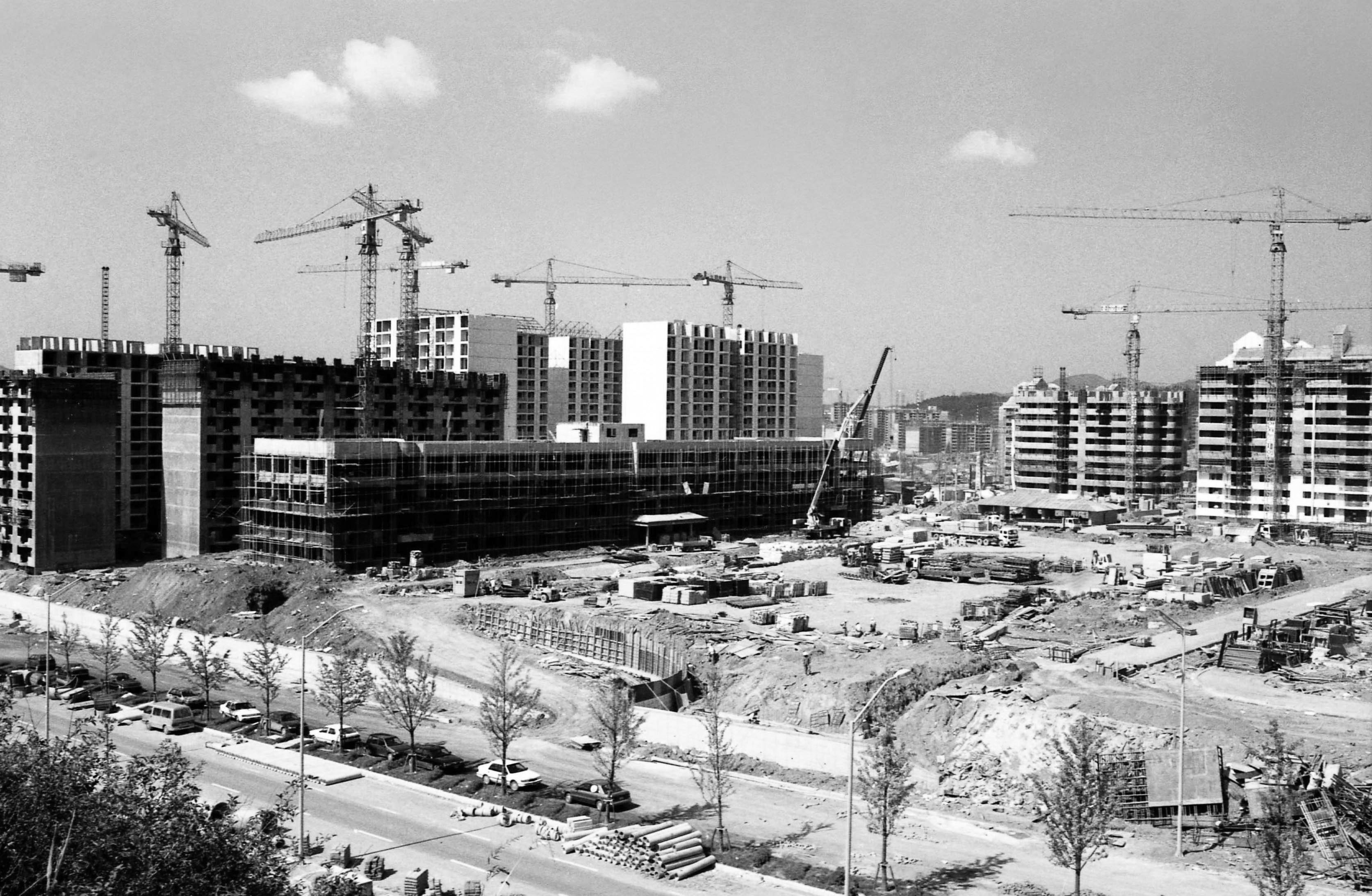
Second, the government took radical steps to boost the housing stock. The landmark policy, announced in May 1988, was a plan for the construction of 2 million housing units over five years, a significant turning point in the country’s housing policy. This represented a fundamental departure from previous approaches. Homes were allocated based on a family's income and earnings potential, with priority given to non-homeowners, while the resale of these homes was restricted for a specified period to prevent speculation.
3. Assessing the Outcomes
The results of these aggressive policies were dramatic. The 2 million housing plan was completed ahead of schedule, with 2.14 million houses built by August 1991. This was a collaborative effort, with the public sector building 780,000 units and the private sector contributing 1.43 million. Private builders were incentivized to participate through specific policy tools, including replacing a ceiling on the sales price of apartments with a cost-peg system; relaxing regulations on floor space and building-to-land ratios; and providing tax and financial benefits. Consequently, the annual construction of new housing units surged from an average of 220,000 between 1980 and 1987 to a peak of 750,000 in 1990. These measures were highly effective in stabilizing the real estate market in the early 1990s, though they also produced adverse side effects, such as a shortage of construction materials.
This period of intense state intervention successfully resolved the immediate housing crisis, setting the stage for the next administration's significant shift in policy philosophy.
1. A New Philosophy: Market-Led Growth
The Kim Young-sam administration marked a significant philosophical shift in economic policy. As outlined in its New Five-Year Economic Plan (1993-1997), the government moved away from the direct state intervention of its predecessor. The new economic logic held that reviving growth required unlocking private sector efficiency and attracting global capital. In real estate, the administration's objectives included increasing housing supply, stabilizing prices, and improving existing homes, primarily by providing support for private entities. This market-led approach proved productive, as a total of 3.12 million housing units were built during this period, surpassing the original target of 2.85 million.
2. Championing Deregulation and Private Investment
To empower the private sector, the administration implemented key deregulation measures that expanded the role of private entities into land development, a domain previously reserved for the state. Crucial legislative changes included the Act on Attracting Private Capital for Infrastructure Facilities, the Act on Foreigners’ Land Acquisition and Management, and the Special Act on the Relaxation of Regulations over Business Activities.
Agricultural regulations were also fundamentally reformed. The amended Farmland Act of 1996 represented a clear ideological pivot, prioritizing market-based efficiency over the post-war state's long-held commitment to land equity. The longstanding principle that farmland should belong only to working farmers was relaxed; specifically, the ceiling on the ownership of farmland of 7.35 acres was abolished in "agriculture promotion areas," and the ceiling outside these areas was raised to 12.25 acres.
3. Strengthening Global Competitiveness through Regional Development
The administration's regional development strategy shifted from the 1980s goal of balanced national development to a new focus on creating large-scale economic structures to strengthen local competitiveness in a globalized economy. The new official position was that balanced development should not be pursued at the expense of market forces.
A representative example was the West Coast Development Project, which targeted a relatively underdeveloped region for investment, including the Gunsan Industrial Park to serve as a hub for trade with China and the 352 km West Coast Expressway. In the capital region, policies were similarly focused on national competitiveness. Regulations on factory sites were eased; for instance, large-sized businesses engaged in seven high-tech sectors were allowed to expand their facilities by up to 30 percent in "growth management zones."
This environment yielded positive results, such as the rise of the Pusan International Film Festival. However, the long-term consequence of this deregulation was significant. The revision of the National Land Use Zoning Act, which integrated land use zones from five to three, reduced regulatory specificity. This change, coupled with a lack of systematic planning supervision, led to reckless development and environmental damage, particularly in the capital region.
This era of deregulation and growth would soon be interrupted by a seismic economic event that would force another fundamental rethinking of national policy.
1. Emergency Measures in the Face of a Financial Crisis
The foreign exchange crisis that struck South Korea in November 1997 had a profound and immediate impact on its real estate policy. The newly inaugurated Kim Dae-jung administration was forced to undertake extensive economic restructuring, and its actions related to the property market were framed as emergency measures. The primary goal was to stimulate the frozen real estate market by increasing transactions through aggressive deregulation.
To achieve this, the administration swiftly abolished numerous regulations. Key rules that were eliminated included the requirement for sales in certain areas to be reported for official approval, regulations on land owned by companies for non-business purposes, the legal limit on the ownership of land for housing, and the excessive-profit tax on land sales. In parallel, property-related taxes were lowered to further encourage private sector demand.
2. Market Opening and Financial Innovation
The administration's most significant policy decisions were born directly from the crisis. Recognizing the limits of relying on domestic financial resources, the government took the unprecedented step of completely opening the domestic property market to foreign investors in 1998. This move was complemented by a structural transformation of real estate finance. To facilitate transactions and unlock liquidity through securitization, the government adopted modern, Anglo-American models of financialization. These included new property financing techniques such as asset-backed securitization (ABS), mortgage-backed securitization (MBS), and real estate investment trusts (REITs). This combination of deregulation, foreign capital infusion, and financial innovation proved effective. Aided by these measures, the South Korean property market successfully stabilized by early 2000.

This report provides an analysis of South Korea's real estate policy transformations from the late 1980s through the early 2000s, charting the nation's ideological journey from a developmental state defined by strong intervention to a neoliberal actor embracing market liberalization. This evolution was not merely a series of reactions to circumstance but a profound policy learning curve, driven first by a severe domestic housing crisis and later by the imperatives of a global financial shock. The period showcases a pragmatic yet dramatic shift in governance, fundamentally reshaping the country's real estate landscape and its relationship with the global economy.
#land policy #regional development #real estate
1. Setting the Stage: The Late 1980s Housing Shortage
The Roh Tae-woo administration inherited a critical domestic issue that threatened both social and economic stability: a severe housing shortage exacerbated by rampant real estate speculation. Addressing this crisis became a cornerstone of its policy agenda. The situation stemmed from a confluence of factors. While an economic boom fueled rising housing demand, the supply of new homes had stagnated at a mere 200,000 units per year due to insufficient investment. Consequently, the national housing supply ratio, which stood at 71.2 percent in 1980, dropped to 69.2 percent by 1987. This imbalance had dire consequences, causing a dramatic jump in apartment prices in the Seoul region and soaring costs for jeonse (housing lease deposits), which placed an immense burden on low-income families and escalated the housing shortage into a major political problem.
2. A Dual-Pronged Strategy: Controlling Demand and Boosting Supply
In response, the government announced comprehensive real estate measures in August 1988, adopting a two-pronged strategy of suppressing speculative demand while simultaneously engineering a massive increase in housing supply.
First, to curb speculation, the administration enacted three powerful laws in December 1989 founded on the concept of "public stewardship toward land policy." These laws placed a limit on housing lot ownership, imposed a tax on excessive profits from land sales, and introduced development charges. A composite land tax was also adopted in 1989, and an official system of posting land prices was established to create a transparent basis for taxation. Although these interventionist laws were later ruled unconstitutional by the Constitutional Court, they played a considerable role in stabilizing the market at the time. Further tightening occurred in 1990, with measures that made real estate ownership registration obligatory, expanded the categories of land sales requiring official approval, and applied more rigorous criteria to real estate owned by firms for non-business-related purposes to discourage companies from holding unnecessarily large property assets.
Second, the government took radical steps to boost the housing stock. The landmark policy, announced in May 1988, was a plan for the construction of 2 million housing units over five years, a significant turning point in the country’s housing policy. This represented a fundamental departure from previous approaches. Homes were allocated based on a family's income and earnings potential, with priority given to non-homeowners, while the resale of these homes was restricted for a specified period to prevent speculation.
3. Assessing the Outcomes
The results of these aggressive policies were dramatic. The 2 million housing plan was completed ahead of schedule, with 2.14 million houses built by August 1991. This was a collaborative effort, with the public sector building 780,000 units and the private sector contributing 1.43 million. Private builders were incentivized to participate through specific policy tools, including replacing a ceiling on the sales price of apartments with a cost-peg system; relaxing regulations on floor space and building-to-land ratios; and providing tax and financial benefits. Consequently, the annual construction of new housing units surged from an average of 220,000 between 1980 and 1987 to a peak of 750,000 in 1990. These measures were highly effective in stabilizing the real estate market in the early 1990s, though they also produced adverse side effects, such as a shortage of construction materials.
This period of intense state intervention successfully resolved the immediate housing crisis, setting the stage for the next administration's significant shift in policy philosophy.
1. A New Philosophy: Market-Led Growth
The Kim Young-sam administration marked a significant philosophical shift in economic policy. As outlined in its New Five-Year Economic Plan (1993-1997), the government moved away from the direct state intervention of its predecessor. The new economic logic held that reviving growth required unlocking private sector efficiency and attracting global capital. In real estate, the administration's objectives included increasing housing supply, stabilizing prices, and improving existing homes, primarily by providing support for private entities. This market-led approach proved productive, as a total of 3.12 million housing units were built during this period, surpassing the original target of 2.85 million.
2. Championing Deregulation and Private Investment
To empower the private sector, the administration implemented key deregulation measures that expanded the role of private entities into land development, a domain previously reserved for the state. Crucial legislative changes included the Act on Attracting Private Capital for Infrastructure Facilities, the Act on Foreigners’ Land Acquisition and Management, and the Special Act on the Relaxation of Regulations over Business Activities.
Agricultural regulations were also fundamentally reformed. The amended Farmland Act of 1996 represented a clear ideological pivot, prioritizing market-based efficiency over the post-war state's long-held commitment to land equity. The longstanding principle that farmland should belong only to working farmers was relaxed; specifically, the ceiling on the ownership of farmland of 7.35 acres was abolished in "agriculture promotion areas," and the ceiling outside these areas was raised to 12.25 acres.
3. Strengthening Global Competitiveness through Regional Development
The administration's regional development strategy shifted from the 1980s goal of balanced national development to a new focus on creating large-scale economic structures to strengthen local competitiveness in a globalized economy. The new official position was that balanced development should not be pursued at the expense of market forces.
A representative example was the West Coast Development Project, which targeted a relatively underdeveloped region for investment, including the Gunsan Industrial Park to serve as a hub for trade with China and the 352 km West Coast Expressway. In the capital region, policies were similarly focused on national competitiveness. Regulations on factory sites were eased; for instance, large-sized businesses engaged in seven high-tech sectors were allowed to expand their facilities by up to 30 percent in "growth management zones."
This environment yielded positive results, such as the rise of the Pusan International Film Festival. However, the long-term consequence of this deregulation was significant. The revision of the National Land Use Zoning Act, which integrated land use zones from five to three, reduced regulatory specificity. This change, coupled with a lack of systematic planning supervision, led to reckless development and environmental damage, particularly in the capital region.
This era of deregulation and growth would soon be interrupted by a seismic economic event that would force another fundamental rethinking of national policy.
1. Emergency Measures in the Face of a Financial Crisis
The foreign exchange crisis that struck South Korea in November 1997 had a profound and immediate impact on its real estate policy. The newly inaugurated Kim Dae-jung administration was forced to undertake extensive economic restructuring, and its actions related to the property market were framed as emergency measures. The primary goal was to stimulate the frozen real estate market by increasing transactions through aggressive deregulation.
To achieve this, the administration swiftly abolished numerous regulations. Key rules that were eliminated included the requirement for sales in certain areas to be reported for official approval, regulations on land owned by companies for non-business purposes, the legal limit on the ownership of land for housing, and the excessive-profit tax on land sales. In parallel, property-related taxes were lowered to further encourage private sector demand.
2. Market Opening and Financial Innovation
The administration's most significant policy decisions were born directly from the crisis. Recognizing the limits of relying on domestic financial resources, the government took the unprecedented step of completely opening the domestic property market to foreign investors in 1998. This move was complemented by a structural transformation of real estate finance. To facilitate transactions and unlock liquidity through securitization, the government adopted modern, Anglo-American models of financialization. These included new property financing techniques such as asset-backed securitization (ABS), mortgage-backed securitization (MBS), and real estate investment trusts (REITs). This combination of deregulation, foreign capital infusion, and financial innovation proved effective. Aided by these measures, the South Korean property market successfully stabilized by early 2000.

1. Setting the Stage: The Late 1980s Housing Shortage
The Roh Tae-woo administration inherited a critical domestic issue that threatened both social and economic stability: a severe housing shortage exacerbated by rampant real estate speculation. Addressing this crisis became a cornerstone of its policy agenda. The situation stemmed from a confluence of factors. While an economic boom fueled rising housing demand, the supply of new homes had stagnated at a mere 200,000 units per year due to insufficient investment. Consequently, the national housing supply ratio, which stood at 71.2 percent in 1980, dropped to 69.2 percent by 1987. This imbalance had dire consequences, causing a dramatic jump in apartment prices in the Seoul region and soaring costs for jeonse (housing lease deposits), which placed an immense burden on low-income families and escalated the housing shortage into a major political problem.
2. A Dual-Pronged Strategy: Controlling Demand and Boosting Supply
In response, the government announced comprehensive real estate measures in August 1988, adopting a two-pronged strategy of suppressing speculative demand while simultaneously engineering a massive increase in housing supply.
First, to curb speculation, the administration enacted three powerful laws in December 1989 founded on the concept of "public stewardship toward land policy." These laws placed a limit on housing lot ownership, imposed a tax on excessive profits from land sales, and introduced development charges. A composite land tax was also adopted in 1989, and an official system of posting land prices was established to create a transparent basis for taxation. Although these interventionist laws were later ruled unconstitutional by the Constitutional Court, they played a considerable role in stabilizing the market at the time. Further tightening occurred in 1990, with measures that made real estate ownership registration obligatory, expanded the categories of land sales requiring official approval, and applied more rigorous criteria to real estate owned by firms for non-business-related purposes to discourage companies from holding unnecessarily large property assets.
Second, the government took radical steps to boost the housing stock. The landmark policy, announced in May 1988, was a plan for the construction of 2 million housing units over five years, a significant turning point in the country’s housing policy. This represented a fundamental departure from previous approaches. Homes were allocated based on a family's income and earnings potential, with priority given to non-homeowners, while the resale of these homes was restricted for a specified period to prevent speculation.
3. Assessing the Outcomes
The results of these aggressive policies were dramatic. The 2 million housing plan was completed ahead of schedule, with 2.14 million houses built by August 1991. This was a collaborative effort, with the public sector building 780,000 units and the private sector contributing 1.43 million. Private builders were incentivized to participate through specific policy tools, including replacing a ceiling on the sales price of apartments with a cost-peg system; relaxing regulations on floor space and building-to-land ratios; and providing tax and financial benefits. Consequently, the annual construction of new housing units surged from an average of 220,000 between 1980 and 1987 to a peak of 750,000 in 1990. These measures were highly effective in stabilizing the real estate market in the early 1990s, though they also produced adverse side effects, such as a shortage of construction materials.
This period of intense state intervention successfully resolved the immediate housing crisis, setting the stage for the next administration's significant shift in policy philosophy.
1. A New Philosophy: Market-Led Growth
The Kim Young-sam administration marked a significant philosophical shift in economic policy. As outlined in its New Five-Year Economic Plan (1993-1997), the government moved away from the direct state intervention of its predecessor. The new economic logic held that reviving growth required unlocking private sector efficiency and attracting global capital. In real estate, the administration's objectives included increasing housing supply, stabilizing prices, and improving existing homes, primarily by providing support for private entities. This market-led approach proved productive, as a total of 3.12 million housing units were built during this period, surpassing the original target of 2.85 million.
2. Championing Deregulation and Private Investment
To empower the private sector, the administration implemented key deregulation measures that expanded the role of private entities into land development, a domain previously reserved for the state. Crucial legislative changes included the Act on Attracting Private Capital for Infrastructure Facilities, the Act on Foreigners’ Land Acquisition and Management, and the Special Act on the Relaxation of Regulations over Business Activities.
Agricultural regulations were also fundamentally reformed. The amended Farmland Act of 1996 represented a clear ideological pivot, prioritizing market-based efficiency over the post-war state's long-held commitment to land equity. The longstanding principle that farmland should belong only to working farmers was relaxed; specifically, the ceiling on the ownership of farmland of 7.35 acres was abolished in "agriculture promotion areas," and the ceiling outside these areas was raised to 12.25 acres.
3. Strengthening Global Competitiveness through Regional Development
The administration's regional development strategy shifted from the 1980s goal of balanced national development to a new focus on creating large-scale economic structures to strengthen local competitiveness in a globalized economy. The new official position was that balanced development should not be pursued at the expense of market forces.
A representative example was the West Coast Development Project, which targeted a relatively underdeveloped region for investment, including the Gunsan Industrial Park to serve as a hub for trade with China and the 352 km West Coast Expressway. In the capital region, policies were similarly focused on national competitiveness. Regulations on factory sites were eased; for instance, large-sized businesses engaged in seven high-tech sectors were allowed to expand their facilities by up to 30 percent in "growth management zones."
This environment yielded positive results, such as the rise of the Pusan International Film Festival. However, the long-term consequence of this deregulation was significant. The revision of the National Land Use Zoning Act, which integrated land use zones from five to three, reduced regulatory specificity. This change, coupled with a lack of systematic planning supervision, led to reckless development and environmental damage, particularly in the capital region.
This era of deregulation and growth would soon be interrupted by a seismic economic event that would force another fundamental rethinking of national policy.
1. Emergency Measures in the Face of a Financial Crisis
The foreign exchange crisis that struck South Korea in November 1997 had a profound and immediate impact on its real estate policy. The newly inaugurated Kim Dae-jung administration was forced to undertake extensive economic restructuring, and its actions related to the property market were framed as emergency measures. The primary goal was to stimulate the frozen real estate market by increasing transactions through aggressive deregulation.
To achieve this, the administration swiftly abolished numerous regulations. Key rules that were eliminated included the requirement for sales in certain areas to be reported for official approval, regulations on land owned by companies for non-business purposes, the legal limit on the ownership of land for housing, and the excessive-profit tax on land sales. In parallel, property-related taxes were lowered to further encourage private sector demand.
2. Market Opening and Financial Innovation
The administration's most significant policy decisions were born directly from the crisis. Recognizing the limits of relying on domestic financial resources, the government took the unprecedented step of completely opening the domestic property market to foreign investors in 1998. This move was complemented by a structural transformation of real estate finance. To facilitate transactions and unlock liquidity through securitization, the government adopted modern, Anglo-American models of financialization. These included new property financing techniques such as asset-backed securitization (ABS), mortgage-backed securitization (MBS), and real estate investment trusts (REITs). This combination of deregulation, foreign capital infusion, and financial innovation proved effective. Aided by these measures, the South Korean property market successfully stabilized by early 2000.