

Back to List
K-Dev Original

Waterworks and Sewerage Systems in Korea: A Historical Overview

Summary

The history of Korea’s water and sewerage systems reflects resilience, strategic planning, and national commitment. Beginning with the Ttukdo Water Purification Plant in 1908, Korea’s modern water supply expanded from 17.1% in 1961 to 98.9% by 2016 through foreign loans, local investment, and technology transfer. Parallel progress in sewerage followed, with national coverage rising from 45.5% in 1995 to 90.1% by 2010. Rural programs, supported by the Saemaeul Movement and special accounts, extended safe drinking water and sanitation nationwide. Over time, policy focus evolved from quantitative expansion to water quality, environmental protection, and equitable access for all citizens.

Key Questions

  • What policy and institutional factors enabled Korea to achieve nationwide water access and sanitation in such a short period?
  • How did Korea’s water and sewerage policies evolve from urban-focused expansion to include rural and small-scale systems?

#water resource #clean water #public health

Building the Foundation: The History of Korea's Modern Waterworks

Origins and Early Challenges

The establishment of a modern, centralized water supply is a cornerstone of a nation's development, fundamental to enhancing public health, enabling urbanization, and supporting industrial growth. The history of Korea's waterworks began when a patent for construction and management was granted to American entrepreneurs in 1903. This led to the completion of the Ttukdo Water Purification Plant, which began supplying 12,500 tons of water per day to 15,000 people in Seoul on September 1, 1908, marking the start of the modern water supply era. By the time of Korea's independence in 1945, the system served approximately two million people across 83 cities. However, this represented only a fraction of the population, and in 1945, the majority of people in Korea still used water from wells, valleys, and streams as drinking water.
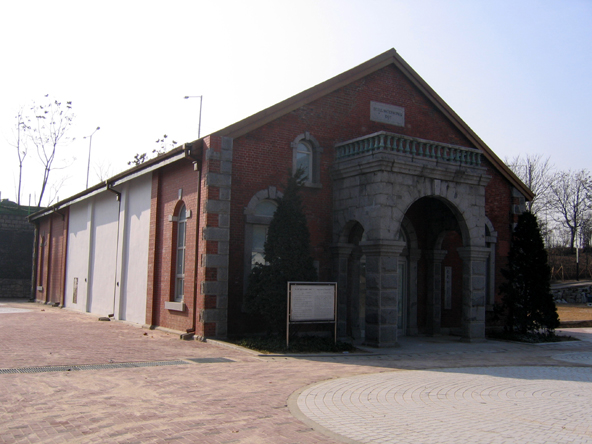
Ttukdo Water Purification Plant

Source: K-water (n.d.)

The years following independence brought immense setbacks. The return of overseas Koreans and rapid population concentration in cities strained the already insufficient waterworks. A critical shortage of technical personnel, a field previously monopolized by the Japanese, created severe maintenance and management challenges. These problems were catastrophically compounded by the Korean War, which inflicted unprecedented damage on the nation's infrastructure. It is estimated that 30-90% of water purification plants, 5-10% of water pipes, and 60-80% of pumping stations were destroyed.

Post-War Recovery and Expansion

In the face of a weak financial position, the post-war recovery effort was driven by a combination of international assistance and domestic resolve. After the Korean War, the waterworks restoration project was launched with the help of foreign loans and the issuance of bonds by local governments. By 1955, all waterworks destroyed during the war had been fully restored, and by 1961, the national water supply capacity had increased to 600,000 tons per day.

The launch of the Five-Year Economic Development Plans in 1962 ushered in an era of planned, large-scale investment in water supply facilities. International support diversified beyond the United States to include technical cooperation and loans from Japan, Germany, and key international bodies like the International Bank for Reconstruction and Development (IBRD) and the Asian Development Bank (ADB).

A landmark initiative, the Multi-regional Water Supply Project, began in the late 1970s to provide a stable water supply to Seoul and 24 surrounding communities from the Paldang Dam. This massive undertaking was financed through mechanisms such as loans from the Overseas Economic Cooperation Fund (OECF) and the continued issuance of local government bonds, which were instrumental in funding construction through the 1980s.

These decades of concerted effort yielded remarkable results. The collaboration with foreign designers on loan-funded projects facilitated a crucial transfer of technology, enhancing the capabilities of Korean engineers. The national water supply rate surged from just 17.1% in 1961 to 78.4% by 1990, eventually reaching an impressive 98.9% by 2016. This achievement marked a significant policy turning point, with the government's focus shifting from quantitative expansion to improving water quality and providing customer-centered service.

While large-scale projects successfully served urban and industrial centers, a different approach was needed to bring safe drinking water to the nation's dispersed rural communities.

Extending the Lifeline: Small-Scale Waterworks in Rural Areas

Addressing the Rural Water Challenge

While cities benefited from modern waterworks, rural populations traditionally relied on wells and natural springs for drinking water. These sources posed significant public health risks. Wells were often located near toilets and animal pens, leading to a high risk of contamination, while thin aquifers offered poor natural filtration. The lack of sanitary management and disinfection resulted in frequent waterborne infections and shortages during droughts. To address this disparity and improve the quality of life in rural areas, dedicated small-scale water supply systems were essential.

The government began installing simple water supply systems in rural areas in 1967. This initiative gained significant momentum in the 1970s as part of the Saemaeul (New Village) Movement, a community-driven development program. With support from government funds and an IBRD loan, 4,073 systems were installed between 1976 and 1977 alone. As a result, 1.5 million people were able to benefit from this program, and the village drinking water system played an important role in supplying safe drinking water to the rural areas at that time.

Under the Waterworks Law, these small-scale facilities are classified into two main types:

  • Village drinking water system: Serves a population of 100 to 2,500 with a daily supply of 20 to 500 cubic meters.
  • Small waterworks: Serves a population of less than 100 with a daily supply of less than 20 cubic meters.

The legal responsibility for managing these systems rests with the head of the local government, with the state providing necessary technical and financial support to ensure sanitary operation.

National subsidies, allocated through special accounts for regional development, provide significant funding for these projects, often covering 70% of the cost for new construction and improvements.

Treatment and Impact

The water sources for these small-scale facilities are typically high-quality underground or valley water, which often requires minimal filtration. However, to guard against potential contamination, various treatment processes are applied depending on the source. These range from simple disinfection for spring water to more complex processes involving coagulation, sedimentation, and filtration for lake or river water.

The success of these rural programs is evident in the dramatic increase in water supply rates. While Myeon (town) areas had a service rate of just 31.1% in 2002, this figure rose to 72.8% by 2016. When including the coverage from small-scale water supply facilities, the rate for Myeon areas reached an impressive 92.7% in 2016, significantly narrowing the gap with urban centers and improving public health across the nation.

Just as access to clean water was expanded, a parallel effort was required to manage the wastewater generated by a growing and modernizing population.

The Parallel Journey: Developing Korea’s Sewerage System

The Rise of Modern Sanitation

The development of modern sewerage systems is inseparable from public health. Effective wastewater collection and treatment are critical for preventing the spread of waterborne diseases, mitigating river pollution, and supporting a sanitary living environment, particularly amid rapid industrialization and population growth. Korea's first modern sewerage system dates back to 1918, and like the waterworks, it underwent post-Korean War restoration and improvement. A key legal milestone was the establishment of the Sewerage Act in 1966, which provided a framework for the construction and management of public sewerage systems.

A pivotal shift occurred in the 1970s. The rapid economic growth and urbanization of the preceding decade had led to a dramatic increase in wastewater, causing severe river pollution. This environmental crisis prompted a new focus on water quality conservation, culminating in the construction of Korea's first terminal sewage disposal plant at Cheonggyecheon in 1976.

This was followed by a period of rapid expansion, spurred by preparations for the 1988 Seoul Olympic Games. As part of the Han River Comprehensive Development Project, four major sewage treatment plants in Seoul were newly constructed or expanded. To fund this massive undertaking, the government began collecting sewer charges in 1983 and secured foreign loans from institutions like the ADB and OECF. These loan-funded projects were broadly classified into two categories: those serving manufacturing areas like Gumi and Ulsan, and those serving urban areas like Daegu and Daejeon.

The massive investments made from the 1990s onward produced dramatic results. From 1993 to 2005 alone, 26.1 trillion won was invested in sewerage projects. This intensive effort increased the national sewerage penetration rate from 45.5% in 1995 to 90.1% by 2010, elevating Korea's sanitation infrastructure to a level comparable with advanced countries in a remarkably short period.

As with the water supply, the success of large-scale urban sewerage systems highlighted the need for a tailored approach to bring modern sanitation to rural regions.

Completing the Picture: Small-Scale Sewerage in Rural Korea

The Rural Sanitation Imperative

Historically, sewerage was considered an urban infrastructure. However, the very success of the rural waterworks program, which brought piped water and flush toilets to homes, created an urgent and unforeseen sanitation crisis. The increased wastewater, a direct byproduct of improved living standards and the expansion of stock farming, overwhelmed traditional systems. This threatened the quality of water resources and created unsanitary living conditions, making the development of rural sewerage an environmental and public health imperative.

The small-scale sewerage project began with trial constructions in the early 1990s. The initiative gained significant political and financial momentum with the establishment of a special tax for rural areas in 1995. In the agricultural special tax project, based on the program to improve rural living conditions, the sewerage project focused on myeon or village and was run for 10 years from 1995 to 2004.

System Definition and Management

Under the Sewerage Law, a "small sewerage system" is defined as a public sewage treatment facility with a capacity of less than 500 cubic meters per day. These systems evolved legally over time, initially being installed without a standardized framework before being formally incorporated into the public sewerage system under the Sewerage Law.
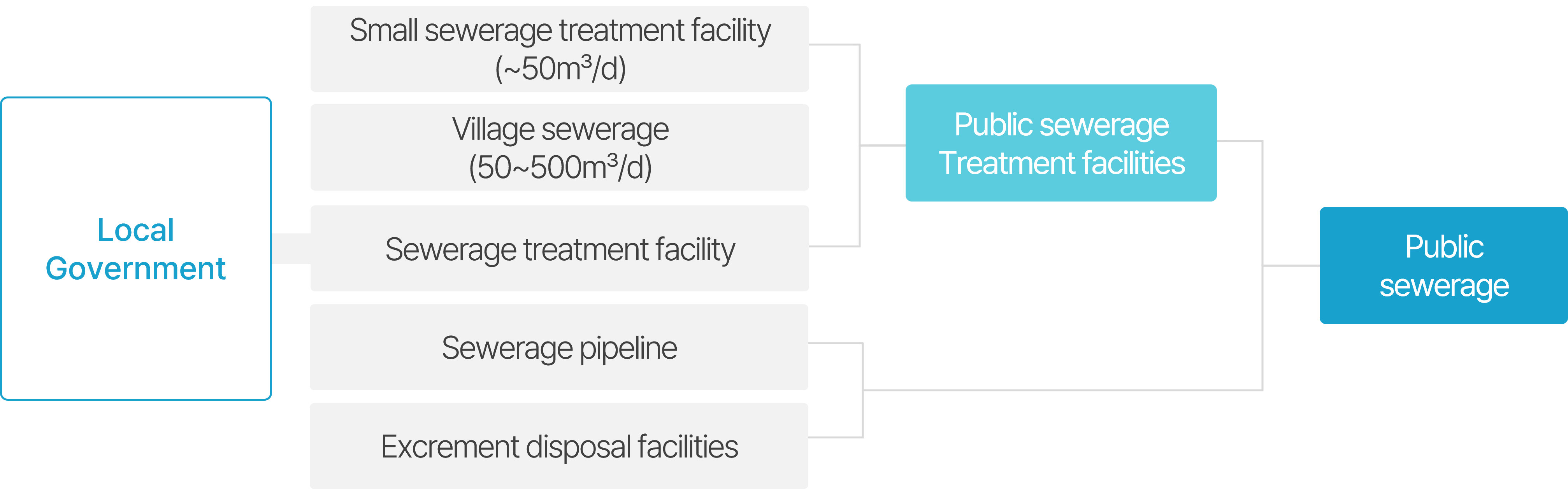
Classification of the public sewerage

Source: Lee (2008)

  • Public Sewerage
  • Sewer Pipe
  • Public Sewage Treatment Facility
  • Sewage Treatment Plant (Sewage treatment capacity more than 500 tons/d)
  • Small Public Sewerage (Sewage treatment capacity less than 500 tons/d)

The management of these projects was initially fragmented across the Ministry of Home Affairs, the Ministry of Agriculture and Forestry, and the Ministry of Environment. To improve efficiency, management responsibilities were eventually consolidated, primarily under the Ministry of Environment and the Ministry of Agriculture and Forestry. Local governments now manage the completed facilities either directly or by commissioning private companies, each model presenting distinct advantages and disadvantages related to cost, efficiency, and quality of service.

Financing, Technology, and Impact

Financing for rural sewerage projects has been complex, drawing from various special accounts over the years, including the special tax for rural development, the agricultural structure improvement special account, and the balanced national development special account. This diversified funding structure allowed for sustained investment in rural sanitation.

A variety of treatment technologies have been applied to these small-scale facilities, broadly categorized as Suspended growth, Attached growth (which includes methods like the Rotating biological contactor and Contact oxidation), SBR (Sequencing batch reactor), and Soil treatment methods. Finally, specific variants like the Contact oxidation method topped soil and the Capillary permeation trench method are included in the Soil treatment method. Effluent water quality standards are regulated by the Sewerage Act, with specific limits for key constituents like BOD, SS, and nitrogen.

These sustained investments have significantly closed the sanitation gap between urban and rural areas. While a disparity still exists, the sewerage service coverage rate in rural areas increased from 45.7% in 2007 to 70.0% in 2017, demonstrating the government's consistent effort to achieve equitable access to this essential public service.

Korea’s Water Industry Today

The development of South Korea’s water and sewerage systems laid the groundwork for today’s globally competitive water industry. Building on this legacy, Korea has fostered the establishment of a Korea Water Cluster, aiming to enhance public water welfare, improve water management efficiency, and create new jobs and economic opportunities. Through these efforts, Korean water companies are strengthening their competitiveness and positioning themselves to lead in the global water industry, advancing the nation’s transition from a recipient of foreign assistance to a global powerhouse in water technology and governance.
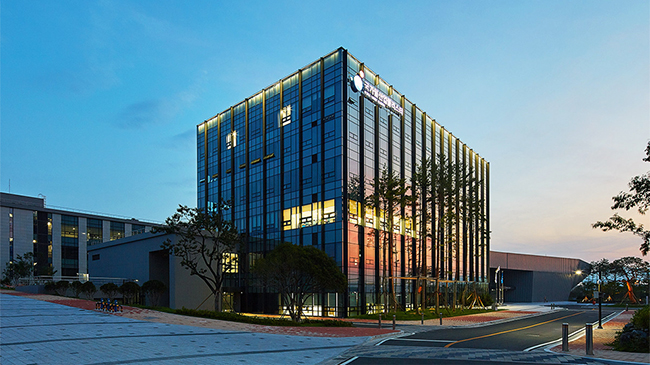
Korea Water Cluster at Daegu

Source: Korea Water Cluster (n.d.)

Further Readings

Author
Eulsaeng Cho
Korea Environment Institute
cite this work

Waterworks and Sewerage Systems in Korea: A Historical Overview

K-Dev Original
February 1, 2026
This is some text inside of a div block.

Summary

The history of Korea’s water and sewerage systems reflects resilience, strategic planning, and national commitment. Beginning with the Ttukdo Water Purification Plant in 1908, Korea’s modern water supply expanded from 17.1% in 1961 to 98.9% by 2016 through foreign loans, local investment, and technology transfer. Parallel progress in sewerage followed, with national coverage rising from 45.5% in 1995 to 90.1% by 2010. Rural programs, supported by the Saemaeul Movement and special accounts, extended safe drinking water and sanitation nationwide. Over time, policy focus evolved from quantitative expansion to water quality, environmental protection, and equitable access for all citizens.

Key Questions

  • What policy and institutional factors enabled Korea to achieve nationwide water access and sanitation in such a short period?
  • How did Korea’s water and sewerage policies evolve from urban-focused expansion to include rural and small-scale systems?

#water resource #clean water #public health

Building the Foundation: The History of Korea's Modern Waterworks

Origins and Early Challenges

The establishment of a modern, centralized water supply is a cornerstone of a nation's development, fundamental to enhancing public health, enabling urbanization, and supporting industrial growth. The history of Korea's waterworks began when a patent for construction and management was granted to American entrepreneurs in 1903. This led to the completion of the Ttukdo Water Purification Plant, which began supplying 12,500 tons of water per day to 15,000 people in Seoul on September 1, 1908, marking the start of the modern water supply era. By the time of Korea's independence in 1945, the system served approximately two million people across 83 cities. However, this represented only a fraction of the population, and in 1945, the majority of people in Korea still used water from wells, valleys, and streams as drinking water.

Ttukdo Water Purification Plant

Source: K-water (n.d.)

The years following independence brought immense setbacks. The return of overseas Koreans and rapid population concentration in cities strained the already insufficient waterworks. A critical shortage of technical personnel, a field previously monopolized by the Japanese, created severe maintenance and management challenges. These problems were catastrophically compounded by the Korean War, which inflicted unprecedented damage on the nation's infrastructure. It is estimated that 30-90% of water purification plants, 5-10% of water pipes, and 60-80% of pumping stations were destroyed.

Post-War Recovery and Expansion

In the face of a weak financial position, the post-war recovery effort was driven by a combination of international assistance and domestic resolve. After the Korean War, the waterworks restoration project was launched with the help of foreign loans and the issuance of bonds by local governments. By 1955, all waterworks destroyed during the war had been fully restored, and by 1961, the national water supply capacity had increased to 600,000 tons per day.

The launch of the Five-Year Economic Development Plans in 1962 ushered in an era of planned, large-scale investment in water supply facilities. International support diversified beyond the United States to include technical cooperation and loans from Japan, Germany, and key international bodies like the International Bank for Reconstruction and Development (IBRD) and the Asian Development Bank (ADB).

A landmark initiative, the Multi-regional Water Supply Project, began in the late 1970s to provide a stable water supply to Seoul and 24 surrounding communities from the Paldang Dam. This massive undertaking was financed through mechanisms such as loans from the Overseas Economic Cooperation Fund (OECF) and the continued issuance of local government bonds, which were instrumental in funding construction through the 1980s.

These decades of concerted effort yielded remarkable results. The collaboration with foreign designers on loan-funded projects facilitated a crucial transfer of technology, enhancing the capabilities of Korean engineers. The national water supply rate surged from just 17.1% in 1961 to 78.4% by 1990, eventually reaching an impressive 98.9% by 2016. This achievement marked a significant policy turning point, with the government's focus shifting from quantitative expansion to improving water quality and providing customer-centered service.

While large-scale projects successfully served urban and industrial centers, a different approach was needed to bring safe drinking water to the nation's dispersed rural communities.

Extending the Lifeline: Small-Scale Waterworks in Rural Areas

Addressing the Rural Water Challenge

While cities benefited from modern waterworks, rural populations traditionally relied on wells and natural springs for drinking water. These sources posed significant public health risks. Wells were often located near toilets and animal pens, leading to a high risk of contamination, while thin aquifers offered poor natural filtration. The lack of sanitary management and disinfection resulted in frequent waterborne infections and shortages during droughts. To address this disparity and improve the quality of life in rural areas, dedicated small-scale water supply systems were essential.

The government began installing simple water supply systems in rural areas in 1967. This initiative gained significant momentum in the 1970s as part of the Saemaeul (New Village) Movement, a community-driven development program. With support from government funds and an IBRD loan, 4,073 systems were installed between 1976 and 1977 alone. As a result, 1.5 million people were able to benefit from this program, and the village drinking water system played an important role in supplying safe drinking water to the rural areas at that time.

Under the Waterworks Law, these small-scale facilities are classified into two main types:

  • Village drinking water system: Serves a population of 100 to 2,500 with a daily supply of 20 to 500 cubic meters.
  • Small waterworks: Serves a population of less than 100 with a daily supply of less than 20 cubic meters.

The legal responsibility for managing these systems rests with the head of the local government, with the state providing necessary technical and financial support to ensure sanitary operation.

National subsidies, allocated through special accounts for regional development, provide significant funding for these projects, often covering 70% of the cost for new construction and improvements.

Treatment and Impact

The water sources for these small-scale facilities are typically high-quality underground or valley water, which often requires minimal filtration. However, to guard against potential contamination, various treatment processes are applied depending on the source. These range from simple disinfection for spring water to more complex processes involving coagulation, sedimentation, and filtration for lake or river water.

The success of these rural programs is evident in the dramatic increase in water supply rates. While Myeon (town) areas had a service rate of just 31.1% in 2002, this figure rose to 72.8% by 2016. When including the coverage from small-scale water supply facilities, the rate for Myeon areas reached an impressive 92.7% in 2016, significantly narrowing the gap with urban centers and improving public health across the nation.

Just as access to clean water was expanded, a parallel effort was required to manage the wastewater generated by a growing and modernizing population.

The Parallel Journey: Developing Korea’s Sewerage System

The Rise of Modern Sanitation

The development of modern sewerage systems is inseparable from public health. Effective wastewater collection and treatment are critical for preventing the spread of waterborne diseases, mitigating river pollution, and supporting a sanitary living environment, particularly amid rapid industrialization and population growth. Korea's first modern sewerage system dates back to 1918, and like the waterworks, it underwent post-Korean War restoration and improvement. A key legal milestone was the establishment of the Sewerage Act in 1966, which provided a framework for the construction and management of public sewerage systems.

A pivotal shift occurred in the 1970s. The rapid economic growth and urbanization of the preceding decade had led to a dramatic increase in wastewater, causing severe river pollution. This environmental crisis prompted a new focus on water quality conservation, culminating in the construction of Korea's first terminal sewage disposal plant at Cheonggyecheon in 1976.

This was followed by a period of rapid expansion, spurred by preparations for the 1988 Seoul Olympic Games. As part of the Han River Comprehensive Development Project, four major sewage treatment plants in Seoul were newly constructed or expanded. To fund this massive undertaking, the government began collecting sewer charges in 1983 and secured foreign loans from institutions like the ADB and OECF. These loan-funded projects were broadly classified into two categories: those serving manufacturing areas like Gumi and Ulsan, and those serving urban areas like Daegu and Daejeon.

The massive investments made from the 1990s onward produced dramatic results. From 1993 to 2005 alone, 26.1 trillion won was invested in sewerage projects. This intensive effort increased the national sewerage penetration rate from 45.5% in 1995 to 90.1% by 2010, elevating Korea's sanitation infrastructure to a level comparable with advanced countries in a remarkably short period.

As with the water supply, the success of large-scale urban sewerage systems highlighted the need for a tailored approach to bring modern sanitation to rural regions.

Completing the Picture: Small-Scale Sewerage in Rural Korea

The Rural Sanitation Imperative

Historically, sewerage was considered an urban infrastructure. However, the very success of the rural waterworks program, which brought piped water and flush toilets to homes, created an urgent and unforeseen sanitation crisis. The increased wastewater, a direct byproduct of improved living standards and the expansion of stock farming, overwhelmed traditional systems. This threatened the quality of water resources and created unsanitary living conditions, making the development of rural sewerage an environmental and public health imperative.

The small-scale sewerage project began with trial constructions in the early 1990s. The initiative gained significant political and financial momentum with the establishment of a special tax for rural areas in 1995. In the agricultural special tax project, based on the program to improve rural living conditions, the sewerage project focused on myeon or village and was run for 10 years from 1995 to 2004.

System Definition and Management

Under the Sewerage Law, a "small sewerage system" is defined as a public sewage treatment facility with a capacity of less than 500 cubic meters per day. These systems evolved legally over time, initially being installed without a standardized framework before being formally incorporated into the public sewerage system under the Sewerage Law.

Classification of the public sewerage

Source: Lee (2008)

  • Public Sewerage
  • Sewer Pipe
  • Public Sewage Treatment Facility
  • Sewage Treatment Plant (Sewage treatment capacity more than 500 tons/d)
  • Small Public Sewerage (Sewage treatment capacity less than 500 tons/d)

The management of these projects was initially fragmented across the Ministry of Home Affairs, the Ministry of Agriculture and Forestry, and the Ministry of Environment. To improve efficiency, management responsibilities were eventually consolidated, primarily under the Ministry of Environment and the Ministry of Agriculture and Forestry. Local governments now manage the completed facilities either directly or by commissioning private companies, each model presenting distinct advantages and disadvantages related to cost, efficiency, and quality of service.

Financing, Technology, and Impact

Financing for rural sewerage projects has been complex, drawing from various special accounts over the years, including the special tax for rural development, the agricultural structure improvement special account, and the balanced national development special account. This diversified funding structure allowed for sustained investment in rural sanitation.

A variety of treatment technologies have been applied to these small-scale facilities, broadly categorized as Suspended growth, Attached growth (which includes methods like the Rotating biological contactor and Contact oxidation), SBR (Sequencing batch reactor), and Soil treatment methods. Finally, specific variants like the Contact oxidation method topped soil and the Capillary permeation trench method are included in the Soil treatment method. Effluent water quality standards are regulated by the Sewerage Act, with specific limits for key constituents like BOD, SS, and nitrogen.

These sustained investments have significantly closed the sanitation gap between urban and rural areas. While a disparity still exists, the sewerage service coverage rate in rural areas increased from 45.7% in 2007 to 70.0% in 2017, demonstrating the government's consistent effort to achieve equitable access to this essential public service.

Korea’s Water Industry Today

The development of South Korea’s water and sewerage systems laid the groundwork for today’s globally competitive water industry. Building on this legacy, Korea has fostered the establishment of a Korea Water Cluster, aiming to enhance public water welfare, improve water management efficiency, and create new jobs and economic opportunities. Through these efforts, Korean water companies are strengthening their competitiveness and positioning themselves to lead in the global water industry, advancing the nation’s transition from a recipient of foreign assistance to a global powerhouse in water technology and governance.

Korea Water Cluster at Daegu

Source: Korea Water Cluster (n.d.)

Further Readings

References
Cite this work
.

More to explore from
In Perspective

Waterworks and Sewerage Systems in Korea: A Historical Overview

K-Dev Original
February 1, 2026

I am the text that will be copied.

Building the Foundation: The History of Korea's Modern Waterworks

Origins and Early Challenges

The establishment of a modern, centralized water supply is a cornerstone of a nation's development, fundamental to enhancing public health, enabling urbanization, and supporting industrial growth. The history of Korea's waterworks began when a patent for construction and management was granted to American entrepreneurs in 1903. This led to the completion of the Ttukdo Water Purification Plant, which began supplying 12,500 tons of water per day to 15,000 people in Seoul on September 1, 1908, marking the start of the modern water supply era. By the time of Korea's independence in 1945, the system served approximately two million people across 83 cities. However, this represented only a fraction of the population, and in 1945, the majority of people in Korea still used water from wells, valleys, and streams as drinking water.

Ttukdo Water Purification Plant

Source: K-water (n.d.)

The years following independence brought immense setbacks. The return of overseas Koreans and rapid population concentration in cities strained the already insufficient waterworks. A critical shortage of technical personnel, a field previously monopolized by the Japanese, created severe maintenance and management challenges. These problems were catastrophically compounded by the Korean War, which inflicted unprecedented damage on the nation's infrastructure. It is estimated that 30-90% of water purification plants, 5-10% of water pipes, and 60-80% of pumping stations were destroyed.

Post-War Recovery and Expansion

In the face of a weak financial position, the post-war recovery effort was driven by a combination of international assistance and domestic resolve. After the Korean War, the waterworks restoration project was launched with the help of foreign loans and the issuance of bonds by local governments. By 1955, all waterworks destroyed during the war had been fully restored, and by 1961, the national water supply capacity had increased to 600,000 tons per day.

The launch of the Five-Year Economic Development Plans in 1962 ushered in an era of planned, large-scale investment in water supply facilities. International support diversified beyond the United States to include technical cooperation and loans from Japan, Germany, and key international bodies like the International Bank for Reconstruction and Development (IBRD) and the Asian Development Bank (ADB).

A landmark initiative, the Multi-regional Water Supply Project, began in the late 1970s to provide a stable water supply to Seoul and 24 surrounding communities from the Paldang Dam. This massive undertaking was financed through mechanisms such as loans from the Overseas Economic Cooperation Fund (OECF) and the continued issuance of local government bonds, which were instrumental in funding construction through the 1980s.

These decades of concerted effort yielded remarkable results. The collaboration with foreign designers on loan-funded projects facilitated a crucial transfer of technology, enhancing the capabilities of Korean engineers. The national water supply rate surged from just 17.1% in 1961 to 78.4% by 1990, eventually reaching an impressive 98.9% by 2016. This achievement marked a significant policy turning point, with the government's focus shifting from quantitative expansion to improving water quality and providing customer-centered service.

While large-scale projects successfully served urban and industrial centers, a different approach was needed to bring safe drinking water to the nation's dispersed rural communities.

Extending the Lifeline: Small-Scale Waterworks in Rural Areas

Addressing the Rural Water Challenge

While cities benefited from modern waterworks, rural populations traditionally relied on wells and natural springs for drinking water. These sources posed significant public health risks. Wells were often located near toilets and animal pens, leading to a high risk of contamination, while thin aquifers offered poor natural filtration. The lack of sanitary management and disinfection resulted in frequent waterborne infections and shortages during droughts. To address this disparity and improve the quality of life in rural areas, dedicated small-scale water supply systems were essential.

The government began installing simple water supply systems in rural areas in 1967. This initiative gained significant momentum in the 1970s as part of the Saemaeul (New Village) Movement, a community-driven development program. With support from government funds and an IBRD loan, 4,073 systems were installed between 1976 and 1977 alone. As a result, 1.5 million people were able to benefit from this program, and the village drinking water system played an important role in supplying safe drinking water to the rural areas at that time.

Under the Waterworks Law, these small-scale facilities are classified into two main types:

  • Village drinking water system: Serves a population of 100 to 2,500 with a daily supply of 20 to 500 cubic meters.
  • Small waterworks: Serves a population of less than 100 with a daily supply of less than 20 cubic meters.

The legal responsibility for managing these systems rests with the head of the local government, with the state providing necessary technical and financial support to ensure sanitary operation.

National subsidies, allocated through special accounts for regional development, provide significant funding for these projects, often covering 70% of the cost for new construction and improvements.

Treatment and Impact

The water sources for these small-scale facilities are typically high-quality underground or valley water, which often requires minimal filtration. However, to guard against potential contamination, various treatment processes are applied depending on the source. These range from simple disinfection for spring water to more complex processes involving coagulation, sedimentation, and filtration for lake or river water.

The success of these rural programs is evident in the dramatic increase in water supply rates. While Myeon (town) areas had a service rate of just 31.1% in 2002, this figure rose to 72.8% by 2016. When including the coverage from small-scale water supply facilities, the rate for Myeon areas reached an impressive 92.7% in 2016, significantly narrowing the gap with urban centers and improving public health across the nation.

Just as access to clean water was expanded, a parallel effort was required to manage the wastewater generated by a growing and modernizing population.

The Parallel Journey: Developing Korea’s Sewerage System

The Rise of Modern Sanitation

The development of modern sewerage systems is inseparable from public health. Effective wastewater collection and treatment are critical for preventing the spread of waterborne diseases, mitigating river pollution, and supporting a sanitary living environment, particularly amid rapid industrialization and population growth. Korea's first modern sewerage system dates back to 1918, and like the waterworks, it underwent post-Korean War restoration and improvement. A key legal milestone was the establishment of the Sewerage Act in 1966, which provided a framework for the construction and management of public sewerage systems.

A pivotal shift occurred in the 1970s. The rapid economic growth and urbanization of the preceding decade had led to a dramatic increase in wastewater, causing severe river pollution. This environmental crisis prompted a new focus on water quality conservation, culminating in the construction of Korea's first terminal sewage disposal plant at Cheonggyecheon in 1976.

This was followed by a period of rapid expansion, spurred by preparations for the 1988 Seoul Olympic Games. As part of the Han River Comprehensive Development Project, four major sewage treatment plants in Seoul were newly constructed or expanded. To fund this massive undertaking, the government began collecting sewer charges in 1983 and secured foreign loans from institutions like the ADB and OECF. These loan-funded projects were broadly classified into two categories: those serving manufacturing areas like Gumi and Ulsan, and those serving urban areas like Daegu and Daejeon.

The massive investments made from the 1990s onward produced dramatic results. From 1993 to 2005 alone, 26.1 trillion won was invested in sewerage projects. This intensive effort increased the national sewerage penetration rate from 45.5% in 1995 to 90.1% by 2010, elevating Korea's sanitation infrastructure to a level comparable with advanced countries in a remarkably short period.

As with the water supply, the success of large-scale urban sewerage systems highlighted the need for a tailored approach to bring modern sanitation to rural regions.

Completing the Picture: Small-Scale Sewerage in Rural Korea

The Rural Sanitation Imperative

Historically, sewerage was considered an urban infrastructure. However, the very success of the rural waterworks program, which brought piped water and flush toilets to homes, created an urgent and unforeseen sanitation crisis. The increased wastewater, a direct byproduct of improved living standards and the expansion of stock farming, overwhelmed traditional systems. This threatened the quality of water resources and created unsanitary living conditions, making the development of rural sewerage an environmental and public health imperative.

The small-scale sewerage project began with trial constructions in the early 1990s. The initiative gained significant political and financial momentum with the establishment of a special tax for rural areas in 1995. In the agricultural special tax project, based on the program to improve rural living conditions, the sewerage project focused on myeon or village and was run for 10 years from 1995 to 2004.

System Definition and Management

Under the Sewerage Law, a "small sewerage system" is defined as a public sewage treatment facility with a capacity of less than 500 cubic meters per day. These systems evolved legally over time, initially being installed without a standardized framework before being formally incorporated into the public sewerage system under the Sewerage Law.

Classification of the public sewerage

Source: Lee (2008)

  • Public Sewerage
  • Sewer Pipe
  • Public Sewage Treatment Facility
  • Sewage Treatment Plant (Sewage treatment capacity more than 500 tons/d)
  • Small Public Sewerage (Sewage treatment capacity less than 500 tons/d)

The management of these projects was initially fragmented across the Ministry of Home Affairs, the Ministry of Agriculture and Forestry, and the Ministry of Environment. To improve efficiency, management responsibilities were eventually consolidated, primarily under the Ministry of Environment and the Ministry of Agriculture and Forestry. Local governments now manage the completed facilities either directly or by commissioning private companies, each model presenting distinct advantages and disadvantages related to cost, efficiency, and quality of service.

Financing, Technology, and Impact

Financing for rural sewerage projects has been complex, drawing from various special accounts over the years, including the special tax for rural development, the agricultural structure improvement special account, and the balanced national development special account. This diversified funding structure allowed for sustained investment in rural sanitation.

A variety of treatment technologies have been applied to these small-scale facilities, broadly categorized as Suspended growth, Attached growth (which includes methods like the Rotating biological contactor and Contact oxidation), SBR (Sequencing batch reactor), and Soil treatment methods. Finally, specific variants like the Contact oxidation method topped soil and the Capillary permeation trench method are included in the Soil treatment method. Effluent water quality standards are regulated by the Sewerage Act, with specific limits for key constituents like BOD, SS, and nitrogen.

These sustained investments have significantly closed the sanitation gap between urban and rural areas. While a disparity still exists, the sewerage service coverage rate in rural areas increased from 45.7% in 2007 to 70.0% in 2017, demonstrating the government's consistent effort to achieve equitable access to this essential public service.

Korea’s Water Industry Today

The development of South Korea’s water and sewerage systems laid the groundwork for today’s globally competitive water industry. Building on this legacy, Korea has fostered the establishment of a Korea Water Cluster, aiming to enhance public water welfare, improve water management efficiency, and create new jobs and economic opportunities. Through these efforts, Korean water companies are strengthening their competitiveness and positioning themselves to lead in the global water industry, advancing the nation’s transition from a recipient of foreign assistance to a global powerhouse in water technology and governance.

Korea Water Cluster at Daegu

Source: Korea Water Cluster (n.d.)

Further Readings

References
Cite this work
.

More to explore from
In Perspective